Lemon-Glazed Ricotta Cakes

Lemon-Glazed Ricotta Cakes

These tiny ricotta cakes with their zesty glaze are on my top 5 list of favourite eats!! The ricotta gives the cakes a fluffy, light, melt-in-the-mouth feel and the glaze adds a citrus punch that draws all the flavours together! Makes about 18 cakes/biscuits.

625ml flour
5ml baking powder
5ml salt
100g butter, room temperature
500ml sugar
2 eggs
420g ricotta cheese (you can make your own by following my recipe for Homemade Ricotta)
45ml lemon juice
the zest of one lemon

Lemon glaze:
375ml icing sugar
45ml lemon juice
the zest of one lemon

Preheat your oven to 190℃ and line two baking sheets with baking paper.
Add the flour, baking powder and salt to a bowl and stir to combine. Set aside.
Add the butter and sugar to the bowl of a stand mixer fitted with the paddle attachment.
Beat on a high speed for 3 minutes.
Turn the mixer speed down to medium and add the eggs one at a time.
Add the ricotta, lemon juice and lemon zest.
Turn the mixer onto its lowest speed and add the flour mixture, a few tablespoons at a time. Keep going until you have added all the flour.
Spoon about 30ml (one large tablespoon) of the mixture onto the prepared baking sheet. The dough is very sticky but use your finger to shape/mould the dough into what resembles a circle/round mound – do not flatten it! Space the dough mounds about 5 cm apart as it will flatten slightly and spread during baking.
Bake for 15 minutes.
Remove the cakes from the oven and allow to cool on the baking sheets for 30 minutes.

For the lemon glaze:
Sift the icing sugar into a bowl.
Add the lemon juice and zest and mix until smooth.
Spoon about half a teaspoon of the glaze onto each cooled cake.
Allow to become hard – about 2 hours.

Keep the cakes in a sealed container at room temperature.

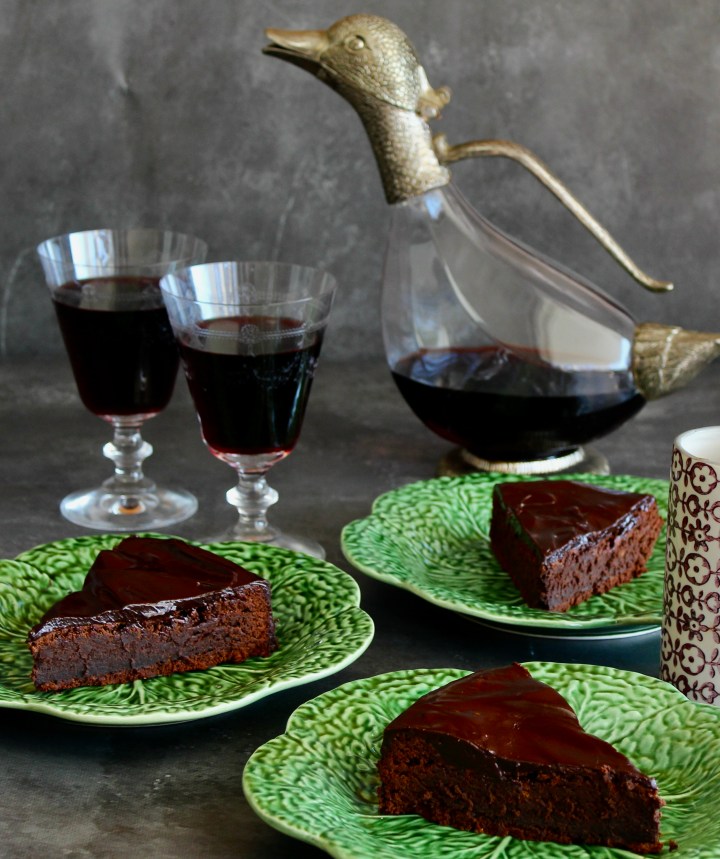
Chocolate Cake with Pinot Noir Glaze

Chocolate Cake with Pinot Noir Glaze

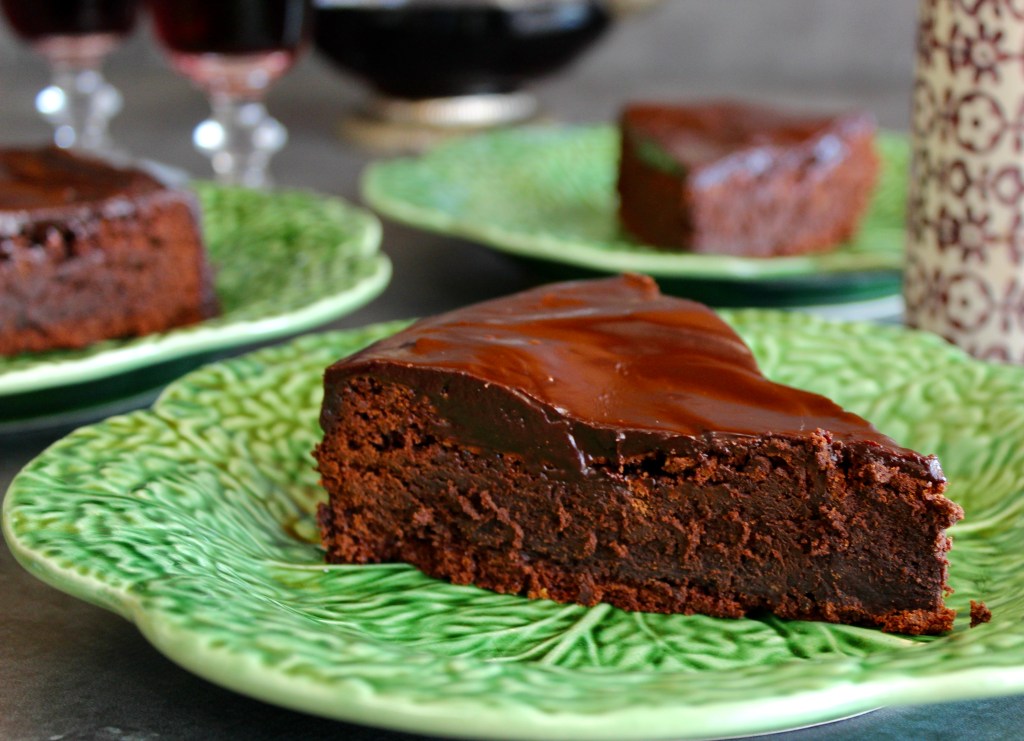
This is a glorious, genuine dark chocolate cake with an intense chocolate and red wine glaze. I use a Pinot Noir red wine as the berry notes mix perfectly with the dark chocolate aromas.

220g DeVilliersChocolate Intense or other dark chocolate, chopped
250ml sugar
200g butter, cubed
4 eggs
3,7ml salt
83ml flour

Glaze:
220g DeVilliersChocolate Intense or other dark chocolate, chopped
62ml butter, cubed
2,5ml salt
125ml icing sugar
125ml pinot noir or any other red wine

Preheat your oven to 180℃ and grease and flour a loose-bottom cake tin of 22cm in diameter.
Add the chocolate, sugar and butter to a heatproof bowl and set it oven a saucepan of simmering water.
Stir the mixture for 3 minutes or until melted and remove from the heat. Keep on stirring until the chocolate is completely smooth.
Scrape the chocolate mixture into the bowl of a stand mixer fitted with the whisk attachment.
Set aside and allow to cool completely.

Set the mixer onto medium speed and add the eggs, one at a time.
Turn the mixer onto its highest speed.
Keep beating on high speed until the mixture has a very thick, mousse-like consistency.
Turn the mixer down to a low speed and add the salt and flour. Mix until smooth.
Pour the batter into the prepared cake tin and bake for 60 minutes.
It is important to test the cake for doneness by inserting a toothpick into the cake’s centre and checking that it comes out clean. If the toothpick/cake tester is sticky, bake the cake for a few minutes longer and test again.
Remove the cake from the oven and place it on a cooling rack. Cool the cake in the tin.

For the glaze:
Add the chopped chocolate, butter and salt to a heatproof bowl set over a saucepan with simmering water.
Stir for 3 – 5 minutes until melted.
Remove the bowl from the saucepan.
Sift the icing sugar directly into the melted chocolate mixture and whisk to combine.
Add the red wine to a small saucepan and place on the heat to warm the wine.
Remove the wine from the heat as soon as small bubbles start appearing at the edges of the pan.
Drizzle the wine into the chocolate mixture while whisking continuously until all the wine is incorporated.
Set the glaze apart for about 10 minutes so that it can thicken.
Place the cold cake onto a cooling rack set inside a baking sheet and pour the glaze evenly over the cake.
Allow the glaze to set – about 2 hours.


No-fuss Chocolate Truffles

No-fuss Chocolate Truffles

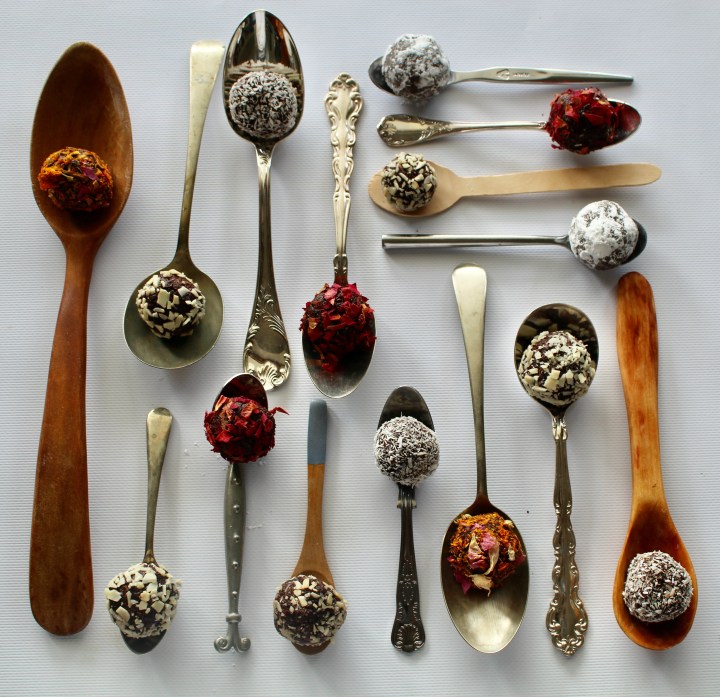
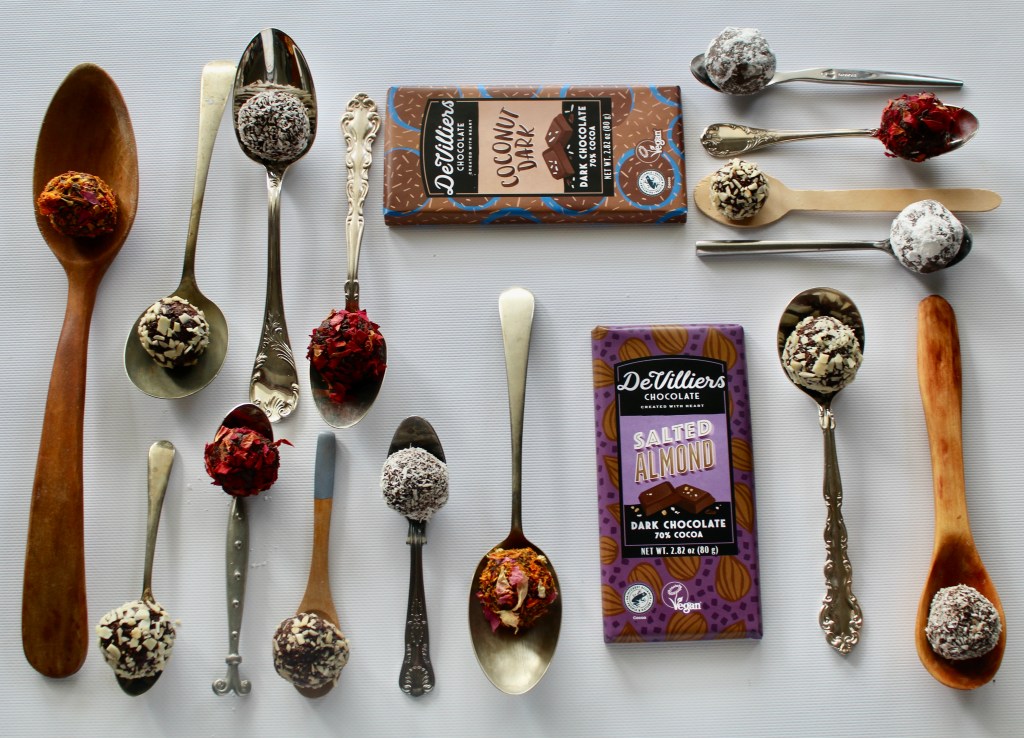
l make these truffles from cake off-cuts and sometimes from a slice or two of left-over cake. They are somewhere between a cake-pop and a traditional chocolate truffle but believe me, they are delicious and very more-ish!

160g De Villiers chocolate, chopped
5ml butter
30ml milk
80ml desiccated coconut
330ml cake crumbs (blitz two slices of cake in a food processor)
62ml icing sugar
20g almonds, chopped

For rolling the truffles:
A handful of the following
almonds, very finely chopped
desiccated coconut
cocoa powder
dried rose petals
icing sugar

Add the chocolate, butter and milk to a heatproof bowl and place over a saucepan with simmering water to melt. Stir every now and then until the chocolate is completely melted and the mixture amalgamated.
Take the chocolate mixture from the heat and stir in the coconut, cake crumbs, icing sugar and chopped nuts. Keep mixing until all the ingredients are completely covered with chocolate.
Roll the mixture into balls the size of walnuts and then roll them through the almonds/coconut/cocoa/rose petals/icing sugar.
Keep the truffles in a sealed container at room temperature.
Chocolate Orange Syrup Cakes

Chocolate Orange Syrup Cakes

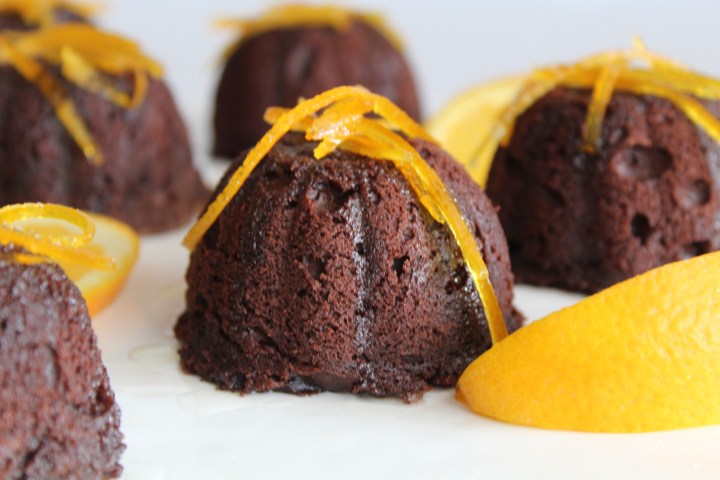
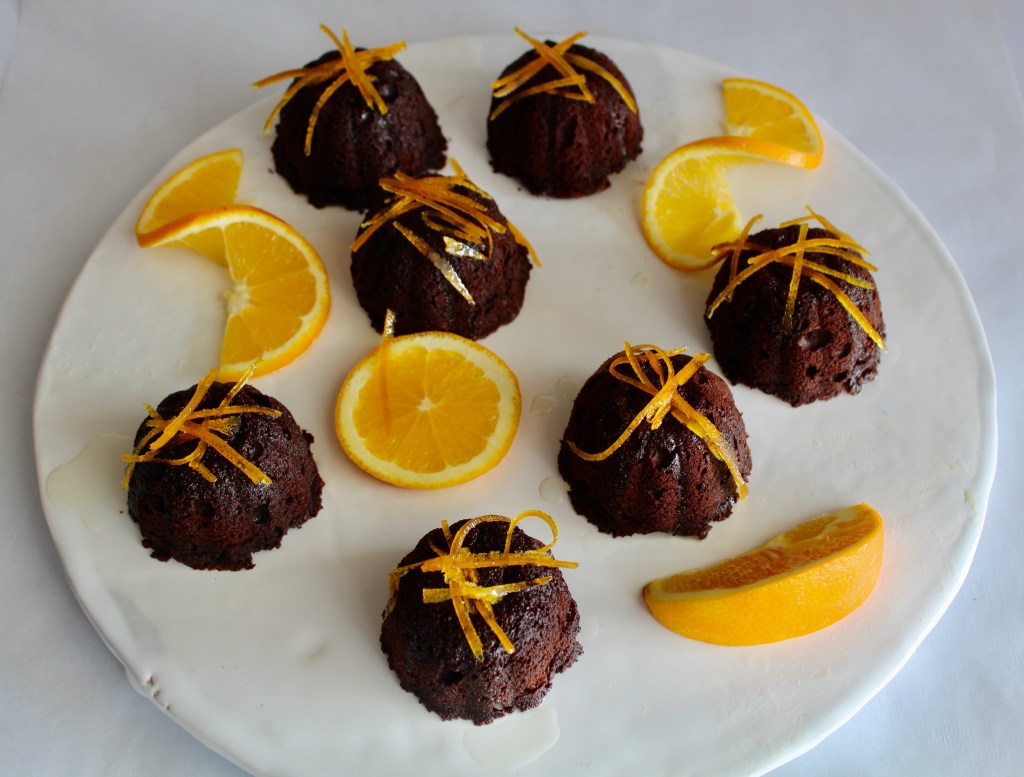
These cakes are like little jewels of chocolate and orange that explode in your mouth. This is an easy dessert when you are entertaining friends and want to impress.

Orange syrup:
200ml sugar
200ml water
zest from one orange

For the cake:
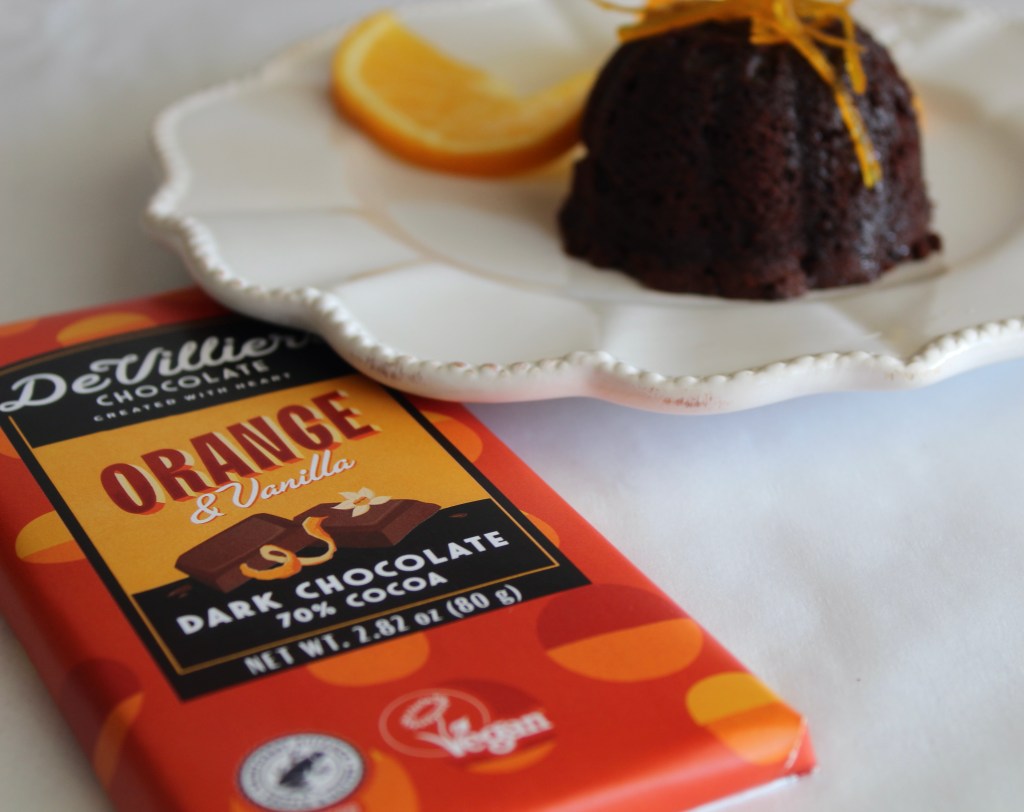
320g De Villiers Chocolate: orange and vanilla, 70% dark or any other dark chocolate
250g butter, cubed
300g brown sugar
5 eggs
100g cake flour
100g self-raising flour
30ml orange liqueur or brandy

For the orange syrup:
Strip the zest from the orange with a vegetable peeler.
Put the strip of zest flat onto a chopping board and slice into needle-wide strips with a sharp knife. Cut all of the zest into these needle strips. Put aside.
Add the sugar and water to a small saucepan and place on a high heat.
Stir the mixture until all the sugar has dissolved. DO NOT stir again.
Add the zest-needles to the mixture and bring the mixture to a boil, FOR ONE MINUTE.
Take the saucepan from the heat and set aside to cool.

For the cake:
Preheat your oven to 160℃.
Grease 12 small baking moulds or a 12-hole standard muffin tin.
Chop the chocolate. Melt the chocolate in a heatproof bowl over a saucepan with simmering water. Stir every now and then until all the chocolate has melted and the mixture is completely smooth.
Remove from the heat and put aside.
Add the butter and sugar to the bowl of a stand mixer fitted with the paddle attachment.
Cream the butter and sugar until light and fluffy.
Turn the mixer down to a medium speed and add the eggs one at a time, waiting for each to be incorporated.
Turn the mixer to its lowest speed and add the slightly cooled chocolate, liqueur and flour.
Scoop the batter into the prepared mould and bake for 30 minutes.
Remove the cakes from the oven.
Cut the cakes flush with the moulds you baked them in while still very warm. This will leave you with a flat surface to stand the cakes once you plate them.
Spoon about 20ml of the cold syrup onto the cut-side of the warm cakes.
Remove each cake from the mould (stand them up – the way you will serve them) and spoon the rest of the orange syrup over.
Serve slightly warm or at room temperature.

Pancake Puffs

Pancake Puffs

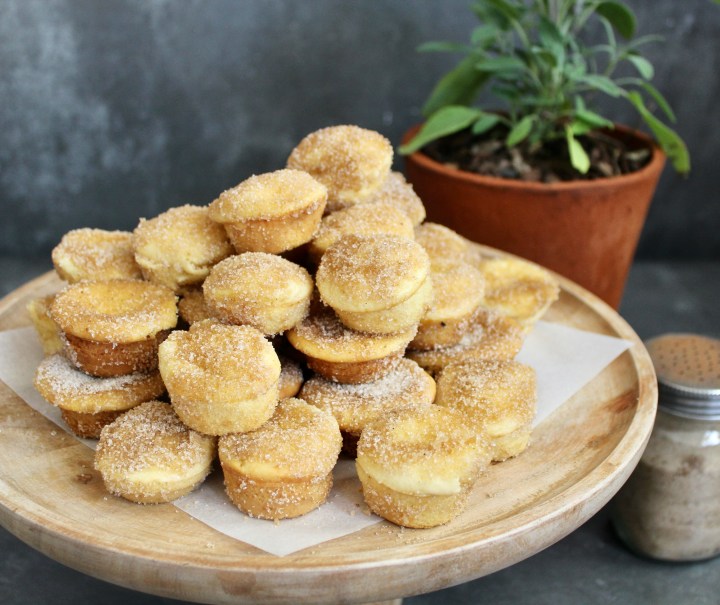
These mini cupcakes are little bites of pure happiness and comfort! The recipe yields 24 mouthfuls.

45ml + 125ml sugar
250ml flour
5ml baking powder
2,5ml bicarbonate of soda
1,2ml salt
190ml cultured buttermilk
5ml vanilla
30g + 75g butter, melted
1 egg
5ml cinnamon

Preheat your oven to 180℃, NO FAN!
Grease a 24-hole mini muffin tin and put aside.
Add the 45ml sugar, flour, baking powder, bicarbonate of soda and salt to a mixing bowl and whisk together.
Add the buttermilk, vanilla, 30g melted butter and egg to another bowl and whisk together.
Add the wet ingredients to the dry ingredients in a thin stream while whisking to combine.
Spoon the batter into the prepared muffin tins and bake for 12 minutes.
Take the puffs from the oven and leave to stand for about 5 minutes before removing them from the tin.
Pour the 75g melted butter into a small bowl and have a pastry brush ready.
Mix the 125ml sugar and cinnamon in a separate bowl and mix through.
Brush each puff with the butter and then roll it in the cinnamon sugar.
Serve warm.

Apple Crumble

Apple Crumble

This is an easy, uncomplicated apple crumble in one dish but it is full of flavour and absolutely delicious when served slightly warm with ice cream.

450g cooking apples
62ml sugar

Crumble:
40g oats
40g flour
40g butter, cubed
30g brown sugar
2,5ml cinnamon

Preheat your oven to 190℃.
Peel, core and cut the apples into quarters. Cut the quarters into chunks.
Add the apple pieces to a small saucepan with the sugar and 45ml water.
Cook over a low heat, stirring occasionally, for about 5 minutes.
Spoon the apple into an ovenproof dish or individual ramekins. Put aside.

For the crumble:
Add the oats, flour, butter, sugar and cinnamon to a mixing bowl.
Rub the butter into the mixture with your fingers until it has an even crumb texture.
Spoon the crumb mixture onto the apple chunks.
Place in the oven and bake for 20 – 25 minutes.
Serve slightly warm with vanilla ice cream.

Quince and Cape Gooseberry Clafoutis

Quince and Cape Gooseberry Clafoutis

3 large quinces
1 lemon
250ml sugar

250ml cape gooseberries
125ml flour
125ml sugar
3 eggs
5ml vanilla
30ml butter, melted
250ml milk

Poaching the quince:
Pour 750ml water into a saucepan and add 250ml sugar and the juice of one lemon.
Turn the heat onto low and stir the mixture until the sugar has dissolved. Keep the saucepan on a low heat.
Cut the quince in quarters, peel the quarters with a vegetable peeler, core the quarters and then cut each into half again.
Add the quince pieces to the poaching liquid.
Cut a circle from baking paper and place the paper directly onto the poaching liquid.
Turn the heat up so that the liquid comes to a simmer.
Poach for an hour to an hour and a half or until a sharp knife easily pierces the quince.
Remove from the heat and allow the quince to cool in the poaching liquid.

Preheat your oven to 180℃.
Butter an ovenproof pie dish.
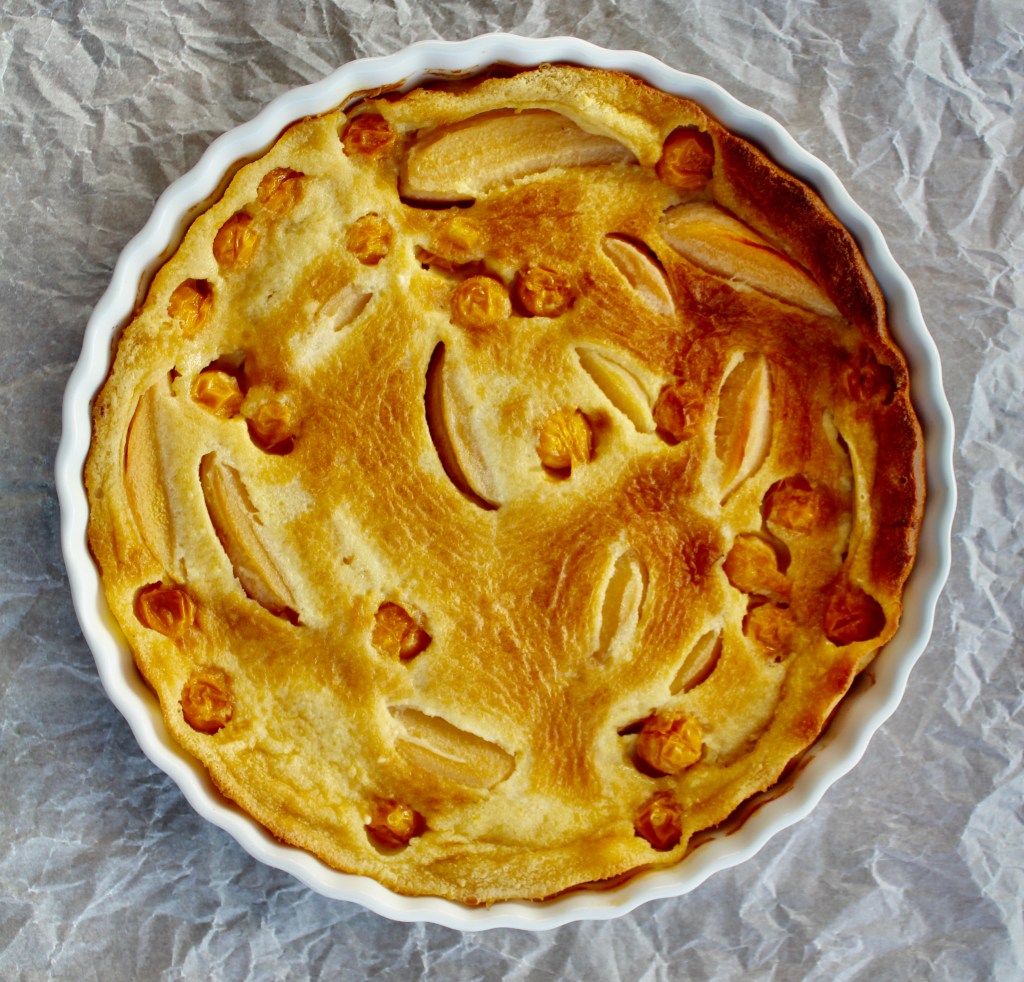
Arrange the cooled quince pieces and gooseberries on the bottom of the pie dish.
Add the flour and sugar to a mixing bowl and stir through.
Add the eggs, vanilla, melted butter and milk to a wide-mouthed jug and whisk together to combine.
Pour the wet mixture onto the dry mixture in a thin stream, whisking constantly.
Pour the batter into the dish with the fruit and bake for 40 minutes.
Take the clafoutis from the oven and cool it on a cooling rack. The clafoutis will be puffed up high but will fall back onto itself as it cools.
Dust with icing sugar to serve.


Self-saucing Chocolate Pudding

Self-saucing Chocolate Pudding

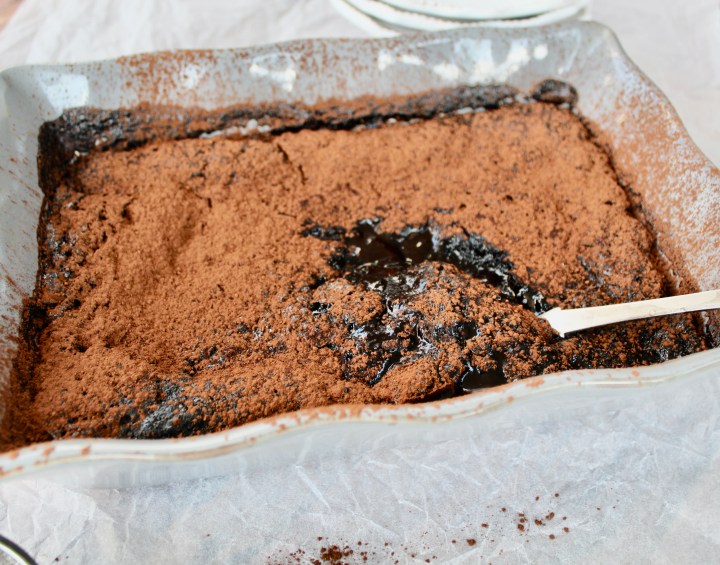
Not all things need to be pretty and with this recipe the proof IS in the pudding! Easy to make, not too sweet, fit for all seasons and a real crowd pleaser … give it a try, you will thank me!

250ml self-raising flour
62ml cocoa powder
125ml caster sugar
60g butter, melted
125ml milk
5ml vanilla
1 egg

125ml granulated sugar
45ml cocoa powder
500ml boiling water

Preheat your oven to 160℃.
Sift the flour and cocoa powder into a mixing bowl and add the caster sugar.
Stir the ingredients to combine and put aside.
Add the melted butter, milk, vanilla and egg to a separate bowl and whisk together.
Pour the wet ingredients into the bowl with the dry ingredients and stir with a spatula until just combined into a batter.
Spoon the batter into a 25cm X 15cm ceramic dish and level the top with the spatula.
Sprinkle the granulated sugar onto the batter in an even layer.
Sift the 45ml cocoa powder onto the sugar layer and then gently pour the boiling water onto the batter.
Bake the pudding for 35 minutes.
Remove from the oven and stand for at least 10 minutes.
Serve warm.

Chocolate Aperol Cake

Chocolate Aperol Cake

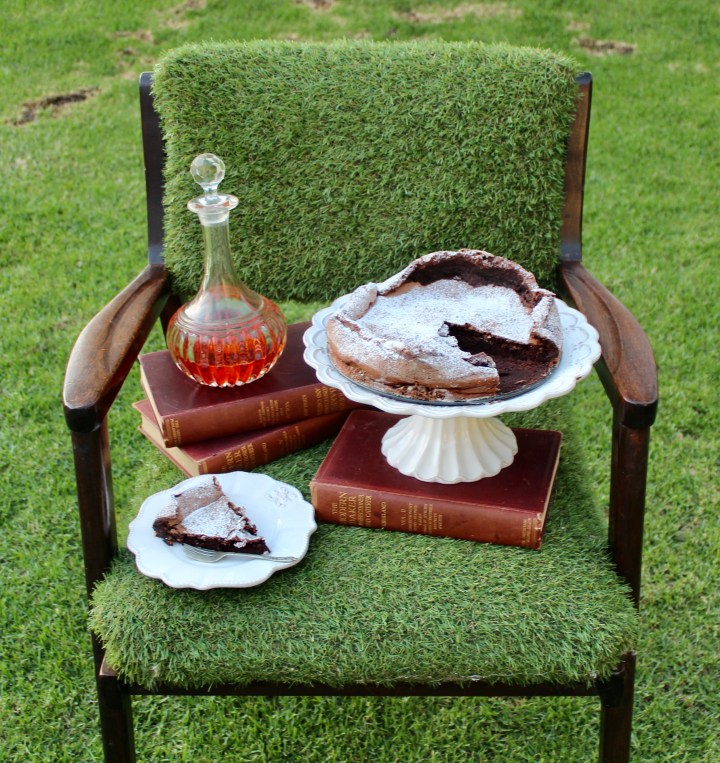
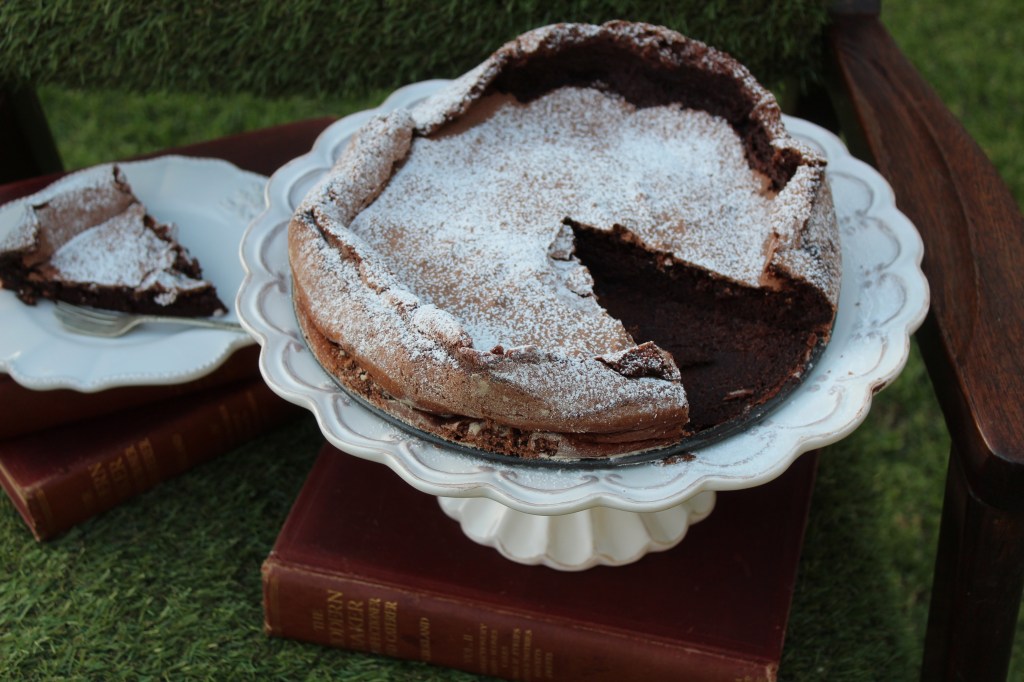
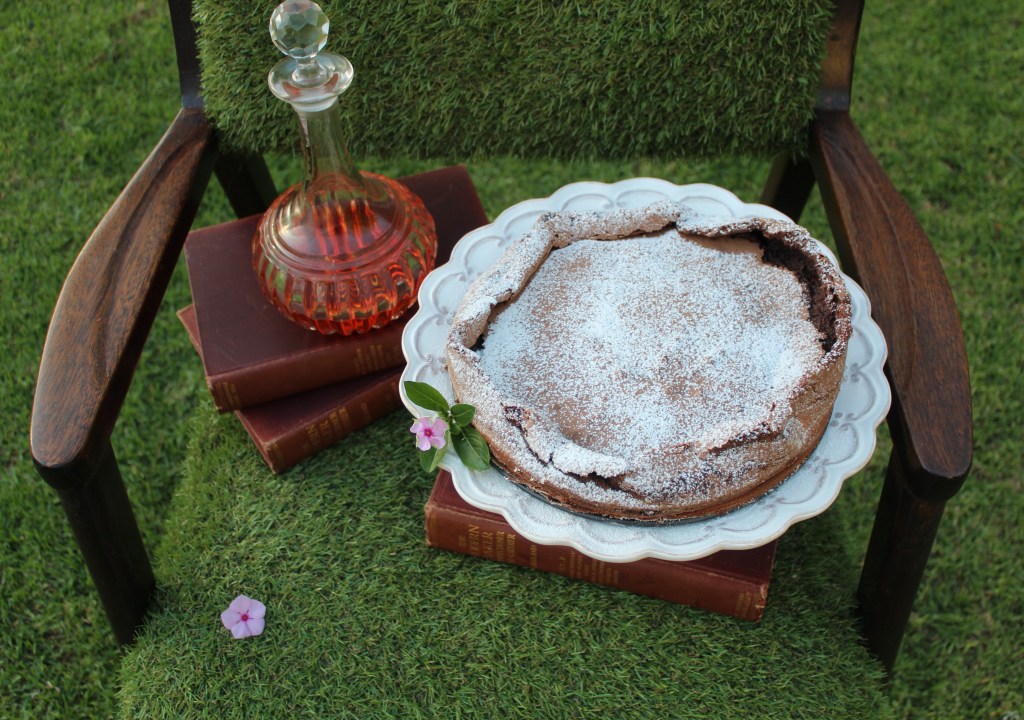
The best write-up for this cake is to have a slice of it…. It is a cake that rises up high and then falls back on itself, thereby creating a dense looking texture that is actually quite airy in one’s mouth. It is a cake that is pure chocolate indulgence, but without the sticky sweetness normally associated with chocolate. It is a cake that is delicately cracked and delightfully imperfect. It is a cake you will never forget once you have tasted it…

340g dark chocolate, chopped
140g butter, cubed
45ml Aperol
15ml vanilla
1.2ml salt
6 eggs, separated
83ml + 83ml + 15ml caster sugar
icing sugar for dusting

Preheat your oven to 180℃.
Butter a 25cm loose-bottom cake tin and dust the bottom and sides with caster sugar. Put aside.
Add the chopped chocolate and cubed butter to a heatproof bowl set over a pan of barely simmering water. Stir until the chocolate has melted completely and the mixture is smooth.
Remove the bowl from the heat and stir in the Aperol, vanilla and salt.
Cool the mixture for at least 5 minutes.
Add the 6 egg yolks and 83ml caster sugar to a small mixing bowl and whisk it by hand for about a minute.
Now whisk this mixture into the chocolate mixture.
Allow the chocolate mixture to cool to room temperature.

Add the 6 egg whites to the bowl of a stand mixer and add a pinch of salt. Attach the whisk attachment and whip the whites on medium speed, until they reach soft peak stage.
Keep the machine running at medium speed and gradually (a teaspoon at a time) add the 83ml and 15ml caster sugar. Do not become impatient when adding the sugar!! Once all the sugar has been added you will be left with a glossy mixture that holds stiff peaks.
Spoon a third of the egg white mixture into the room temperature chocolate mixture and stir it through to lighten the chocolate mixture.
Add the rest of the egg white mixture and gently fold into the mixture with a spatula until the mixtures are evenly combined.
Pour the mixture into the prepared cake tin and bake for about 30 minutes.
The top of the cake should feel dry and it should start to crack. A toothpick that is inserted should come out sticky but not wet. If the cake is too wet, let it bake for another 5 minutes and check it again.
Cool the cake in the cake tin. The cake will fall in on itself as it cools – don’t be alarmed!
Remove the ring from the baking tin once the cake has reached room temperature (about an hour).
Dust generously with icing sugar and serve.