Authentic Greek Moussaka

This Moussaka will remind you just how much you enjoyed Greek food when you last visited the most beautiful islands in the world…..

Serves 8 nostalgic guests.

6 average sized aubergine

Preheat your oven to 200℃.

Slice the aubergine into 1cm thick slices.

Grease a baking sheet and pack the aubergine slices on it in a single layer. Drizzle with oil.

Bake for 10 minutes, flip the slices over and continue baking for another 10 minutes, until soft and golden.

Remove from the oven and put aside.

For the meat sauce:

62ml vegetable oil

2 onions, chopped

2 cloves of garlic, minced

30ml tomato puree

750g lamb mince or a mixture of lamb and beef mince

250ml red wine

1 tin chopped tomatoes

5ml sugar

a pinch of cinnamon

Add the vegetable oil to a saucepan and place it on medium heat.

Add the chopped onion and cook until soft and translucent.

Add the garlic, tomato puree, mince and red wine and stir everything together.\

Finally add the tinned tomato, sugar and cinnamon.

Season the mixture with salt and pepper and simmer for 30 minutes, stirring occasionally.

You are looking for a sauce consistency where most of the liquid has evaporated without leaving the sauce dry.

Turn off the heat and put the meat sauce to the side.

For the Béchamel sauce:

120g butter, cubed

120g flour

900ml milk

2 egg yolks

a pinch of nutmeg

100g Kefalotyri or Parmesan cheese, grated

Place a saucepan onto medium heat and add the butter to it.

Once the butter has melted, add the flour. Stir the butter and flour around for about 2 – 3 minutes to cook out the floury taste.

Add the milk and whisk vigorously to get rid of lumps.

Gently stir the béchamel until it has thickened and remove the saucepan from the heat.

Allow the mixture to cool slightly before adding the egg yolks, nutmeg and cheese. Whisk the mixture well.

Season the béchamel with salt and pepper and put to the side.

Assembling the moussaka:

Grease an ovenproof dish of about 20cm X 30cm.

Start off by packing half the aubergine slices onto the bottom of the dish. Spread the slices to make an even a layer as possible.

Spoon all of the meat sauce onto this first layer and then end off with a layer of the last half of the aubergine.

Now pour the seasoned béchamel sauce over the meat and aubergine layers.

Bake the moussaka in the preheated oven for 50 minutes.

Serve warm with a crisp Greek salad and a glass of white wine.

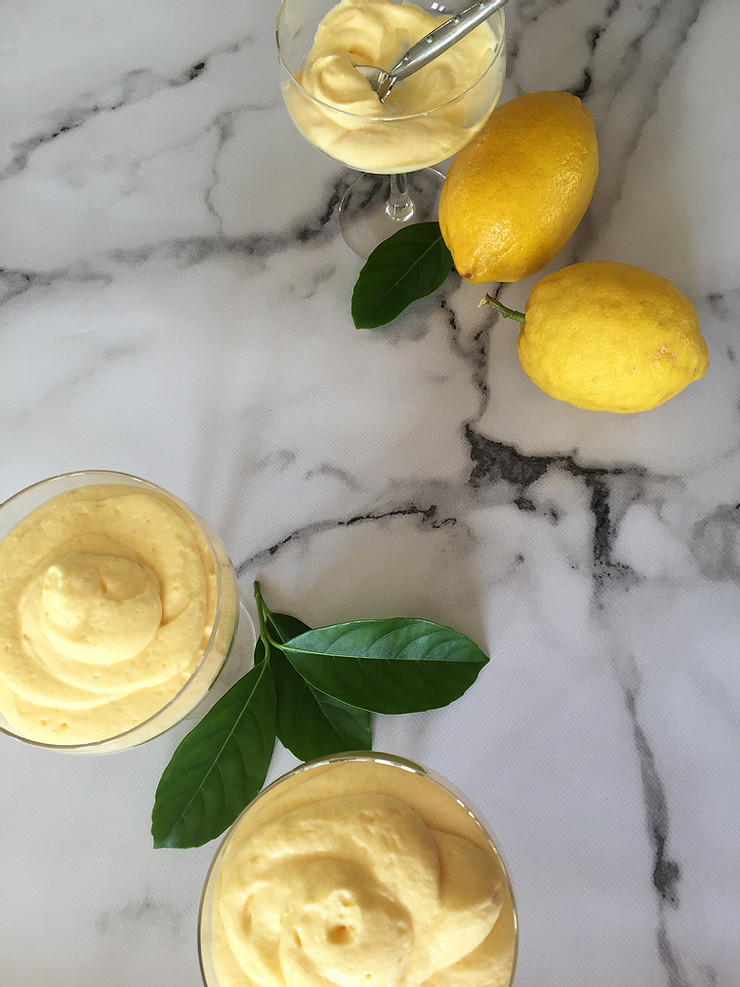
Lemon Mousse

This lemon mousse is perfect in every sense of the word: light as air, zesty and incredibly more-is!!

The recipe makes 8 full dessert portions.

8 eggs

310ml sugar (250ml + 62ml)

2,5ml salt

the juice and zest of 4 lemons

250ml whipping cream

5ml vanilla extract

Start off by separating 4 eggs into to mixing bowls.

Add 4 whole eggs to the bowl with the 4 egg yolks as well as 250ml sugar.

Whisk the eggs and sugar together and pour this mixture into a small saucepan.

Add the salt, lemon juice and lemon zest.

Turn the heat on low and stir the mixture continuously until it thickens. This should take about 10 minutes.

Take the mixture off the heat and strain it through a sieve.

Now put it into the refrigerator to cool and chill completely.

In the meantime, whisk the 4 egg whites until stiff peak stage.

Add the 62ml sugar a little at a time (a spoonful) while whisking continuously.

Keep going until all the sugar is incorporated and you are left with a stiff, glossy meringue mixture.

Add this mixture to the chilled curd and fold it through.

Whisk the cream and vanilla in a separate bowl until stiff and fold it into the curd mixture.

Spoon the mousse into the serving cups and chill.

Do not keep the mousse in the refrigerator for longer than 4 hours as it will become watery.

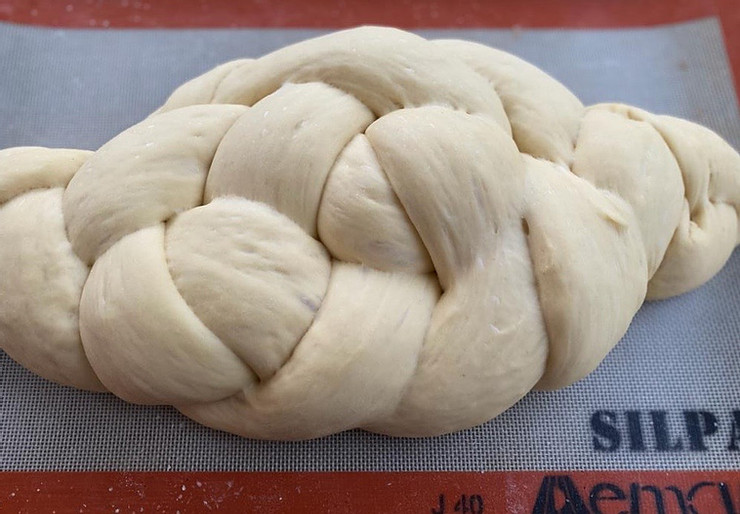
Cheesy Garlic Bread

Once you have tried this cheesy garlic bread you will never want to have any other on your table!

Watch the video on YouTube at https://youtu.be/8ecmAv9L7oU

250g butter, cubed

8 – 10 cloves of garlic, minced

400g cheese spread

Add all the ingredients to a saucepan and place on a medium to low heat.

Allow to melt while stirring every now and then.

Preheat your oven to 200℃.

Slice a baguette but do not slice through – in other words, keep the bottom 3mm of the bread intact so that it stays together.

Place the sliced baguette on a double layer of tin foil and spoon the butter and garlic mixture into each slice.

Bake in the oven for 20 minutes.

Serve steaming hot!

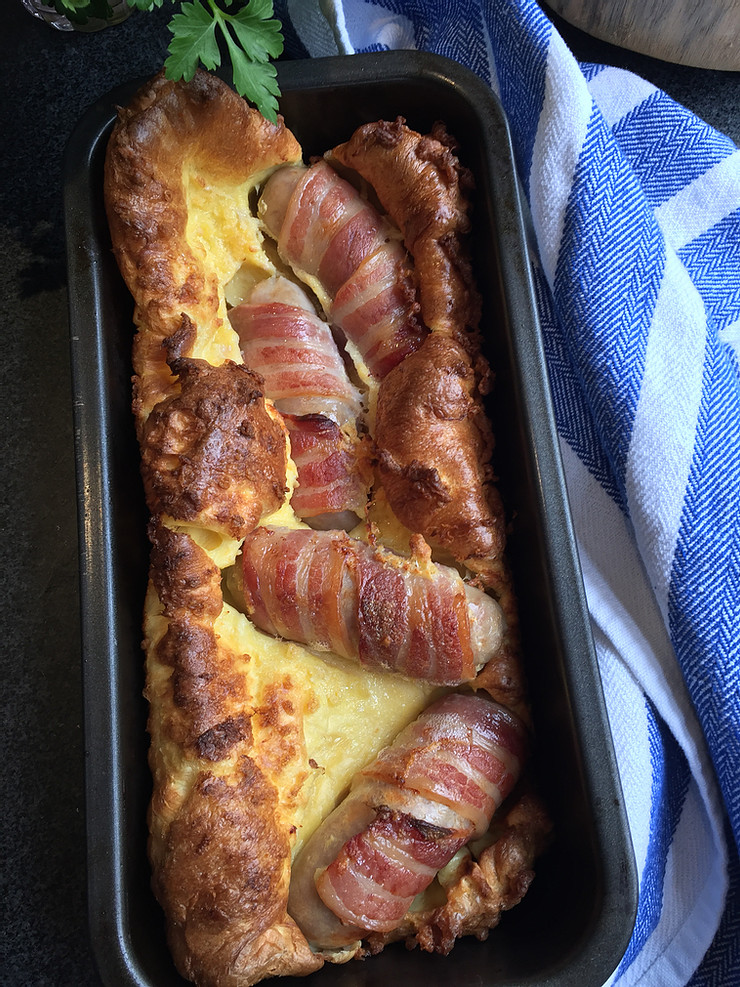
Toad in the Hole

This is the perfect quick-one-pan-dinner and if you are a fan of pork bangers, it is a double win! This recipe serves 8 people and is best cooked in two large bread loaf tins.

6 eggs

250ml flour

300ml milk

a generous pinch of salt

15ml wholegrain mustard

16 pork bangers

16 strips of bacon

vegetable oil

Wrap each of the pork sausages in a strip of bacon.

Whisk the eggs in a mixing bowl.

Add the flour and stir through with a spatula.

Add the milk a little at a time, beating in between, to get rid of any lumps.

Allow the mixture to stand for at least one hour.

Preheat your oven to 250℃.

Pour some vegetable oil into two large bread loaf tins – about 0,5cm of oil.

Put the tins into the preheated oven for 15 minutes so that the oil can heat up.

Once the oil is hot, you have to work quickly: take the loaf tins out of the oven, arrange the wrapped sausages in the tins and carefully pour the batter onto the sausages, making sure you divide the batter evenly between the two tins.

Immediately put the tins back into the oven and bake for 20 minutes WITHOUT OPENING THE OVEN DOOR TO PEAK!!

Remove the Toad in the hole and serve warm with a crispy green salad and a glass of white.

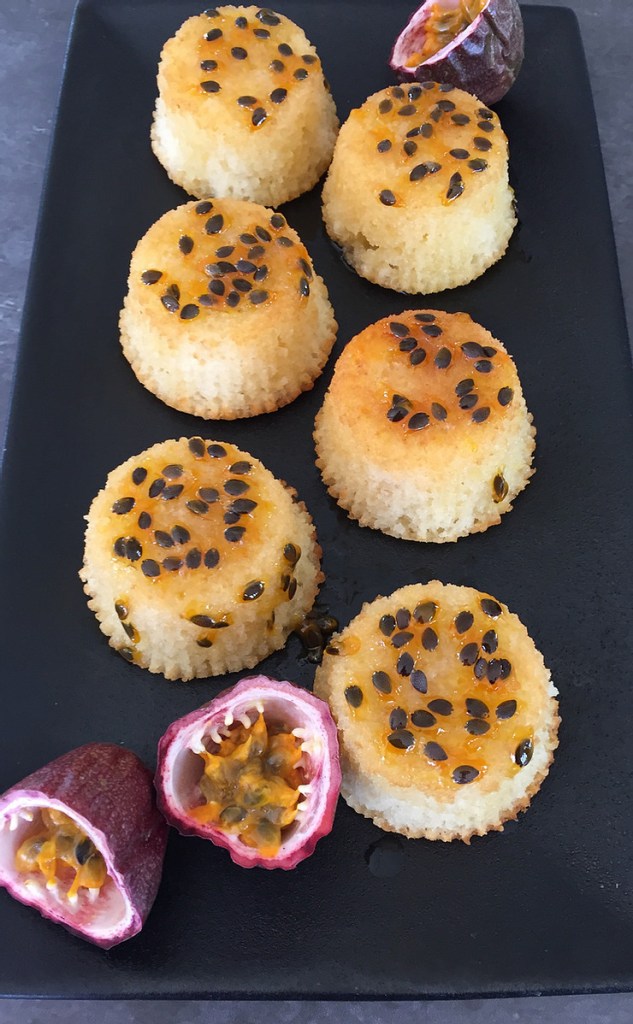
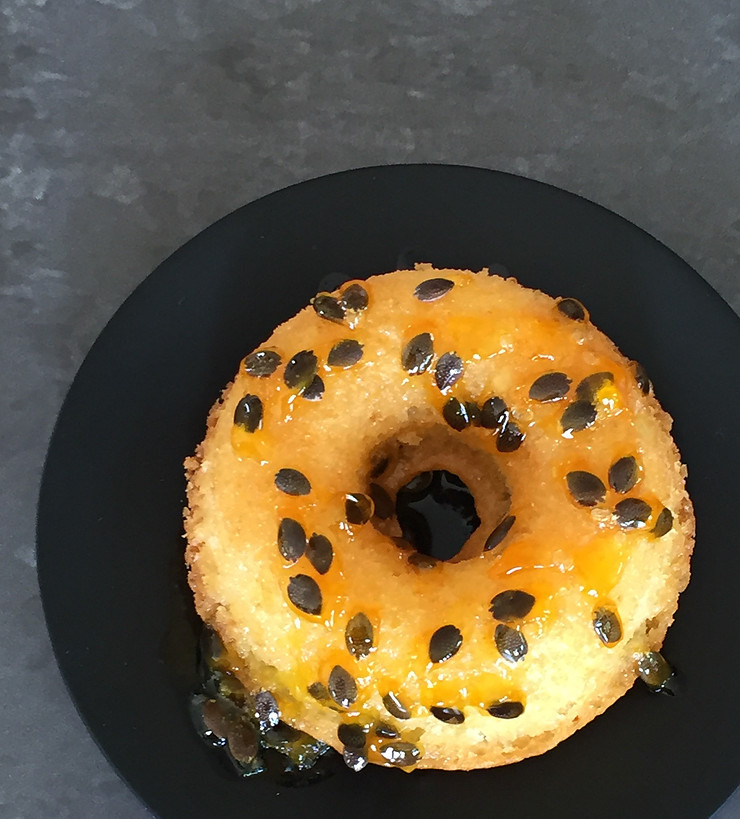
Passionfruit Syrup Cakes

These tiny cakes are made with yoghurt and are light and airy and not like cake at all…. The syrup is acidic and leaves one’s palette refreshed and alive! Once you have made these cakes, they will become a firm favourite for those special occasions, whether you need a cake or a dessert.

375ml sugar

250ml vegetable oil

2 eggs

250ml vanilla yoghurt

2 lemons; juice and zest

500ml self-raising flour

Preheat your oven to 160℃.

Grease a muffin tin or individual small cake moulds. Now dust the greased moulds with some cake flour, so that each mould is coated evenly with flour. Shake out any excess flour.

Add the sugar and oil to a mixing bowl and whisk together with an electric beater.

Add the eggs, one at a time, and whisk well.

Now stir in the yoghurt, lemon juice and the lemon zest.

Sift the flour directly into the mixing bowl in two or three batches and stir until just mixed through. DO NOT over mix.

Spoon the batter into the baking mould and tap the moulds lightly on a working surface to get rid of air bubbles.

Bake for 20 – 25 minutes or until a skewer comes out clean.

Cool the cakes completely on a cooling rack.

Passionfruit syrup:

125ml sugar

83ml water

83ml lemon juice

83ml passionfruit pulp

Add all the ingredients to a saucepan and bring to the boil while stirring constantly.

Simmer the mixture for about 10 minutes so that you end up with a light syrup consistency.

Pour spoonfuls of the very hot syrup onto the cooled cakes before serving.

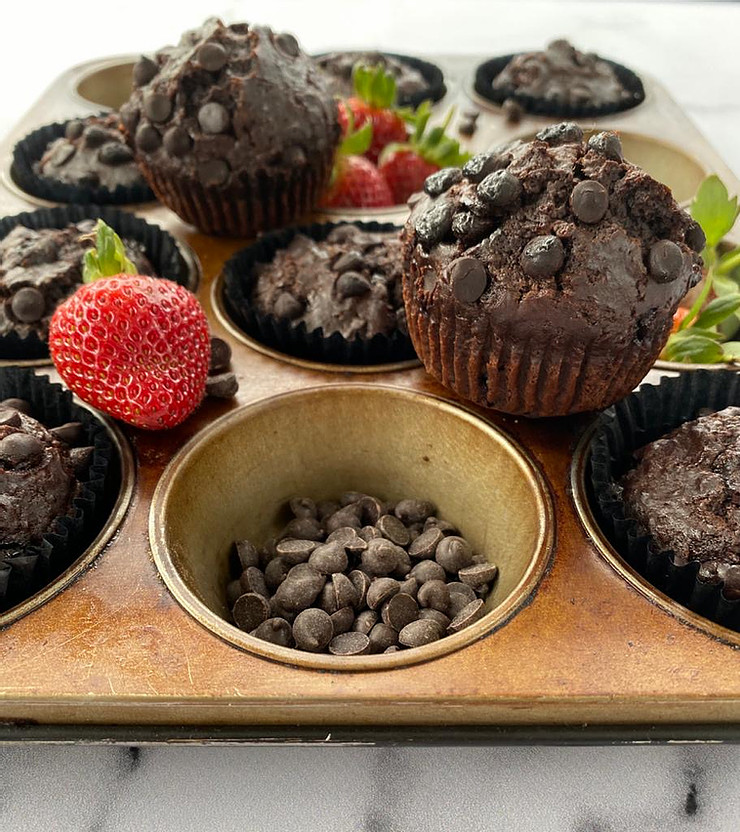
Chocolate-chip Muffins

One bowl, one jug and a whisk… You don’t need much more to put these muffins together and as an added bonus, they are so chocolatey, that you will not miss an icing for it. The recipe makes 12 regular sized muffins but may be doubled for 24.

500ml flour

160ml cocoa powder

125ml sugar

10ml baking powder

a pinch of salt

250ml chocolate chips

330ml milk

80ml vegetable oil

2 eggs

5ml vanilla

Preheat your oven to 200℃.

Line a muffin tin with paper cups.

Sift the flour, cocoa powder, baking powder and salt together into a bowl.

Add the sugar and mix through.

Add half the chocolate chips.

Whisk the milk, oil, eggs and vanilla in a jug with a wide mouth.

Stir this wet mixture into the dry mixture, taking care not to over mix.

Spoon the batter into the prepared muffin tins and sprinkle the rest of the chocolate chips over.

Bake for 20 – 25 minutes.

You may serve whenever you like as these muffins don’t need additional icing and is quite tasty when slightly warm.

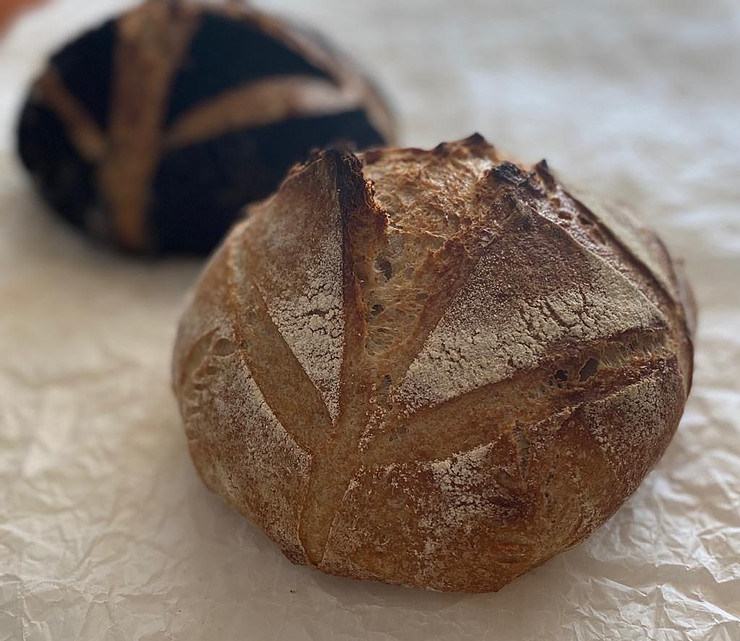
Simplest Sourdough Bread

I am by no means a Master Baker but when it comes to eating sourdough bread, I know what I like: crusty but not hard, nicely salted and tangy enough so that I know what I eat.

I have baked many, many sourdoughs and I honestly can not taste the difference between those that take three days to make and the one I am about to give you the recipe off. To me, it ticks all the boxes as far as satisfaction and taste goes and as far as time goes, this method makes sense in my life!! I do the mixing in the afternoon and the baking the next morning, which works out just perfect. After all, food and the process of creating it should add joy to your life!

100g active sourdough starter

300g water

15ml salt

400g bread flour

Add your starter, water and salt to a bowl and leave to stand for ten minutes or so.

Stir the mixture every now and then during this time.

Add the bread flour.

Stick your hand in the bowl and sqish the water and flour between your fingers by grabbing some in your hand and then making a tight fist. Keep going until all the ingredients are incorporated and you have no big lumps in the dough.

Cover the bowl with a tea towel and set aside for 30 minutes.

Now, wet your hands to stretch and fold the dough. With the bowl in front of you, start at the top: push your hand underneath the dough, grab some of it and stretch it up as far as it will go. Relax it and fold it over the top of the dough, towards you. Do the same, but in reverse, with the dough closest to you and then proceed to do both the left and right sides, until you have stretched and folded the dough from four different directions.

Cover the bowl with a tea towel and leave to rest for another 30 min.

Repeat this process of stretching and folding 3 – 4 times. You will feel the dough becoming stronger each time you stretch and fold!

Cover the dough after the last folding session and put it somewhere cool in your kitchen, for 12 – 18 hours.

The dough is ready to be shaped once it has increased in volume and you can see air bubbles in it.

Transfer the dough to a work surface dusted with flour and shape your bread. Carefully transfer it to baking paper and slash it/decorate with a lime or sharp knife.

Take hold of the edges of the baking paper and transfer the bread to a dutch oven, put on the lid and leave for about an hour.

Preheat your oven to 250℃.

Place the dutch oven in the preheated oven and bake for 30 minutes, with the lid on.

Turn the oven temperature down to 220℃ , take off the lid of the dutch oven and bake the bread for another 20 minutes.

Remove the dutch oven from the oven and remove the bread from it.

Cool on a cooling rack.

Sunday Lunch

We have had an exceptionally cold winter. Some days the heavens opened up and soaked the earth and everything on it and on others, the mountains were covered in snow and we huddled inside around the fire, hands either clamped around a cup of hot chocolate or that well deserved glass of red at the end of the day. And then, with the first few rays of sunshine making their appearance, we were outside, making believe that summer is on its way in Stellenbosch!

I have to say, there is something about food and fresh air. Eating al fresco affects the senses and makes the food taste fresher and somehow better and sitting around a table with your loved ones, a glass of wine in hand and a simple meal in front of you, makes life seem complete.

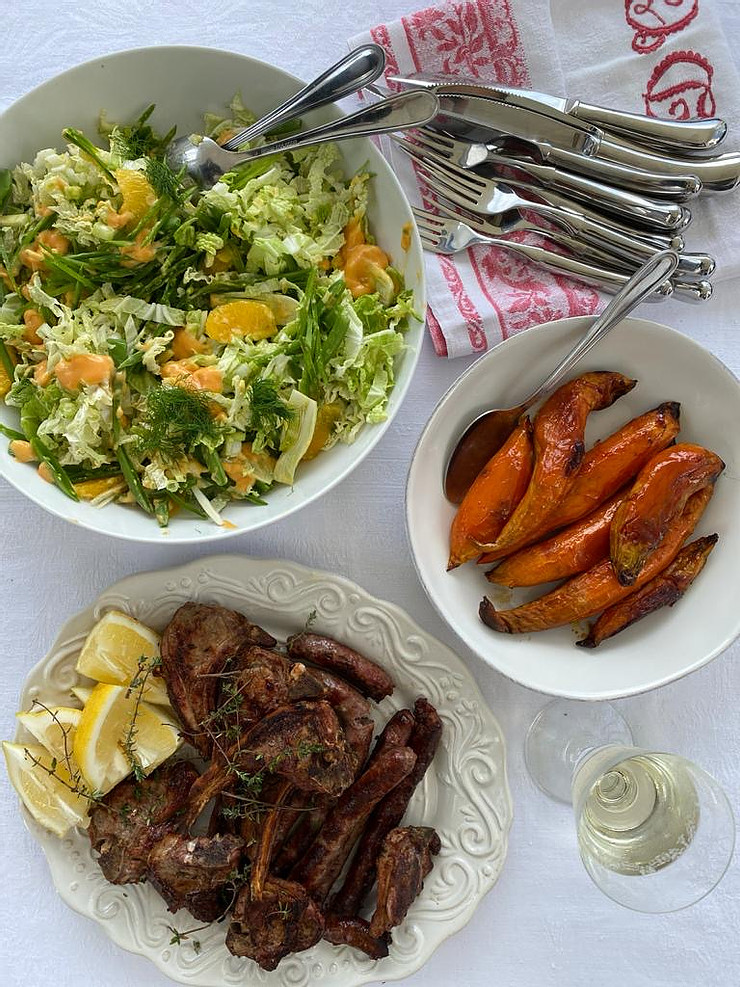
So the food was a bit of a throw-together-from-the-fridge kind of meal. I marinated lamb chops in some white wine and thyme and we cooked it on an open fire. Without going into the story behind it, we always have sausage with chops.

We had orange sweet potato that was glazed with butter, honey, brown sugar and a pinch of salt. Simply poured over the sweet potato and roasted in the oven until soft and caramelised.

The salad was shredded bok choy, finely sliced fennel bulbs, orange segments and fresh sugar snap peas.

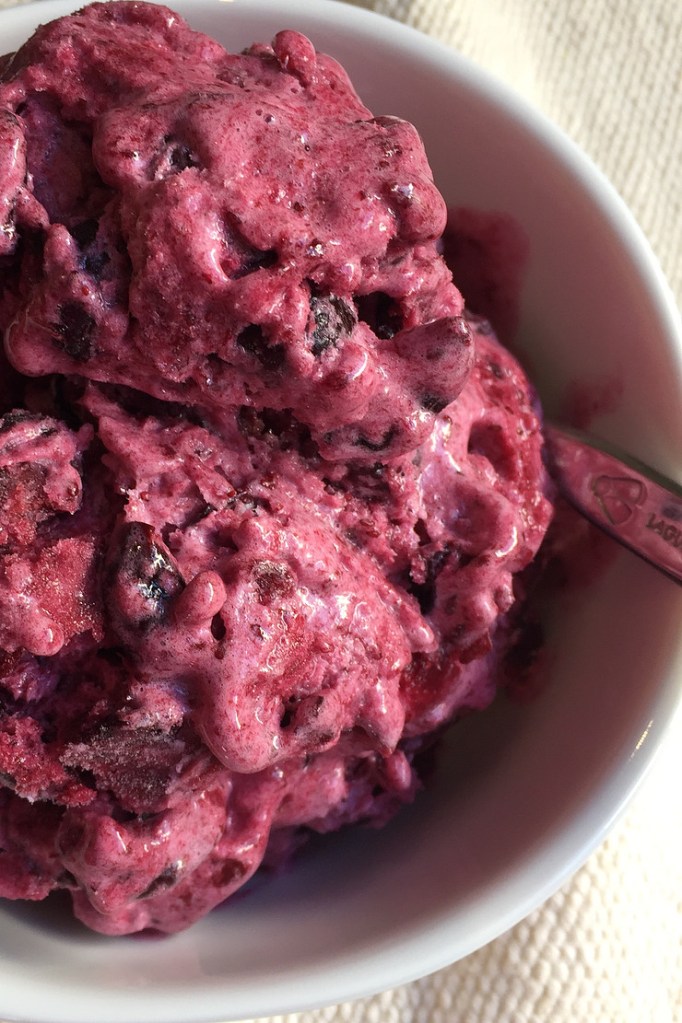
We ended the meal with a simple blueberry sorbet of which I include the recipe. (Find in the recipe section under No-machine Blueberry Sorbet).

Happy lunching in the “make-believe” summer!

No-machine Blueberry Sorbet

Easy, quick and refreshing!

500g blueberries, fresh or frozen

30g granulated sugar

100g caster sugar

2 egg whites

Add the blueberries and granulated sugar to a small saucepan, over medium to low heat. Stir occasionally as you want the berries to burst and release their juice.

Once there is enough liquid in the saucepan, turn the heat down to low and simmer the mixture for about 15 minutes.

Take off the heat and allow to cool completely.

Spoon the cold blueberry mixture into a container with a lid and place it in the freezer for one hour.

In the meantime, add the egg whites to a clean mixing bowl and beat with an electric beater until soft peak stage.

Add a teaspoonful of the caster sugar and beat for about 30 seconds to incorporate. Keep going, adding small amounts of sugar and beating, until you have a glossy meringue and have used all the caster sugar.

Take the berry mixture out of the freezer (after the one hour) and stir through the icy/crystal mixture. Now add the meringue you have made to the container and stir the berry-meringue together. Replace the lid and place back into the freezer.

Take the container out after 20 minutes and give the mixture a good stir. Place it back into the freezer. Repeat this process TWICE more.

Now freeze the mixture undisturbed for another 2 hours.

When you are ready to serve, take the container from the freezer and let it stand in the kitchen for about 10 minutes before scooping out the sorbet.

Melazanie alla Parmigiana (Aubergine and Parmesan Bake)

This cheesy bake is the perfect vegetarian dish for cold winters days. This recipe serves eight as a main, served with a roll or some fresh crusty bread to mop up the juices and a fresh salad to cut through the richness.

2 large Aubergine, cut into 1cm thick slices (If you are in doubt about the size of the Aubergine, use 3!)

300g Ricotta cheese (see my recipe for Homemade Ricotta)

300g Mozzarella cheese, grated

50g Parmesan cheese, grated, plus extra for grating on top

1 egg, beaten

150ml cream

2 tins chopped tomatoes

5ml mixed, dried herbs

15ml sugar

10ml salt

Preheat your oven to 200℃.

Slice the aubergine into 1cm thick slices and if you like, salt them. If you have salted, leave to stand for 30 minutes, rinse and dry. I don’t always salt my aubergine and the heavens have not descended upon me!

Put a frying pan onto medium heat, add a generous slug of vegetable oil and fry the aubergine slices, turning them as necessary, until they are soft and golden brown. Keep going until all the slices are done. Add more oil as necessary.

Now, mix the ricotta, grated mozzarella and parmesan in a mixing bowl.

Whisk the egg and cream together and add this mixture to the cheese mixture. Stir through.

To make the tomato sauce, empty the two cans of chopped tomato, dried herbs, sugar and salt into a small saucepan on medium heat.

Simmer the tomato mixture until most of the water has evaporated and you are left with a thick sauce.

To put the final dish together, I use a 18cm X 28cm ovenproof ceramic dish.

Start off by spooning about a third of the tomato mixture into the dish and then spreading it evenly.

Layer half of the cooked aubergine slices onto the tomato sauce. It is perfectly alright if the aubergine overlaps or forms a double layer in places.

Spoon half of the cheese mixture onto the aubergine and, with a fork or your fingers helping, spread the cheese to get as good a covering as possible.

Now repeat the process with another third of the tomato sauce, the rest of the aubergine and then the rest of the TOMATO SAUCE.

Finally, round it all off with a last layer of cheese on top.

You may grate some extra parmesan on this layer as it gives a wonderful golden finish to the melanzane.

Bake for 40 minutes until steaming hot and fragrant.

Serve immediately.