Hi and welcome to my blog! My name is Karen and I love cooking simple, uncomplicated, flavourful food. My cooking is inspired by seasonal ingredients, punchy flavours, an awareness of sustainability and of course by the likes and dislikes of my family and friends that sit around my table as well as you, the virtual guests around my table!
I am a chef, recipe developer and food stylist and generate my own content. I am also completely addicted to recipe books, of which I have an extremely large collection but the essence of my food is about celebrating life and all the fabulousness that we can add by creating good food.
Thank you for reading my blog. Please keep on giving me feedback and may your kitchen, as mine, be filled with joy and the best tasting food!
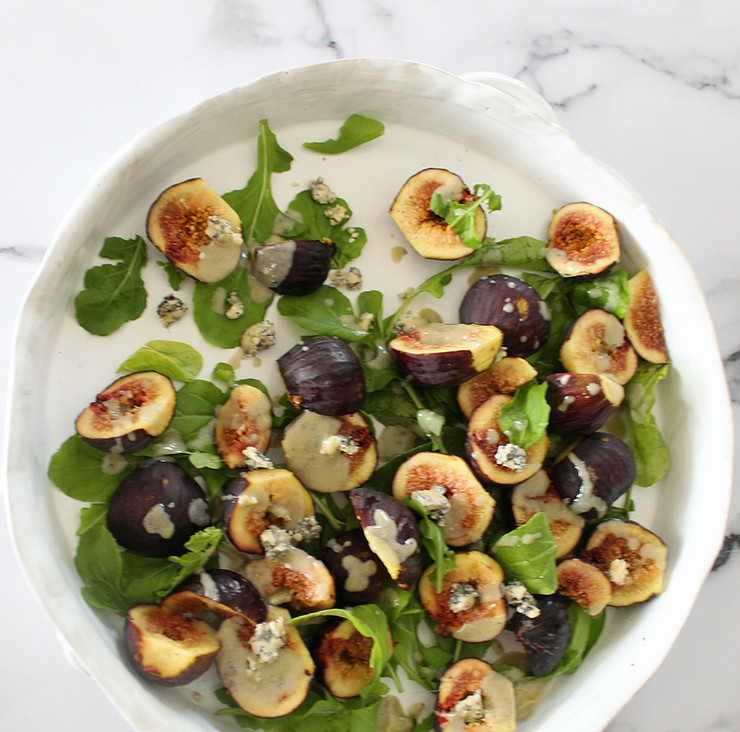
This salad is absolutely delicious! It is sophisticated, trendy and easily doubles up as an appetiser before a meal or even as an accompaniment to a cheese course.
80g rocket leaves, washed and dried
10 – 12 ripe figs
50g pecan nuts, roughly chopped
Dressing:
125ml cream
100g blue cheese
Arrange the rocket leaves on a serving platter.
Half or quarter the figs and arrange them on the rocket.
Pour the cream into a small saucepan.
Break 50g of the blue cheese into chunks and add that to the cream.
Place the saucepan onto medium heat and stir the mixture until the cheese has melted.
remove from the heat and drizzle onto the rocket and figs.
Scatter the chopped nuts over the figs.
Break the remaining 50g cheese into chunks and scatter that over the salad as well.
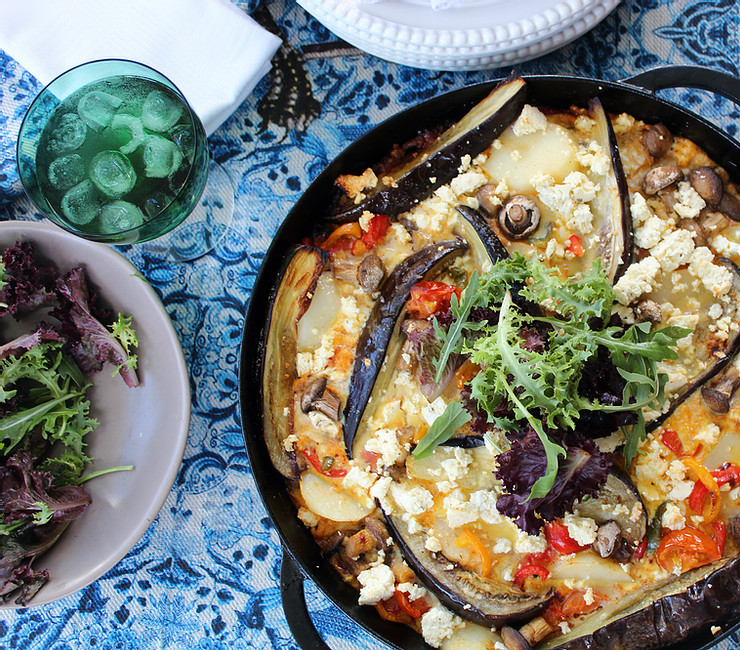
Frittata is one of my fall-backs when I don’t have time or enthusiasm for cooking. It takes about 30 minutes to prepare and makes a healthy weekday dinner or weekend brunch. This specific frittata includes all the mediterranean flavours and makes it perfect for a healthy summer meal.
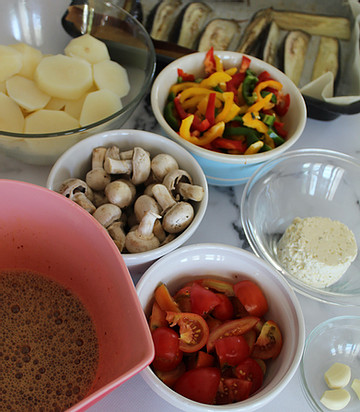
4 potatoes
2 average aubergine
2 small sweet peppers, sliced
250ml mushrooms
3 tomatoes, cut into wedges
3 cloves of garlic, minced
8 eggs
83ml cream
250ml feta cheese, broken into chunks
a large handful of basil leaves
Preheat your oven to 190℃.
Peel the potatoes, cut them into 1cm thick slices and par-boil them until just cooked. Drain and set aside.
Line a roasting tin with baking paper and slice the aubergine into eight pieces, lengthwise. Sprinkle with olive oil and bake in the oven for about 15 minutes. Remove from the oven and keep aside.
Put an ovenproof frying pan onto medium heat, add some vegetable oil and gently fry the peppers, mushroom and garlic until barely soft.
Add the potato slices, tomato wedges and aubergine to the pan and cook for one minute.
Whisk the eggs and cream together in a mixing bowl, season with salt and pepper and add the crumbled feta.
Pour the egg mixture into the pan. Tilt the pan to make sure the eggs settle evenly over the vegetables.
Cook for about two minutes until you see the eggs at the edge of the pan beginning to set.
Place the pan into the oven and bake for about ten minutes. Check whether the egg mixture has set before removing from the oven.
Allow the frittata to stand for 5 minutes before slicing it into portions to serve.
A salad is often underrated but during long summer months one comes to appreciate those that create a nutritious, complete meal. This salad is exactly that; simple, nutritious and can be prepared in advance. Feeds four as a meal.
250ml bulgar wheat (or pearl wheat)
Dressing:
45ml olive oil
15ml red wine vinegar
10ml honey
2,5ml mustard powder
2,5ml salt
2 mangos, diced
a handful of fresh basil leaves
a handful of fresh mint leaves
Prepare the bulgar wheat according to the packet instructions. Set aside to cool.
Add all the ingredients for the dressing to a glass and whisk to bring together.
Peel and dice the mango and add to the cooled bulgar wheat.
Chop the basil and mint and add that to the wheat mixture.
This is a very substantial salad and makes a complete meal with a crusty loaf of bread. This is not a recipe but rather a guide of ingredients and a good vinaigrette. Have fun putting yours together, it is quick, delicious and perfect, lazy summer food!
mixed salad leaves, enough to cover the bottom of a large serving dish
2 smoked chicken breasts, cut into 0,5cm slices
500g beef biltong, sliced
1 pomegranate, de-seeded
400g seedless grapes, halved
Arrange all the ingredients on a serving dish and drizzle with the vinaigrette.
Serve with a fresh crusty loaf of bread.
Vinaigrette:
90ml olive oil
30ml red wine vinegar
30ml honey
5ml grainy mustard
2,5ml salt
Whisk the ingredients for the vinaigrette together and drizzle over the salad.
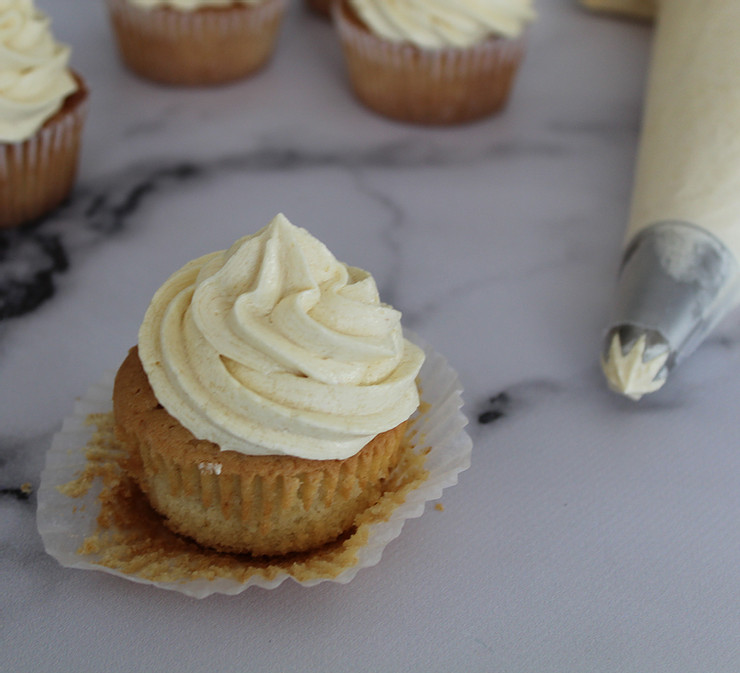
This frosting has been around for many years and is known by various names: ermine frosting, boiled milk frosting, roux frosting and mock cream, which probably best describes it. It is the frosting that was originally used for red velvet cake. It is smooth, rich, has a flavour similar to cream cheese frosting, is less sweet and perfect for piping. Give it a try, you will not frost a cupcake without this ever again!
75ml flour
250ml white sugar
250ml milk, warmed
7,5ml vanilla
a pinch of salt
225g butter, room temperature
Add the flour and sugar to a saucepan and turn the heat on to medium. Cook dry for about 30 seconds while stirring constantly.
Warm the milk and slowly add the warmed milk to the flour mixture while whisking.
Stir the mixture until it has thickened.
Remove from the heat and scrape into a clean bowl. Cover the bowl with cling film BUT PRESS THE CLINGFILM RIGHT DOWN ONTO THE ROUX/FLOUR MIXTURE SO THAT THE SURFACE HAS ‘A SEAL OF PLASTIC’ON IT, which will prevent it from forming a skin.
Put aside and allow to cool completely.
Measure the butter so long and leave to stand so that it can soften.
Add the butter to the bowl of a stand mixer fitted with the whisk attachment and beat it on medium-high speed for 3 minutes. The butter should be completely smooth and the colour should change to a very pale yellow.
Turn the mixer onto medium speed and add the flour mixture, one spoonful at a time until all of it has been incorporated into the butter.
Now add the vanilla and salt and whip the mixture for a final 3 minutes.
This recipe is straight from the kitchens of fine dining restaurants and really easy to make. Serve it on grilled Salmon or Yellowtail and taste absolute perfection!
20g butter
half an onion, chopped
125ml white wine
300ml cream
10ml dried tarragon
salt and pepper
Add the butter to a small saucepan and allow to melt.
Cook the onion in the butter until soft and translucent.
Add the wine and bring the mixture to the boil.
Reduce the heat for the mixture to simmer until reduced by half.
Add the cream and simmer uncovered for another ten minutes.
Remove the saucepan from the heat and add the tarragon.
Season the sauce with salt and pepper and serve warm.
These hamburger rolls are absolute perfection: light, with a brioche like crumb and straight forward to make. The buns freeze well. Makes about ten rolls.
250ml water, lukewarm
45ml milk, lukewarm
10g instant yeast or active dry yeast
37,5ml sugar
1 egg, beaten with a fork
750ml bread flour
83ml cake flour
7,5ml salt
37,5ml butter, cubed
Egg wash:
one egg beaten with 15ml water
Add the water, milk, sugar and yeast to a bowl and stir until the sugar has dissolved.
Allow to stand for 5 minutes.
Add the bread flour, cake flour and salt to the bowl of a stand mixer.
Add the cubed butter and rub the butter into the flour with your fingertips, creating an even sized crumb.
Fit the mixer with the dough hook and mix the dry mixture through on slow speed.
Pour the yeast mixture into the dry ingredients, add the beaten egg and turn the mixer onto slow speed for about 2 minutes.
Now turn the speed to medium and knead for 5 minutes.
The dough will be very sticky and if it is REALLY too sticky to handle you can dust it lightly with flour but do try not to add flour as the buns will loose their softness.
Lightly oil a clean bowl, place the dough into it and cover with plastic wrap.
Allow the dough to double in size – about 2 hours.
Line a baking sheet with parchment paper and preheat your oven to 180℃.
Weigh the dough and divide it so that you have rolls that are about 100g each. I get about ten on a warm summer day.
Now shape the rolls: Stretch the top to create a high-tension, smooth surface; flip the dough ball over and stretch the sides in towards the centre and pinch it together. Flip the ball over so that the pinched part is facing down.
Place the shaped rolls onto the lined baking sheet, cover with a clean tea towel and allow to rise for two hours.
Brush each roll with the egg wash and bake for 15 minutes.
Cool completely on a cooling rack before serving or freezing.
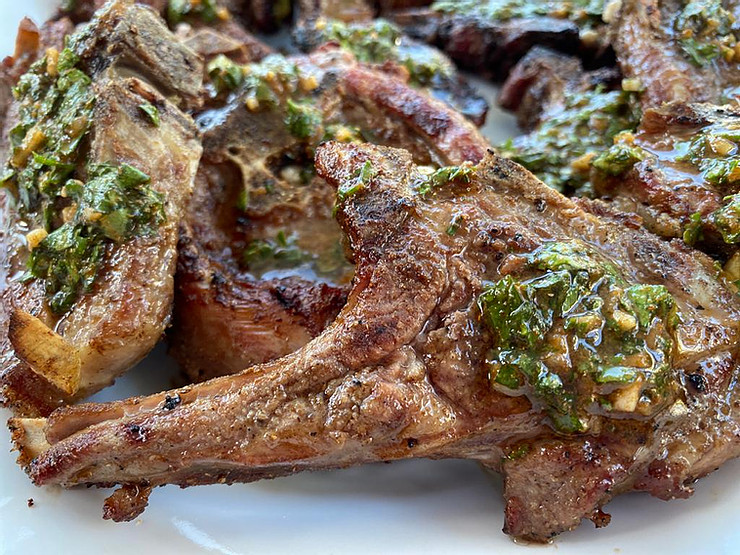
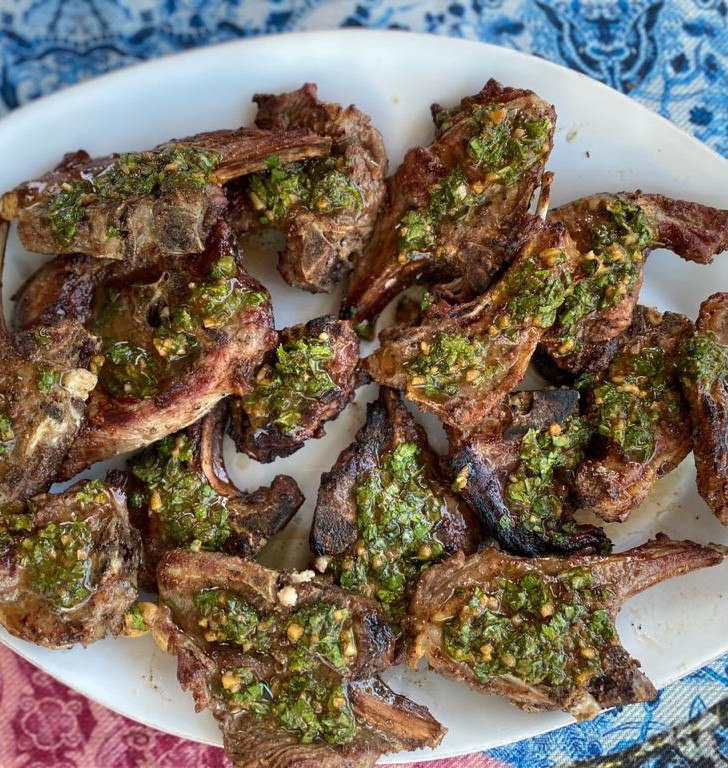
The combination of warm North African spices and a herby chimichurri makes these lamb chops truly delicious.
16 lamb chops, fat trimmed
olive oil
10ml ground coriander
5ml salt
5ml black pepper, ground
Sauce:
3 cloves garlic, minced
83ml fresh parsley, finely chopped
83ml fresh basil leaves, finely chopped
10ml red wine vinegar
7,5ml paprika
5ml salt
10ml ground coriander
2,5ml black pepper
83ml olive oil
Take the chops from the refrigerator at least one hour before barbecuing them.
Brush each chop with some of the olive oil.
Add the ground coriander, salt and pepper to a small bowl, mix through and season the chops with the dry mixture, pressing lightly onto the meat for the seasoning to adhere.
Pack the seasoned meat into a large baking tin, cover and leave to rest for 30 minutes.
Prepare your fire.
In the meantime add the sauce ingredients to a bowl and whisk together. Put the sauce aside.
Cook the meat on direct, high heat, 3 – 5 minutes in total, turning once.
Remove the lamb chops from the fire and spoon the chimichurri sauce onto it.
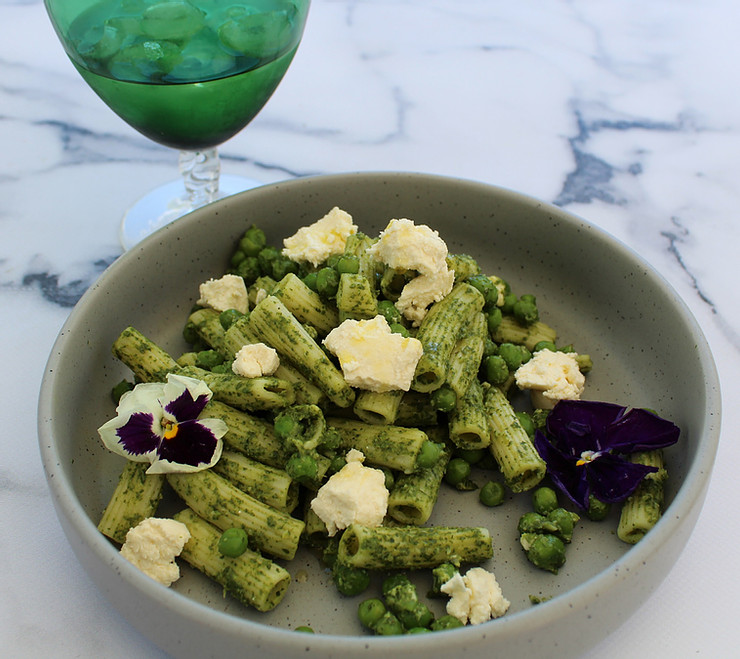
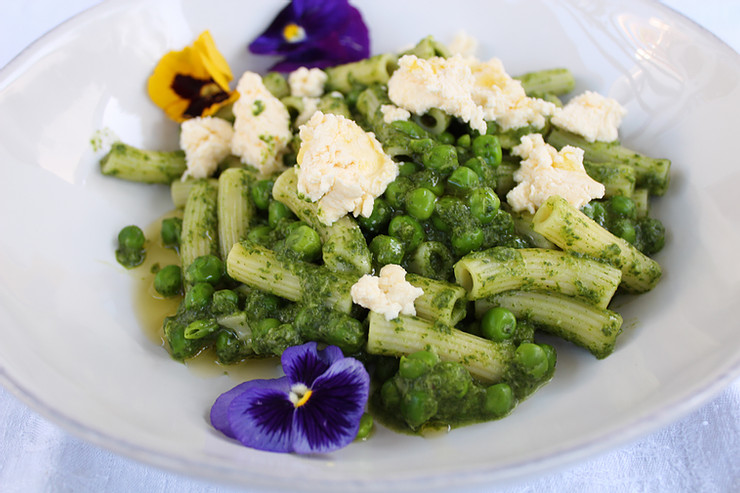
This pasta dish is perfect when you do not feel like cooking but still want something healthy and nutritious. You will make this entire dish in twenty minutes and have only one saucepan to clean!! The recipe feeds six adults and is delicious served hot or cold.
500g penne pasta
6 cloves of garlic
400g spinach or swiss chard
30ml olive oil
50g parmesan cheese
625ml frozen green peas
one lemon
100g ricotta cheese
Cook the pasta as per the instructions on the packet.
Once it is cooked, scoop out 250ml of the pasta water before draining the pasta.
Set the pasta and pasta water aside.
Cut the stems from the spinach leaves and peel the garlic cloves.
Put a casserole with water onto the burner and add the spinach and garlic as soon as the water starts boiling. Simmer the leaves and garlic for 5 minutes.
Scoop the spinach and garlic directly into the jug of a blender and add the olive oil and pasta water.
Add the peas to the spinach water left in the saucepan and cook for 2 minutes. Drain the peas and keep it aside.
Grate the parmesan cheese and add that to the blender jug as well.
Process the ingredients until it is very finely chopped.
Now pour the spinach mixture and drained pasta back into the empty saucepan and turn the heat on to medium.
Add the peas and allow the mixture to warm through – about 2 minutes.
Season the dish with salt and white pepper.
Take the pasta from the heat and squeeze a generous amount of lemon juice onto it.
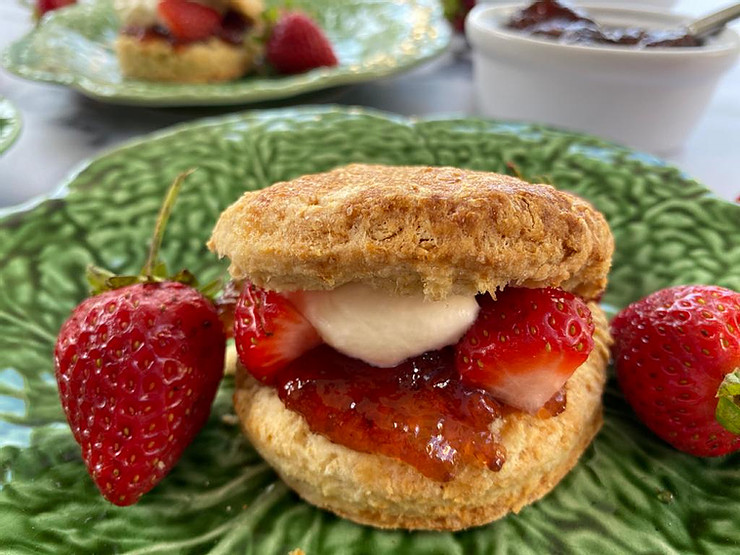
These traditional-style scones are perfectly moist and light. Serve them with Chantilly cream, strawberry jam and fresh, sliced strawberries or leave out the sugar if you would like to serve them as a savoury treat.
There is no secret to perfect scones: follow the instructions and success will be yours!!
280g flour
2,5ml salt
8ml baking powder
100g butter, ice cold
25g sugar
62ml cream
62ml yoghurt
1 egg
Egg wash:
1 egg
15ml milk
Preheat your oven to 180℃, dry heat (i.e. not on fan setting)
Grease a small baking tray and set aside.
Sift together the flour, salt and baking powder into a mixing bowl. Repeat twice more. Do not skip the sifting stage as it really makes for a fluffy, light scone!
Grate the cold butter directly into the bowl with the flour.
Rub the butter into the flour with your fingers. Work quickly so that the mixture stays as cold as possible.
Add the sugar, cream, yoghurt and egg to a separate bowl and give it a whisk until blended.
Add this mixture to the flour mixture. Scrape out every drop of the liquid!
Cut the mixture with a palette knife or a blunt kitchen knife to mix the ingredients together, i.e. cut straight down into the ingredients and turn the bowl. Keep cutting and turning until a dough comes together.
Lightly dust a work surface with some flour and turn the almost-dough mixture out onto it.
Push the dough together even if there are bits that look as though they should be kneaded in. NOTHING WENT WRONG if the dough seems flaky and not quite together – that is exactly what you are looking for!
Shape the dough into a rectangle by lightly rolling it out on the surface.
Now turn up a third of the length and then turn over the third of the top part. Roll this folded piece to a thickness of 3,5 cm.
Select a biscuit cutter (about 7cm in diameter), dip it in some flour and press straight down into the rolled dough. Do not twist the cutter when you press down as it will prevent your scones from rising. Keep rolling and cutting until you have no dough left.
Place the scones onto the baking tray.
Mix together the egg wash and brush ONLY the top of the scones – be careful not to let the wash run down the sides.
Bake the scones for 15 minutes.
Remove the baking sheet from the oven and cool the scones on a cooling rack.






 My Whisk and I