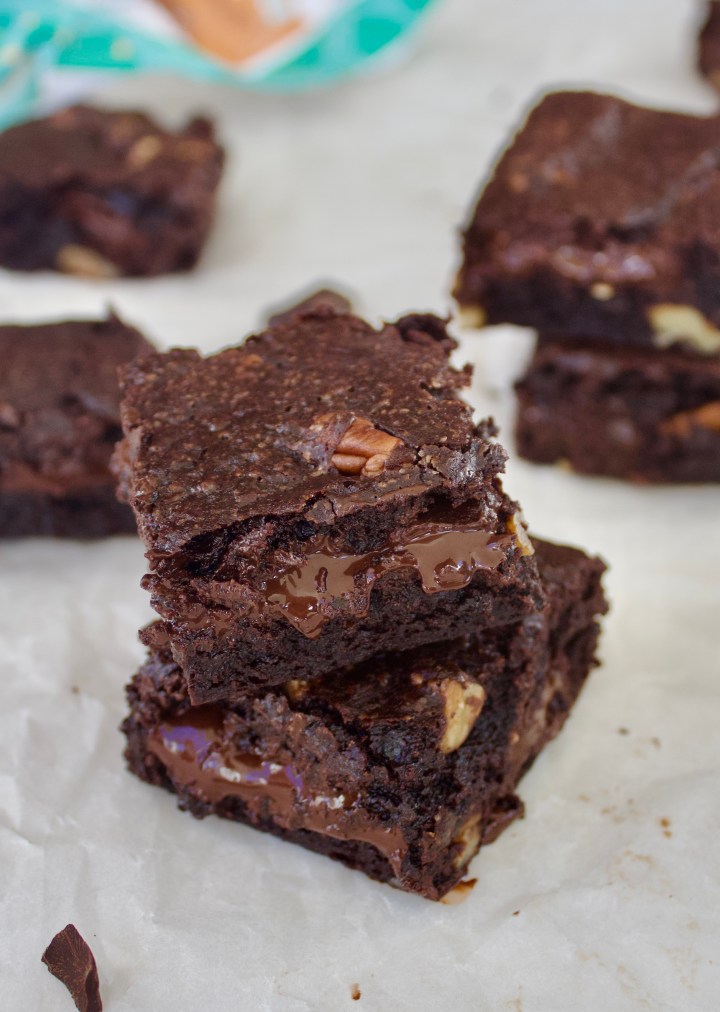
145g butter 250g sugar 80g cocoa powder, sifted 1,2ml salt 7,5ml vanilla 2 eggs 65g flour 75g pecan nuts, roughly chopped 2 x 80g slabs of chocolate
Preheat your oven to 180℃ and line a 20cm x 20cm baking tin with baking paper. Add the butter, sugar, cocoa powder and salt to a heatproof bowl set over a saucepan of simmering water. Stir the mixture every now and then until the butter has melted and the mixture is amalgamated. Remove the bowl from the saucepan and add the vanilla. Stir through. Add the eggs one-by-one and beat to incorporate, with a wooden spoon. Add the flour and beat again to incorporate. Add the pecan nuts and stir through. Spoon half the batter in to the prepared baking tin and spread it out evenly. Place the chocolate slabs, side-to-side, on the batter and cover with the rest of the brownie batter. Bake in the oven for 25 minutes. Remove the brownies from the oven and cool completely. Slice into 16 squares.
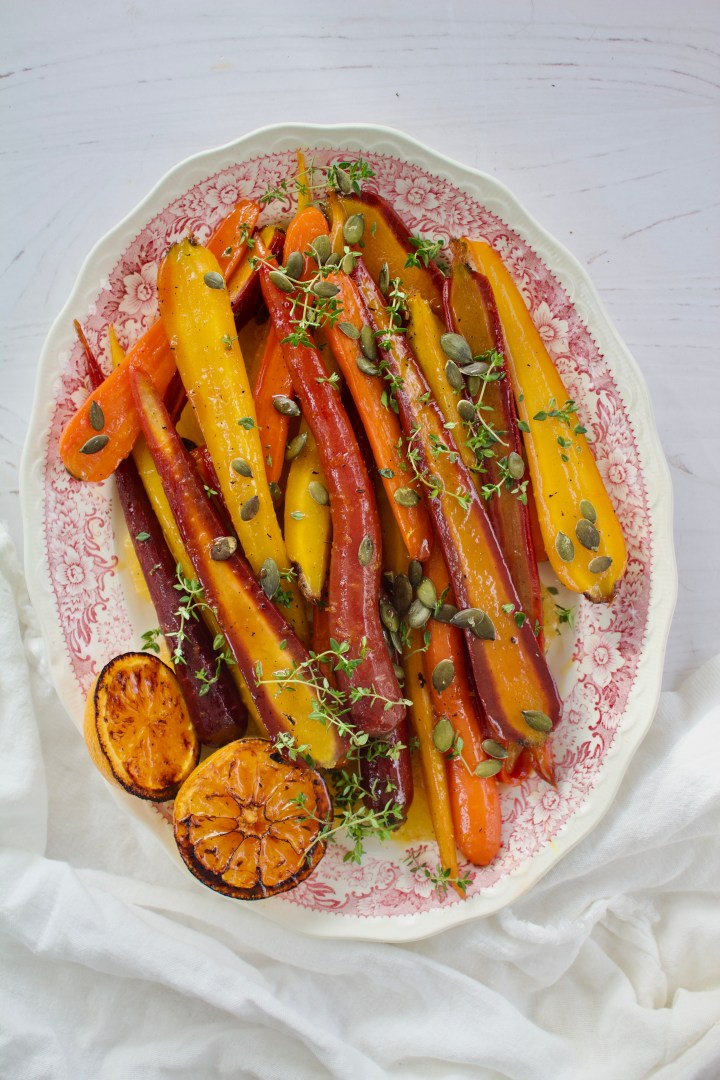
1kg carrots, peeled 60ml butter, cubed grated zest of one orange 2 + 2 oranges 125ml brown sugar 30ml thyme leaves 30ml pumpkin seeds
Fill a saucepan with water, add the carrots and bring to the boil. Cook for 5-6 minutes until almost done – the cooking time will of course depend on the size of the carrots. Drain and pat dry with a tea towel. Place a pan on medium-high heat, add the butter and wait for it to melt. Now add the orange zest, 60ml orange juice and the brown sugar. Stir until most of the sugar has dissolved. Add the carrots to the pan and season with salt and pepper. Cook, stirring occasionally, until most of the liquid has evaporated and the glaze is shiny and thick enough to coat the carrots – between 5 and 10 minutes. Watch the carrots in the glaze and regulate the heat – they burn easily. Peel and slice the other two oranges and arrange the slices on a serving plate. Place the carrots on top of the orange. Drizzle over any glaze in the pan, scatter the thyme leaves and pumpkin seeds over and serve with a smile.
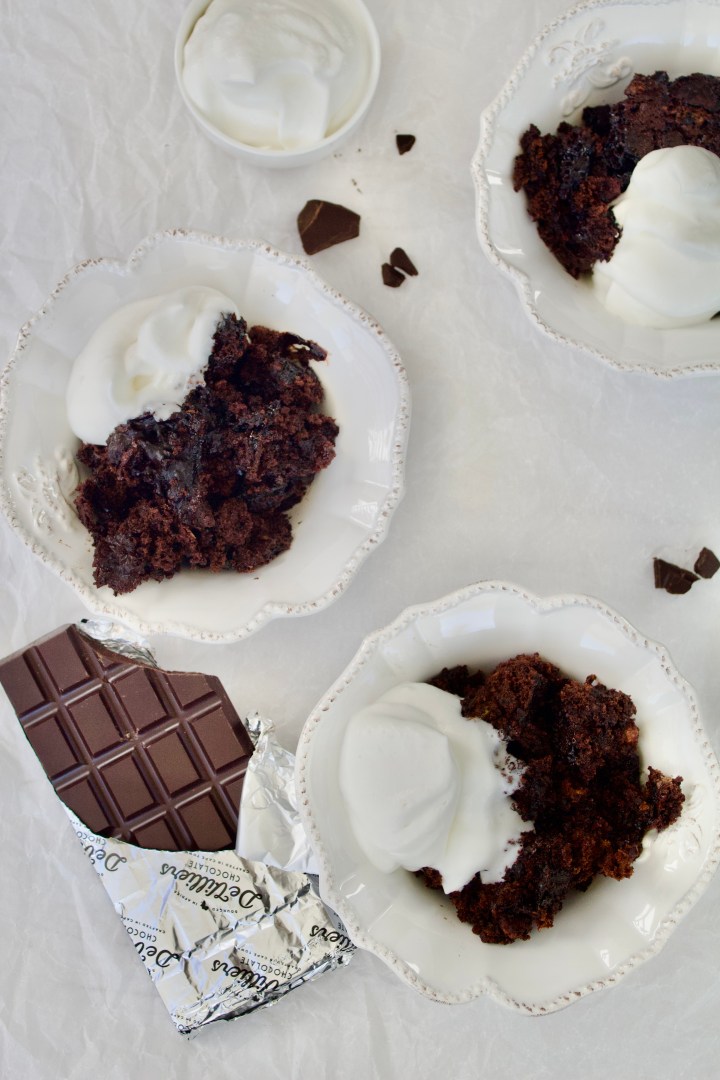
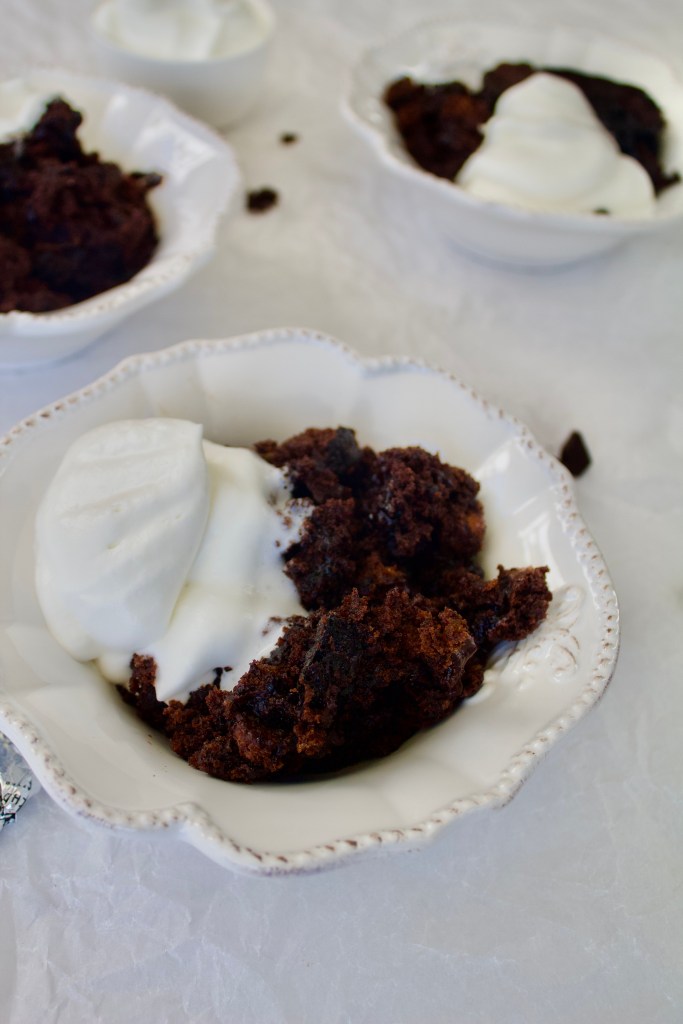
Preheat your oven to 180℃ and spray a 20cm x 20cm baking tin with cooking spray. Add the flour, cocoa powder, sugar, salt and baking powder to a mixing bowl and stir together with a whisk. Add the egg, melted butter, milk and vanilla to a jug and whisk together. Pour the wet ingredients in to the dry ingredients. Add the chopped chocolate and nuts and stir to mix. Spoon the batter in to the prepared baking tin. Add the 80ml granulated and brown sugar and the cocoa powder, to a bowl and mix. Sprinkle the mixture over the cake batter. Pour the coffee over and bake in the oven for 25 minutes. Serve the chocolate pudding cake with cream or ice cream.
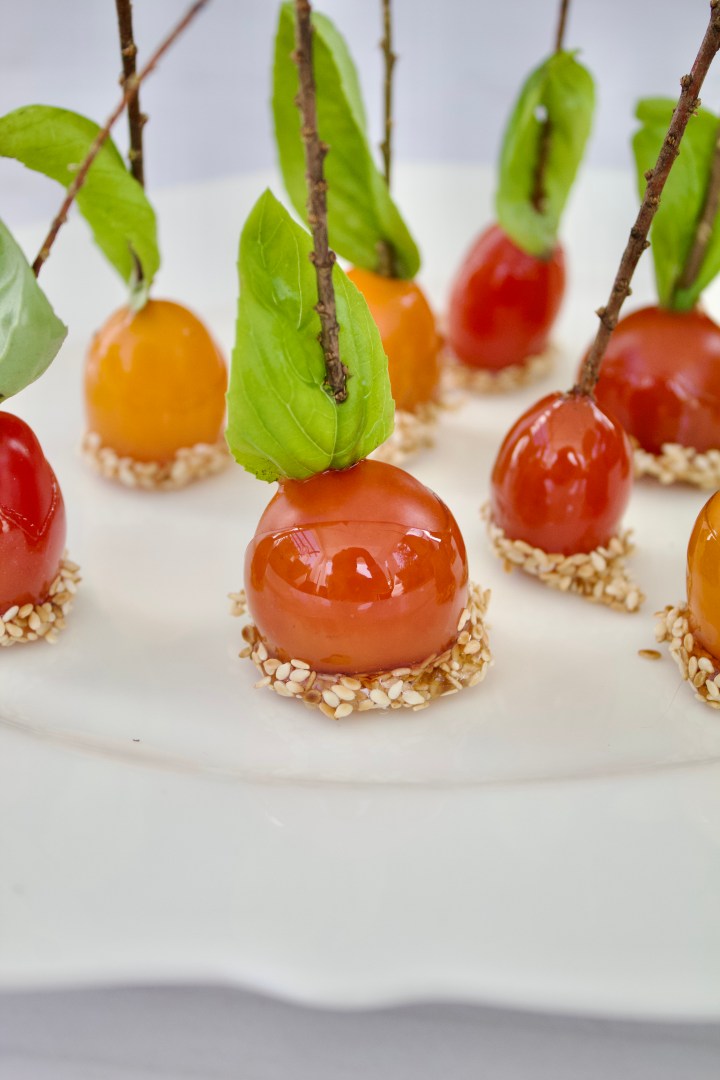
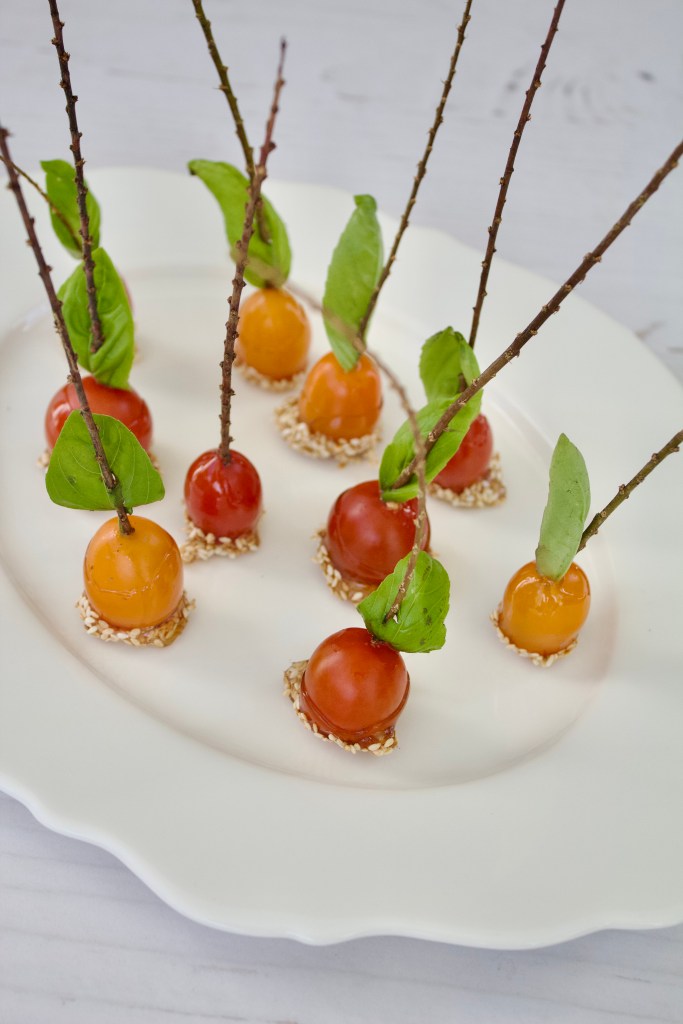
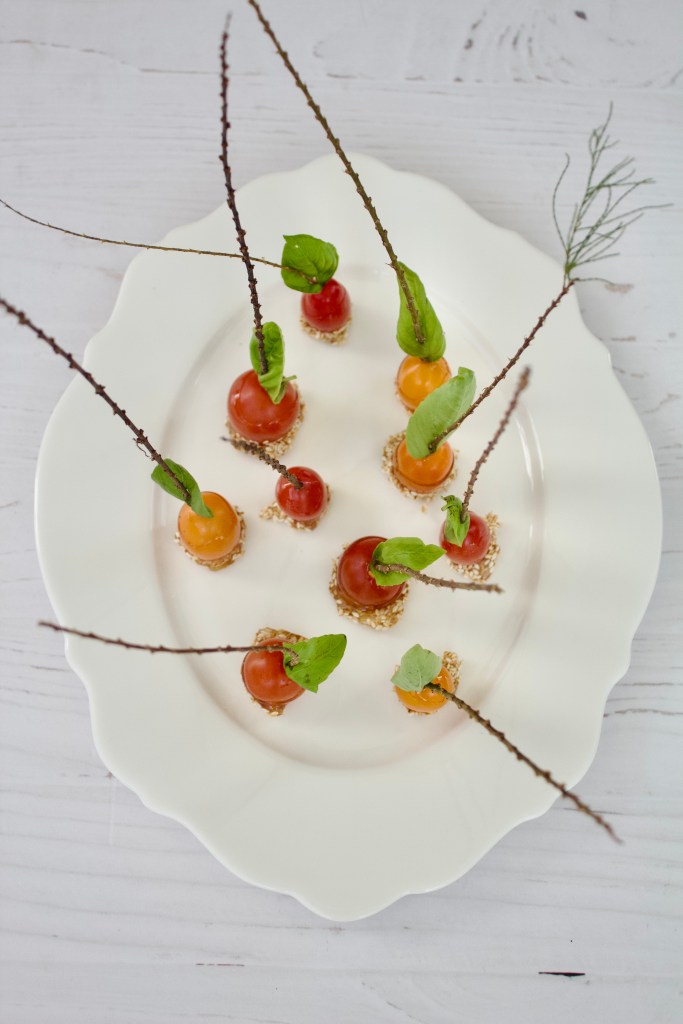
This recipe is not mine to give out as it belongs to the South African chef Jan Hendrik van der Westhuizen BUT you should make these for your next drinks party …. delicious just got so much better!
These tomatoes are incredibly tasty and the balsamic toffee perfectly balances with the toasty sesame brittle on which it sits. Easy and quick to make EXCEPT on a rainy day! The moisture in the air prevents the toffee from “sitting” on the tomato…
You can find this recipe in Jan Hendrik van der Westhuizen’s book The French Affair (Struik; 2013) (p. 19).
Not quite gnocchi but also not quite noodle…. You will need a clean wine or beer bottle to shape the noodles into a mushroom shape. The top must be clean and dry.
Cook the potato in salted water until very soft. Drain, add the potato back into the hot saucepan and place over a medium-high heat. Stir around for a minute or two until the potato is dry and there are no trace of water. Take off the heat and mash to a fine texture. Add the cornflour, salt and chives and mix through. Knead/squeesh the ingredients together until it forms a dough. If you REALLY can’t bring it together, add a few drops of water and knead again. Scoop up about 15ml of the dough and squeeze/roll into a ball shape. Press the dough balls into the top of a dry wine bottle and carefully lift it off. Put aside and continue shaping the rest of the dough. Fill a saucepan with water, bring to the boil and then turn it down to a simmer. Add the gnocchi to the water and simmer for 4 minutes – they will float once they are done. Remove and drain. Set aside. Add the butter to a pan set over medium-high heat. Add the mushroom, onion and salad onion and cook for about 5 minutes. Scatter in the thyme leaves and add the gnocchi-noodles. Reduce the heat to medium and stir-fry for 3 minutes until the noodles are warmed through. Serve immediately.
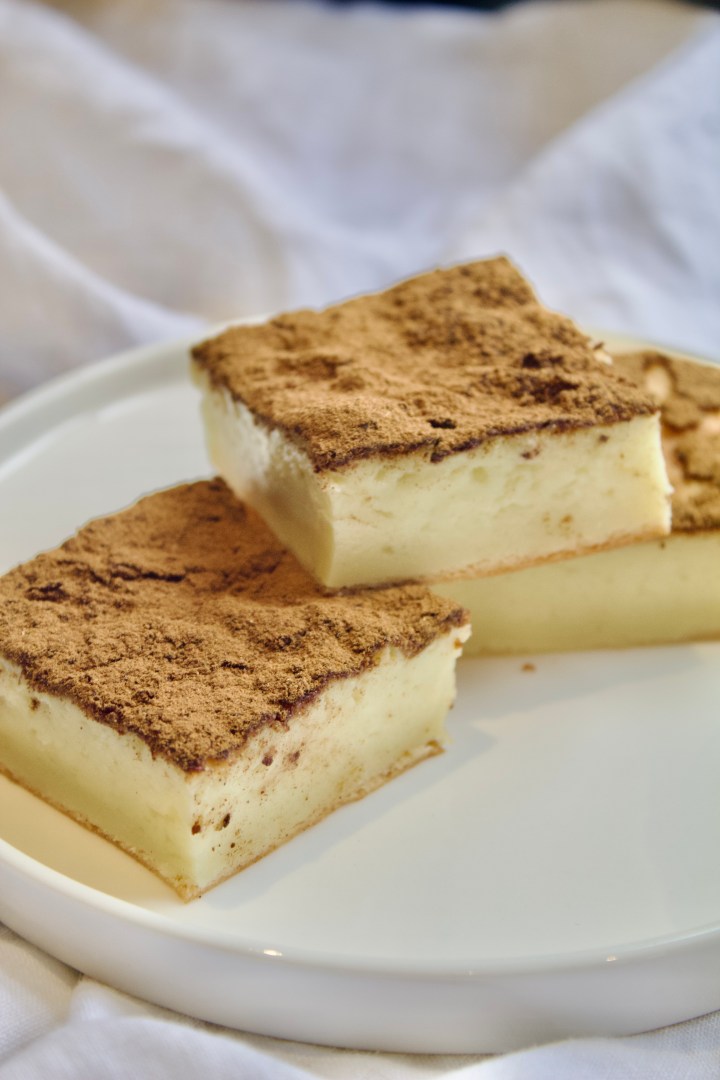
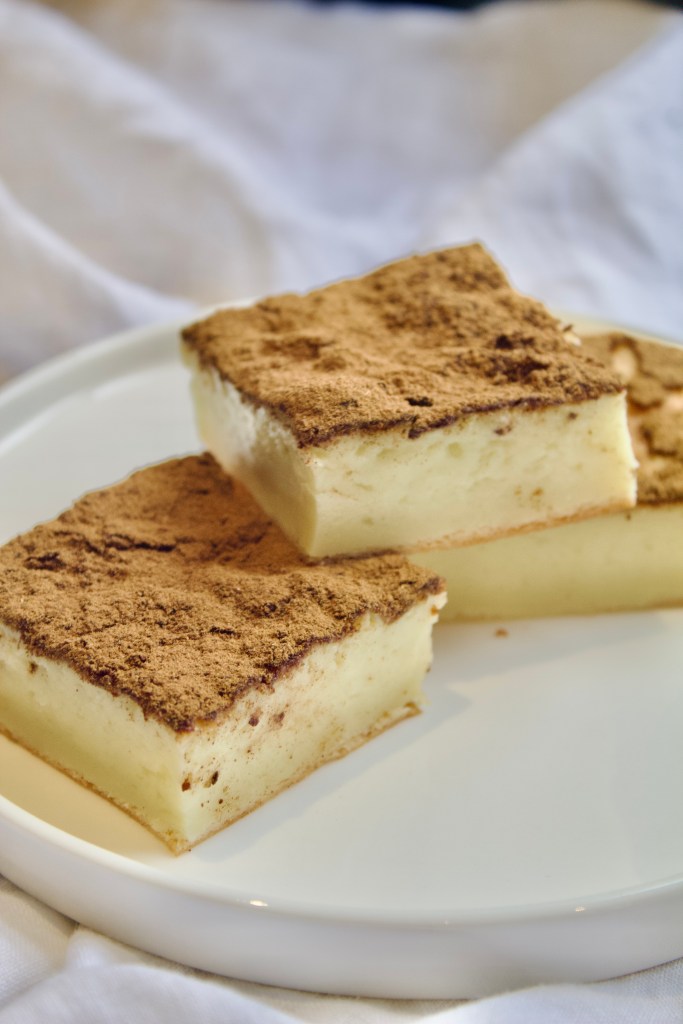
This is a crustless milk tart, easy to put together and produces one large (38cm x 26cm) or two medium (28cm x 20cm) tarts.
6 eggs 375ml sugar 90g butter, melted 375ml flour 7,5ml baking powder a pinch of salt 1,5litres of milk 15ml vanilla ground cinnamon
Preheat your oven to 180℃ and spray a 38cm x 26cm ceramic dish with cooking spray. Add the eggs and sugar to the bowl of a stand mixer fitted with the paddle attachment. Mix on medium-high speed for 2 minutes. Turn the mixer to a low speed and drizzle in the melted butter. Turn off the mixer. Sift the flour, baking powder and salt into the bowl and turn the mixer back on to a low speed until the ingredients are incorporated. Add the vanilla to the milk and drizzle the milk in to the batter with the engine running. Scrape the batter into the prepared ceramic dish. Bake in the oven for 1 hour. Take the milk tart from the oven and immediately sift over some ground cinnamon. Set aside for at least 30 minutes before slicing. Keep refrigerated.
200g self-raising flour 170g greek yoghurt Filling: 50g baby spinach 50g feta cheese, crumbed 30ml cream cheese, room temperature 1 clove of garlic, minced a few grindings of black pepper 40ml frozen peas, defrosted a handful of mint leaves, chopped
Add the flour and yoghurt to a mixing bowl and bring together. Knead the dough by hand for 5 minutes – you want a soft, bouncy dough. (Add more flour if you have to, but the dough becomes less sticky as you knead it). Cover with plastic wrap and set aside. Place the spinach in a bowl and pour boiling water over. Stand for 1 minutes, drain and squeeze the spinach as dry as you can get it, in a tea towel. Chop it up and add it to a bowl. Add the feta, cream cheese, garlic, pepper, peas and mint and mix together. Unwrap the dough and divide it into 4 equal portions. Make a ball from each portion and then press it into a circle with your fingers. Spoon a tablespoon full of filling in the centre and then bring in the edges and seal by squeezing it together. Turn the filled disc over and flatten out with your fingers until about 1,5cm thick. Set aside and repeat the process with the rest of the dough and filling. Place a non-stick pan on medium-low heat and add a small knob of butter. Place the flatbreads in the pan and cook for 4-5 minutes PER SIDE. Serve warm.
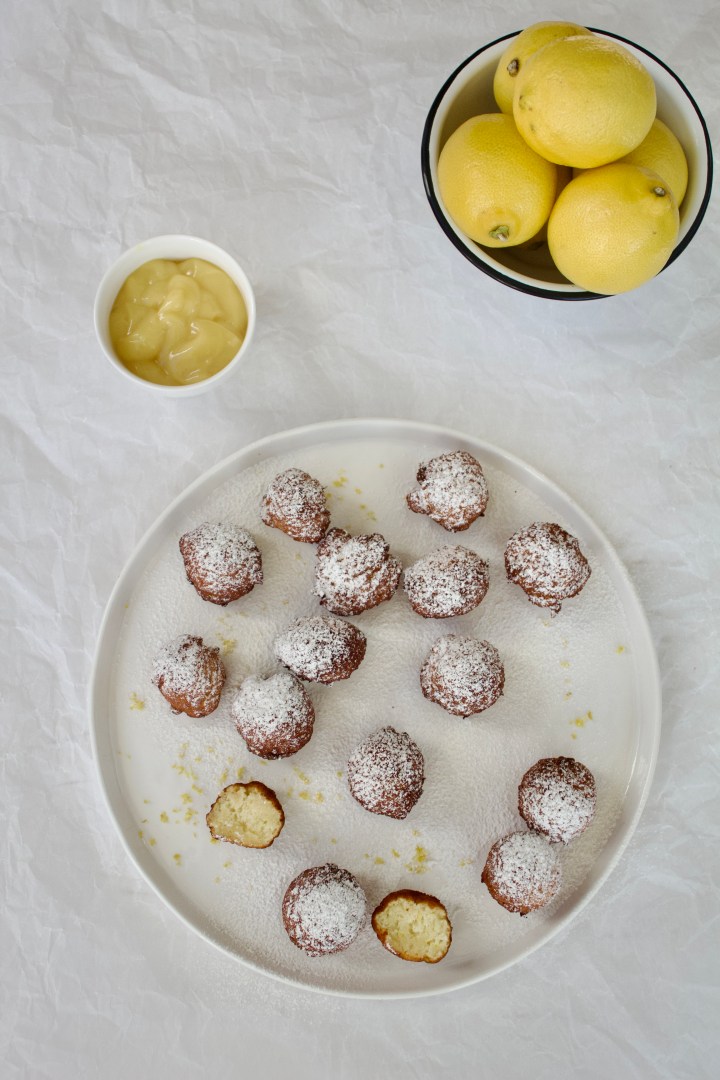
The recipe yields a small batch of around 16 small donuts. Feel free to double-up!!
80ml greek yoghurt 45ml lemon curd 10ml lemon zest 190ml self-raising flour vegetable oil for deep frying icing sugar
Add the yoghurt, lemon curd and zest to a mixing bowl and mix together. Add about two thirds of the flour and mix through. You should have a very thick, sticky dough. To test the consistency, break off a piece and roll between your palms. If you can’t form a ball and the dough is too sticky, add sour flour, mix again and give it another try. You want as little flour as possible so that you produce a light, airy donut. Scoop up 15ml of the dough with a measuring spoon and roll between your palms to make a ball. Place the balls on a tray lined with baking paper. Pour some vegetable oil about 5cm deep, into a small saucepan. Heat to 170℃. Add the donuts to the preheated oil and fry in batches until golden brown. Drain on kitchen paper. Arrange on a serving plate and dust with icing sugar.
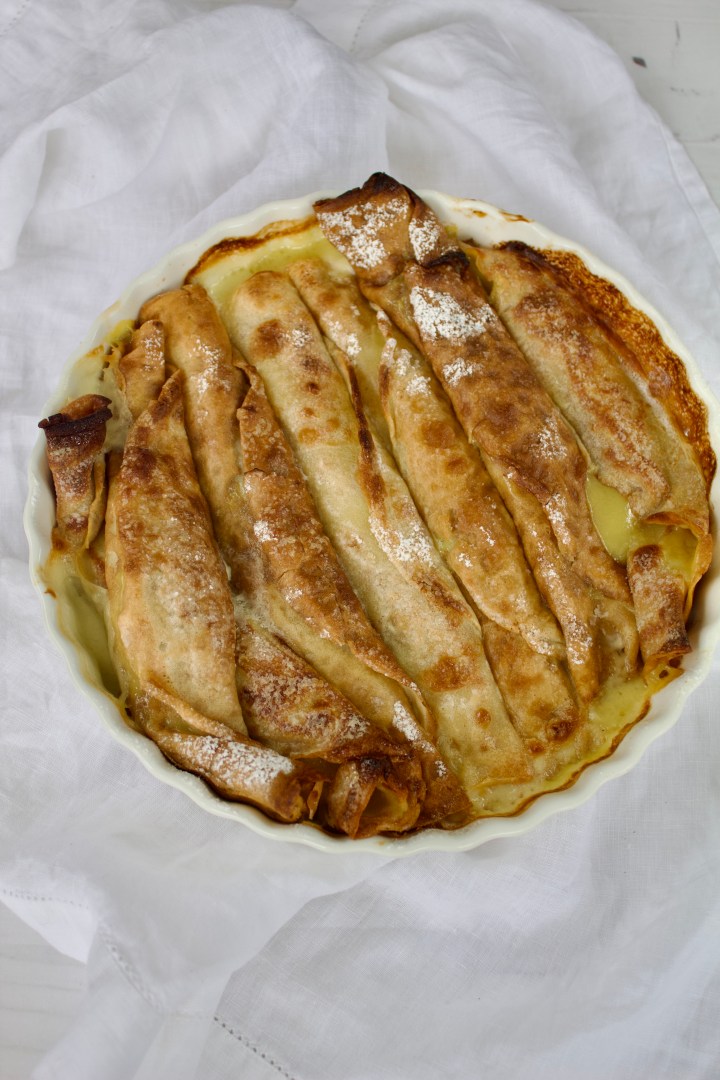
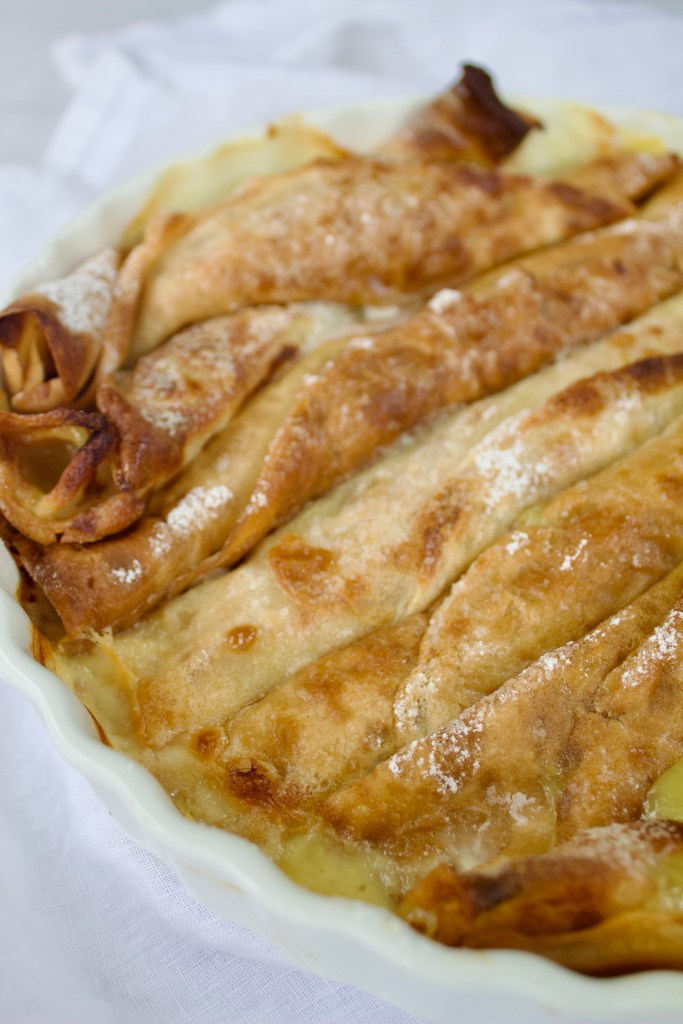
This entire dish can be put together with store-bought/ready made components. For those of you that like to slave away in the kitchen, here are the recipes.
Pancakes/Crêpes: 250ml flour 1,2ml baking powder 2,5ml salt 250ml milk 125ml water 62ml vegetable oil 2 eggs
Add the flour, baking powder and salt to a bowl of a stand mixer fitter with the whisk attachment. Add the milk, water, oil and eggs to a jug and whisk together by hand until the eggs are fully incorporated. Turn the mixer on low speed and slowly drizzle in the milk mixture. Set the mixer on its highest speed and whisk for 2 minutes. Take the bowl from the mixer and check whether there are any lumps in the batter. If there are, set a sieve over a large bowl and pour through. Cover with a tea towel and set aside to rest for an hour. Place a crêpe pan on medium-high heat, wait for it to warm up and pour a few drops of oil into the pan. Spoon a soup ladle full of batter into the pan and swirl around to cover the surface. Cook for a minute or two, flip the crêpe over and cook for another minute or so. Keep going until you have no batter left. Cover the crêpes and allow to cool completely.
Lemon curd: grated zest of one lemon 220g caster sugar 110g butter, cubed 125ml lemon juice, strained (about three lemons) 3 eggs, lightly beaten
Add the zest, sugar and butter to a small saucepan and set over the lowest heat. Stir the mixture until the butter has melted and the sugar has dissolved. Add the lemon juice to the saucepan and stir through. Now add the egg and keep stirring until the mixture is thick enough to coat the back of a spoon. Take the curd from the heat and pour into a glass jar. Allow to cool completely.
Putting the dish together: Preheat your oven to 200℃ and butter a ceramic tart dish. Spoon 2-3 teaspoons of lemon curd on a crêpe and spread it with the back of a spoon. Roll the crêpe up and place it in the ceramic dish. Keep going until all the crêpes are filled. Pour the cream over the pancakes and sift the icing sugar over. Bake in the oven for 20 minutes. Serve warm.
Line a container that is about 20cm x 14cm with baking paper.
Pour 250ml milk into a small bowl and add the cornstarch. Whisk together until the cornstarch has dissolved. Set aside. Pour the other 250ml milk into a small saucepan and add the sugar. Place over medium-low heat and cook for 3-4 minutes while stirring. The milk should be warm but it should not come to the boil. Now, whisk the cornstarch mixture while slowly pouring it into the saucepan. Stir continuously for about 4 minutes until the mixture is very thick. Pour the mixture into the prepared container and allow to cool completely – about 2 hours. Add the desiccated coconut to a shallow bowl. Lift the milk pudding out of the container with the paper and cut into small squares. Roll each square in the coconut to coat. Keep in a sealed container in the refrigerator for 2-3 days.