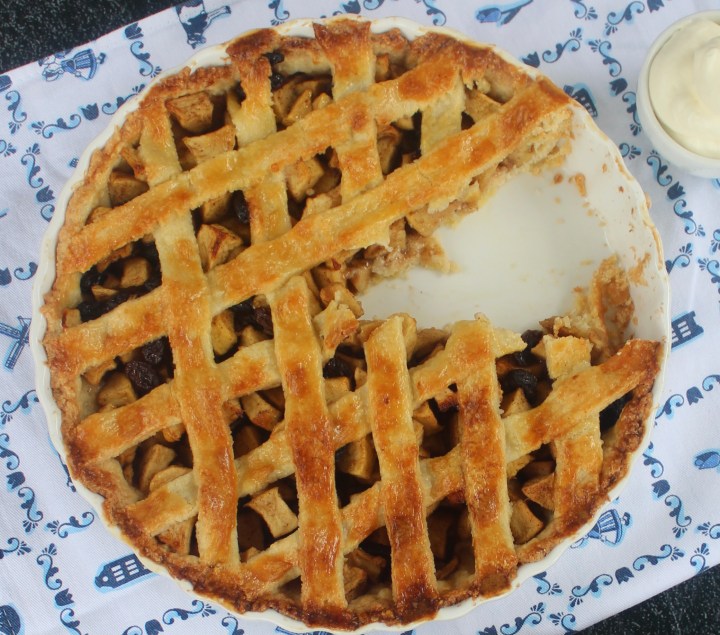
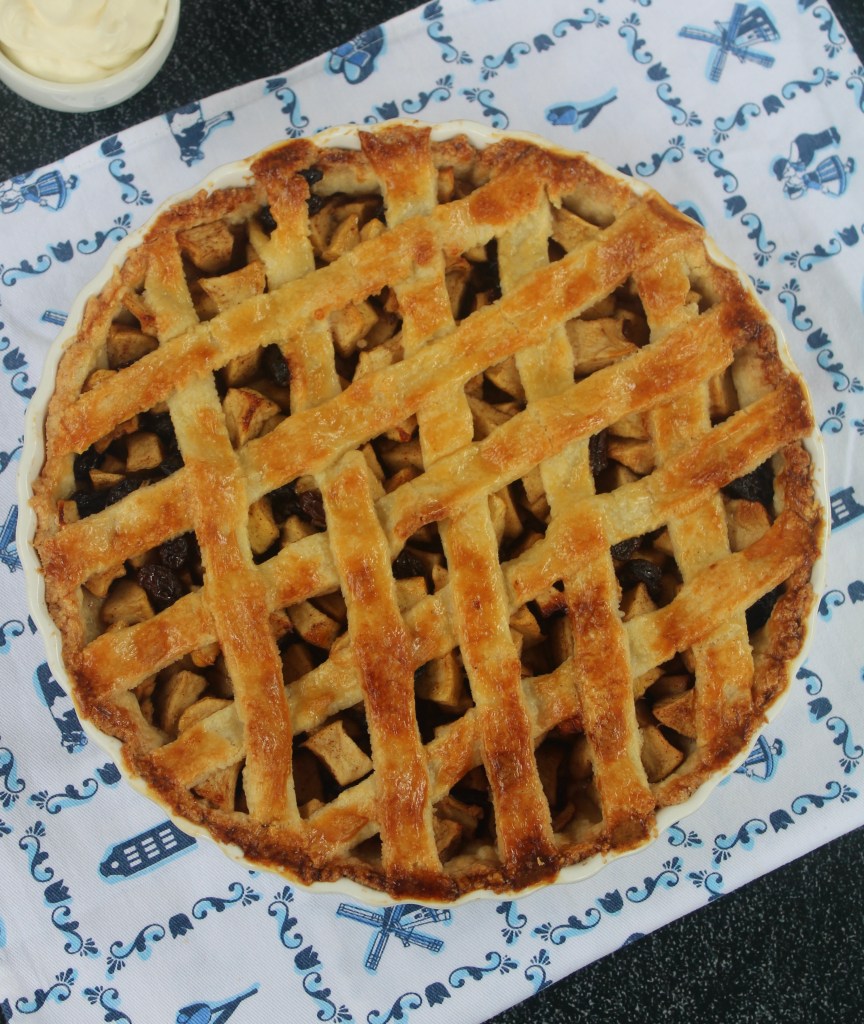
Dutch Apple Tart/Appeltaart

Dutch Apple Tart/Appeltaart

Pie Crust:
375ml flour
125ml sugar
125g butter, cubed
1 egg

Filling:
4 large apples
83ml raisins
83ml brown sugar
2,5ml ground cinnamon
finely grated zest of 1 lemon

Eggwash:
1 egg and 15ml water whisked together

For the pie crust:
Combine the flour and sugar in a mixing bowl.
Add the cubed butter and rub in with your fingertips until it is clumps the size of peas.
Whisk the egg with a fork and add it to the mixture.
Mix the pastry with your hands and add a few drops of water if it is too dry to come together.
Shape the pastry into a ball, cover with plastic wrap and refrigerate.

For the filling:
Preheat your oven to 180℃ and spray a 22cm pie dish with cooking spray.
Peel the apples, core them and cut into small chunks. Add them to a large mixing bowl.
Add the raisins, brown sugar, cinnamon and lemon zest and mix through.
Cut the pastry into 4 equal pieces and set one piece aside.
Press the rest of the pastry into the bottom and sides of the cake tin – you can roll it out and patch wherever it breaks.
Spoon the filling into the pie crust.
Dust a work surface with flour and roll out the remaining pastry.
Cut into strips and make a lattice pattern for the tart.
Brush the pastry with the egg wash.
Place the apple tart in the oven and bake for 40 minutes.
Serve the tart with a dollop of cream.
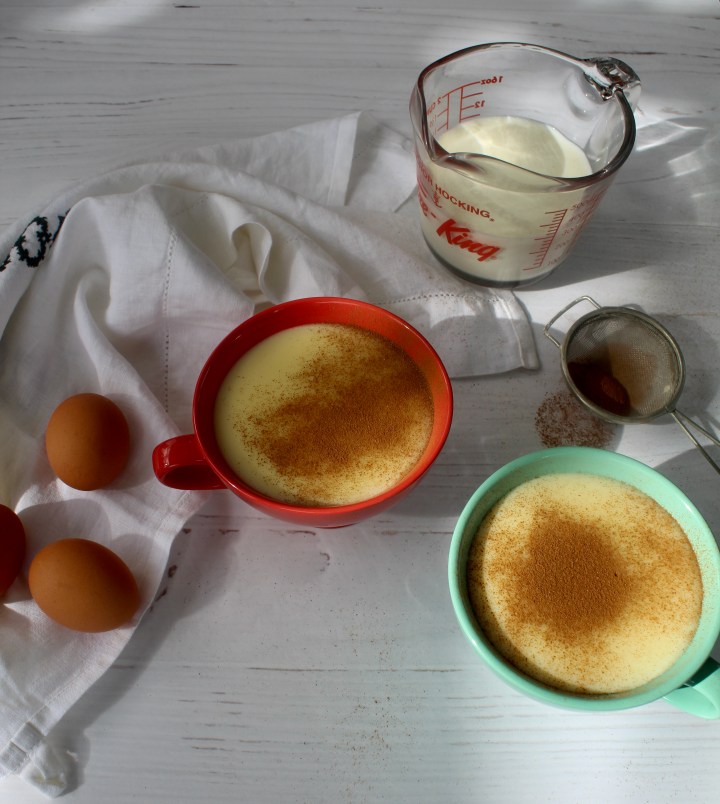
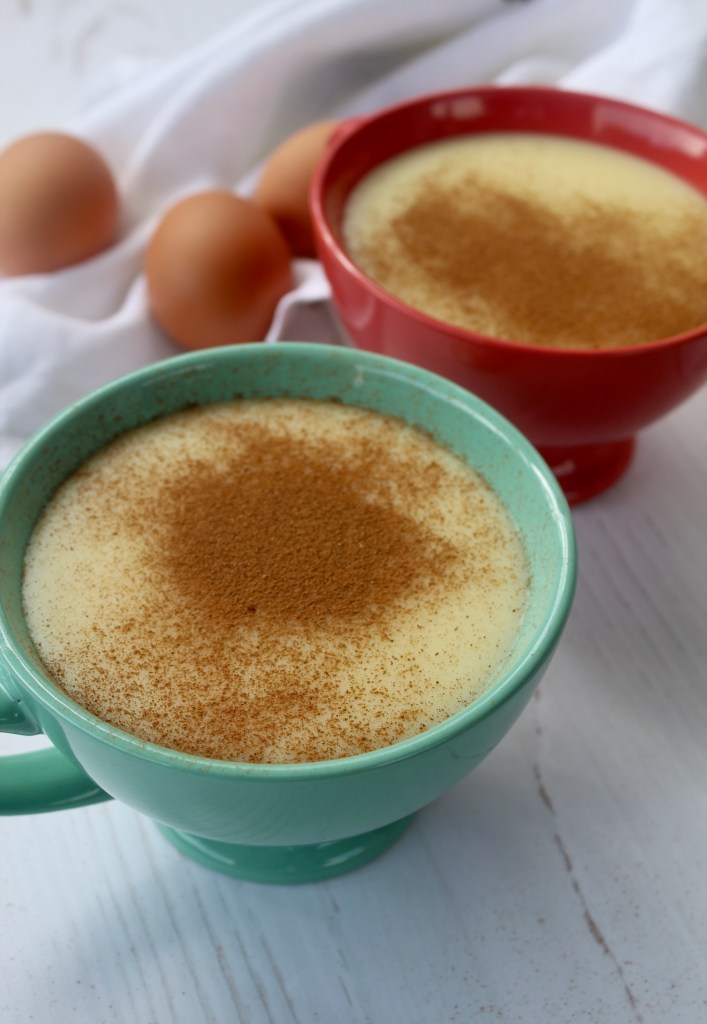
Drinking Milktart

Drinking Milktart

When you are too impatient or lazy to make a traditional milktart but you really, absolutely, must have one……

150g sugar
45ml cornstarch
3 egg yolks
700ml + 50ml milk
7,5ml vanilla
ground cinnamon for dusting

Add the sugar and cornstarch to a mixing bowl and stir through.
Add the egg yolks and 50ml milk and mix together to make a smooth very runny paste. Set aside.
Add the 700ml milk to a saucepan set over medium high heat and bring to a boil.
Pour the egg and milk mixture into the boiling milk in a thin stream while whisking vigorously.
Turn the heat down to medium, keep stirring and wait for the mixture to thicken.
Remove the saucepan from the heat and stir in the vanilla.
Pour the custard into cups and dust with some ground cinnamon.
Serve slightly warm.

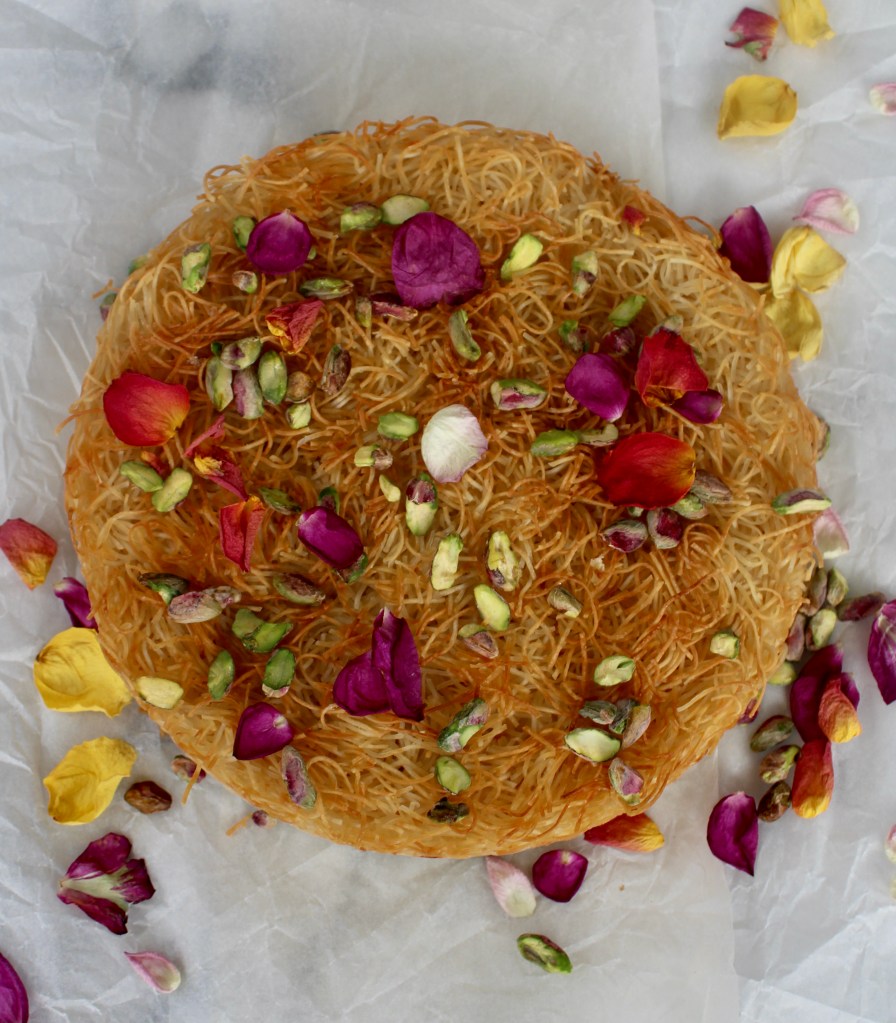
Kunafa ala Nawal

Kunafa ala Nawal

Kunafa is a Middle Eastern dessert made with spun pastry and drizzled with rosewater and sugar syrup. This is my adapted version of Kunafa, inspired by my favourite tennis “tweeter”! Thanks Nawal!!

250ml sugar
125ml water
5ml rose water
450g vermicelli noodles, cooked and cooled
140g butter, melted
300g mozzarella cheese, grated
a handful of pistachio nuts
icing sugar to dust

Preheat your oven to 200℃ and butter a 25cm loose bottom cake tin. Place the cake tin on a large baking sheet and set aside.
Add the sugar and water to a small saucepan set over medium high heat.
Stir the mixture until all the sugar granules are dissolved and then bring it to a simmer for 1 minute.
Take the saucepan from the heat, add the rosewater and set aside.
Place the cooked noodles in a large mixing bowl, drizzle with the melted butter and mix with your hands to spread the butter over the noodles.
Place half of the noodles in the prepare cake tin, in an even layer.
Spread the mozzarella over the noodles and top the cheese with the remaining noodles.
Press the layers down into the tin and bake for 50-60 minutes, until golden.
Remove the cake tin (still on the baking sheet) from the oven and immediately drizzle the kunafa with the rosewater syrup.
Leave to stand for 10 minutes.
Take off the ring of the tin and sprinkle the kunafa with pistachio nuts.
Sieve over some icing sugar and serve warm or at room temperature.

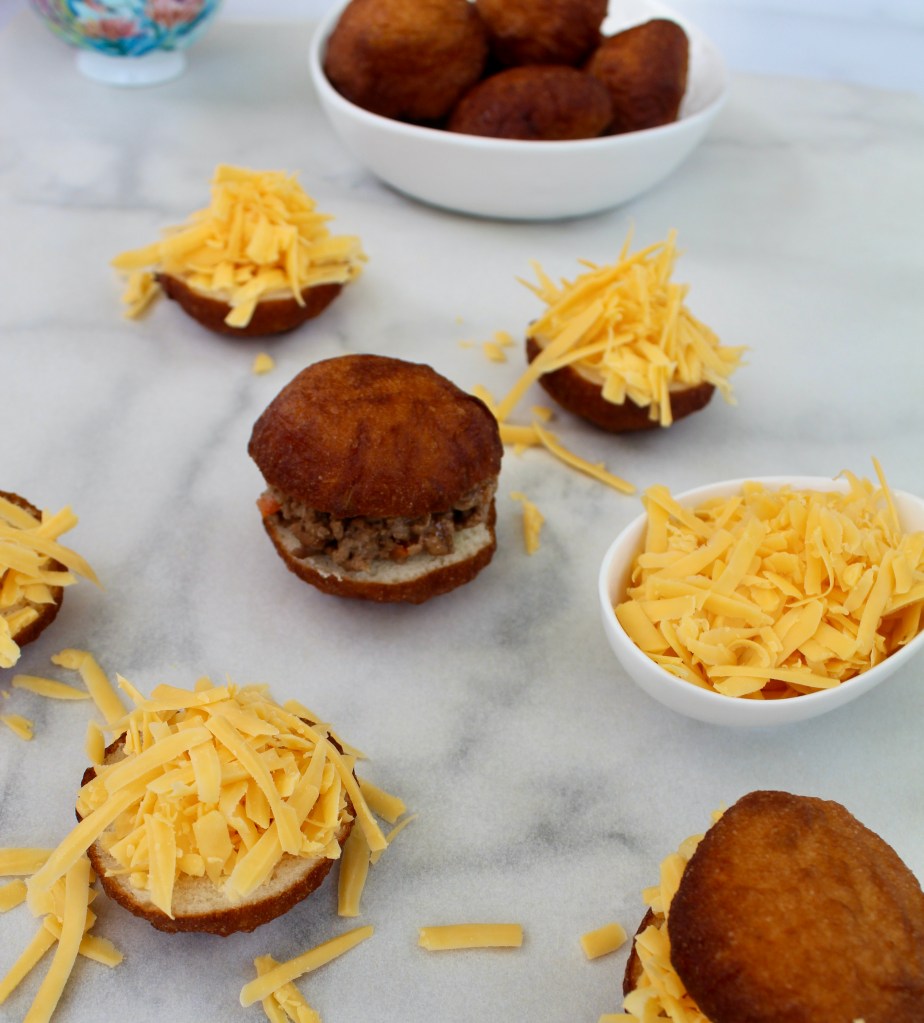
Vetkoek – Magwinya

Vetkoek – Magwinya

This is a traditional South African food that is popular as a quick meal and often eaten as is, filled with minced meat or with cheese and syrup. Vetkoek literally means “fat cakes” as it is basically a deep-fried bread. Magwinya is simply shaped differently, smaller than tennis balls and often found in Townships or sold as a on-the-go breakfast at taxi ranks.

10g dried yeast
900g cake flour
10ml salt
10ml sugar
vegetable oil for frying

Pour 250ml of warm water (tepid) into a mixing bowl and sprinkle the yeast on top. Stir to dissolve the yeast and set aside.
Add the flour, salt and sugar to the bowl of a stand mixer fitted with the dough hook.
Run the mixer on low speed and add the yeast mixture.
Now add some more lukewarm water (about 400ml) until the mixture comes together in a soft dough.
Knead on medium speed for 6 minutes.
Transfer the dough to an oiled mixing bowl, cover with a tea towel and set aside for 90 minutes.
Knock back the dough by kneading it by hand for 1 minute.
Pour about 2 litres of vegetable oil into a saucepan over medium-high heat.
If you are making Magwinya, pinch off some dough and shape it into a ball, about the size of a golf ball.
If you are making vetkoek, pinch off twice the amount of dough, roll into a ball and then press it flat between your hands.
Place the shaped dough on an oiled tray until you have shaped all the dough and the oil is warm.
Test the oil with a small piece of dough: if the dough starts bubbling and rises when dropped into the oil, it is hot enough.
Deep-fry the magwinya/vetkoek in the oil, turning them often for about 3 minutes or until they are a deep golden brown.
Scoop out and drain on kitchen paper.
Serve warm with mince/ragou or grated cheddar cheese and golden syrup.

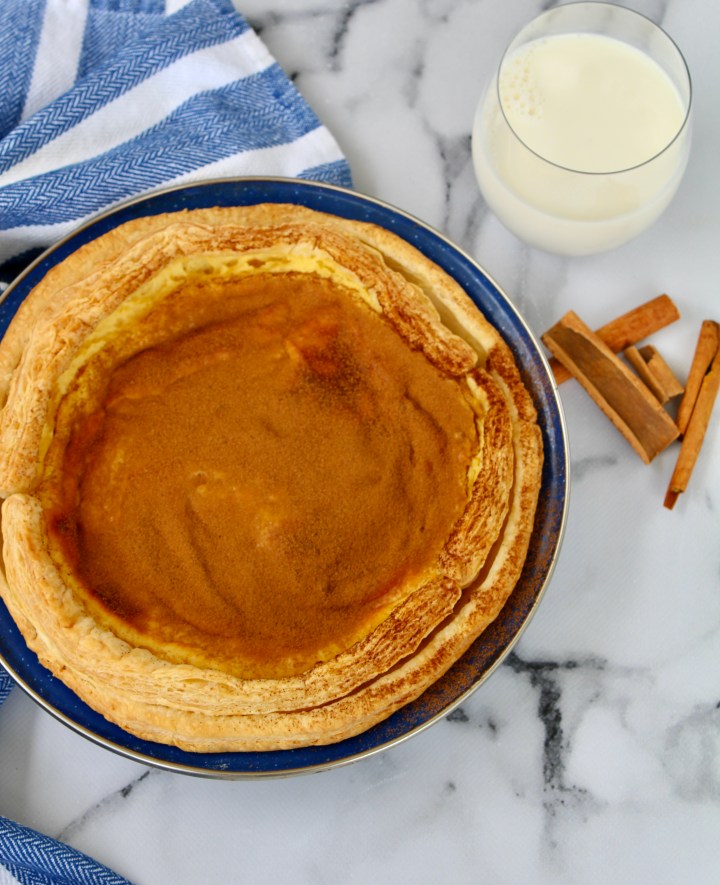
Milk Tart

Milk Tart

This recipe makes two standard sized tarts.

500g puff pastry

1litre + 250ml milk
250ml sugar
1 cinnamon quill
160ml flour
50ml custard powder
50ml cornstarch
5 eggs, separated
2,5ml baking powder
20g butter
5ml vanilla
ground cinnamon for dusting

Preheat your oven to 200℃ and spray two 22cm tart tins with cooking spray.
Dust a work surface with flour and roll the pastry to 3mm thickness. Line the tart tins – the pastry should be about 1cm larger that the tins to allow for shrinkage during baking.
Place the prepared tart tins in the refrigerator until needed.

Pour 1 litre milk into a saucepan and add the sugar and cinnamon quill. Turn the heat on medium-high and stir the mixture until the sugar has dissolved.
Heat the milk mixture until it starts forming tiny bubbles around the edges of the saucepan.
Remove from the heat and take out the quill. Set aside.
Add the flour, custard powder and cornflour to a mixing bowl.
Drizzle in the remaining 250ml milk while whisking, to make a slurry.
Add the egg yolks to the slurry and whisk together.
Slowly pour the warm milk-mixture into the slurry while whisking continuously. Remember: pour slowly, whisk quickly!
Pour the mixture back into the saucepan and return to a low heat.
Stir the mixture until it thickens and starts to bubble. Take off the heat, add the butter and vanilla, stir through and set aside.
Add the baking powder to the egg whites and beat until stiff peaks form.
Fold the egg whites into the custard and divide the mixture between the two prepared tart tins.
Bake the tarts in the oven for 25 minutes.
Remove from the oven and immediately sift some ground cinnamon on the surface.
Serve with your favourite brew of coffee.

Roosterkoek

Roosterkoek

Roosterkoek is a traditional South African bread roll that is cooked on an open fire. It is smoky, slightly charred and heaven-in-a-bite when eaten slightly warm with butter. This recipe makes about 10 – 12 roosterkoeke.

1kg bread flour
15g instant yeast
15ml salt
about 700ml lukewarm water

Add the flour, yeast and salt to the bowl of a stand mixer fitted with a dough hook.
Turn the mixer on to a low speed and add just enough water to make a stiff dough.
Knead on medium speed for 5 minutes until the dough is elastic and smooth.
Lightly oil a clean mixing bowl, place the dough in it and cover with a clean tea towel.
Proof the dough for 90 minutes.
Knock the dough back and roll it to a 2cm thickness on an oiled work surface.
Cut the rolled dough into roughly 10 – 12 equal sized pieces. Place the pieces of dough about 5cm apart on an oiled baking sheet. Cover with a tea towel and set aside to rise while you get your break/outdoor fire ready.

Brush the griddle with a thin layer of vegetable oil and wait for any flair-ups/flames to die away.
Cook the Roosterkoek on a medium-warm fire for 10 minutes before turning them over for another 10 minutes cooking time.
Serve slightly warm with butter and your choice of filling.

Bobotie with two Sambals

Bobotie with two Sambals

Bobotie:

30ml Oil
2x Chopped onions
1kg Beef mince
2x Slices of white bread
250ml + 125ml Milk
3x Eggs
30ml Curry powder
10ml Salt
15ml Turmeric
45ml Lemon juice
125ml Raisins
60ml Chutney
4-5 Bay leaves

  • Preheat the oven to 180℃
  • Heat the oil in a saucepan over medium heat, add the onions and cook until golden.
  • Remove the onions from the heat and put in a mixing bowl for later use.
  • Add the minced meat to the saucepan the onions were in and brown the mince. Once the mince has been browned remove from heat and add to the mixing bowl with the onions.
  • Pour 250ml milk into a small bowl, place the two slices of bread into the milk and let them soak. Once the bread has soaked up all the milk add it to the mince and onion mixture. Mix thoroughly.
  • Place two of the three eggs into a bowl and whisk until fluffy. Add the egg mixture to the mince mixture and mix through.
  • Add all the remaining ingredients to the mince mixture (except the bay leaves, milk and egg) and mix through.
  • Prepare a casserole dish by spraying it with cooking spray to prevent the bobotie from sticking. Spoon the mixture into the casserole dish and bake in the oven for 20 minutes.
  • Whisk the remaining 125ml of milk and one egg together and pour over the bobotie once it comes out of the oven. Put the bay leaves spread out over the mixture and immediately put it back into the oven for another 15 minutes or until golden.

Tomato Sambal:

3 Chopped tomatoes
2 Chopped onions
15ml Lemon juice
15ml Sugar
15ml Olive oil
Fresh parsley
Salt and Pepper

  • Chop tomatoes and onions in small to medium sized blocks.
  • Mix lemon juice, olive oil and sugar into a dressing.
  • Chop parsley.
  • Mix everything together and season to taste with salt and pepper.

Chutney Sambal:

250ml Fruit Chutney
83ml Chopped dried apricots
125ml Diced, Granny smith apple

  • Dice the apple into small cubes and chop the dried apricots into roughly the same size.
  • Combine and mix with the fruit chutney.

Savoury Greek Cheesecake

Savoury Greek Cheesecake

The name may be slightly deceptive as this is a savoury cake with loads of cheese and sultanas and not a cheesecake as is popularly known. If you are looking to try something different however, this Cypriot cheesecake is for you.

200g feta cheese, grated
200g cheddar cheese, grated
10ml mint, chopped
4 eggs
250ml milk
225ml vegetable oil
15ml sugar
5ml baking powder
320g self-raising flour
250g sultanas
1 onion, finely chopped
a handful of black and/or white sesame seeds

Preheat your oven to 180℃ and grease a loose-bottomed cake tin.
Grate the feta and cheddar cheese, add the mint and mix together. Put aside.
Add the eggs, milk, oil and sugar to the bowl of a stand mixer fitted with the paddle attachment.
Beat the mixture together for one minute.
Add the baking powder and flour to a separate bowl and mix together.
Turn the mixer down to a medium speed and add a few tablespoons of flour at a time.
Scrape the sides of the bowl down, once all the flour has been incorporated.
Add the sultanas, onion and two thirds of the cheese and mix through.
Pour the batter into the prepared cake tin and sprinkle the remaining cheese on top.
Finish off by sprinkling a handful of sesame seeds on top of the cake. Be generous – it is delicious!
Bake the cake for 1 hour.
Remove the cake from the oven and allow it to cool completely in the cake tin.
Remove from the tin and serve with a crisp salad or as a side dish.