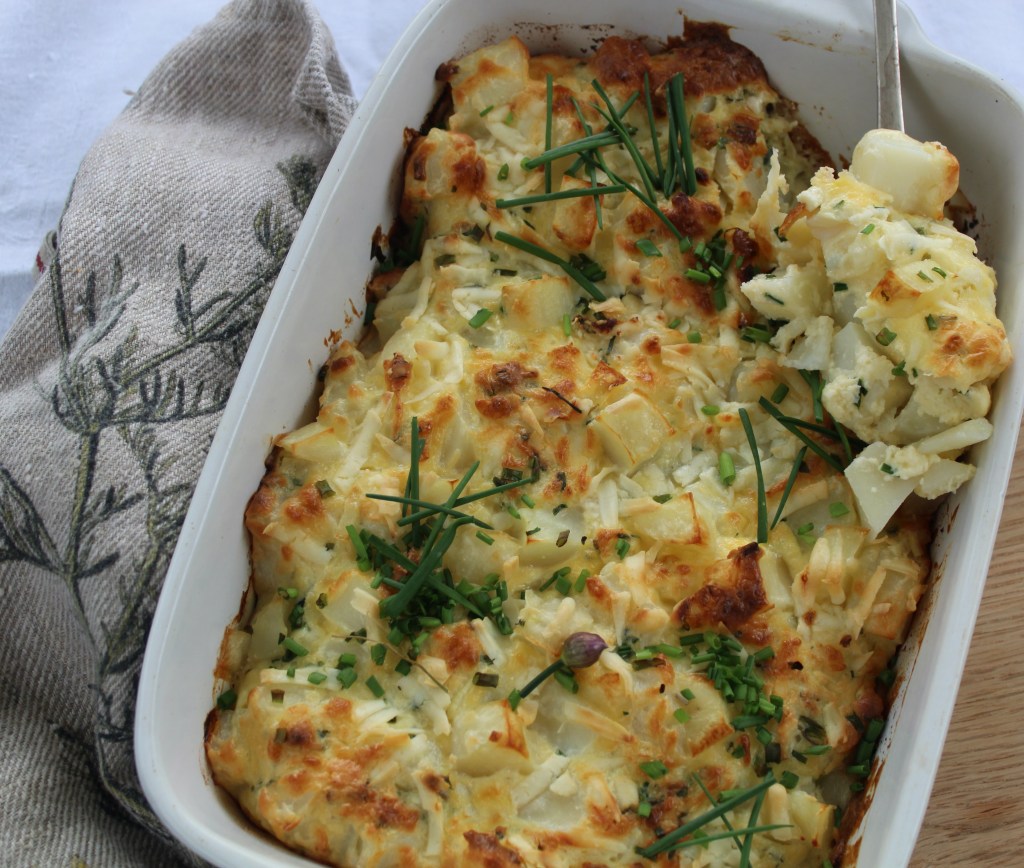
This potato dish is a quick weekday dinner for vegetarians or a substantial side dish to any meat. If you don’t have ricotta cheese on hand, get the recipe from this site and make your own. Yields 6 – 8 portions.
6 large potatoes 350g ricotta cheese 4 eggs, lightly beaten 1 onion, finely chopped a handful of chives, chopped 2 cloves of garlic, minced 40g parmesan/pecorino cheese, grated
Preheat your oven to 180℃ and grease a 20cm X 28cm baking dish.
Peel the potatoes and boil them until just cooked. Slice them into 1,5cm cubes and put aside. Add the eggs to a mixing bowl and whisk together. Add the chopped onion, chives, minced garlic and parmesan to the egg mixture and whisk together. Now add the cubed potato and mix through. Spoon the mixture into the prepared baking dish and bake for 25 minutes until golden. Serve with a green salad.
250ml wholewheat flour 250ml cake flour 125ml sugar 7,5ml baking powder 2,5ml bicarbonate of soda 2,5ml salt 15ml each of sesame, poppy and sunflower seeds 250ml greek yoghurt 1 egg 62ml vegetable oil
Preheat your oven to 180℃ and grease a standard 23cm X 13cm loaf pan. Add the wholewheat flour, cake flour, sugar, baking powder, bicarbonate of soda, salt and seeds to a mixing bowl and mix through with a whisk. Add the yoghurt, egg and vegetable oil to a wide-mouthed jug and whisk together. Pour the liquid ingredients in to the dry ingredients and stir through with a spatula until all the flour has been incorporated and you are left with a shaggy, wet batter. Scrape the batter into the prepared loaf pan and pat it down into the corners. Bake the loaf for 50 minutes or until a toothpick inserted into the centre of the loaf, comes out clean. Take the bread from the oven and cool in the pan for 15 minutes before turning it out. Allow to cool completely before slicing.
Chocolate and pear is a match made in heaven and with this delicious chocolate pastry as a base, few desserts will be able to compare to this tart!
Poached pears: 3 ripe pears 750ml water 250ml sugar 15ml lemon juice
Chocolate pastry: 80g dark chocolate, at least 70% cocoa 175g butter, cubed 230g caster sugar 4 egg yolks 10ml vanilla 15ml milk 50g cocoa powder 350g cake flour
Chocolate frangipane: 120g dark chocolate, at least 70% cocoa 120g butter, cubed 120g caster sugar 5ml vanilla 2 eggs 125g ground almonds 25g flour
Poaching the pears: Pour the water into a small saucepan and add the sugar and lemon juice. Turn the heat on to medium and stir until the sugar has dissolved. Peel, halve and core the pears and add to the poaching liquid. Cut a square of baking paper that is large enough to cover the saucepan. Scrunch the paper up and then slide it down into the saucepan until it touches the poaching liquid. Bring the poaching liquid to the boil, reduce the heat and simmer gently until a wooden skewer can easily be inserted into the pear quarters. Turn off the heat and allow the fruit to cool in the poaching liquid. Remove the pear once it has cooled and keep aside. Simmer the poaching liquid until it reduces to a syrup. Reserve this to glaze the tart with once it comes from the oven.
For the chocolate pastry: Chop and melt the chocolate in a heatproof bowl set over a saucepan of simmering water, making sure that the bottom of the bowl is not in contact with the water. Stir until silky smooth and completely melted. Take the bowl from the heat and allow to cool slightly. Add the cubed butter, sugar, egg yolks, vanilla and milk to the bowl of a food processor and blitz together. Pour in the slightly cooled chocolate and pulse to blend in. Sift the cocoa powder and flour into the chocolate mixture and blitz until the mixture comes together in a smooth ball of pastry. Wrap the pastry with plastic wrap and store in the refrigerator for one hour.
Lightly spray a tart tin with baking spray. Roll the pastry to a thickness of 3mm and line the baking tin on the bottom and sides. Place the pastry case into the freezer for 1 hour.
Preheat your oven to 180℃. Line the pastry case with baking paper and baking beans and bake for 15 minutes. Set aside to cool.
For the chocolate frangipane: Keep your oven on 180℃. Melt the chocolate in a heatproof bowl set over a saucepan of simmering water, making sure that the bottom of the bowl is not in contact with the water. Stir until completely melted. Remove from the heat and set aside to cool slightly. Add the butter and sugar to the bowl of a stand mixer fitted with the paddle attachment. Cream the butter and sugar until light and fluffy. Add the vanilla and the eggs and beat together, scraping down once or twice, until well blended. Add the almonds and flour and fold into the egg mixture with a spatula. Pour in the melted chocolate and stir once again to incorporate, with the spatula. Spread the frangipane mixture onto the baked pastry case. Slice the pears and position each sliced half onto the chocolate frangipane, spacing it so that there is enough space for all of the pear. Bake the tart for 45 minutes. Remove from the oven and brush the reduced poaching liquid (syrup) onto the warm tart. Allow to cool in the baking mould. Serve with a sprinkling of icing sugar or a scoop of vanilla ice cream.
For the potato crust: Preheat your oven to 180℃ and grease a loose-bottomed cake tin. Spread a clean tea towel onto a work surface and grate the potato directly onto it, with the skin on. Fold the towel over the potato, gathering all ends together and twist and squeeze the potato over your kitchen sink until all the excess moisture has been removed. Put the potato into a mixing bowl. Sprinkle the garlic salt and flour over the grated potato and mix through with your hands in order to distribute all ingredients as evenly as possible. Now add the egg and mix in the same way. Spoon the mixture into the prepared cake tin and press it tightly into the base and sides of the tin with the back of a spoon. Place the cake tin on a flat baking sheet and bake in the oven for 30 minutes. Remove from the oven and set aside.
For the filling: Put a frying pan on to medium heat and add some oil to it. Slice the onions and fry them until soft and translucent. Spoon the onion into a large mixing bowl. Turn the heat up to high, slice the mushrooms and add them to the hot pan. Cook until caramelised. Spoon into the bowl with the onion. Grate the zucchini and cheese directly into the mixing bowl with the onion and mushroom. Mix together. Spoon the vegetable-cheese mixture in to the potato crust. Set aside. Add the eggs, cream, salt and mustard to a mixing bowl and whisk together. Gently pour over the vegetable mixture. Bake in the preheated oven for 40 minutes, until golden and set. Remove from the oven and stand in the baking tin for 30 minutes. Slice and serve warm.
For the topping: 60g sugar 60g butter, room temperature 10ml warm water 2,5ml coffee powder 1 egg 70g flour a pinch of salt
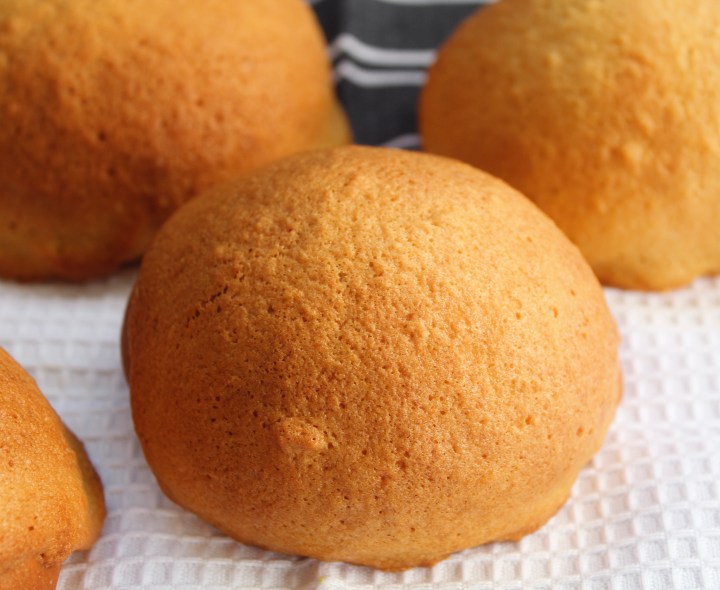
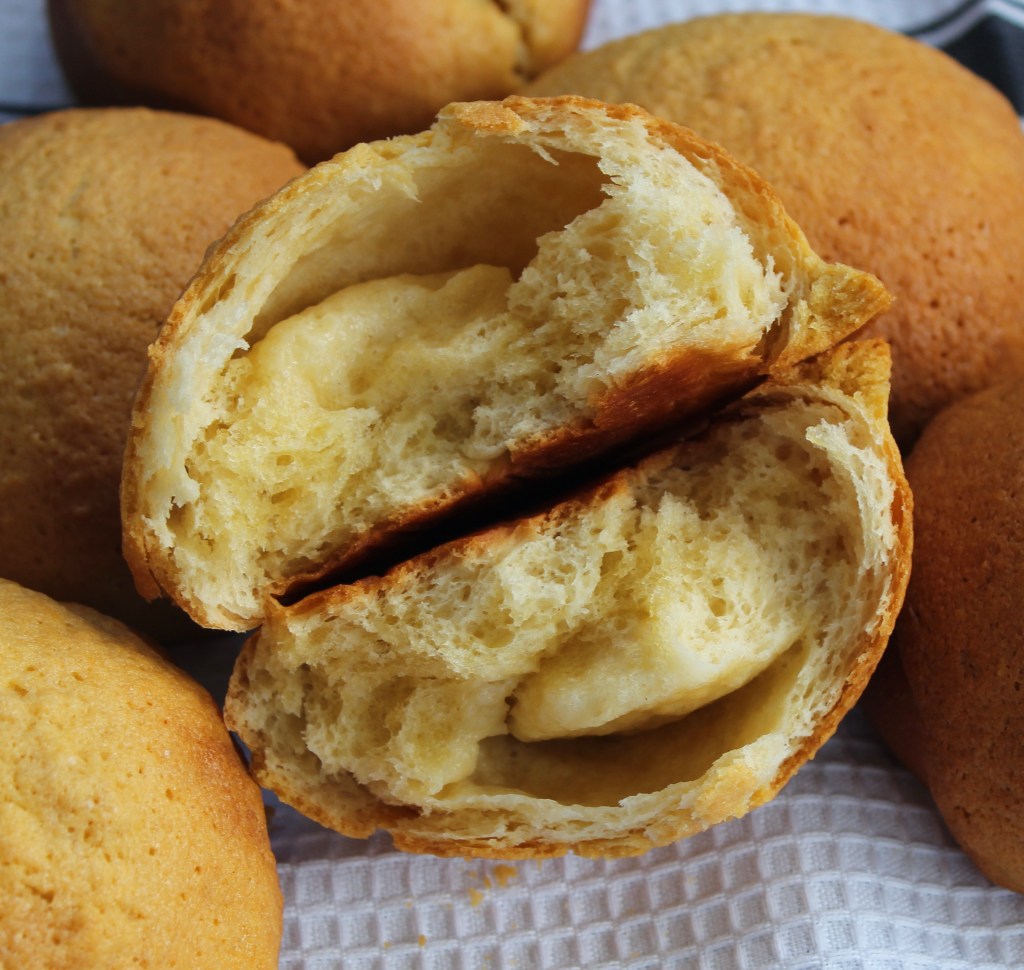
Cut the 50g butter into ten equal pieces, wrap in baking paper and place it in the freezer. Line a large baking sheet with baking paper. Add the flour and salt to the bowl of a stand mixer fitted with the dough hook. Warm the milk until tepid and pour it into a mixing bowl. Add the butter, instant yeast and sugar to the milk and stir until dissolved. Turn the mixer onto a low speed and add the liquids. Mix/knead for about 3 minutes. The dough will be very sticky! Turn the mixer to medium speed and knead for another 6 minutes. You want a dough that is soft, smooth and elastic. Divide the dough into 10 equal pieces – weigh them on a scale, they should be around 60g each. Roll each portion into a ball and then roll the ball into a disc with a rolling pin – about 9cm in diameter. Take the butter cubes from the freezer and place a cube in the centre of the dough disc. Lift the sides and cover the butter with the dough, pinching it together, to seal. Flip the ball over and place on the prepared baking sheet. Keep going until there is no dough left. Spray some plastic wrap with cooking spray and lightly cover the buns. Set aside to proof for 90 minutes.
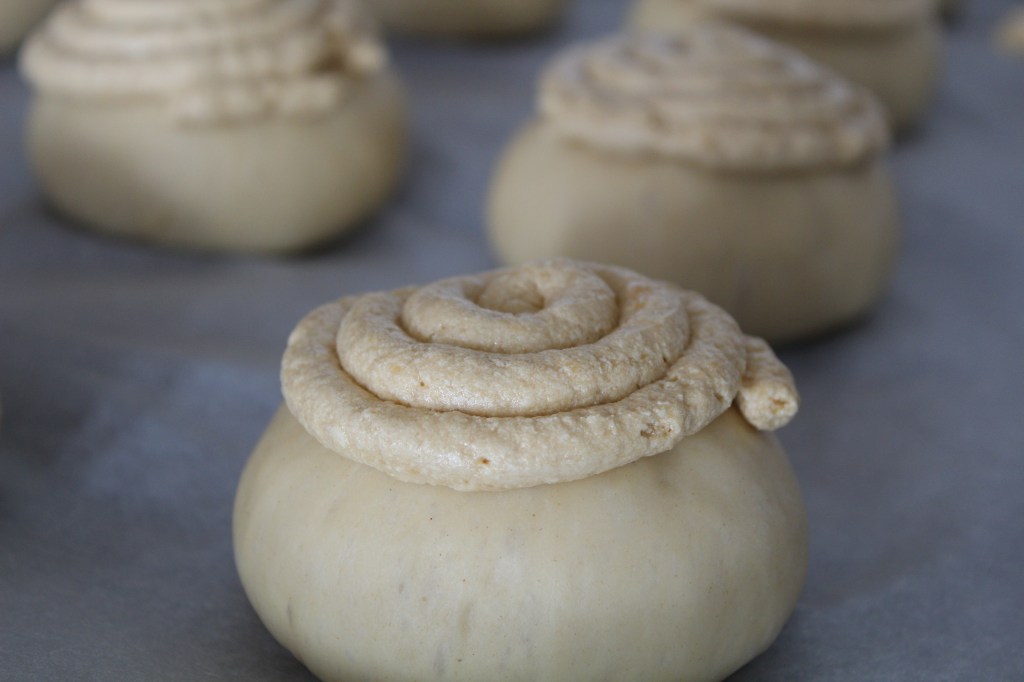
Coffee topping: Add the butter and sugar to the bowl of an electric mixer fitted with the paddle attachment. Beat until the mixture is light in colour and has a fluffy texture. Dissolve the coffee powder in the warm water and add to the butter mixture. Stir through by hand. Add the egg and stir until incorporated. Add the flour and salt and stir to mix. Spoon the mixture into a piping bag and place in the refrigerator until needed.
Preheat your oven to 180℃. Pipe the coffee topping in a tight circular pattern, starting from the centre of the bun working a third of the way down. Bake the buns for 20 minutes.
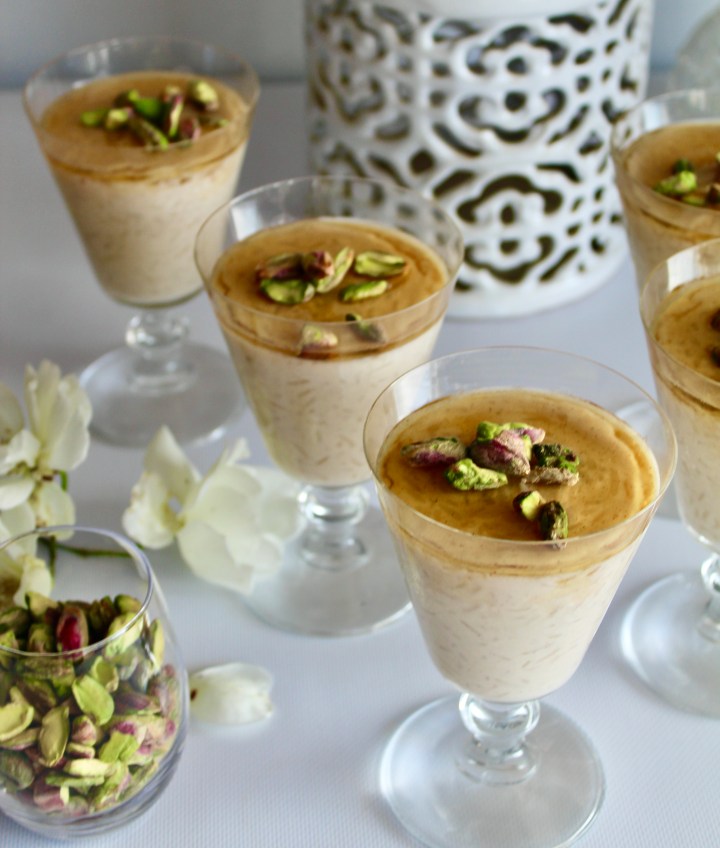
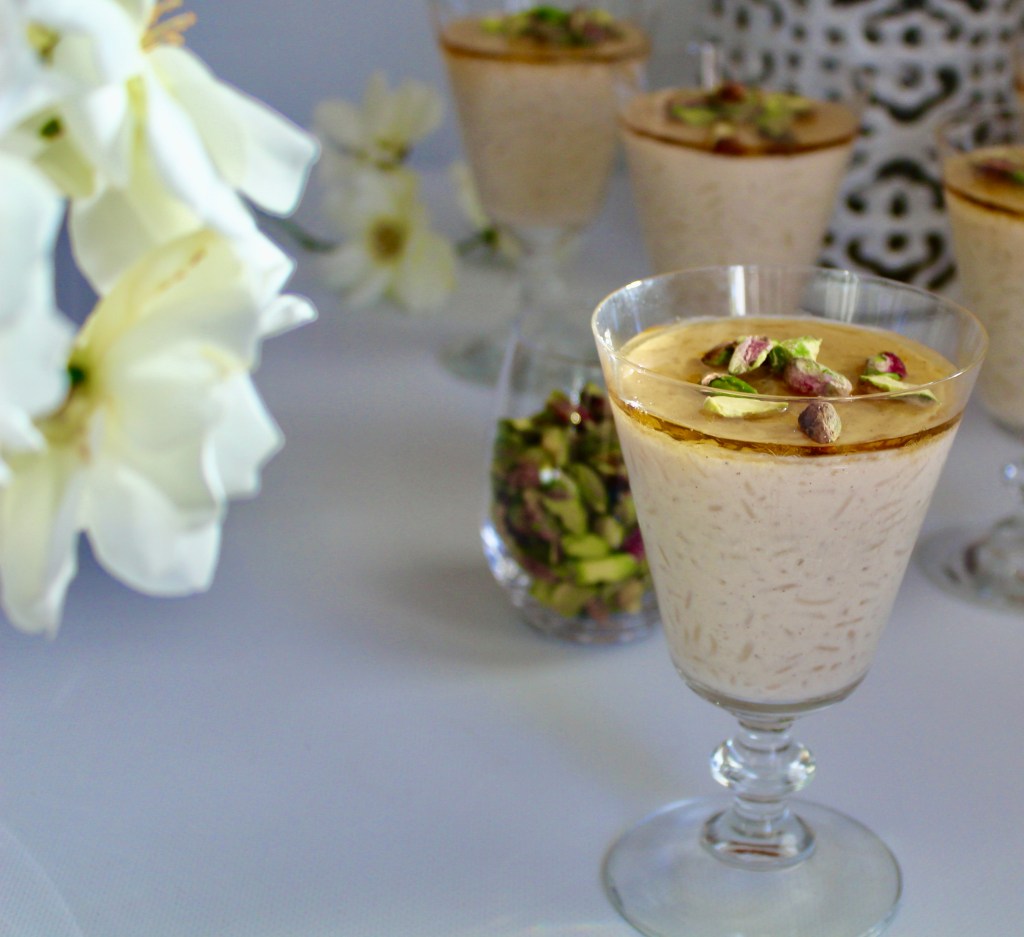
This is fragrant dessert with rose water and honey and is based on the traditional Roz bel Laban. The recipe provides 6 generous portions depending on the size of the glasses or bowls it is served in.
500ml milk 250ml cream 2 cinnamon quills 6 cloves 1,2ml ground cardamon 250ml rice 30ml sugar 500ml water 83ml condensed milk 30ml butter 30ml rose water honey and pistachio nuts to serve
Add the milk, cream, cinnamon, cloves and cardamon to a saucepan. Turn the heat on medium and wait for the mixture to come to the boil. Turn the heat down so that the mixture simmers and add the rice, sugar and water. Allow the mixture to simmer until the rice is cooked, stirring continuously. This will take 30 – 40 minutes. Do not leave the mixture – keep an eye on it! Take the saucepan from the heat and add the condensed milk, rose water and butter. Stir thoroughly. Spoon the rice pudding into glasses or serving bowls. Drizzle each dessert with honey and a sprinkling of pistachio nuts. The rice pudding is best served warm.
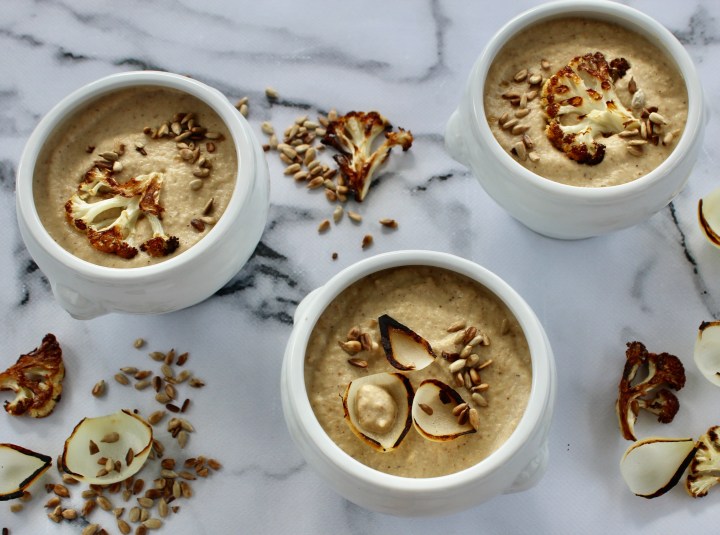
This roasted cauliflower soup is deliciously light and complex at the same time. The sunflower seeds add a creaminess and depth of taste and makes this a soup you can entertain with. Yields 6 – 8 servings.
2 heads of cauliflower 2 onions 3 cloves of garlic, minced 1l vegetable/chicken stock 250ml water 250ml cream 125ml sunflower seeds, toasted 1,2ml grated/ground nutmeg 15ml lemon juice 30ml butter salt and pepper
Preheat your oven to 220℃ and line a baking tray with baking paper. Cut the cauliflower heads into florets and place them on the line baking tray. Drizzle with vegetable oil and a sprinkling of salt. Roast the florets in the oven for 20 minutes, stirring halfway through the roasting time.
Peel and chop the onions. Put a large saucepan on to medium heat, add some oil and the onions and fry until the onions start to caramelise. Turn the heat down, add the garlic and cook for 1 minute. Pour the stock, water and cream into the saucepan and add the sunflower seeds and nutmeg. Add the roasted florets and cook at medium heat for 20 minutes. Add the lemon juice and butter to the soup and stir through. Decant the soup, in batches, into a liquidiser and blend until smooth. Pour the soup back into the same saucepan and taste it – adjust the seasoning with salt and pepper. Serve the soup warm with a crusty bread.
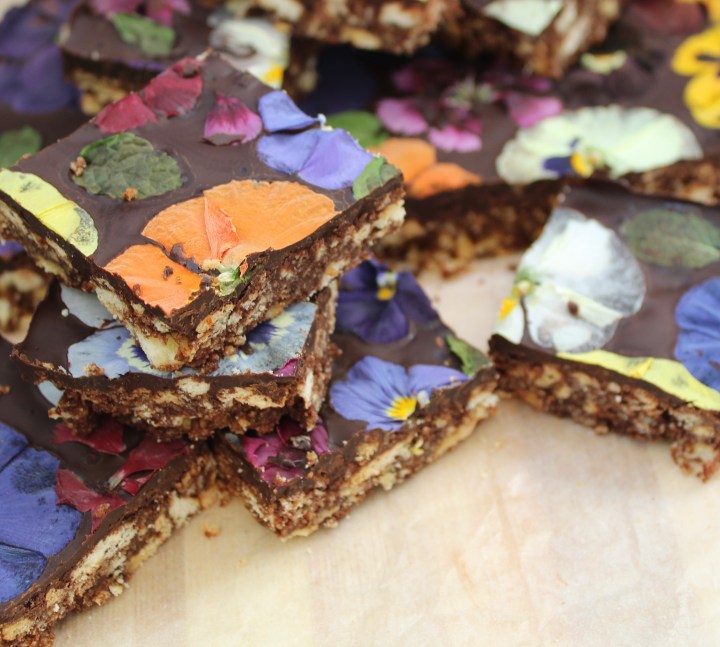
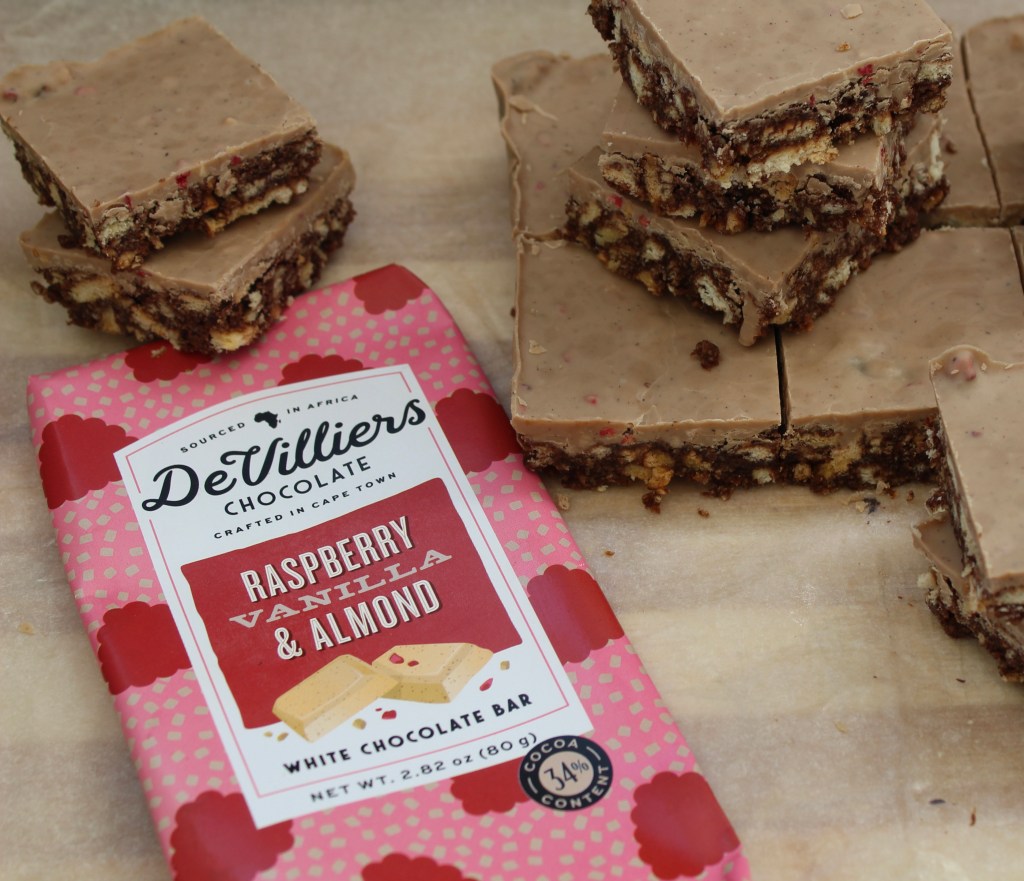
This is an old favourite which most of us have eaten in one form or the other. The addition of the chocolate layer on top adds a creaminess and turns a kids-party-favourite into an adult snack! Keeps well in a sealed container at room temperature.
2 X 200g packets plain biscuits 250g butter 60ml condensed milk 30ml golden syrup 45ml cocoa powder, sifted 30 sugar 160g dark chocolate; I used De Villiers Dark Chocolate, Intense 160g white chocolate; I used De Villiers White Chocolate, Raspberry, Vanilla and Almonds
Line two 20cm X 20cm baking tins with baking paper. Put the biscuits into a plastic bag and crush them with a rolling pin. Pour the biscuit pieces into a large mixing bowl. Add the butter, condensed milk, syrup, cocoa powder and sugar to a small saucepan and melt together over a low heat. Stir the mixture until completely smooth and amalgamated. Pour the runny mixture onto the biscuit pieces and mix well, making sure that all the pieces are covered in it. Divide the mixture between the two prepared baking tins and smooth the top with the back of a spoon. Press down to compact the mixture. Refrigerate for 10 minutes. Chop the dark chocolate into small pieces and add it to a heatproof bowl that sits on a saucepan of simmering water. Stir every now and then until the chocolate is melted. Pour onto one of the baking tins with brownies. Repeat the process with the white chocolate and pour over the other batch of brownies. If you want to prettify the brownies with edible flowers, now is the time! Place the two baking tins in the refrigerator for 30 minutes. Slice before serving.
This recipe provides a quick method for a rye bread with loads of flavour. The addition of buttermilk gives the typical tangy taste that one associates with a traditional rye and adds to a really good texture. This recipe makes two medium-sized, oblong breads.
Add the flours and salt to the bowl of a stand mixer fitted with the dough hook. Add the yeast, water, sugar, buttermilk and melted butter to a separate bowl and whisk together to dissolve the sugar and yeast. Turn the mixer on to a low speed and add the liquids. Mix/knead for 7 minutes. Place the dough in a lightly greased bowl, cover with plastic wrap and let rise in a warm place until double the volume. Preheat your oven to 190℃ and line a large baking sheet with baking paper. Knead the dough down by hand for 2 minutes. Divide the dough in half and shape two oblong loaves. Place the shaped dough on the prepared baking sheet, cover with oiled plastic wrap and allow to proof until almost doubled in size. Brush the bread with egg white or water for a shiny crust. Make 4 diagonal, shallow cuts in the top of the bread. Bake the breads for 30 minutes. Cool on wire racks until completely cold.
This is a savoury dish that will get conversations (and your tastebuds) going….. Serves 6 people.
500ml bread flour 190ml cocoa powder 5 eggs 2,5ml salt
For the filling: 250ml ricotta cheese 80g dark/bitter chocolate, finely chopped a pinch of salt
100g butter 20 sage leaves
Sift the flour, cocoa powder and salt together onto a clean work surface. Make a well in the centre and put in the eggs. Mix the eggs with your fingers and gradually draw in the flour and cocoa mixture to form a soft, but not sticky, dough. Add more flour or egg, if needed, to get the right consistency. Knead for 10 minutes until you have a smooth and elastic dough. Wrap the dough in plastic wrap and leave in the fridge to chill for one hour.
Mix the ricotta, chopped chocolate and a pinch of salt with a wooden spoon until smooth. Roll the pasta through a pasta machine. Lay one sheet of pasta flat and form walnut-sized balls with the ricotta mixture. Place the ricotta balls onto the sheet of pasta. Wet the area around the ricotta-balls with water and lay a second sheet of pasta on top. Press down and around the ricotta balls so that the top sheet of pasta sticks. Cut individual ravioli shapes with a round cutter and cook them for three minutes in simmering water. Keep warm while making the sage-butter.
Add the butter to a small saucepan and place it on a high heat. Allow the butter to melt and then to caramelise – regulate the heat: you want the butter to turn brown and become nutty without burning. Add the sage leaves once the butter has browned and immediately turn off the heat. Be careful the butter will spatter as you add the sage.
Arrange the cooked ravioli on plates and spoon the butter and sage over. Serve with a crusty bread.








 My Whisk and I