Pistachio nut butter is relatively low in calories and fat but high in protein. Spread it on toast, stir it into oatmeal porridge or mix it into a cookie batter. You will need a powerful food processor to process the nuts.
Choose the amount of nuts – I used 500ml Blanch the pistachios for two minutes, drain and spread them onto a tea towel. Rub the between the cloth to remove the skins. The more skin you remove, the greener the pistachio butter!
Now roast the nuts at 170℃ for 7 minutes. Add the pistachio to a food processor and blitz until creamy. Scoop the nut butter into a glass jar and store in the fridge.
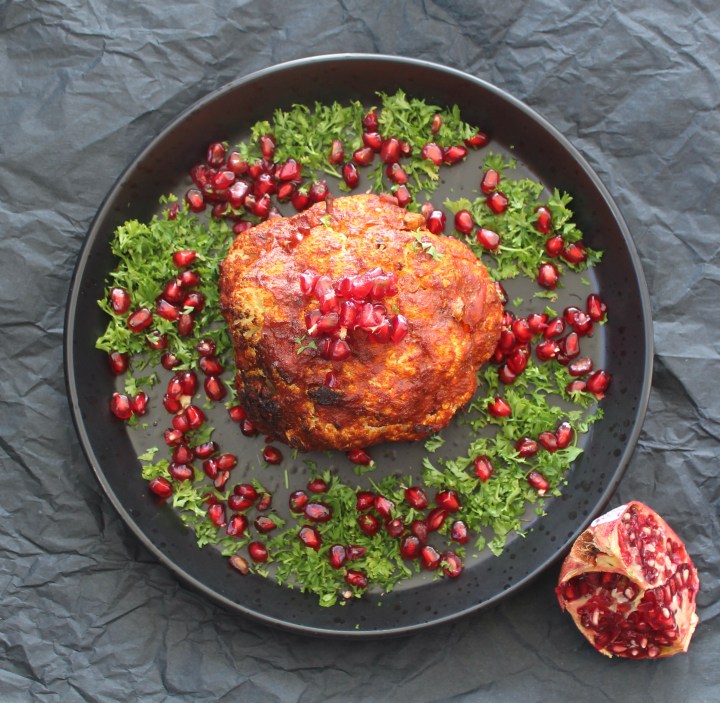
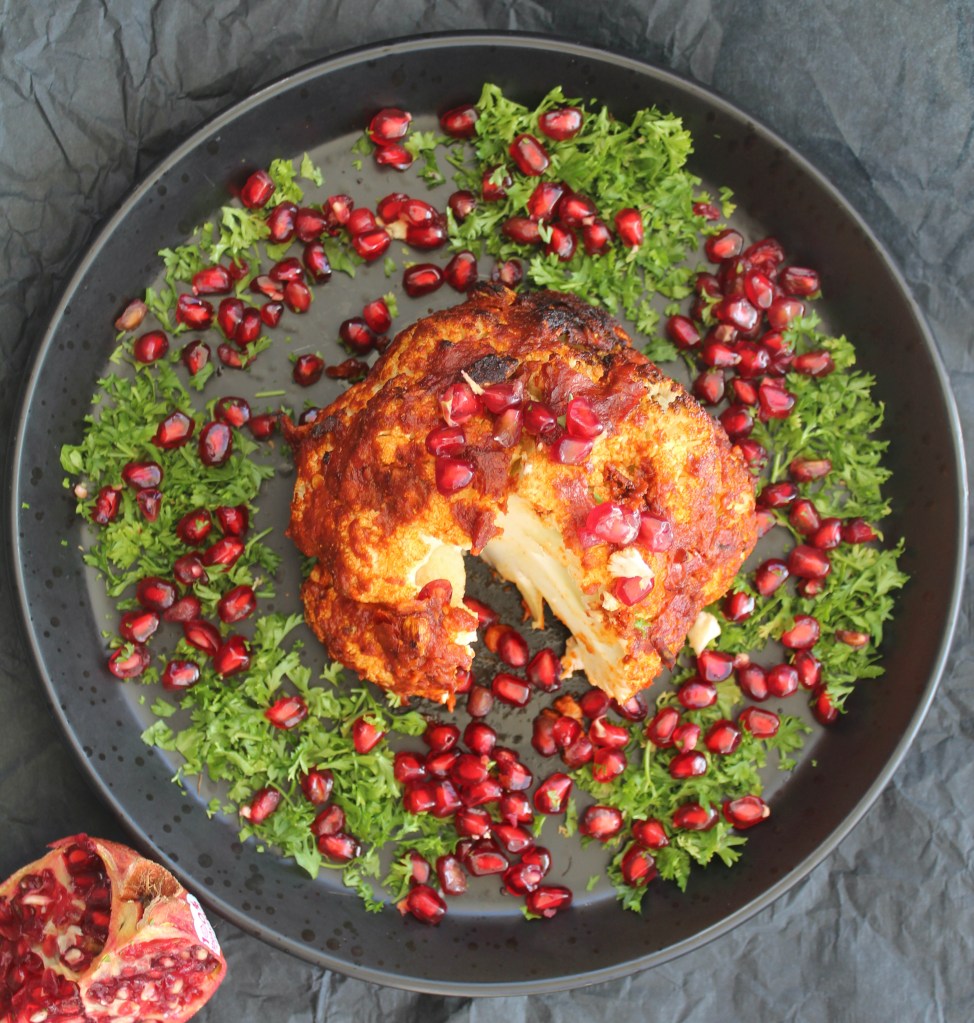
1 cauliflower head 100ml Harissa paste (make your own Harissa with Fresh Chillies – recipe on this blog)
Preheat your oven to 180℃. Line a baking sheet/baking tin with aluminium foil. Trim the outer leaves from the cauliflower and cut down the stalk so that the head can stand on its own. Flip the head upside down and brush the bottom (and between the florets) liberally with the harissa paste. Brush the rest of the paste onto the sides and top of the head so that the entire veg is covered in paste. Cover the cauliflower with aluminium foil and bake in the oven for 45 minutes. Remove the foil covering and roast uncovered for another 30 minutes. Cut the cauliflower into steaks or wedges to serve.
Whenever I eat this sweet potato dish with honey and orange, I am reminded of the city of Casablanca with its sweet smells and the aroma of cinnamon drifting in the air after another very warm day!!
4 – 6 large sweet potatoes 50g butter 62ml brown sugar 62ml honey 62ml orange juice the zest of one orange 2,5ml salt 2,5ml ground cinnamon
Preheat your oven to 190℃. Scrub the sweet potato, cut into chunks and add them to an ovenproof dish. Add the butter, brown sugar, honey, orange juice, zest, salt and cinnamon to a small saucepan and melt together. Pour the mixture over the sweet potato chunks and stir through so that all of the potato is covered in the sauce. Bake in the oven for 30 – 40 minutes or until cooked and slightly charred and the sauce is syrupy. Serve warm.
This cauliflower mash is silky smooth and makes the perfect base for a curry dish or stew. Add some steamed or roasted veg for a complete vegetarian meal.
about 700g cauliflower (one average head) 125ml milk 125ml cream 2,5ml salt 30ml butter
Cut the cauliflower into chunks, including the stalks, and place in a saucepan. Add the milk, cream and salt and bring to a boil – DO NOT LET IT BOIL OVER! Turn the heat down so that the liquid simmers lightly, put the lid on and allow to simmer until the cauliflower is soft enough to insert a toothpick into it easily. Pour the cauliflower-milk mixture into a blender and add the butter. Process until the mixture is smooth and silky. Season with salt, pepper and some more butter. Serve warm with your favourite casserole or as a delicious side.
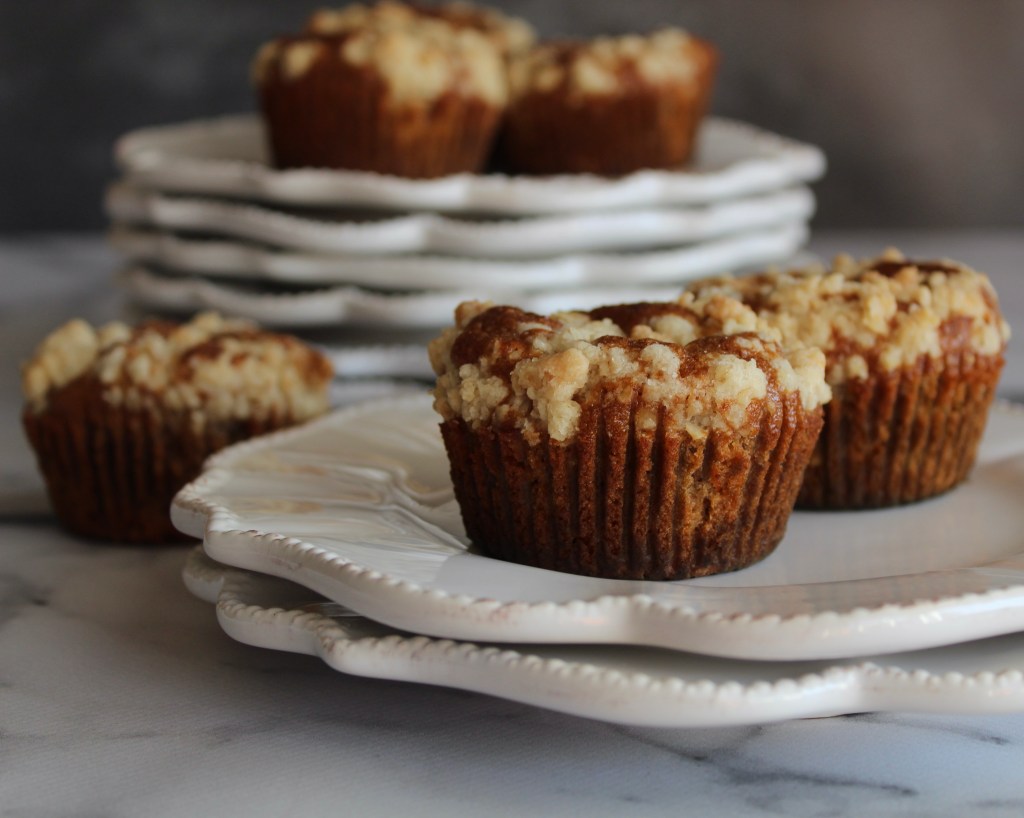
These pumpkin muffins are deliciously moist and has the traditional cream cheese frosting in its centre with a crunchy strudel-like topping! For those who prefer not-so-sweet it is a perfect nutritious treat! This recipe yields 12 – 16 regular sized muffins.
For the topping:
125ml flour 62ml brown sugar 62ml oats a pinch of salt 60ml butter, room temperature
For the filling:
230g cream cheese, room temperature 62ml sugar 2,5ml vanilla
For the muffins:
250ml pumpkin purée 2 eggs 125ml brown sugar 45ml vegetable oil 62ml honey 2,5ml salt 1,2ml ground ginger 5ml ground cinnamon 5ml baking powder 2,5ml bicarbonate of soda 180ml milk 375ml flour
Preheat your oven to 180℃. Line a muffin tray with paper cups, spray each cup lightly and set aside.
For the topping: Add the flour, sugar, oats and salt to a mixing bowl and give it a stir to mix the ingredients. Add the butter to the dry ingredients and rub it into the dry mixture with your fingertips until you have a coarse crumb texture. Put aside.
For the filling: Add the cream cheese, sugar and vanilla to a mixing bowl and beat with a spatula to combine. Put aside.
For the muffins: Add all the ingredients EXCEPT THE FLOUR, to a large mixing bowl and mix thoroughly with a spatula. Now add the flour and mix until just incorporated, scraping down the sides of the bowl. You will be left with a runny batter.
Spoon about 30ml batter into each paper cup, making sure it covers the entire bottom of the cup. Spoon 15ml of the cream cheese mixture into the centre of the pumpkin batter. Now cover the cream cheese by spooning another 30ml of pumpkin batter into the cups. You will have 12 – 16 regular sized muffins. Finally sprinkle about a teaspoon full of the topping onto each muffin. Bake for 20 minutes. Remove from the oven and cool on a cooling rack. Serve warm or at room temperature.
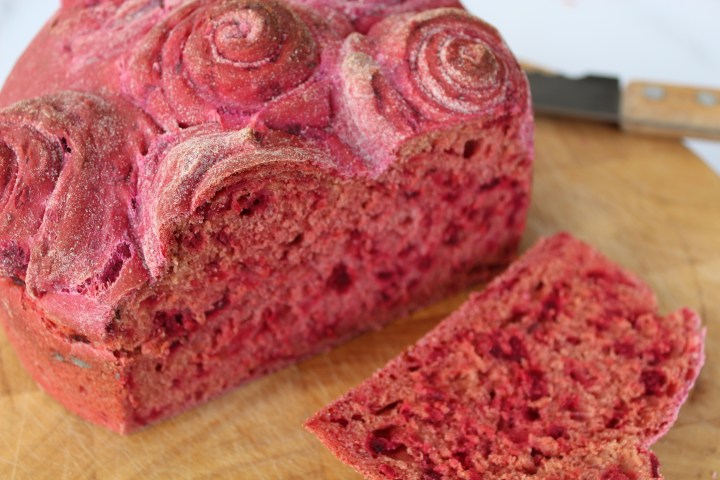
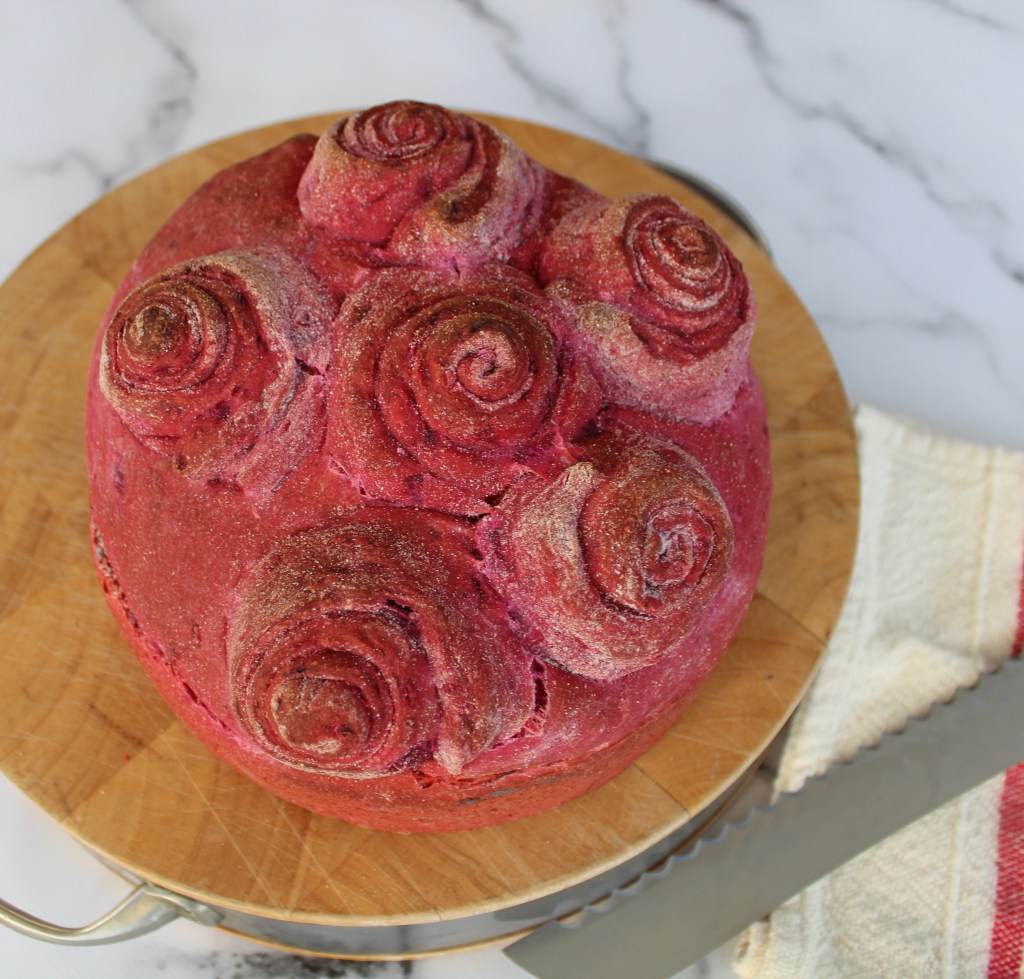
This bread has a moist texture and is absolutely perfect for a topping of tomato, salad, cucumber and avocado. Easy to make and it will prettify your table!
Sprinkle the yeast onto the water and give it a good stir. Add the flour, salt, beetroot and oil to the bowl of a stand mixer fitted with the dough hook and mix on low speed for one minute. Add the yeast mixture and mix/knead for another 3 minutes. At this stage you want a dough that comes loose from the sides of the bowl. If the dough is too soft to come together in a ball, add a handful of flour and allow your machine to incorporate it. Keep adding small amounts of bread flour until the dough just comes together in a kneadable dough. Add a few drops of vegetable oil to a clean mixing bowl and cover the sides and bottom with a thin layer. Now add the dough to the bowl, cover with plastic wrap/a bag and put aside to rest for an hour. Preheat your oven to 210℃. Take the dough from the bowl, gently knock it back and shape it into a round. Place on a baking sheet lined with baking paper. Cover the bread with a clean tea towel and rest for another 20 minutes. Bake the bread for 30 minutes. Cool completely before cutting.
If you would like to “decorate” your bread as in the image below, follow the following guidelines: Once you have knocked back the dough, cut about a third of the dough from the rest. Shape the larger quantity dough into a ball and place it in a small, deep cake tin. Brush the surface with a small amount of water. Roll the rest of the dough to a 1cm thickness and cut into strips about three centimetres wide. Roll each strip into a coil and place onto the dough ball. Stand for 20 minutes before baking.
Cook the lentils according to the instructions on the packet. Set aside. Add the ghee to a saucepan on medium heat and fry the onion for 2 – 3 minutes. Add the garlic, ginger and chilli and fry on low heat until fragrant. Add the fennel seeds, mustard seeds, cumin seeds, garam marsala and sugar. Stir the mixture for about one minute while cooking gently. Add the spinach, mint and 45ml water to the saucepan and immediately cover with the lid. Cook for about 3 minutes, stirring occasionally. Place the spinach and spices into a blender, add 320ml water and blend until smooth. Pour the sauce back into the same saucepan, on low heat. Add the yoghurt, salt and the juice of about half a lemon. Serve with fragrant rice and tomato salad.
This recipe works well with any white fish, fresh or frozen, and is the perfect nutritious weeknight dinner. Ladolemono dressing is traditionally Greek and a basic olive oil and lemon dressing that is drizzled onto fish before and after baking. This version has garlic and origanum added and will have you longing for a Greek vacation!
6 – 8 portions of white fish fillet Ladolemono Dressing:
90ml olive oil 30ml lemon juice 5ml salt 15ml fresh oregano 1 clove garlic, minced
Preheat your oven to 220℃. Lay the white fish portions/fillets onto a baking sheet and put aside while making the dressing. Add all the Ladolemono dressing ingredients to a small bowl and whisk until the mixture turns thick and is completely blended. Spoon half of the dressing onto the fish and bake for 15 minutes. Remove the fish from the oven and drizzle the rest of the dressing onto the cooked fish. Serve with a salad or roasted vegetables.
This fruity, fresh salad is loaded with tastes of summer. The yoghurt dressing is healthy and can be drizzled in abundance as one should!
A mix of salad leaves, herbs and baby spinach leaves Fresh, rip figs 1 large pomegranate 100g blue cheese
Yoghurt dressing:
90ml greek yoghurt 60ml olive oil 30ml lemon juice 90ml honey 5ml salt
Pack the salad leaves or whatever greens you prefer, onto a serving platter. Tear or cut the figs into quarters and scatter onto the greens. Now scatter the pomegranate seeds and chunks of blue cheese on top the salad.
Add all the ingredients for the dressing to a small mixing bowl and whisk together until it amalgamates. Liberally dress the salad. Serve with crusty bread as a light lunch.
Barley is a nutritious whole-grain and makes a delicious salad. In this recipe you may replace the roasted beetroot and carrots with leftover, roasted veg. The dressing in this salad pulls the dish together and perks it up to extra tasty!
250ml pearl barley 750ml water 10ml stock powder about half an English cucumber, diced one red onion, diced a handful of basil and mint, chopped 2 tomatoes, chopped about 125ml roasted beetroot, chopped about 125ml roasted carrot, chopped 125ml pomegranate seeds
Dressing:
60ml lemon juice zest of one lemon 60ml olive oil 60ml honey 5ml mustard 60ml mayonnaise 5ml salt 1 clove garlic, minced
Add the pearl barley, water and stock powder to a small saucepan and turn the heat onto high. Keep an eye on it as it gives off a lot of foam at first and can cause the pot to boil over. When the water reaches a boil, turn the heat down to low so that it reaches a simmer. Cover the pot with a lid and cook until the barley is done. The water should be absorbed after 25 minutes and the barley should have tripled in volume. It should be soft but chewy. Take the saucepan from the heat, fluff the barley with a fork and put aside to cool.
For the dressing:
Add all the ingredients to a small mixing bowl and whisk for about a minute or until the dressing is amalgamated.
Add the cooled barley to a mixing bowl and mix with the cucumber, onion, herbs, tomato, beetroot and carrots. Drizzle half of the dressing onto the salad and give everything a good mix. Add the pomegranate seeds to the salad and drizzle with a little more dressing. Serve the salad with the extra dressing in a jug.







 My Whisk and I