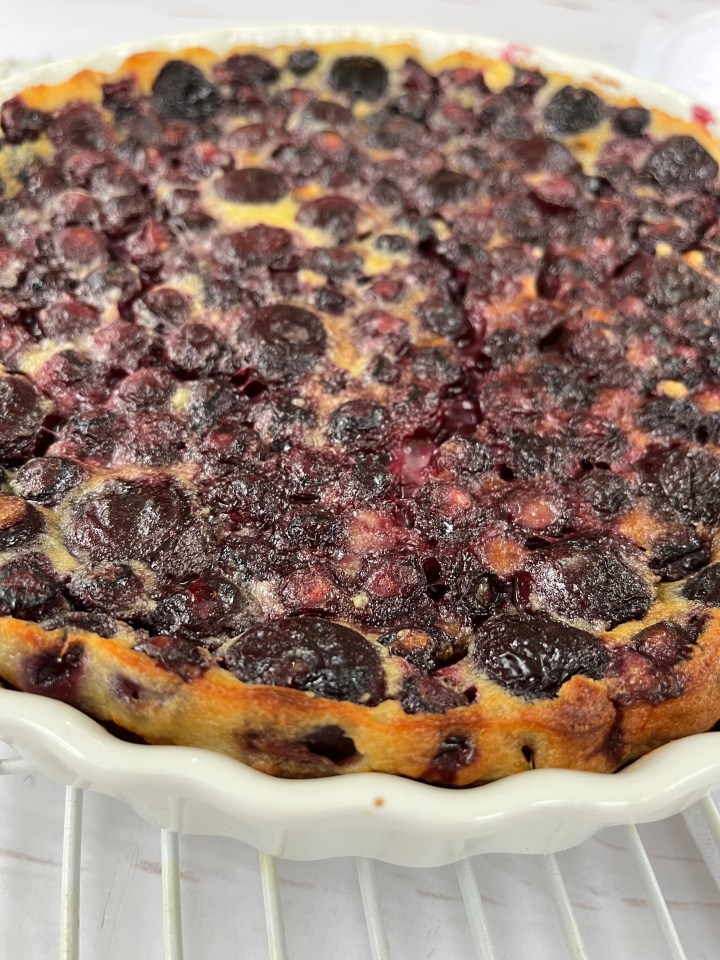
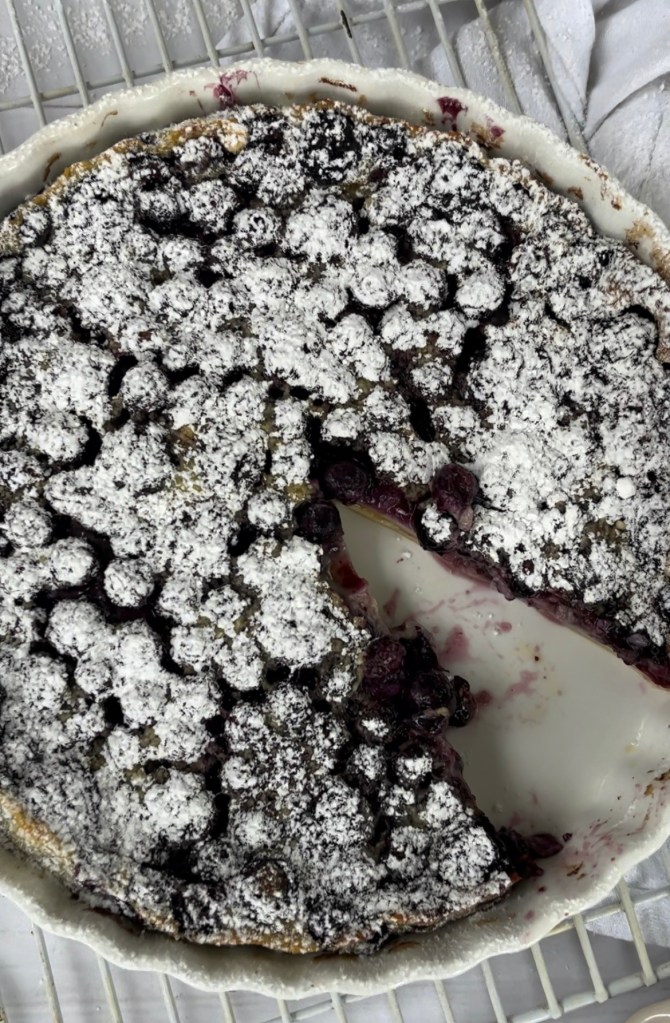
125ml sugar 125ml flour 3 eggs 5ml vanilla 30ml butter, melted 250ml milk enough pitted cherries to cover the bottom of a pie/flan dish
Preheat your oven to 180℃ and grease a ceramic pie/flan dish. Add the sugar and flour to a mixing bowl. Whisk the eggs, vanilla, melted butter and milk together in a wide-mouth jug. Slowly pour the milk mixture into the dry ingredients while whisking. Fill the bottom of the pie dish with an even layer of cherries and pour the batter over the cherries. Bake in the oven for 40 minutes. The clafoutis will puff up in the oven and fall back on itself as it cools. Dust with icing sugar once cooled.
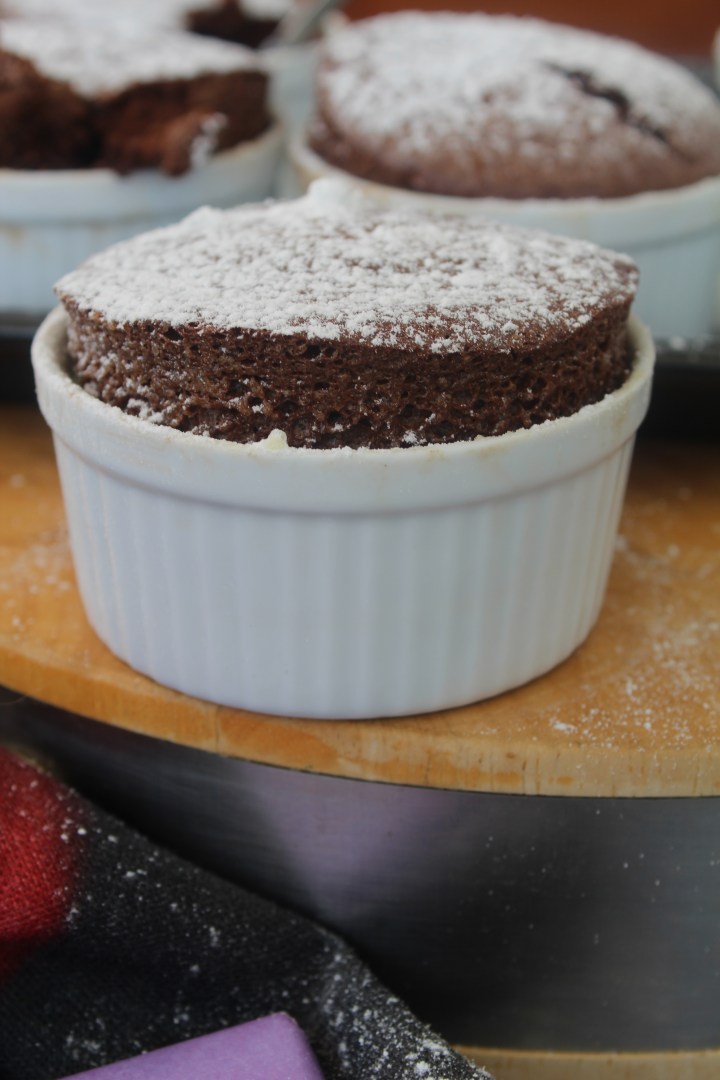
50g butter, melted 140g chocolate, chopped 30ml sour cream 10ml vanilla 4 eggs, separated 2 egg whites a pinch of cream of tartar a pinch of salt 45ml sugar
Preheat your oven to 200℃. Place 6 ramekins on a baking sheet, brush the insides evenly with the melted butter and dust with some sugar, making sure you cover the bottom and sides of each ramekin. Set aside. Add the chocolate to a heatproof bowl set over a saucepan of simmering water and allow to melt. Take the bowl from the heat, add the sour cream and stir through. Add the vanilla and stir through. Now add the egg yolks, one at a time and stir to combine. Set aside. Add the 4 + 2 egg whites to a clean mixing bowl, sprinkle the cream of tartar and salt over and whisk until soft peaks form. Add the sugar a teaspoonful at a time while whisking continuously. Fold a third of the egg white mixture into the chocolate with a metal spoon. Now add the rest and gently for into the chocolate mixture. Do not over mix but do get rid of white streaks in the mixture. Fill each ramekin. Gently run your thumb around the inside of the ramekin to create a small well. Bake the soufflés for 12 minutes. Dust with icing sugar and serve immediately.
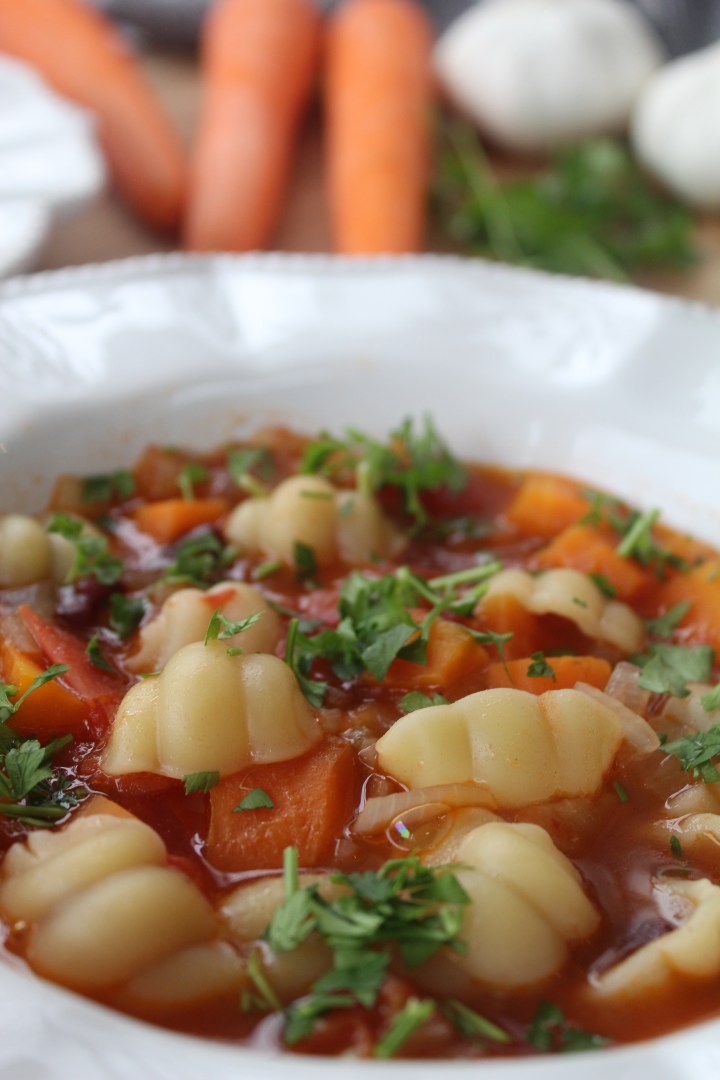
2 onions, chopped 3 cloves of garlic, minced 4 carrots, chopped 1 x 400g tin of chopped tomatoes 1 x 400g tin of butter beans (or any other white bean, cooked) 4 x 250ml vegetable stock 2 bay leaves 5ml dried thyme 250ml small pasta, e.g. elbows, shells, vermicelli 125ml fresh parsley, chopped salt and black pepper
Add some olive oil to a saucepan set over medium-high heat and fry the onion until soft. Add the garlic and stir-fry for 1 minute. Now add the carrots, tomato, beans, stock, bay leaves and thyme. Cover the saucepan with a lid and simmer for 20 minutes. Stir in the pasta and cook uncovered until done – about 10 minutes. Season to taste with salt and pepper. Sprinkle the chopped parsley over the soup and serve piping hot.
2.5 – 3kg oxtail vegetable oil 3 onions, chopped 4 clove of garlic, minced 60ml flour 5 carrots, peeled and chopped into chunks 2 bay leaves 2 x 400g tins of chopped tomato 250ml red wine 1,5l beef stock Worcestershire sauce
Dumplings: 250ml flour 7,5ml baking powder 2ml salt 60g butter, cut into small cubes 10ml dried mixed herbs 60-80ml milk
For the stew: Preheat your oven to 220℃. Add the oxtail to 2 large roasting tins and drizzle with the vegetable oil. Season with salt and pepper. Roast the oxtail for 20-25 minutes, until beautifully caramelised and golden. Set aside. Place a large saucepan on medium-high heat, add some vegetable oil and then add the onions. Cook until soft. Add the garlic and stir-fry for one minute. Sprinkle over the flour and stir while cooking for another minute. Now add the carrots, bay leaves, tomatoes, red wine, beef stock and about 6 dashes of Worcestershire sauce. Add the oxtail and whatever pan juices you have and bring to a simmer. Reduce the heat to a low simmer and partly cover with a lid. Simmer the oxtail for 3 hours, stirring every now and then. Remove the lid and check the consistency of the sauce – if it is too watery, simmer without the lid for 20-30 minutes longer. The sauce should be thick and rich and the meat should be fork tender.
For the dumplings: Add the flour, baking powder and salt to a mixing bowl and stir through. Add the butter and rub it into the flour mixture with your fingertips until it resembles breadcrumbs. Add the herbs and enough milk to form a soft dough. Spoon teaspoonful of the dough onto the oxtail stew and cover with a lid. Simmer for 15 minutes without opening the lid.
1 chocolate bar, broken into blocks – I used De Villiers nut butter chocolate puff pastry, store-bought 1 egg yolk and 15ml water, whisked together
Preheat your oven to 220℃ and line a baking sheet with baking paper. Cut the pastry into squares and follow the following technique to make little parcels:
Place the chocolate parcels on the prepared baking sheet and brush with the egg-wash. Bake for about 12 minutes, until golden. Serve warm.
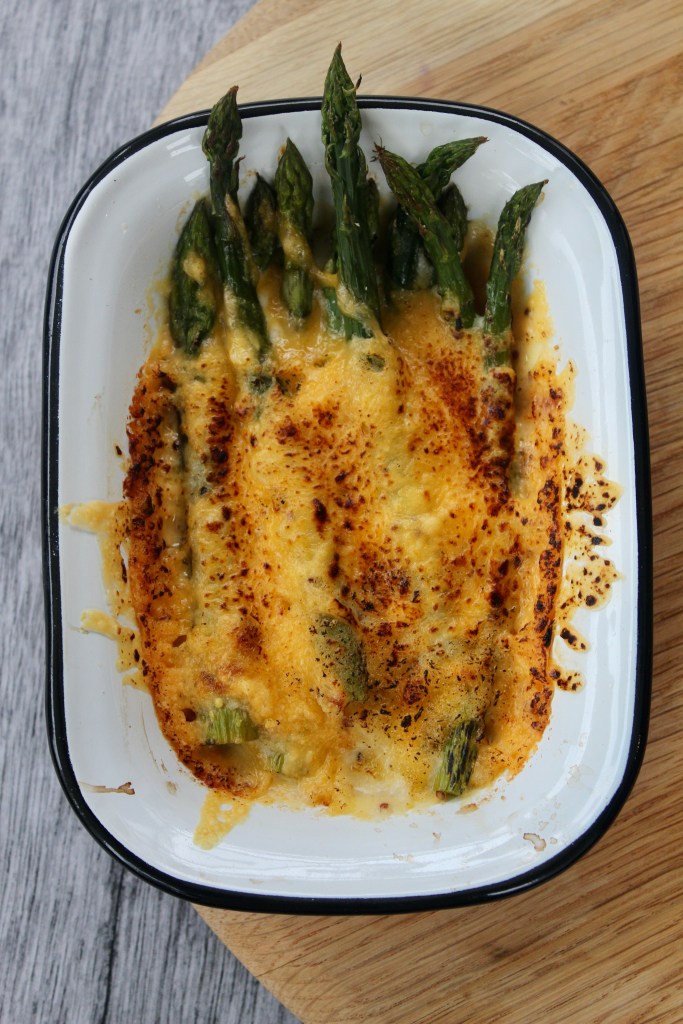
1 large bunch of green asparagus 80ml cream 5ml wholegrain mustard 5ml flour 2 cloves garlic, minced 2,5ml salt black pepper 80ml Panko breadcrumbs 250ml mature cheddar cheese, grated
Set your oven rack in the middle of the oven and preheat the oven to 200℃. Parboil the asparagus in salted water for 2 minutes. Remove from the heat, drain and plunge the asparagus into ice cold water for a minute. Drain on kitchen paper. Arrange the asparagus in a gratin (any ovenproof) dish and set aside. Stir the cream, mustard, flour, garlic and half the grated cheese together and season with salt and pepper. Pour the mixture over the asparagus and top with the breadcrumbs and the remaining cheese. Bake for 12 minutes. Increase the oven temperature and grill until golden brown – about 2 minutes. Serve immediately.
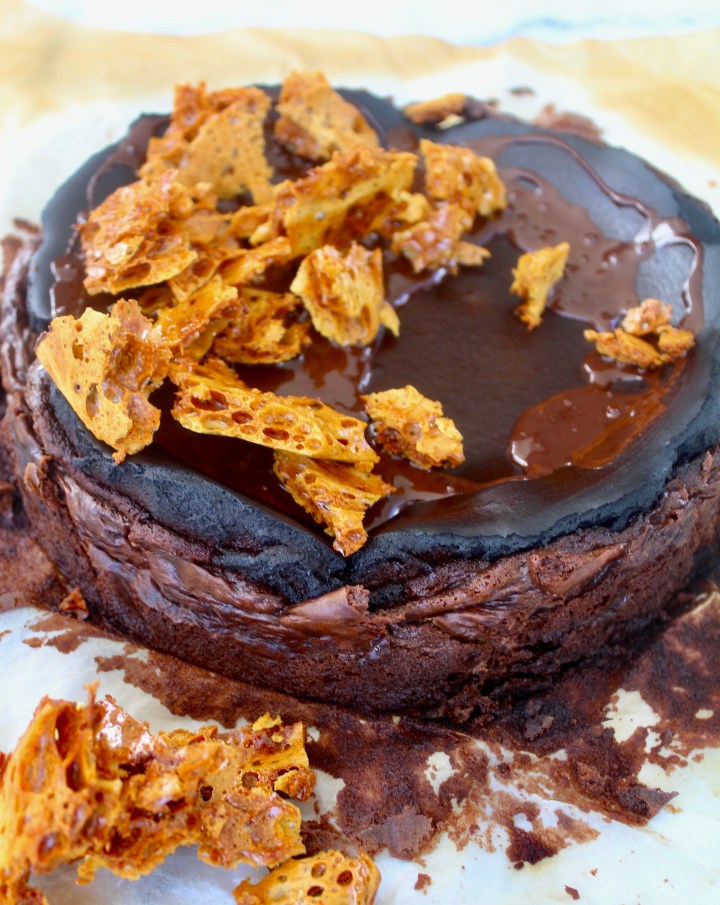
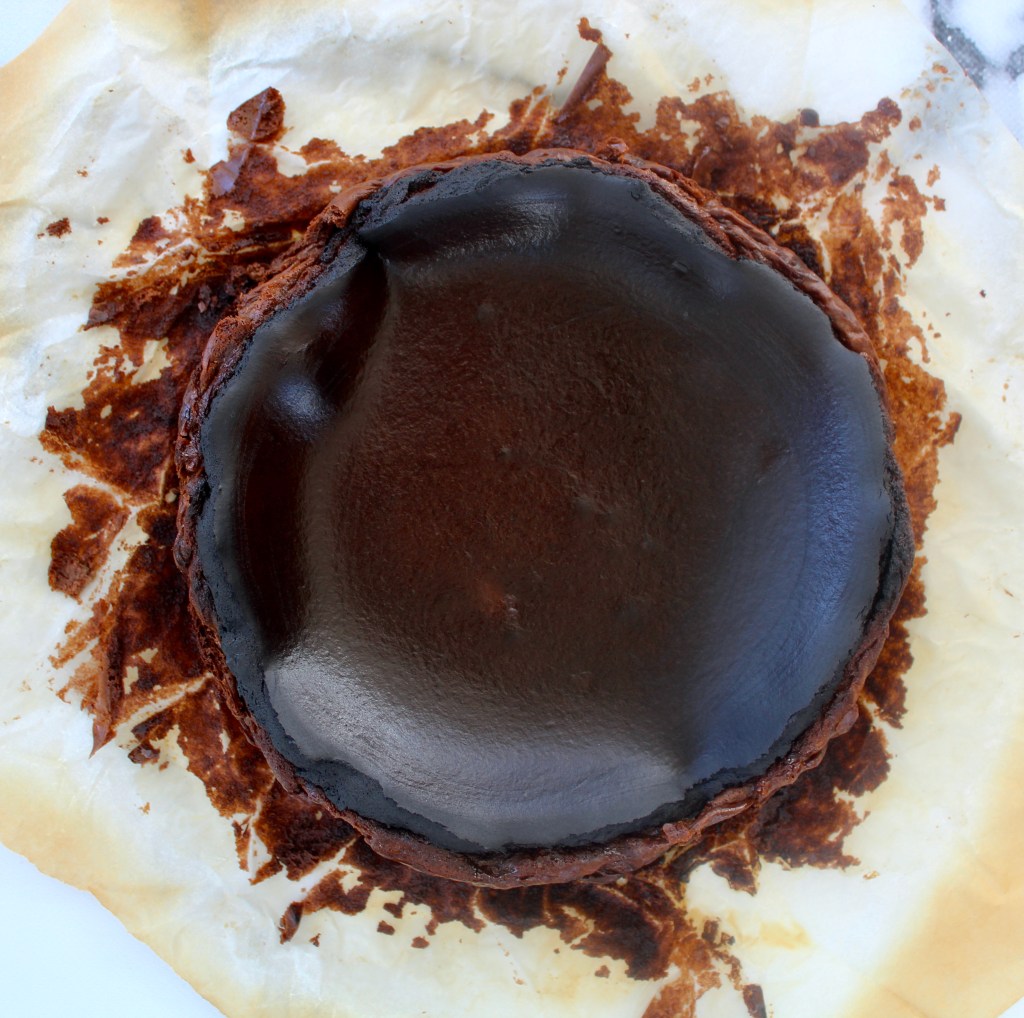
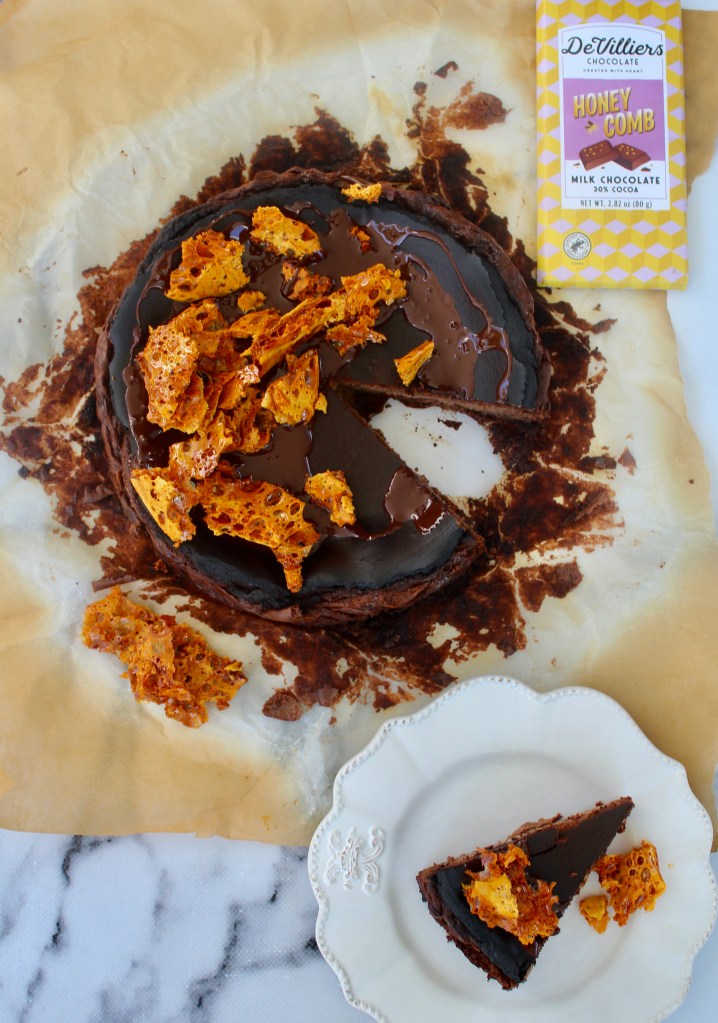
This recipe is a quick version of a burnt Basque cheesecake which one sees in almost every market on the French coastal region. The top of the cheesecake is supposed to be completely black, hence the name!
750g cream cheese, at room temperature 250g caster sugar 5 eggs 100g chocolate (honeycomb flavour), chopped 375ml cream 30ml cocoa powder, sifted 5ml vanilla a pinch of salt honeycomb or honeycomb chocolate (Crunchie), broken into pieces 60g chocolate (honeycomb flavour), melted
Preheat your oven to 220℃ and line a 22cm loose bottom cake tin with aluminium foil – this will prevent the cheesecake batter from leaking. Line the “foiled” cake tin with baking paper. Add the cream cheese and caster sugar to the bowl of a stand mixer fitted with the whisk attachment. Beat on high speed until the mixture is smooth and forms soft peaks. Turn the mixer to a low-medium speed and add the eggs one at a time. Add the chocolate and cream to a heatproof bowl set over a saucepan of simmering water. Stir until the chocolate has melted. Take the bowl from the heat and add the cocoa powder, vanilla an a pinch of salt. Stir through. Turn the mixer onto a low speed and pour in the chocolate mixture. Pour the batter into the prepared cake tin and bake for 60 minutes. DO NOT PANIC WHEN YOU SMELL THE CHEESECAKE BURNING!! Remove the cake from the oven and cool it completely. The cheesecake will have a wobbly centre when removed from the oven. Cover the cheesecake with plastic wrap and refrigerate overnight.
Place the cheesecake on a serving plate. Pour over the melted chocolate and scatter the broken honeycomb.
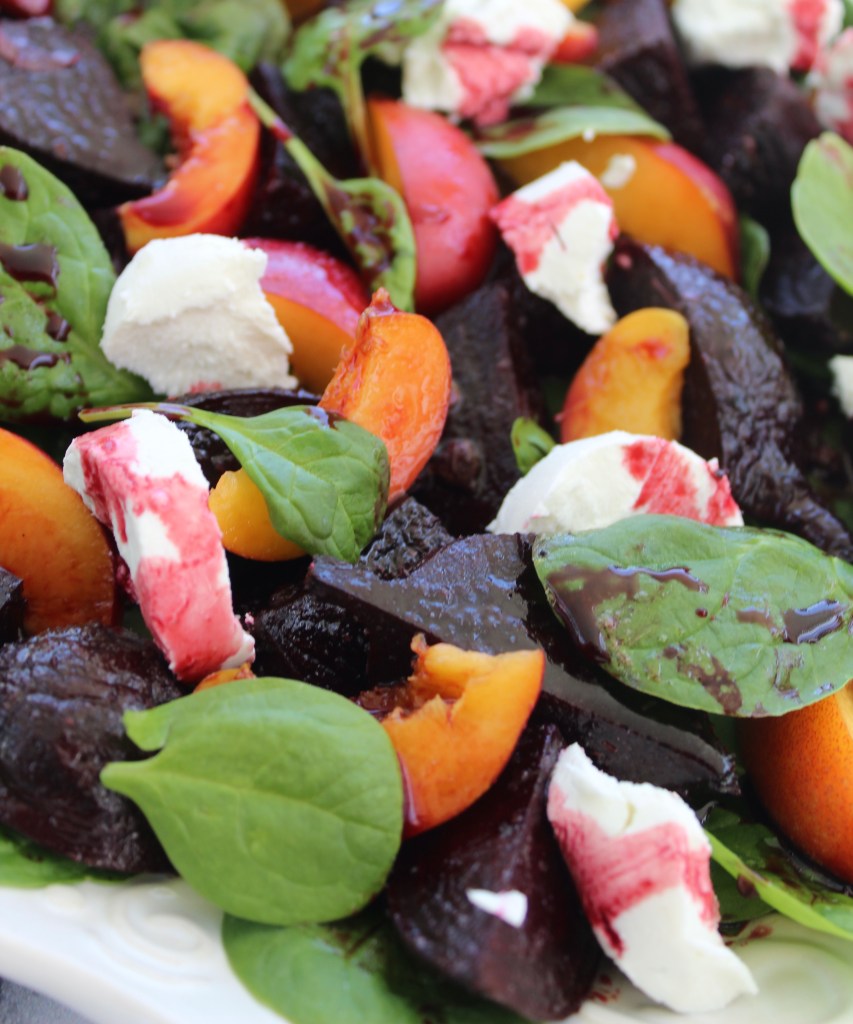
30ml butter, melted 15ml olive oil 83ml balsamic vinegar 30ml water 15ml sugar 1,2ml salt about 12 small/medium beetroot baby spinach 5 fresh peaches, stoned and quartered 100g goats cheese 30ml honey
Preheat your oven to 180℃. Add the melted butter, olive oil, balsamic vinegar, water, sugar and salt to a small bowl and whisk everything together. Set aside. Wash and scrub the beetroot and cut off the hairy parts at the root. Half or quarter each, depending on its size and place them in an oven tray. Pour the balsamic mixture over and cover the pan with aluminium foil. Bake the beetroot for 30 minutes, remove the foil, turn the beets and bake for a further 30 minutes or until fully cooked and beautifully glazed. Remove the tray from the oven and allow to cool. Reserve the pan juices. Arrange the baby spinach, cooled beetroot and peach quarters on a serving platter and break the goats cheese over it. Mix together 45ml of the reserved pan juices and the honey and drizzle over the salad. Serve as a side or with a fresh crusty bread as a lunch.
(Patates Fournou Lemonates) Unlike traditional roasted potatoes these lemon potatoes are soft, moist, tender and melting. The zing from the lemon cuts through the richness of lamb or meat dishes and is truly more-dish! This to me, is the essence of everything I love about Greece – do your tastebuds a favour…
12 potatoes, peeled 90ml olive oil finely grated zest of 2 lemons juice of 2 lemons 10ml salt a handful of thyme leaves
Preheat your oven to 180℃. Quarter each potato lengthwise and spread them in a large roasting tin. Drizzle with the olive oil, lemon zest, lemon juice and sprinkle over the salt and thyme leaves. Mix together with your hands so that the potato is covered with the mixture. Roast for 1 hour, turning once or twice during cooking. Add another sprinkle of salt and serve.
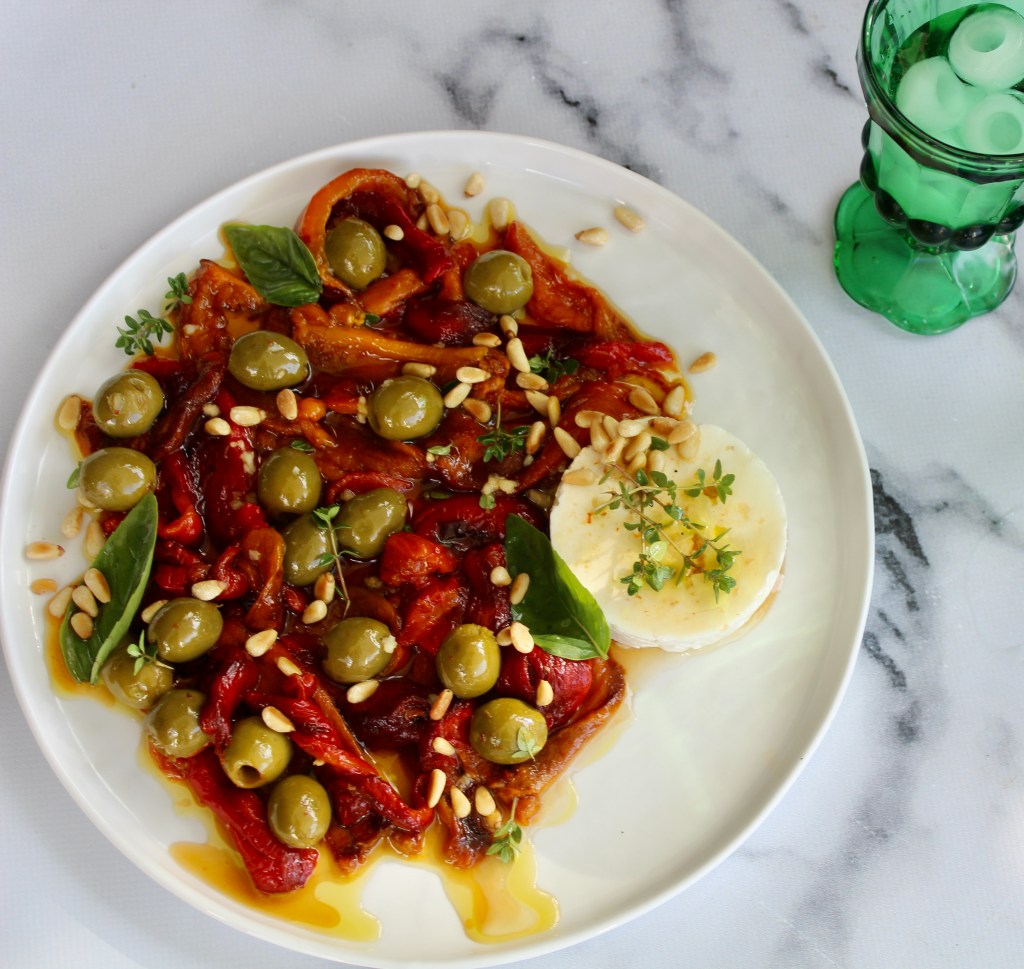
450g sweet peppers/bell peppers 30ml + 15ml olive oil 30ml white wine vinegar 1 clove of garlic, minced 12 basil leaves, chopped 2 sprigs of thyme 5ml sugar 2,5ml salt 45ml pine nuts, toasted 125ml crumbed feta cheese 125ml olives, pitted
Turn your oven on the grill setting and line a baking sheet with aluminium foil. Drizzle the 15ml olive oil on the peppers and spread evenly over each pepper with your hands. Place the peppers on the lined baking sheet and grill for about 15 minutes, until their skins are black. DO NOT take the peppers out too soon….they can not be too blackened! Immediately place the charred peppers in a mixing bowl and cover the bowl tightly with plastic wrap. Set aside until the peppers are cool enough to handle. Break open the peppers, remove the core and seeds and pull the skin from each. It is easiest to use your hands to scrape the seeds out and it is quite all right for the peppers to tear into strips! Add the peppers, oil, vinegar, garlic, basil, thyme, sugar and salt to a mixing bowl and refrigerate for one hour. Arrange the marinated peppers on a serving plate and top with pine nuts, feta and olives.







 My Whisk and I