Preheat your oven to 180℃ and spray an oven tray/sheet pan with cooking spray. Add the sugar, flour and marshmallow to a large mixing bowl. Add the butter, oil, cocoa powder and Coca Cola to a saucepan and bring to a boil. Pour the hot mixture onto the marshmallow mixture and stir until well blended – some of the marshmallow will melt, but not all of it. Pour the buttermilk into a small bowl and dissolve the baking powder in it. Add to the rest of the mixture and mix through. Now add the eggs and vanilla and give the mixture a last stir. Pour the batter in to the prepared oven tray and bake for 45 minutes.
For the frosting: Sift the icing sugar in to a mixing bowl. Add the butter, cocoa powder and Coca Cola to a saucepan and bring to a boil. Pour the hot liquids on to the icing sugar and blend well. Add the vanilla and nuts, stir through and spread onto the cake as soon as it comes out of the oven. Set aside and allow the cake to cool before serving.
For the filling: Add the corn flour to a large mixing bowl and pour in 50ml milk. Add the egg yolks and 50g sugar and whisk together. Set aside. Pour the 450ml milk and 50g sugar into a small saucepan set over medium-high heat. Stir until the sugar has dissolved. Bring the mixture to just before boiling point and take off the heat. Drizzle the warm milk mixture into the egg mixture while whisking continuously. Pour the mixture back into the saucepan and place it over medium-high heat. Stir until very thick and then cook for 30 seconds. Remove from the heat, add the vanilla and stir through. Pour the custard onto a dinner plate and cover with plastic wrap. Push the wrap directly onto the surface of the custard. Allow to cool to room temperature.
Your should make TWO batches of filling, separately.
For the cake: Preheat your oven to 180℃ and spray two loose-bottom cake tins and line the base and sides with baking paper. Add the flour, baking powder and salt to a bowl and whisk to mix. Add the eggs to the bowl of a stand mixer fitted with the whisk attachment and beat on high speed for 30 seconds. Slowly pour in the sugar while the mixer is running. Now beat on high speed until the mixture is three times its original volume – about 7 minutes or so. Scatter a third of the flour on the surface and mix on the lowest speed. Add another third, mix and then the remaining flour and mix again. Add the butter and milk to a saucepan set over medium heat. Stir until the butter has melted and the mixture is warm when you put your finger in it. NB: YOU WANT THE BUTTER TO MELT, YOU DONT WANT TO BOIL THE MILK! Pour the milk mixture into a large mixing bowl. Add the vanilla and vegetable oil and whisk through with a hand whisk. Add about 250ml of the egg and flour mixture and vigorously whisk to combine. The batter must be smooth. Turn the mixer on to a low speed and very slowly, pour in the milk. Scrape down the sides and the base of the bowl. Beat on low speed for 20 seconds. Divide the batter between the two prepared cake tins. Lift each tin 5cm from the work surface and then drop it – repeat a few times to knock out the large air bubbles. Place the cake tins in the oven and bake for 30 minutes. Remove from the oven and cool in the tins for 15 minutes before turning the cakes out on cooling racks and removing the baking paper. Leave to cool completely.
Assembling the cake: Slice the cake horizontally so that you have 4 cake discs. Spread the custard evenly on to each cake layer and stack them on a serving platter. Roast the flaked almonds in a dry pan, allow to cool and scatter over the cake to serve.
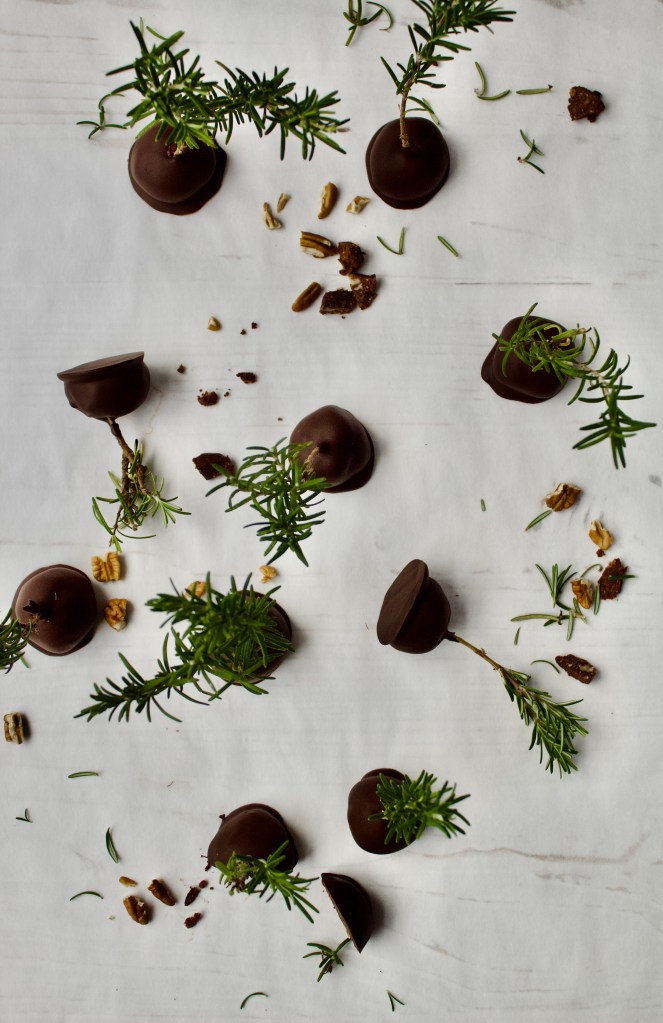
Add the 160g chocolate and butter to a heatproof bowl set over a saucepan of simmering water and allow to melt completely. Take off the heat and stir in the milk. Add the coconut, chocolate cake, icing sugar, pecan and rosemary and stir through. Allow the mixture to cool for about 15 minutes. Scoop 15ml portions into your hands and roll into balls. Place on a tray lined with baking paper and refrigerate until set. Scewer each truffle with a rosemary sprig. Add the remaining 160g chocolate to a heatproof bowl set over a saucepan of simmering water and stir every now and then to melt. Dip the truffles into the melted chocolate and place them back onto the lined tray. Stand the truffles at room temperature until the chocolate has set before serving.
These tiny loaves are deliciously moist and lemony and can be baked as cupcakes as well. The recipe yields about 10 mini loaves or 24 cupcakes.
200g flour 1,2ml baking powder 1,2ml bicarbonate of soda 1,2ml salt 15ml poppy seeds 105ml vegetable oil 210g sugar grated zest of 1 lemon 3 eggs 150g sour cream 7,5ml vanilla 15ml lemon juice
Lemon Buttercream: 200g butter, room temperature grated zest of half a lemon 10ml vanilla 15ml lemon juice 330g icing sugar, sifted
Preheat your oven to 160℃ and line 12 x mini-loaf tins with paper cups (2 x 12-hole muffin tins). Sift the flour, baking powder, bicarbonate of soda and salt together. Add the poppy seeds and set aside. Add the vegetable oil, sugar and lemon zest to the bowl of a stand mixer fitted with the paddle attachment. Turn the mixer on medium-high speed and mix for 1 minute. Turn the mixer down to a slow speed and add the eggs, one at a time. Turn off the mixer and scrape down the bowl. Turn back on to a low speed and add the flour mixture a spoonful at a time. Now add the sour cream, vanilla and lemon juice and mix until combined. Divide the batter among the paper cups and bake for 25 minutes. Remove from the oven and cool on a wire rack.
For the buttercream: Add the butter and lemon zest to the bowl of a stand mixer fitted with the paddle attachment. Mix on high speed for 2 minutes, scrape down the bowl and mix for another 2 minutes. Add the vanilla and lemon juice and mix until incorporated. Turn the mixer to medium speed and add the icing sugar a spoonful at a time. Pipe/spread on to the cupcakes.
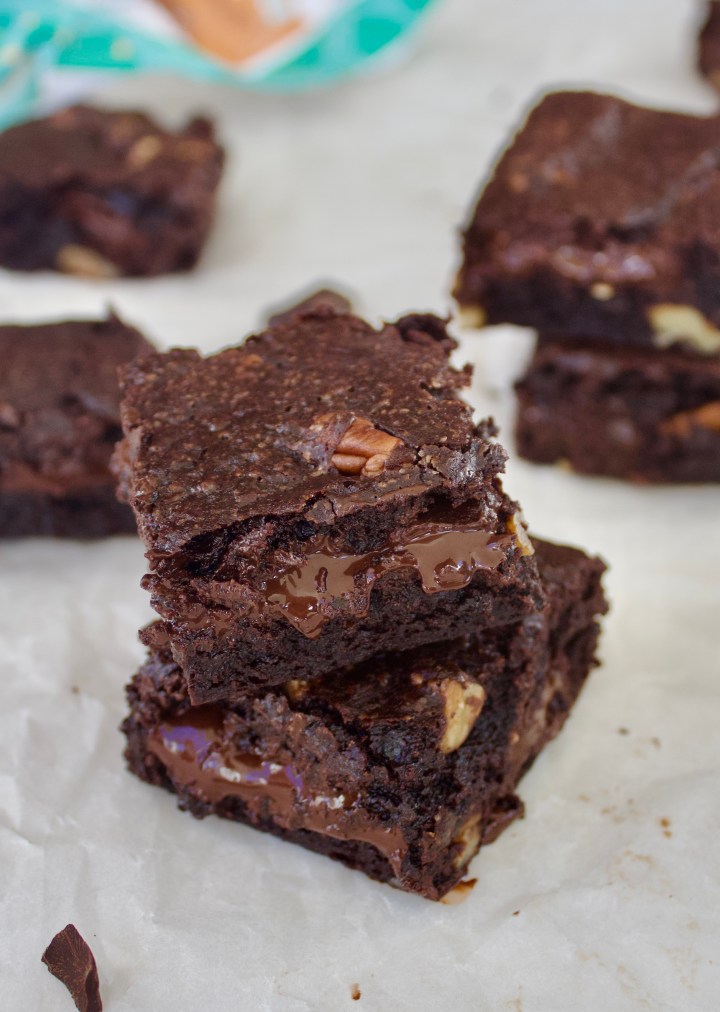
145g butter 250g sugar 80g cocoa powder, sifted 1,2ml salt 7,5ml vanilla 2 eggs 65g flour 75g pecan nuts, roughly chopped 2 x 80g slabs of chocolate
Preheat your oven to 180℃ and line a 20cm x 20cm baking tin with baking paper. Add the butter, sugar, cocoa powder and salt to a heatproof bowl set over a saucepan of simmering water. Stir the mixture every now and then until the butter has melted and the mixture is amalgamated. Remove the bowl from the saucepan and add the vanilla. Stir through. Add the eggs one-by-one and beat to incorporate, with a wooden spoon. Add the flour and beat again to incorporate. Add the pecan nuts and stir through. Spoon half the batter in to the prepared baking tin and spread it out evenly. Place the chocolate slabs, side-to-side, on the batter and cover with the rest of the brownie batter. Bake in the oven for 25 minutes. Remove the brownies from the oven and cool completely. Slice into 16 squares.
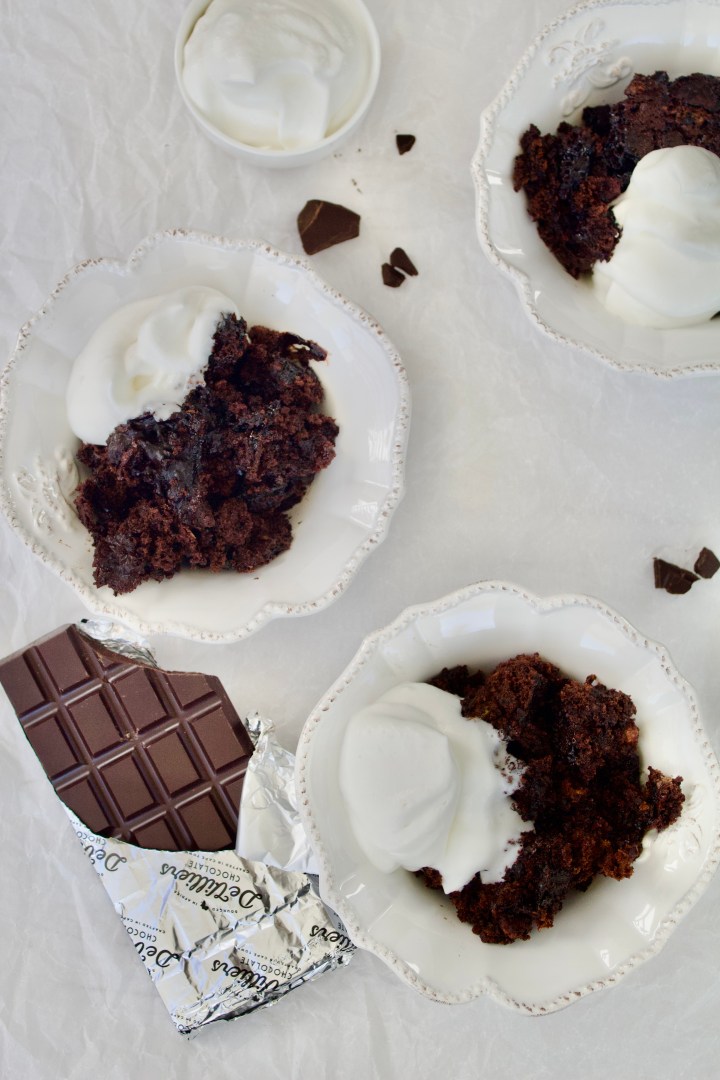
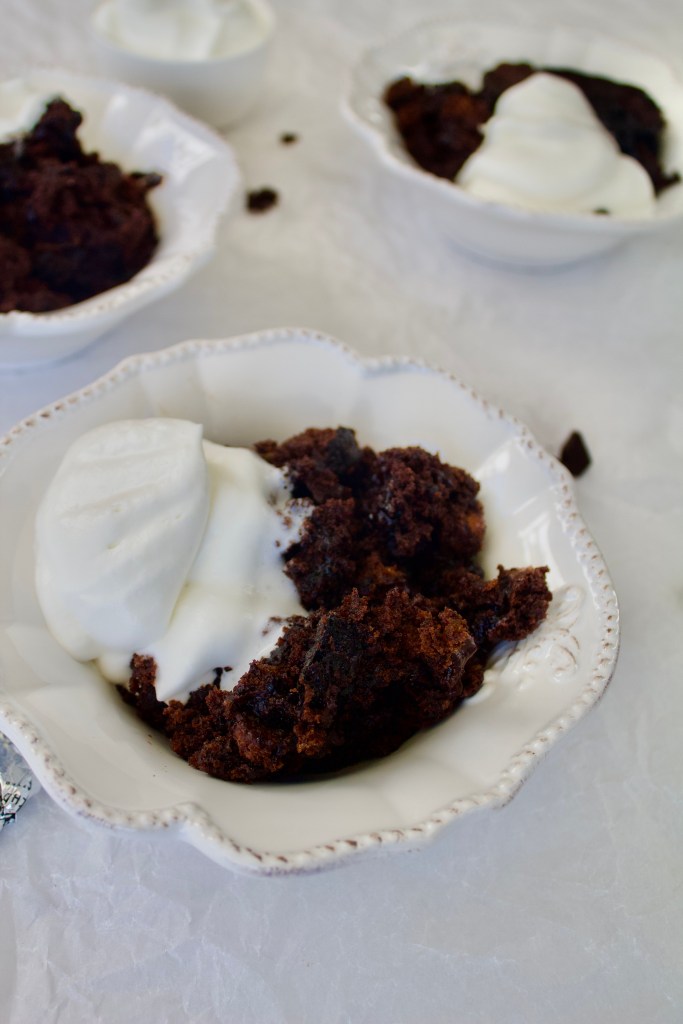
Preheat your oven to 180℃ and spray a 20cm x 20cm baking tin with cooking spray. Add the flour, cocoa powder, sugar, salt and baking powder to a mixing bowl and stir together with a whisk. Add the egg, melted butter, milk and vanilla to a jug and whisk together. Pour the wet ingredients in to the dry ingredients. Add the chopped chocolate and nuts and stir to mix. Spoon the batter in to the prepared baking tin. Add the 80ml granulated and brown sugar and the cocoa powder, to a bowl and mix. Sprinkle the mixture over the cake batter. Pour the coffee over and bake in the oven for 25 minutes. Serve the chocolate pudding cake with cream or ice cream.
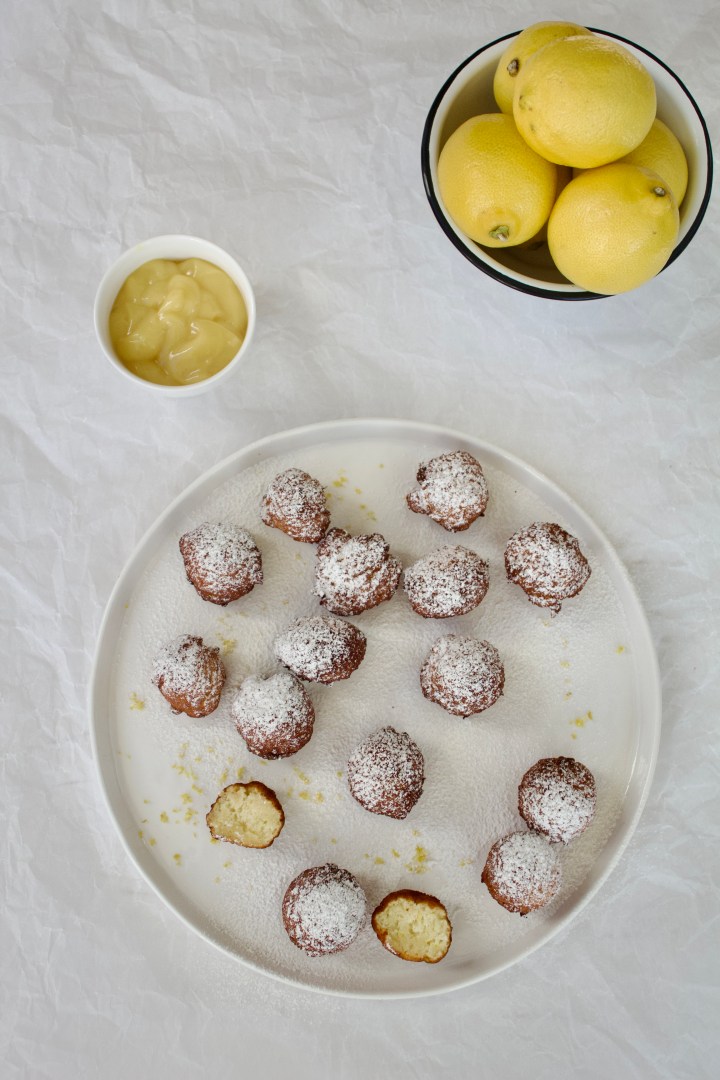
The recipe yields a small batch of around 16 small donuts. Feel free to double-up!!
80ml greek yoghurt 45ml lemon curd 10ml lemon zest 190ml self-raising flour vegetable oil for deep frying icing sugar
Add the yoghurt, lemon curd and zest to a mixing bowl and mix together. Add about two thirds of the flour and mix through. You should have a very thick, sticky dough. To test the consistency, break off a piece and roll between your palms. If you can’t form a ball and the dough is too sticky, add sour flour, mix again and give it another try. You want as little flour as possible so that you produce a light, airy donut. Scoop up 15ml of the dough with a measuring spoon and roll between your palms to make a ball. Place the balls on a tray lined with baking paper. Pour some vegetable oil about 5cm deep, into a small saucepan. Heat to 170℃. Add the donuts to the preheated oil and fry in batches until golden brown. Drain on kitchen paper. Arrange on a serving plate and dust with icing sugar.
Preheat your oven to 180℃ and line a 25cm x 11cm loaf tin with baking paper. Add the flour, sugar, baking powder, salt and cinnamon to a mixing bowl. Set aside. Add the eggs, mashed banana and oil to a jug and whisk together until amalgamated. Pour the mixture into the flour and mix just until you can no longer see dry ingredients. Add the grated carrot and pecan nuts and fold through until evenly distributed. Place in the oven and bake for 1 hour. Test the bread by inserting a skewer to see if it comes out clean. Cool in the loaf tin for 10 minutes before removing and cooling on a wire rack. The bread should be completely cooled before slicing.
Preheat your oven to 200℃. Spread the hazelnuts on a baking sheet and roast them in the oven for 10 minutes. Give the pan a shake halfway through baking time. Spread the warm nuts between two tea towels and rub them so that the skins come off. Turn your oven temperature down to 180℃ and spray a 22cm loose-bottom cake tin with cooking spray. Line the bottom of the tin with baking paper. Add 200g of the cooled hazelnuts to a food processor and blitz until fine – a similar texture to that of breadcrumbs. Add the butter and chocolate to a heatproof bowl set over a saucepan of simmering water and allow to melt. Remove from the heat and stir in the ground hazelnuts. Set aside to cool for 5 minutes. Add the egg yolks and sugar to a mixing bowl and beat for 4 minutes with an electric whisk. Add it to the hazelnut mixture and stir by hand until well combined. Pour in the orange juice and stir through. Add the egg whites to a clean bowl and whisk to stiff peaks. Spoon a third of the whites into the hazelnut mixture and stir through to loosen. Now add the remaining whites and gently fold through. Spoon the batter into the prepared cake tin and bake for 40 minutes. Remove the cake and leave to cool in the baking tin for 30 minutes. Unclip the outside ring and invert the cake on a serving plate. Pull off the baking paper and leave the cake to cool completely. Melt about 80g of hazelnut chocolate, pour on the cake and sprinkle over the remaining hazelnuts.
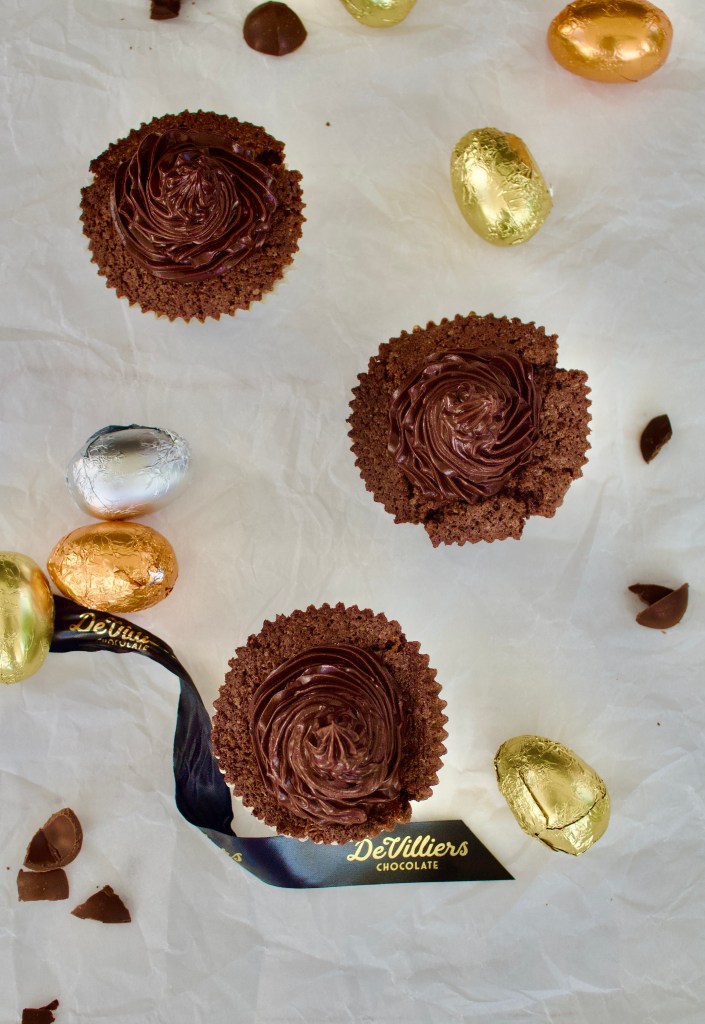
You can top these cupcakes with a chocolate ganache icing or leave them plain – I prefer plain as they are sweet and gooey with the melted Easter egg on the inside.
200g butter, room temperature 200g sugar 200g flour 83ml cocoa powder, sifted 7,5ml baking powder 1,2ml bicarbonate of soda 2,5ml salt 150ml sour cream 2 eggs, lightly beaten 7,5ml vanilla 12 small, filled chocolate eggs
Preheat your oven to 180℃ and line a 12-hole muffin tin with paper cups. Add the butter and sugar to the bowl of a stand mixer fitted with the paddle attachment. Cream together on high speed, scrape down the bowl and mix again on high speed. Add the flour, cocoa powder, baking powder, bicarbonate of soda and salt. Mix on low speed until the ingredients are incorporated. Remove the mixing bowl from the mixer and add the sour cream, eggs and vanilla. Stir through by hand until just incorporated. Divide the batter between the 12 paper cups and insert a filled chocolate egg in each. Bake the cupcakes for 20 minutes. Remove from the oven and cool on a wire rack.







 My Whisk and I