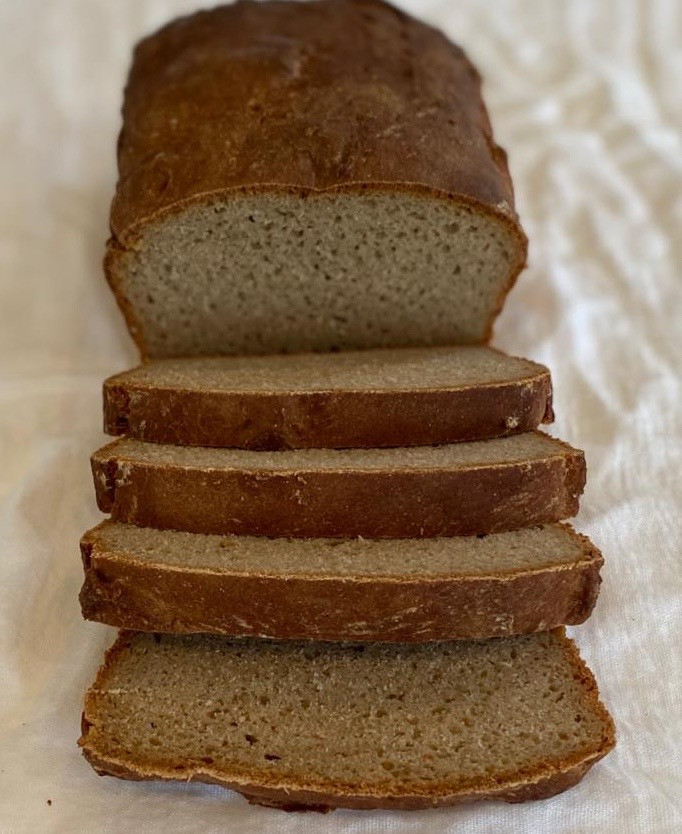
I found the inspiration for this recipe on the back of a 2 kilogram Bio-Wheat Flour package. The original recipe is a light rye bread and belongs to the Fourie family.
This bread takes no effort to make and is truly delicious and filled with goodness.
350g Bio-Wheat Rye Flour
150g Bio-Wheat Course White Flour
30ml brown sugar
10ml salt
10g dry yeast
400ml lukewarm water
15ml honey
15ml oil
15ml vinegar
Sprinkle the yeast onto the water and stir until dissolved. Put aside.
Grease a medium sized bread tin.
Mix the dry ingredients together in a mixing bowl.
Add the honey, oil and vinegar to the yeast mixture and give it another stir.
Add the wet ingredients to the dry and mix through with a spatula.
Spoon the mixture into the prepared bread tin and even out the surface with the back of the spatula.
Cover the baking tin with a clean tea towel and set aside for one hour.
Preheat your oven to 180℃.
Once the bread has proofed for an hour, bake it for another hour.
Cool on a cooling rack for 10 minutes before turning the bread out and allowing it to cool completely before slicing.
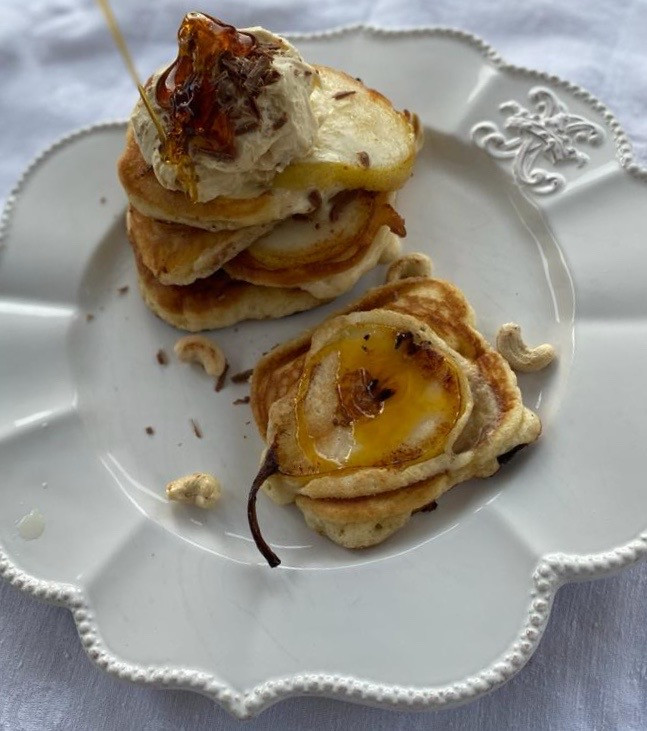
I met Armand Aucamp from “Armand Kook Kaal” while helping him in the kitchen at the Stellenbosch Woordfees. We made some fabulous Banting and Keto recipes from his recipe book NUDE for the tasting kitchen at the festival.
This tall, dark and handsome man had me in his pocket after the first day! He is warm, kind, with his feet firmly on the ground and his generosity reflected in the food he makes. This recipe was inspired by his “French Toast with Brinjal” (read more about his book in the COOK & BOOK section of this blog).
You can get the crumpet/flapjack recipe from my recipes on this blog.
Chocolate cream cheese:
250g cream cheese
5ml vanilla extract
a pinch of cinnamon
50g chocolate, finely chopped
a handful of nuts, roasted and roughly chopped
15ml honey
Add the cream cheese to a small mixing bowl and beat it with a spatula until it becomes creamy and soft.
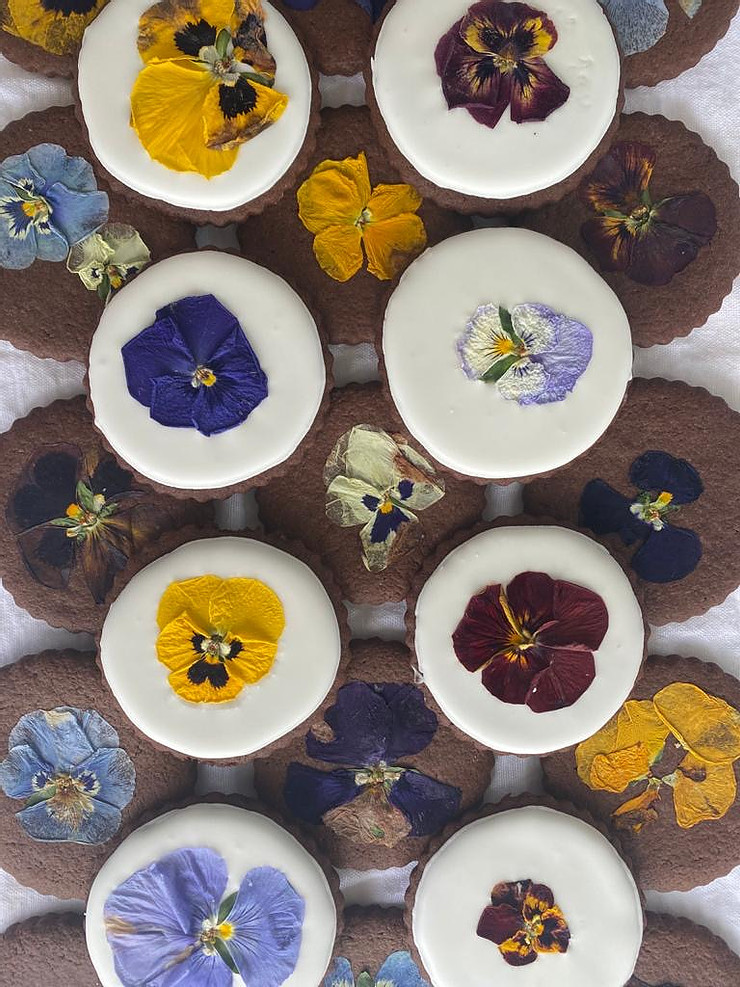
This is an easy and delicious recipe to make any cut-out biscuits with, whether it is for a birthday party and you want hearts, cats or dinosaurs, or whether you need a tea-time biscuit decorated with edible flowers.
240g butter
360g caster sugar
2 eggs
10ml vanilla extract
440g cake flour
70g cocoa powder, sieved
5ml baking powder
5ml bicarbonate of soda
2,5ml salt
Add the butter and sugar to the bowl of a stand mixer fitted with the paddle attachment.
Beat until light and fluffy.
Add the eggs and vanilla and mix at high speed for 1 minute.
Sift the flour, cocoa powder, baking powder, bicarbonate of soda and salt into a separate mixing bowl.
Now add a spoonful of this mixture with the engine running on low speed until all of the dry ingredients have been incorporated.
Scoop the biscuit dough into a plastic bag and put into the refrigerator for at least an hour to firm up.
Preheat your oven to 180℃.
Line a baking sheet with baking paper or a silicone baking mat.
Lightly dust a work surface with cake flour and roll the dough to a thickness of between 3 and 5mm.
Cut the biscuits with a biscuit cutter and place onto the baking sheet.
Bake in the preheated oven for 7 minutes.
Remove the baking sheet from the oven and allow the biscuits to cool on the sheet for 5 minutes so that they may firm up.
Cool the biscuits completely on a cooling rack before decorating.
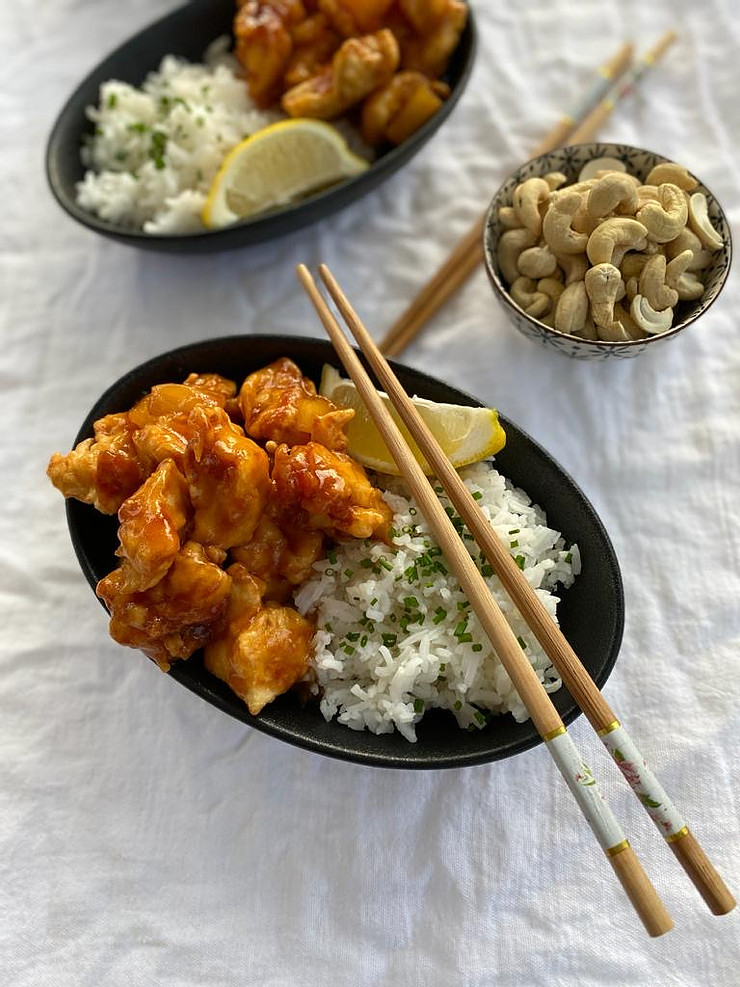
This is a really easy dish to make and you will most probably have all the ingredients in your store cupboard. If you would like some spiciness you may add a chopped chilli to the sauce before adding the fried chicken.
6 – 9 skinless chicken breasts, cut into ±2cm X 2cm pieces
Batter:
125ml cornstarch
125ml cake flour
5ml salt
1 egg
30ml vegetable oil
125ml water
Add all the ingredients to a mixing bowl and whisk until you have a smooth batter without any lumps.
Add the chicken to the batter and stir through so that all the chicken pieces are coated in batter.
Set aside.
Sweet-and-sour sauce:
45ml oil
6 cloves of garlic, minced
15ml grated, fresh ginger
375ml water
75ml rice wine vinegar or malt vinegar, or any other vinegar you have
90ml honey
90ml tomato sauce
90ml soy sauce
1 tin of pineapple pieces or 250ml fresh pineapple cut into 1cm pieces
30ml cornstarch
15ml cold water
Heat a small saucepan on medium heat and add the vegetable oil to it.
Fry the garlic and ginger for one minute.
Add the water, vinegar, honey, tomato sauce, soy sauce, salt and pineapple and whisk while on the heat.
Bring to a light simmer.
Make a slurry by mixing the cornstarch and cold water in a small bowl.
Add the slurry in a steady stream to the simmering mixture, while whisking continuously.
Allow the mixture to thicken.
Keep warm.
Heat some vegetable oil for deep frying to about 170℃.
Fry the batter-covered chicken in batches until beautifully golden.
Once all the chicken has been fried, heat the sauce and place the chicken pieces into the sauce to warm through.
One of the very best dishes I have ever eaten is the Pumpkin Risotto and Arancini by Chef Liam Tomlin. I can have it for breakfast, lunch and dinner and have it again the next day. ( See my COOK & BOOK section for more about his latest book TAPAS, where you can find the recipe.)
This recipe is for Arancini made with leftover mushroom risotto, but you may use any risotto to make these. It is a delicious and substantial canapé to have with that perfect glass of wine or alternatively, served with a salad as a starter.
cold, leftover mushroom risotto (recipe on this site)
±100g flour, seasoned with salt
2 eggs, lightly beaten
± 100g fine breadcrumbs
Mozzarella cheese, cut into 1cm X 1cm cubes
vegetable oil for deep-frying
Line a baking tray with baking paper.
Scoop about 15ml of the risotto into your hand (I use my measuring spoon for this) and push a cube of cheese into it. Manipulate the rice to cover the cheese completely and shape into a ball. Place the risotto ball on the lined baking sheet. Keep going until you have the quantity you want.
Line up 3 shallow containers.
Add the flour to the first container, the eggs to the second and the breadcrumbs to the third.
Now roll a risotto ball in the flour, dip it into the egg mixture and finally roll it in the breadcrumbs.
Make sure that each risotto ball is completely covered by each of the ingredients before proceeding to the next.
Place the coated balls back onto the lined tray.
Add enough vegetable oil to a heavy based saucepan to deep-fry the balls. The oil should be about 170℃.
Place a risotto ball onto a slotted spoon and lower it into the heated oil. Add about 4 -5 at a time, depending on the size of the saucepan, and fry until beautifully golden.
Lift out onto some kitchen paper to drain the excess oil.
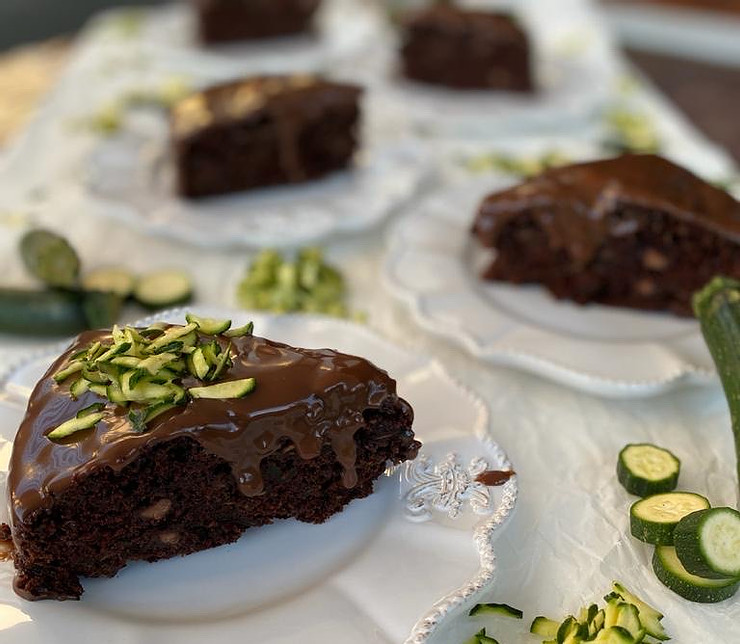
This is one of my all-time favourite cakes. It is not too sweet but wonderfully moist. It has the finest crumb but you get the texture of the zucchini. It is totally satisfying and extremely moorish. I really love eating this cake.
If you are a food snob, this recipe is NOT for you. I add local, ordinary milk chocolate to the cake and I make the ganache with local, ordinary milk chocolate. I believe it balances the tastes, but feel free to add a 70% cocoa chocolate if you wish.
240g flour
60g cocoa powder
15ml bicarbonate of soda
2,5ml baking powder
2,5ml salt
110g butter at room temperature
180g sugar
5ml vanilla extract
5ml coffee granules
3 eggs
350g zucchini, grated
150g milk chocolate, roughly chopped into chunky pieces
150g milk chocolate
300g cream
Preheat your oven to 180℃.
Grease a 23cm loose-bottomed cake tin.
Mix the flour, cocoa powder, bicarbonate of soda, baking powder and salt in a mixing bowl.
Add the butter and sugar to the bowl of a stand mixer fitted with the paddle attachment. Beat until light and fluffy, scraping down once or twice.
With the machine on low speed, add the vanilla, coffee granules and eggs. Beat well in between each addition.
Now, reserve about 120g of the flour mixture and set it aside.
Add the rest of the flour mixture to the egg mixture with the machine on low speed.
Add the grated zucchini and chopped chocolate to the reserved flour mixture and lightly mix it through. The aim is to cover the zucchini and chocolate with flour. Break up any lumps that may form by pushing lightly onto it with a spoon.
Fold the zucchini mixture into the cake batter.
Spoon the mixture into the prepared cake tin and level the batter with the back of a spoon.
Bake for 40 minutes or until a cake tester inserted into the centre comes out clean.
Transfer the cake to a cooling rack for 10 minutes before running a sharp knife around the edge of the cake. Remove the cake ring and allow the cake to cool completely
Milk chocolate ganache:
Chop the chocolate into small pieces and add it to a glass bowl.
Pour the cream onto the chocolate.
Fill a small saucepan onto which the glass bowl can fit with 5-6 cm of water. Turn on the heat and bring the water to a simmer.
Now put the glass bowl onto the saucepan. Make sure that the bottom of the bowl does not touch the water.
Allow the mixture to warm up, stirring occasionally until the chocolate has melted completely.
Remove from the heat and put the bowl onto a dry tea towel.
Beat the mixture by hand so that it can cool down. If you become tired, leave the ganache to stand and return 5 minutes later to beat again. You need a thick, smooth, cool mixture to pour onto the cake. All lumps can be removed by beating the ganache vigorously by hand.
Once the ganache is cool enough and the cake has cooled completely, you may pour the ganache onto the cake.
The picture is of a sirloin steak with Chimichurri sauce. Below I offer tips on cooking the perfect steak, served with your favourite sauce.
The quality of the meat you choose is very important. A steak that has been dry-aged for 30 days and is between 3 and 4 cm thick is perfect in every way.
Bring the steak to room temperature at least one hour before cooking it.
Generously salt the steak and rub the salt into the meat as this cures the surface of the meat, leaving you with a tender and flavoursome piece of meat. You may salt it 24 hours in advance but one hour before cooking is quite enough time.
Preheat your oven to 180℃.
Pat the steak dry and lightly salt it once more. You do not want to add pepper to your steak before cooking, it as the pepper will burn. Add pepper to an already cooked steak.
Put a heavy-based frying pan onto a high heat.
Add a knob or two of butter and rosemary/thyme/garlic, if you so wish.
Wait for the pan to heat up.
Add the steak to the pan and do not touch it for 2-3 minutes before turning it. Now hold the pan on a slight angle and baste the steak with the flavoured butter. Cook in this way for another 2-3 minutes to develop a golden colour and the most incredible aromas!
Stick the pan into the preheated oven for 4 minutes so that the steak heats through. It will not cook further if you allow 4 minutes!!
Remove the steak from the oven and remove it from the pan. Cover with tinfoil and a tea-towel. Rest for 10 minutes so that the meat can relax and absorb all the juices.
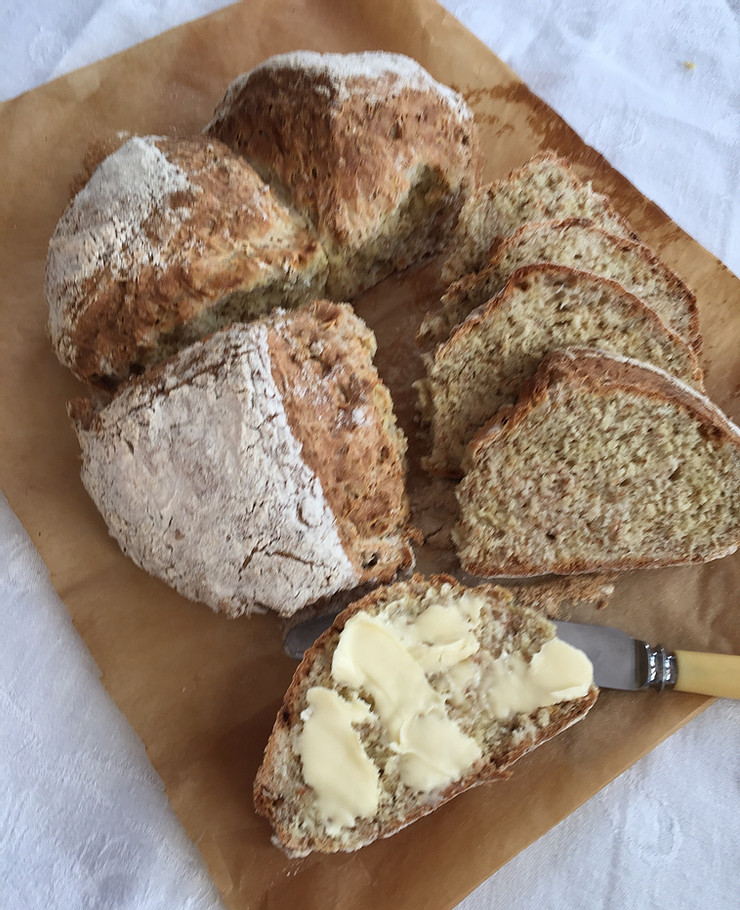
This is one of my all-time favourite quick-breads when I have no time, a steaming pot of soup and am in desperate need of good, fresh bread.
250g wholemeal flour
250g cake flour
5ml bicarbonate of soda
5ml salt
420ml buttermilk
Add the wholemeal and cake flour to a large mixing bowl.
Add the bicarb, salt and then mix in the buttermilk to form a sticky, stiff dough.
Tip the dough onto a work surface that has been floured. Now roll and fold the dough for two minutes or so, but do not knead it.
Shape it into a round and flatten slightly with the palm of your hand.
Line a baking sheet with baking paper and place your bread onto it. Dust the bread with cake flour.
Divide the bread into quarters by cutting across, turning and cutting once more. Once you’ve pushed the knife through, wiggle it slightly from side-to-side to separate slightly. When the dough rises and bakes it will join up again.
Let the bread rest on the work surface for 30 minutes.
Preheat your oven to 200℃.
Bake for 30 minutes.
The bread should sound hollow when tapped on the bottom.
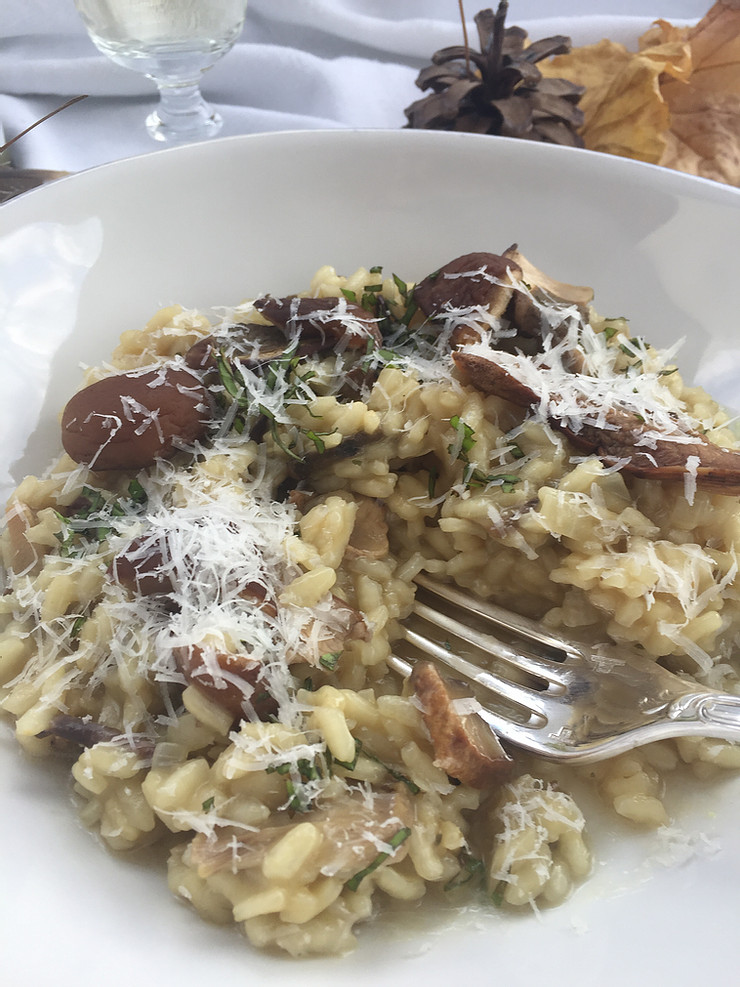
When I was at chef school, one of my favourite chefs and lecturers used to say that you cannot make risotto while you are angry at someone! If you’re making risotto the traditional way you have to stir, pour stock and stir some more for about 40 minutes. I am very inpatient but I love cooking risotto. There is something calming and soothing about tending to a pan of risotto and of course, if you’ve tasted a good risotto once, you have the sublime end-product to look forward to.
Because the risotto relies on the mushroom for its dominant flavour I would recommend sourcing dried Porcini mushrooms. They are fragrant and earthy and brings an other-worldly fabulousness to this dish. Try Delheim Wine Estate for Porcini mushrooms that have been foraged and dried on their estate and while you’re at it, get a few bottles of their Sauvignon Blanc as well! (See the COOK & BOOK section for more detail on Delheim).
±80g risotto rice per person (I use 100g per person so that I have enough risotto left over to make Arancini the next day)
100g butter and some good olive oil
100g dried Porcini mushrooms or mixed mushrooms
250ml white wine, the Delheim Sauvignon Blanc is utterly delicious!
1 onion, very finely chopped
5 cloves of garlic, minced
2 litres of stock
salt
parmesan or pecorino cheese
Soak the dried mushrooms by placing them in a bowl and adding warm tap water to it. Allow to stand and soak for at least 1 hour.
Put a sieve over a stock pot and drain the mushrooms into the pot so that you have the mushrooms in the sieve and the soaking liquid in the pot. Put the mushrooms to the side and add the 2 litres stock to the mushroom liquid. Turn on the heat to warm the stock. Once warm you may turn the heat to low, so that the stock keeps warm.
Now, pour yourself a glass of the Sauvignon and put a heavy-based, deep pan onto medium to high heat. Add the butter to the pan and allow to melt.
Add more or less the same amount of olive oil to the melted butter and stir in the onion.
Add the garlic and stir the mixture for 1 minute before adding the risotto rice.
Stir the rice around so that every granule gets coated with the butter and oil mixture and the grains start to appear almost translucent.
Add the white wine and allow it to bubble for about 2 minutes.
Now add about two ladles full of stock to the rice and stir around slowly, waiting for the rice to absorb the liquid. Add another two ladles full of stock and stir again. Keep adding and stirring until the rice isn’t absorbing any more stock.
The risotto should now be creamy and not dry and the rice must retain its “bite”/be al dente.
Add the soaked mushrooms that you have kept to the side and allow it some time to integrate and release its flavour into the dish.
Season the risotto with salt and by grating a generous amount of parmesan into it and taste whether it is to your liking.
Serve with extra parmesan, a crusty loaf of bread and a good wine.