Hi and welcome to my blog! My name is Karen and I love cooking simple, uncomplicated, flavourful food. My cooking is inspired by seasonal ingredients, punchy flavours, an awareness of sustainability and of course by the likes and dislikes of my family and friends that sit around my table as well as you, the virtual guests around my table!
I am a chef, recipe developer and food stylist and generate my own content. I am also completely addicted to recipe books, of which I have an extremely large collection but the essence of my food is about celebrating life and all the fabulousness that we can add by creating good food.
Thank you for reading my blog. Please keep on giving me feedback and may your kitchen, as mine, be filled with joy and the best tasting food!
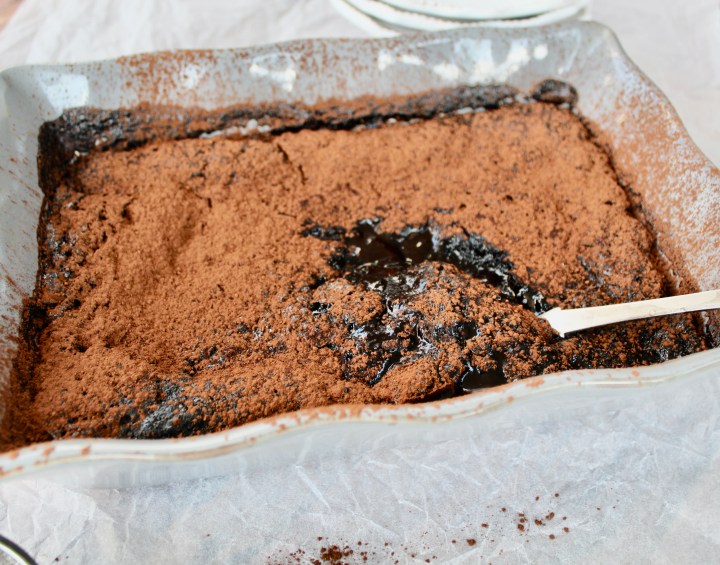
Not all things need to be pretty and with this recipe the proof IS in the pudding! Easy to make, not too sweet, fit for all seasons and a real crowd pleaser … give it a try, you will thank me!
125ml granulated sugar 45ml cocoa powder 500ml boiling water
Preheat your oven to 160℃. Sift the flour and cocoa powder into a mixing bowl and add the caster sugar. Stir the ingredients to combine and put aside. Add the melted butter, milk, vanilla and egg to a separate bowl and whisk together. Pour the wet ingredients into the bowl with the dry ingredients and stir with a spatula until just combined into a batter. Spoon the batter into a 25cm X 15cm ceramic dish and level the top with the spatula. Sprinkle the granulated sugar onto the batter in an even layer. Sift the 45ml cocoa powder onto the sugar layer and then gently pour the boiling water onto the batter. Bake the pudding for 35 minutes. Remove from the oven and stand for at least 10 minutes. Serve warm.
Cook the lentils according to the instructions on the packet. Set aside. Add the ghee to a saucepan on medium heat and fry the onion for 2 – 3 minutes. Add the garlic, ginger and chilli and fry on low heat until fragrant. Add the fennel seeds, mustard seeds, cumin seeds, garam marsala and sugar. Stir the mixture for about one minute while cooking gently. Add the spinach, mint and 45ml water to the saucepan and immediately cover with the lid. Cook for about 3 minutes, stirring occasionally. Place the spinach and spices into a blender, add 320ml water and blend until smooth. Pour the sauce back into the same saucepan, on low heat. Add the yoghurt, salt and the juice of about half a lemon. Serve with fragrant rice and tomato salad.
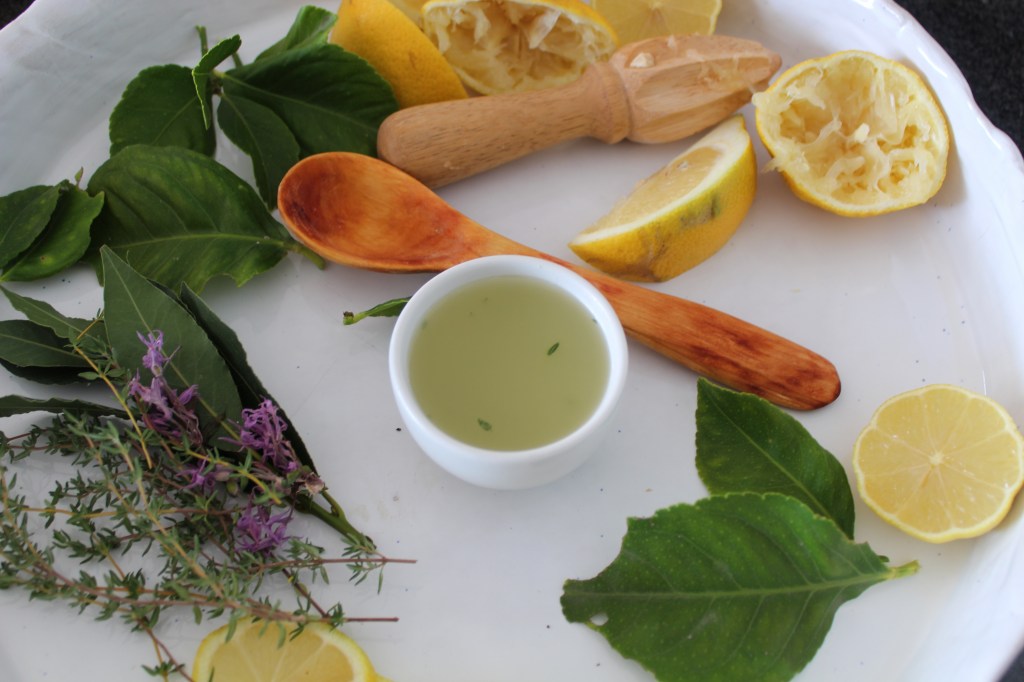
This recipe works well with any white fish, fresh or frozen, and is the perfect nutritious weeknight dinner. Ladolemono dressing is traditionally Greek and a basic olive oil and lemon dressing that is drizzled onto fish before and after baking. This version has garlic and origanum added and will have you longing for a Greek vacation!
6 – 8 portions of white fish fillet Ladolemono Dressing:
90ml olive oil 30ml lemon juice 5ml salt 15ml fresh oregano 1 clove garlic, minced
Preheat your oven to 220℃. Lay the white fish portions/fillets onto a baking sheet and put aside while making the dressing. Add all the Ladolemono dressing ingredients to a small bowl and whisk until the mixture turns thick and is completely blended. Spoon half of the dressing onto the fish and bake for 15 minutes. Remove the fish from the oven and drizzle the rest of the dressing onto the cooked fish. Serve with a salad or roasted vegetables.
This fruity, fresh salad is loaded with tastes of summer. The yoghurt dressing is healthy and can be drizzled in abundance as one should!
A mix of salad leaves, herbs and baby spinach leaves Fresh, rip figs 1 large pomegranate 100g blue cheese
Yoghurt dressing:
90ml greek yoghurt 60ml olive oil 30ml lemon juice 90ml honey 5ml salt
Pack the salad leaves or whatever greens you prefer, onto a serving platter. Tear or cut the figs into quarters and scatter onto the greens. Now scatter the pomegranate seeds and chunks of blue cheese on top the salad.
Add all the ingredients for the dressing to a small mixing bowl and whisk together until it amalgamates. Liberally dress the salad. Serve with crusty bread as a light lunch.
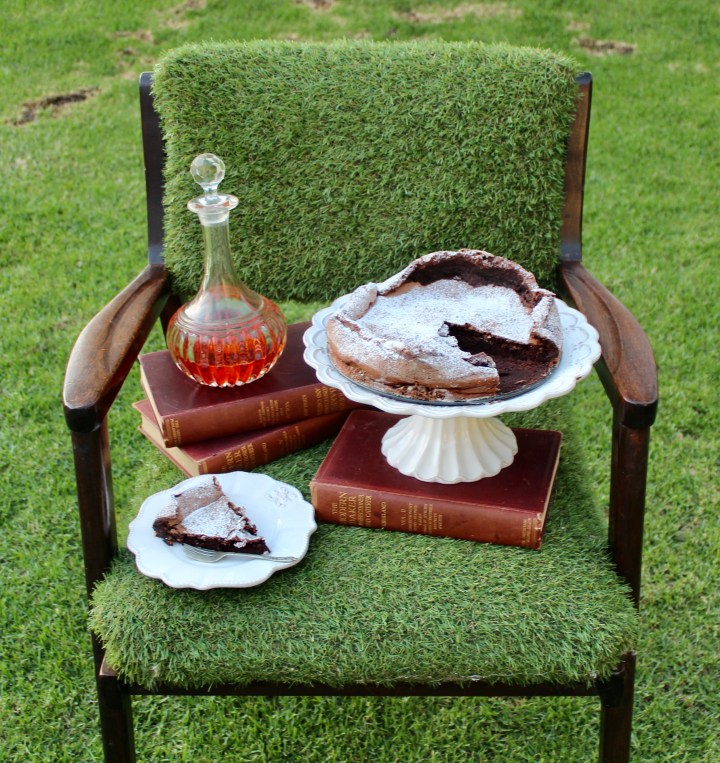
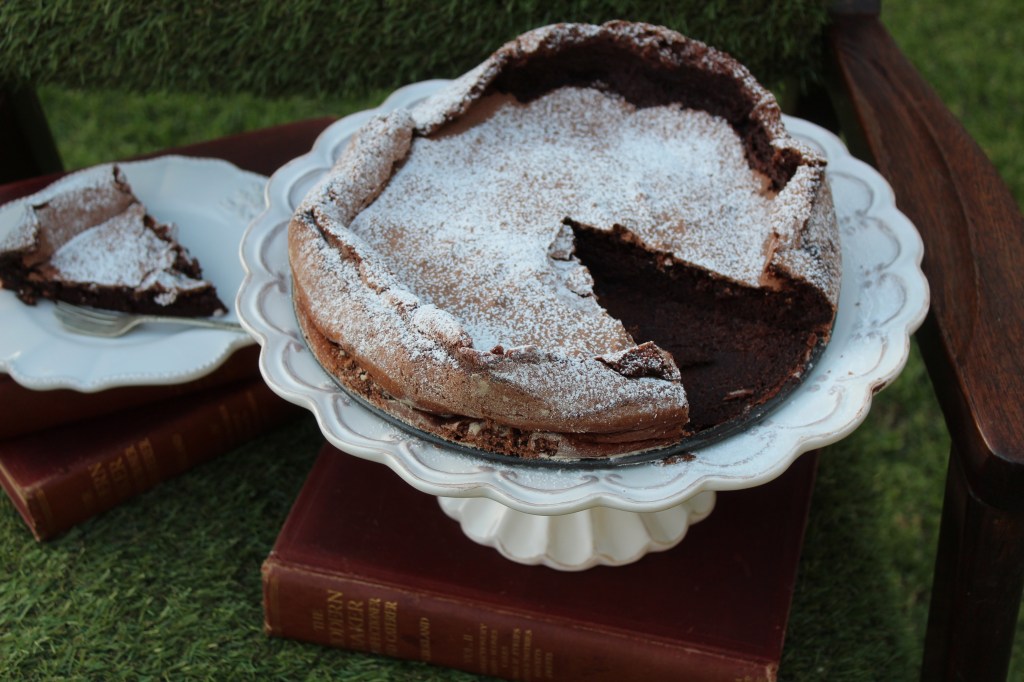
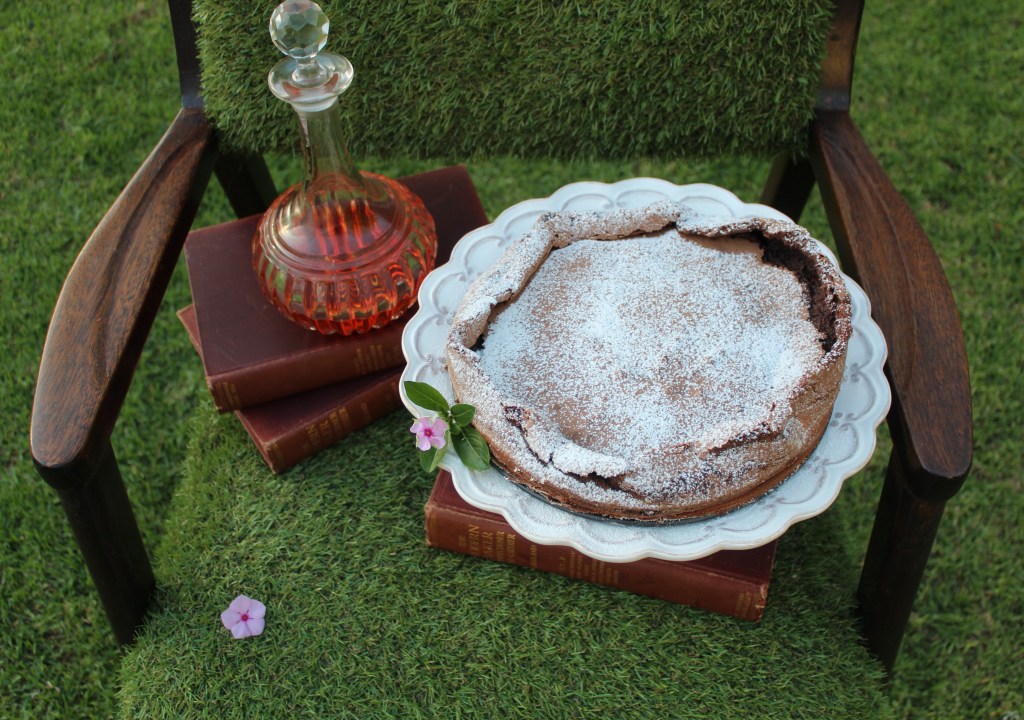
The best write-up for this cake is to have a slice of it…. It is a cake that rises up high and then falls back on itself, thereby creating a dense looking texture that is actually quite airy in one’s mouth. It is a cake that is pure chocolate indulgence, but without the sticky sweetness normally associated with chocolate. It is a cake that is delicately cracked and delightfully imperfect. It is a cake you will never forget once you have tasted it…
340g dark chocolate, chopped 140g butter, cubed 45ml Aperol 15ml vanilla 1.2ml salt 6 eggs, separated 83ml + 83ml + 15ml caster sugar icing sugar for dusting
Preheat your oven to 180℃. Butter a 25cm loose-bottom cake tin and dust the bottom and sides with caster sugar. Put aside. Add the chopped chocolate and cubed butter to a heatproof bowl set over a pan of barely simmering water. Stir until the chocolate has melted completely and the mixture is smooth. Remove the bowl from the heat and stir in the Aperol, vanilla and salt. Cool the mixture for at least 5 minutes. Add the 6 egg yolks and 83ml caster sugar to a small mixing bowl and whisk it by hand for about a minute. Now whisk this mixture into the chocolate mixture. Allow the chocolate mixture to cool to room temperature.
Add the 6 egg whites to the bowl of a stand mixer and add a pinch of salt. Attach the whisk attachment and whip the whites on medium speed, until they reach soft peak stage. Keep the machine running at medium speed and gradually (a teaspoon at a time) add the 83ml and 15ml caster sugar. Do not become impatient when adding the sugar!! Once all the sugar has been added you will be left with a glossy mixture that holds stiff peaks. Spoon a third of the egg white mixture into the room temperature chocolate mixture and stir it through to lighten the chocolate mixture. Add the rest of the egg white mixture and gently fold into the mixture with a spatula until the mixtures are evenly combined. Pour the mixture into the prepared cake tin and bake for about 30 minutes. The top of the cake should feel dry and it should start to crack. A toothpick that is inserted should come out sticky but not wet. If the cake is too wet, let it bake for another 5 minutes and check it again. Cool the cake in the cake tin. The cake will fall in on itself as it cools – don’t be alarmed! Remove the ring from the baking tin once the cake has reached room temperature (about an hour). Dust generously with icing sugar and serve.
Barley is a nutritious whole-grain and makes a delicious salad. In this recipe you may replace the roasted beetroot and carrots with leftover, roasted veg. The dressing in this salad pulls the dish together and perks it up to extra tasty!
250ml pearl barley 750ml water 10ml stock powder about half an English cucumber, diced one red onion, diced a handful of basil and mint, chopped 2 tomatoes, chopped about 125ml roasted beetroot, chopped about 125ml roasted carrot, chopped 125ml pomegranate seeds
Dressing:
60ml lemon juice zest of one lemon 60ml olive oil 60ml honey 5ml mustard 60ml mayonnaise 5ml salt 1 clove garlic, minced
Add the pearl barley, water and stock powder to a small saucepan and turn the heat onto high. Keep an eye on it as it gives off a lot of foam at first and can cause the pot to boil over. When the water reaches a boil, turn the heat down to low so that it reaches a simmer. Cover the pot with a lid and cook until the barley is done. The water should be absorbed after 25 minutes and the barley should have tripled in volume. It should be soft but chewy. Take the saucepan from the heat, fluff the barley with a fork and put aside to cool.
For the dressing:
Add all the ingredients to a small mixing bowl and whisk for about a minute or until the dressing is amalgamated.
Add the cooled barley to a mixing bowl and mix with the cucumber, onion, herbs, tomato, beetroot and carrots. Drizzle half of the dressing onto the salad and give everything a good mix. Add the pomegranate seeds to the salad and drizzle with a little more dressing. Serve the salad with the extra dressing in a jug.
These are traditional pumpkin fritters. In South Africa the caramel sauce has been very popular for many years and in that sense I suppose, it can be seen as almost-traditional. As in all great stories, of which a recipe is one, there is a but … this caramel sauce is an approved version of the original and fabulously, more-ish!
500ml pumpkin, cooked and drained 500ml flour 90ml sugar 10ml baking powder a pinch of salt 2 eggs
Cook the pumpkin by roasting it in your oven at 180℃ until soft. Scoop out the flesh and drain in a sieve over a bowl, to get rid of excess water. Add 500ml of the pumpkin to a mixing bowl. Now add the flour, sugar, baking powder, salt and eggs and mix everything together with a spatula. Heat about 5cm oil in a heavy based saucepan. Scoop up some batter with a teaspoon and fry in the preheated oil until golden. This should take about 3 minutes. Drain the fritters on kitchen paper and keep them warm in a low oven.
Caramel Sauce:
250ml cream 125ml brown sugar 60ml butter, cubed 60ml golden syrup| 5ml vanilla
Add the cream and brown sugar to a small saucepan. Turn the heat on to low and stir until the sugar has dissolved. Add the butter and syrup and turn the heat up to a gentle simmer. Allow the sauce to bubble for 5 minutes while stirring. Take the saucepan off the heat, stir in the vanilla and pour the sauce over the warm pumpkin fritters.
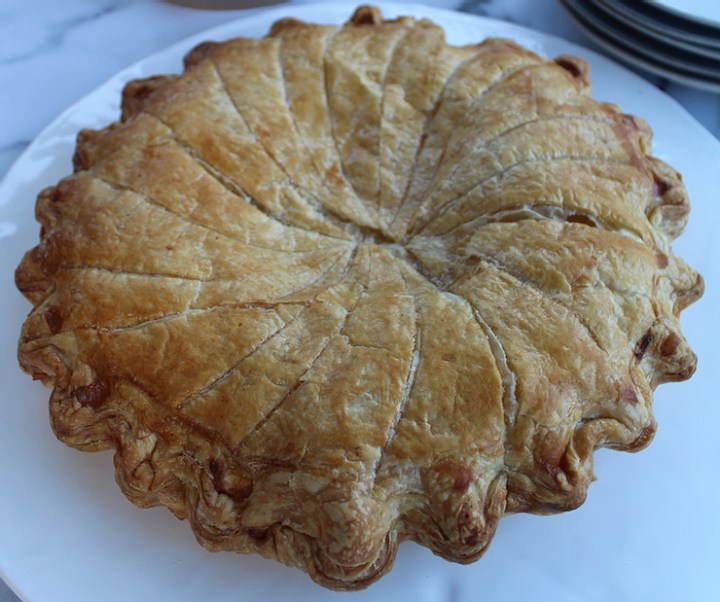
Directly translated from French, Galette des Rois means King’s Cake. A beautiful frangipane based cake which celebrates Epiphany, Galette des Rois can be found in French patisseries during March and April, celebrating the three King’s visit to the baby Jesus. A small porcelain charm called a fève, is hidden in the cake and the person who finds it is “King” for the day and gets to wear the paper crown that comes with the cake. (For safety reasons you may replace the charm with an uncooked bean). While living in France I went down to the local patisserie every second day to buy one of these very special French traditions … it really is delicious and I find, quite addictive!
400g puff pastry
45ml smooth apricot jam
Frangipane filling:
125g butter, room temperature
125g caster sugar
125g ground almonds
3 eggs
10ml cognac / rum / vanilla and almond extract
Glaze:
1 egg
15ml milk
Line a large baking sheet with baking paper and divide your pastry in half.
Roll out each piece of pastry and cut a 25cm circle/round from each.
Place one round onto the baking paper and spread with the apricot jam, leaving a 2cm clear area around the edges. Put aside.
Add the butter and sugar to the bowl of a stand mixer fitted with the paddle attachment.
Beat the mixture until pale.
Add the ground almonds with the machine running on low.
Now add the eggs, one at a time, and finally the cognac (or other flavouring you may be using).
Spoon the frangipane onto the prepared pastry circle, taking care to keep the 2cm around the edges clear. Heap the mixture slightly more in the centre of the pastry, sloping down towards the edges.
If you want to add a fève, pop a dry bean into the filling at this stage.
Brush the clean pastry edge with water and cover the filling with the second circle of pastry. Press the edges to seal.
Lightly mark the top of the pastry from the centre to the edges like spokes of a wheel and brush with the glaze.
Refrigerate your galette for a minimum of 3 hours – if the pastry and frangipane is not ice cold, the frangipane filling will bubble out of the pastry. I refrigerate mine overnight.
Preheat your oven to 200℃.
Place the ice cold cake into the oven and bake for 30 minutes, until the pastry is golden.
Remove and cool.
Galette des Rois may be served warm or cold, but always remember the crown!
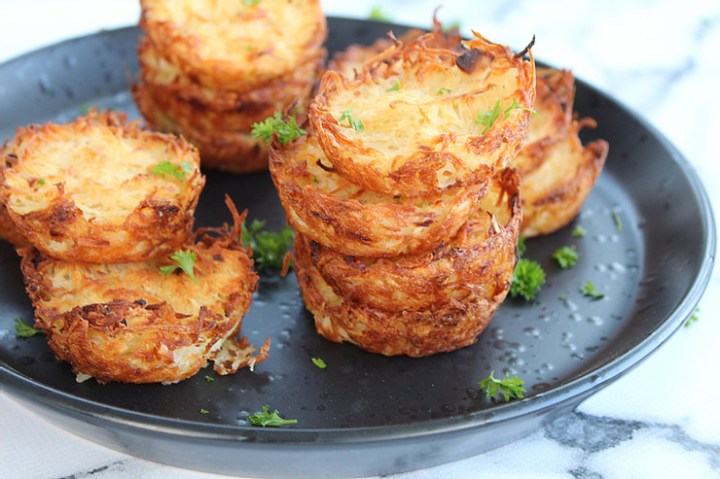
These hash browns are baked in muffin tins which means that they don’t fall apart but still tastes wonderful: fluffy on the inside and beautifully crisp and golden on the outside!
4 large potatoes, finely grated
1 onion
30ml butter, melted
15ml cornflour
2,5ml salt
Preheat your oven to 190℃.
Grease a muffin tin with at least 8 holes.
Peel the potatoes and onion and grate them finely. I do mine in the food processor.
Scoop the grated onion-potato mixture into a clean tea towel, hold it over the kitchen sink and twist and squeeze the towel to remove as much moisture from the grated mixture as possible. The drier the mixture, the more successful the hash browns will be.
Add the grated vegetables to a mixing bowl and drizzle over the melted butter.
Sprinkle the cornflour and salt over the mixture and mix/rub everything together so that all of the potato gets some of the cornflour and salt.
Divide the mixture evenly between 8 muffin holes, filling each about two-thirds full and then pressing the mixture down into the tin.
Bake the hash browns for 30 minutes, turn the heat up to 220℃ and bake for 15 minutes more.
Remove from the oven and loosen the outsides with the blade of a sharp knife.
This is a basic, classic recipe for a really good chocolate cake that can take on many guises: serve it with Chantilly cream and fresh berries; sprinkled with powdered sugar; warm chocolate fudge sauce or as an old fashioned layered cake, but do keep the recipe as a reliable fall-back for those times that you need an uncomplicated but delicious cake!
375ml boiling water
125ml vegetable oil
125ml cocoa powder
4 eggs
5ml vanilla
325g caster sugar
300g self-raising flour
15ml milk powder
a pinch of salt
Preheat your oven to 180℃.
Grease two 22cm loose-bottomed cake tins.
Pour the boiling water, oil and cocoa powder into a large jug and stir to dissolve. Set aside to cool completely.
Add the eggs and vanilla to the bowl of a stand mixer fitted with the paddle attachment. Beat on medium-high speed, until light in colour.
Add the flour, milk powder and salt to a mixing bowl.
Turn the mixer down to a low speed and add the dry mixture a little at a time, so that it incorporates into the batter.
Turn off the mixer and remove the bowl.
Add the cooled water mixture and fold it through with a spatula.
Scoop the batter into the two prepared cake tins and bake for 30 minutes.
Remove the cake from the oven and place it onto a cooling rack for 10 minutes before un-moulding.
Cool the cake completely before sandwiching it together.