Hi and welcome to my blog! My name is Karen and I love cooking simple, uncomplicated, flavourful food. My cooking is inspired by seasonal ingredients, punchy flavours, an awareness of sustainability and of course by the likes and dislikes of my family and friends that sit around my table as well as you, the virtual guests around my table!
I am a chef, recipe developer and food stylist and generate my own content. I am also completely addicted to recipe books, of which I have an extremely large collection but the essence of my food is about celebrating life and all the fabulousness that we can add by creating good food.
Thank you for reading my blog. Please keep on giving me feedback and may your kitchen, as mine, be filled with joy and the best tasting food!
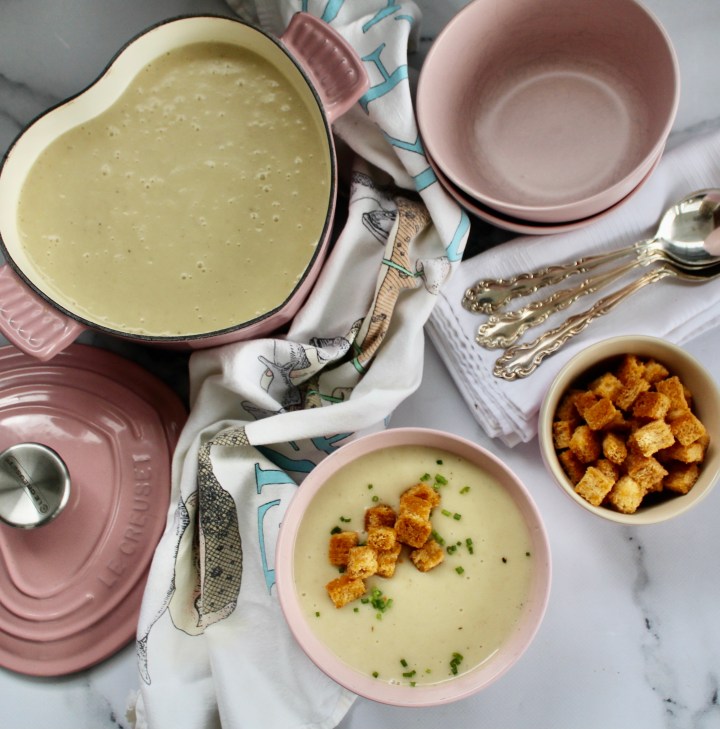
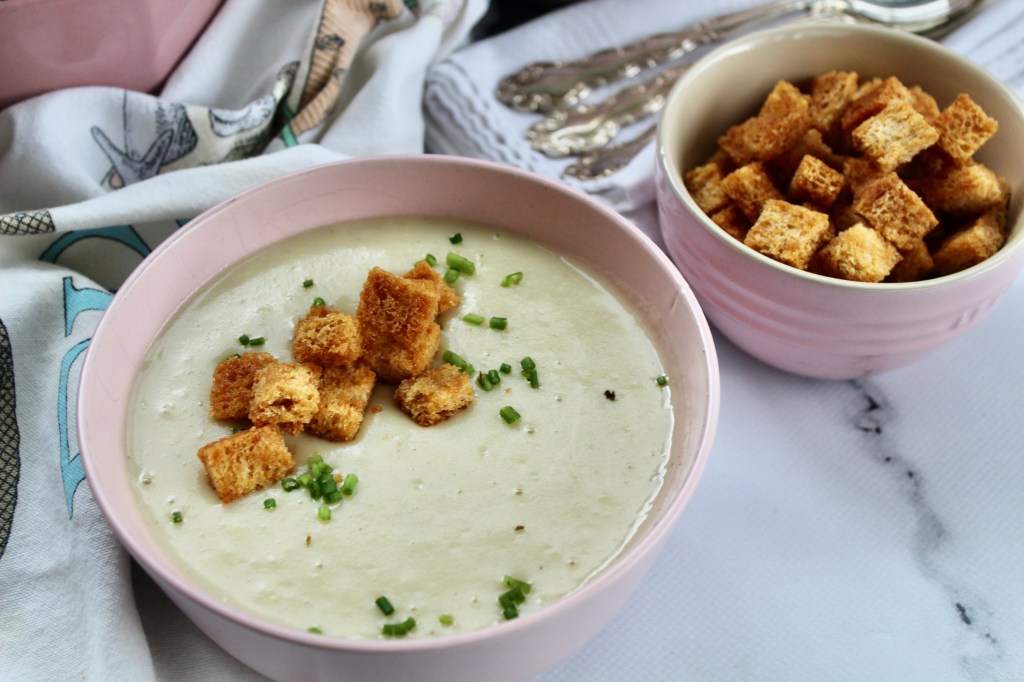
This is a nutritious soup with lots of flavour and crowd appeal and is really easy to make. This recipe feeds 6 – 8 people.
45ml butter 2 large leeks, sliced 2 onions, chopped 2 cloves of garlic, minced 800g potato, diced (about 4 -5 large potatoes) 2 stock cubes (I use chicken but if you want to go vegetarian use vegetable cubes) 5ml salt 1,2ml black pepper 1,2 litre water 250ml cream
Preparing the leeks: Cut off the root ends and thick green parts. Cut the leeks in half lengthwise and rinse under cold running water. Pull the layers apart and check that there is no dirt left.
Melt the butter in a large saucepan over medium heat and add the sliced leeks, onion and garlic. Cook and stir until the leeks and onion are soft and completely wilted. This should take about 10 minutes. Add the potato, stock cubes, salt, pepper and water and bring the mixture to the boil. Lower the heat, cover with a lid and cook gently for 25 minutes until the potato is very soft. Purée the mixture with a stick blender until completely smooth. Now add the cream and stir on a low heat for about 5 minutes. Serve the soup piping hot, sprinkled with croutons.
Making croutons: Preheat your oven to 180℃. Cut 4 slices from a day-old bread and slice off the crusts on all four sides. Cube the bread and spread it out on a baking tray. Drizzle the cubes with olive oil and give the bread cubes a mix with your hands. Bake for 5 minutes, shaking the baking sheet halfway through the cooking time, to spread and turn the cubes. Take the croutons from the oven and lightly sprinkle with salt.
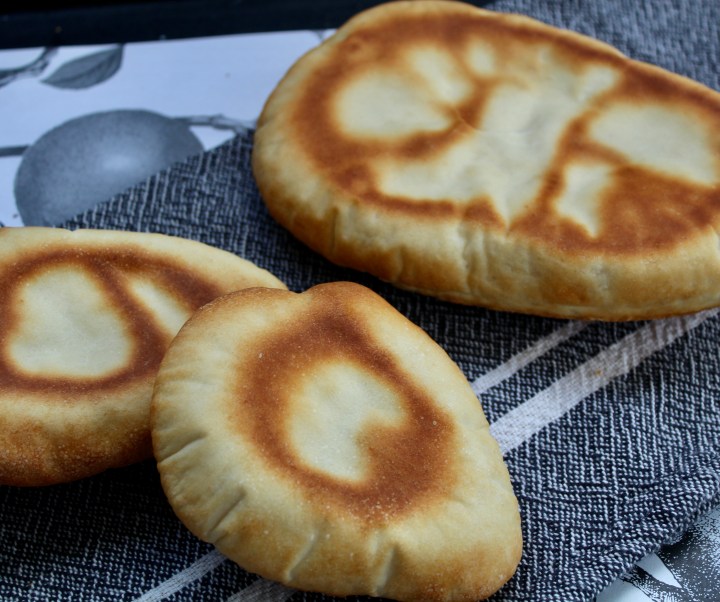
Although Naan is a flatbread it is also known for its softness and has a bit more “body” to it than other flatbreads. This recipe includes yoghurt and yeast which makes this a pillowy, soft bread with loads of taste and deliciousness! Makes four large breads or 8 “hand-sized” flatbreads.
Add the flour and salt to the bowl of a stand mixer fitted with the dough hook. Pour the milk into a glass jug and warm it slightly in the microwave oven. It should be tepid. Add the sugar, yoghurt and melted butter to the milk and stir until the sugar has dissolved. Stir in the yeast and set aside for 5 minutes. Start the mixer on a slow speed and then add the liquid ingredients. Mix for 2 minutes on slow speed until the dough comes together. Turn the mixer to medium speed and knead the dough for another 5 minutes, until smooth and elastic. Lightly oil a large mixing bowl and place the dough in it. Cover with plastic wrap and a clean tea towel and set aside to proof for an hour or until doubled in size.
Preheat your oven to its hottest setting. Place an empty baking sheet in the oven so that it can heat up. Knock down the dough and divide it in 4 portions for large breads or 8 equal smaller portions. Roll the dough into a disc shape with a rolling pin or the traditional tear shape: the important thing is for the dough to be about 5mm thick. Open the oven door and quickly place 3/4 of the breads onto the preheated baking sheet and immediately close the oven door. Bake the breads for 3 minutes, open the door and flip them. Cook this side for another 3 minutes. The naan will puff up and look like pita breads but once it cools it will fall back on itself. Take the cooked breads out of the oven and cover them lightly with a tea towel. Keep going until all the breads are baked. You may serve the naan as soon as they are cool enough to handle.
This recipe, as the name suggests, is loaded with butter, as it was originally intended! This is no low-calorie, adapted butter chicken but the true, real, original dish!
For the marinade: Add the yoghurt, tomato, garam masala, chilli, mustard, cumin, coriander, salt, turmeric, sugar and lemon juice to a blender and blitz together. Pour the marinade in to a large mixing bowl. Cut the chicken breasts into cubes of 2cm X 2cm and add it to the marinade. Stir the mixture through so that the chicken pieces are completely covered in the marinade. Cover the bowl with plastic wrap and set aside (in the refrigerator if your kitchen is warm) to marinate for at least one hour.
Pour some vegetable oil in to a large saucepan and add the onion and garlic. Cook over a low heat until the onion is very soft. Add the chicken pieces and marinade to the onion mixture and bring to a simmer. Cook the chicken for 40 minutes, stirring occasionally. Add the cream and the cubed butter and stir until the butter has melted completely. Garnish with fresh coriander leaves. Serve the butter chicken with rice and naan bread.
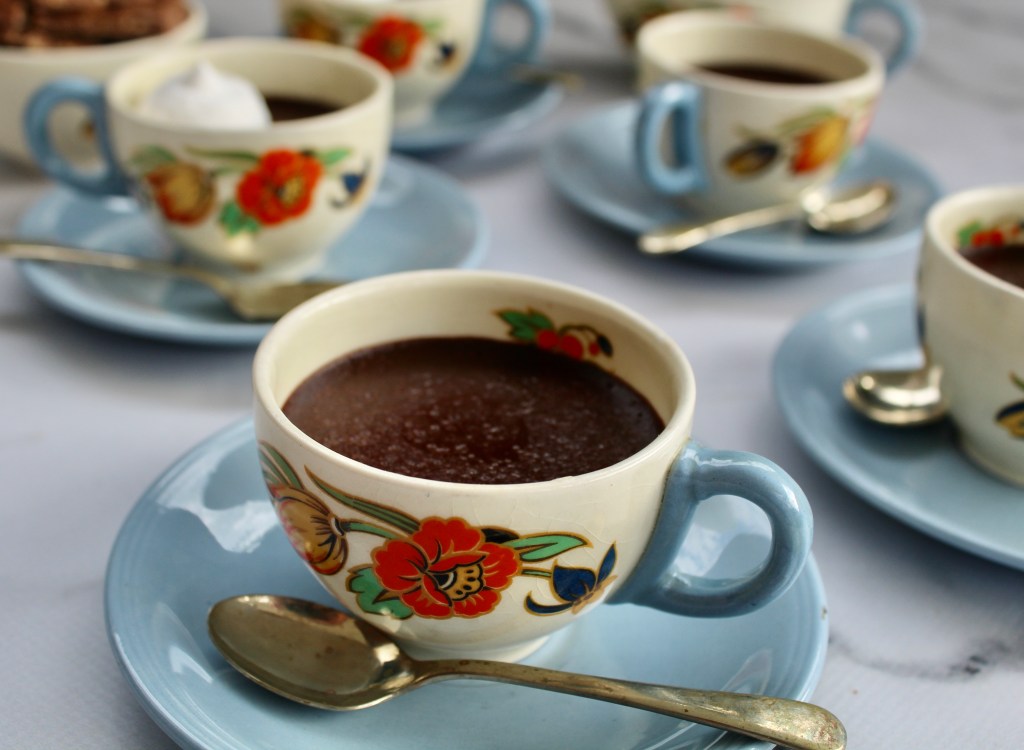
This traditional dessert, also known as Pots de Crème, is super easy to make. It is a rich and creamy no-bake dessert and most of all, it is deliciously smooth and not airy like a mousse. I serve this dessert in espresso cups as I find a larger serving too rich and overwhelming. This recipe yields 10 espresso-cup servings or 6 individual servings in standard ramekins.
250ml cream 100ml milk 160g dark chocolate, minimum 70% cocoa, chopped 40g brown sugar 3 egg yolks 5ml vanilla
Pour the cream and milk into a saucepan and slowly bring it to a simmer. Take the saucepan from the heat the moment it starts to simmer. Add the chopped chocolate and stir the mixture until the chocolate has melted completely. Add the sugar, egg yolks and vanilla to a mixing bowl and whisk with electric beaters until pale and fluffy. Drizzle the chocolate mixture onto the egg mixture, whisking continuously. Remember: pour slowly, whisk quickly! Keep going until you have added all of the chocolate mixture. Divide the mixture between ramekins/espresso cups and allow to cool completely. Place the cups on a baking sheet and cover with plastic wrap. Refrigerate for at least an hour or until you are ready to serve. I serve my chocolate pots as they are but this dessert is often served with Chantilly cream.
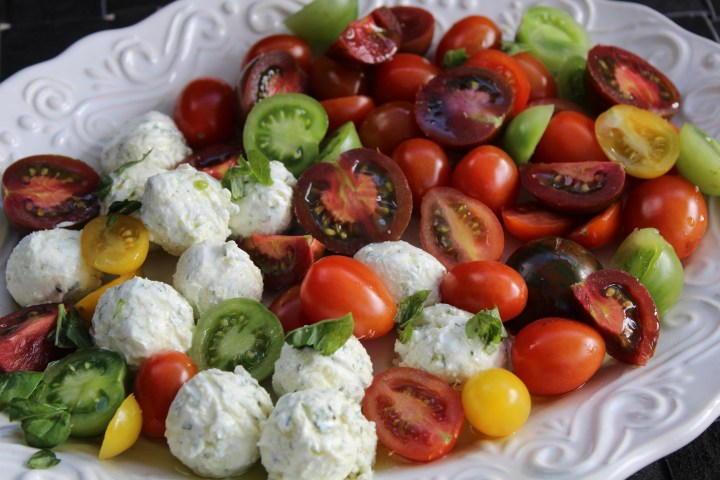
Fresh soft cheese made from yoghurt is better known by its Middle-Eastern name, Labneh or in some cases by its Dutch name, Hangop Kaas. Whatever you choose to name it, this cheese makes a salad come to life and adds interest to cheese platters and a spread for cocktails.
1 litre Greek Yoghurt salt and pepper a handful of very finely chopped fresh herbs like basil, thyme, chives 2 bay leaves 2 sprigs rosemary 2 sprigs thyme 500ml olive oil
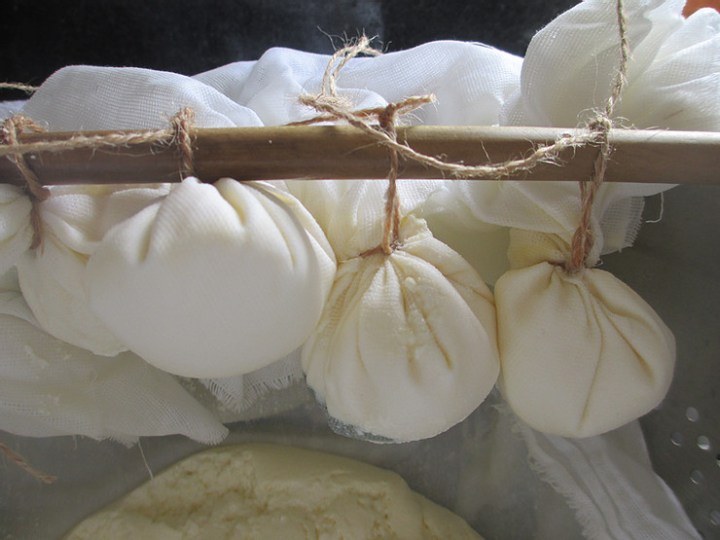
Scoop the yoghurt into a mixing bowl and leave it out on the counter in your kitchen for a few hours until it starts to form a whey layer. Rinse a muslin cloth in cold water and line the inside of a sieve with it, allowing the ends to hang over the sides. Hang/suspend the sieve in a mixing bowl so that the whey can drip into the bowl. Add a good pinch of salt and pepper to the yoghurt and stir through. Pour the yoghurt into the muslin-lined sieve and place the bowl in the refrigerator for at least 4 hours. Remove the bowl from the refrigerator, gather the ends of the muslin cloth and make a knot at the top. Push the handle of a wooden spoon underneath the knot and then place the spoon with each end resting on the side of the mixing bowl so that the muslin parcel hangs inside the bowl. Place the bowl back into the refrigerator for a minimum of 12 hours.
Now remove the yoghurt from the muslin cloth for the last time. Mix the yoghurt and soft, chopped herbs in a mixing bowl. Sterilise 2 glass jars and dry them. Scoop a tablespoon of the yoghurt cheese into your hand and roll it into a ball. Place the ball into the glass jar and keep going with the rest of the cheese. Slide the bay leaves and herb sprigs into the jars and fill them up with the olive oil. Marinate the cheese for 2 days before use. Store in the refrigerator.
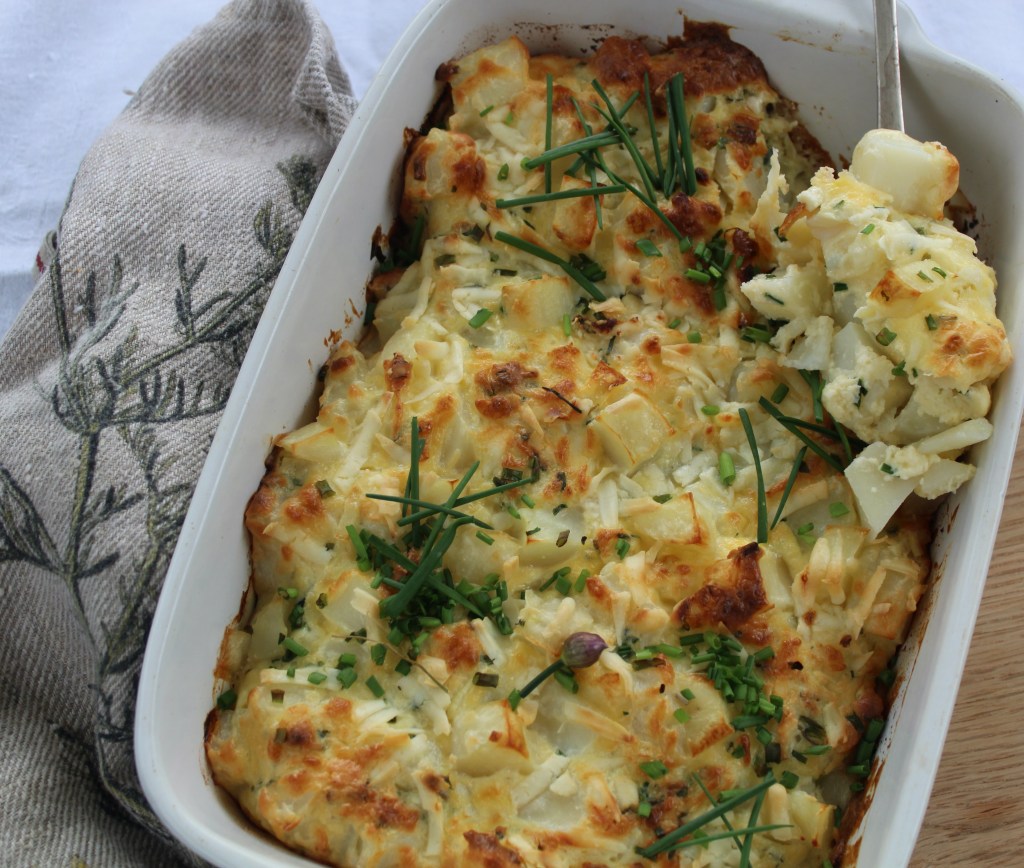
This potato dish is a quick weekday dinner for vegetarians or a substantial side dish to any meat. If you don’t have ricotta cheese on hand, get the recipe from this site and make your own. Yields 6 – 8 portions.
6 large potatoes 350g ricotta cheese 4 eggs, lightly beaten 1 onion, finely chopped a handful of chives, chopped 2 cloves of garlic, minced 40g parmesan/pecorino cheese, grated
Preheat your oven to 180℃ and grease a 20cm X 28cm baking dish.
Peel the potatoes and boil them until just cooked. Slice them into 1,5cm cubes and put aside. Add the eggs to a mixing bowl and whisk together. Add the chopped onion, chives, minced garlic and parmesan to the egg mixture and whisk together. Now add the cubed potato and mix through. Spoon the mixture into the prepared baking dish and bake for 25 minutes until golden. Serve with a green salad.
250ml wholewheat flour 250ml cake flour 125ml sugar 7,5ml baking powder 2,5ml bicarbonate of soda 2,5ml salt 15ml each of sesame, poppy and sunflower seeds 250ml greek yoghurt 1 egg 62ml vegetable oil
Preheat your oven to 180℃ and grease a standard 23cm X 13cm loaf pan. Add the wholewheat flour, cake flour, sugar, baking powder, bicarbonate of soda, salt and seeds to a mixing bowl and mix through with a whisk. Add the yoghurt, egg and vegetable oil to a wide-mouthed jug and whisk together. Pour the liquid ingredients in to the dry ingredients and stir through with a spatula until all the flour has been incorporated and you are left with a shaggy, wet batter. Scrape the batter into the prepared loaf pan and pat it down into the corners. Bake the loaf for 50 minutes or until a toothpick inserted into the centre of the loaf, comes out clean. Take the bread from the oven and cool in the pan for 15 minutes before turning it out. Allow to cool completely before slicing.
This is one of my favourite French desserts and really easy to make. Make the crêpes the day before you need them and simply reheat them in the orange-caramel-syrup before serving.
Crêpes: 750ml cake flour 2,5ml baking powder 5ml salt 500ml milk 250ml water 125ml sunflower oil 4 eggs
Orange sauce: 45ml caster sugar 250ml orange juice the zest of one orange 5ml lemon juice 15ml brandy 50g butter, cubed
For the crêpes: Add the flour, baking powder and salt to the bowl of a stand mixer fitter with the whisk attachment. Whisk the milk, water, oil and eggs together in a separate wide-mouthed jug. Turn the mixer on to a low speed and add the liquid ingredients in a very thin stream. Keep whisking and pouring until all the liquid has been added. Turn the mixer on to a higher speed and whisk for at least two minutes. Remove the bowl from the mixer, cover with plastic wrap and allow to stand for 1 hour. Heat a crêpe pan/frying pan until hot. Add a small amount of vegetable oil and swirl it around the pan. Pour the oil out and put the pan back onto a medium-high heat. Spoon a ladle-full of the batter into the pan and cook until small holes appear over the entire surface of the crêpe. Flip the crêpe and cook for 1 minute on the other side. Slide the cooked crêpe onto a plate and continue baking the rest.
For the orange sauce: Tip the caster sugar into a non-stick frying pan on medium to low heat. Allow the sugar to melt without stirring it. You want the sugar to turn a caramel colour without burning it – watch it like a hawk and do not walk away from it! Take the pan from the heat when the sugar is brown enough and add the orange juice, orange zest, lemon juice and brandy. Return the pan to a very low heat. Do not panic if the sugar has seized, continue heating over a low heat and stir lightly until the sugar has dissolved completely. Now start adding the butter, one or two cubes at a time while stirring constantly. Keep going until you have incorporated all the butter. Bring the mixture to the boil, turn down the heat and simmer until the sauce has thickened slightly and has a lovely gloss to it.
Fold each crêpe into half, and then fold it again so that you have a more-or-less triangular shape. Gently slide the folded crêpe into the pan and spoon the sauce over it. Serve immediately.
Chocolate and pear is a match made in heaven and with this delicious chocolate pastry as a base, few desserts will be able to compare to this tart!
Poached pears: 3 ripe pears 750ml water 250ml sugar 15ml lemon juice
Chocolate pastry: 80g dark chocolate, at least 70% cocoa 175g butter, cubed 230g caster sugar 4 egg yolks 10ml vanilla 15ml milk 50g cocoa powder 350g cake flour
Chocolate frangipane: 120g dark chocolate, at least 70% cocoa 120g butter, cubed 120g caster sugar 5ml vanilla 2 eggs 125g ground almonds 25g flour
Poaching the pears: Pour the water into a small saucepan and add the sugar and lemon juice. Turn the heat on to medium and stir until the sugar has dissolved. Peel, halve and core the pears and add to the poaching liquid. Cut a square of baking paper that is large enough to cover the saucepan. Scrunch the paper up and then slide it down into the saucepan until it touches the poaching liquid. Bring the poaching liquid to the boil, reduce the heat and simmer gently until a wooden skewer can easily be inserted into the pear quarters. Turn off the heat and allow the fruit to cool in the poaching liquid. Remove the pear once it has cooled and keep aside. Simmer the poaching liquid until it reduces to a syrup. Reserve this to glaze the tart with once it comes from the oven.
For the chocolate pastry: Chop and melt the chocolate in a heatproof bowl set over a saucepan of simmering water, making sure that the bottom of the bowl is not in contact with the water. Stir until silky smooth and completely melted. Take the bowl from the heat and allow to cool slightly. Add the cubed butter, sugar, egg yolks, vanilla and milk to the bowl of a food processor and blitz together. Pour in the slightly cooled chocolate and pulse to blend in. Sift the cocoa powder and flour into the chocolate mixture and blitz until the mixture comes together in a smooth ball of pastry. Wrap the pastry with plastic wrap and store in the refrigerator for one hour.
Lightly spray a tart tin with baking spray. Roll the pastry to a thickness of 3mm and line the baking tin on the bottom and sides. Place the pastry case into the freezer for 1 hour.
Preheat your oven to 180℃. Line the pastry case with baking paper and baking beans and bake for 15 minutes. Set aside to cool.
For the chocolate frangipane: Keep your oven on 180℃. Melt the chocolate in a heatproof bowl set over a saucepan of simmering water, making sure that the bottom of the bowl is not in contact with the water. Stir until completely melted. Remove from the heat and set aside to cool slightly. Add the butter and sugar to the bowl of a stand mixer fitted with the paddle attachment. Cream the butter and sugar until light and fluffy. Add the vanilla and the eggs and beat together, scraping down once or twice, until well blended. Add the almonds and flour and fold into the egg mixture with a spatula. Pour in the melted chocolate and stir once again to incorporate, with the spatula. Spread the frangipane mixture onto the baked pastry case. Slice the pears and position each sliced half onto the chocolate frangipane, spacing it so that there is enough space for all of the pear. Bake the tart for 45 minutes. Remove from the oven and brush the reduced poaching liquid (syrup) onto the warm tart. Allow to cool in the baking mould. Serve with a sprinkling of icing sugar or a scoop of vanilla ice cream.
For the potato crust: Preheat your oven to 180℃ and grease a loose-bottomed cake tin. Spread a clean tea towel onto a work surface and grate the potato directly onto it, with the skin on. Fold the towel over the potato, gathering all ends together and twist and squeeze the potato over your kitchen sink until all the excess moisture has been removed. Put the potato into a mixing bowl. Sprinkle the garlic salt and flour over the grated potato and mix through with your hands in order to distribute all ingredients as evenly as possible. Now add the egg and mix in the same way. Spoon the mixture into the prepared cake tin and press it tightly into the base and sides of the tin with the back of a spoon. Place the cake tin on a flat baking sheet and bake in the oven for 30 minutes. Remove from the oven and set aside.
For the filling: Put a frying pan on to medium heat and add some oil to it. Slice the onions and fry them until soft and translucent. Spoon the onion into a large mixing bowl. Turn the heat up to high, slice the mushrooms and add them to the hot pan. Cook until caramelised. Spoon into the bowl with the onion. Grate the zucchini and cheese directly into the mixing bowl with the onion and mushroom. Mix together. Spoon the vegetable-cheese mixture in to the potato crust. Set aside. Add the eggs, cream, salt and mustard to a mixing bowl and whisk together. Gently pour over the vegetable mixture. Bake in the preheated oven for 40 minutes, until golden and set. Remove from the oven and stand in the baking tin for 30 minutes. Slice and serve warm.





 My Whisk and I