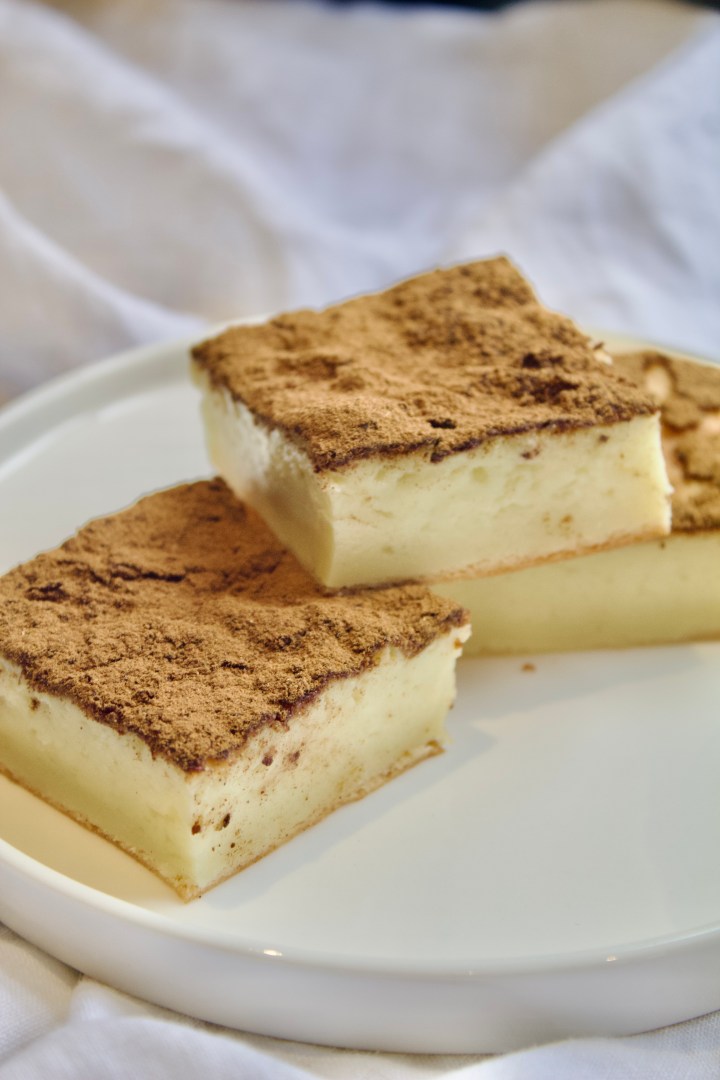
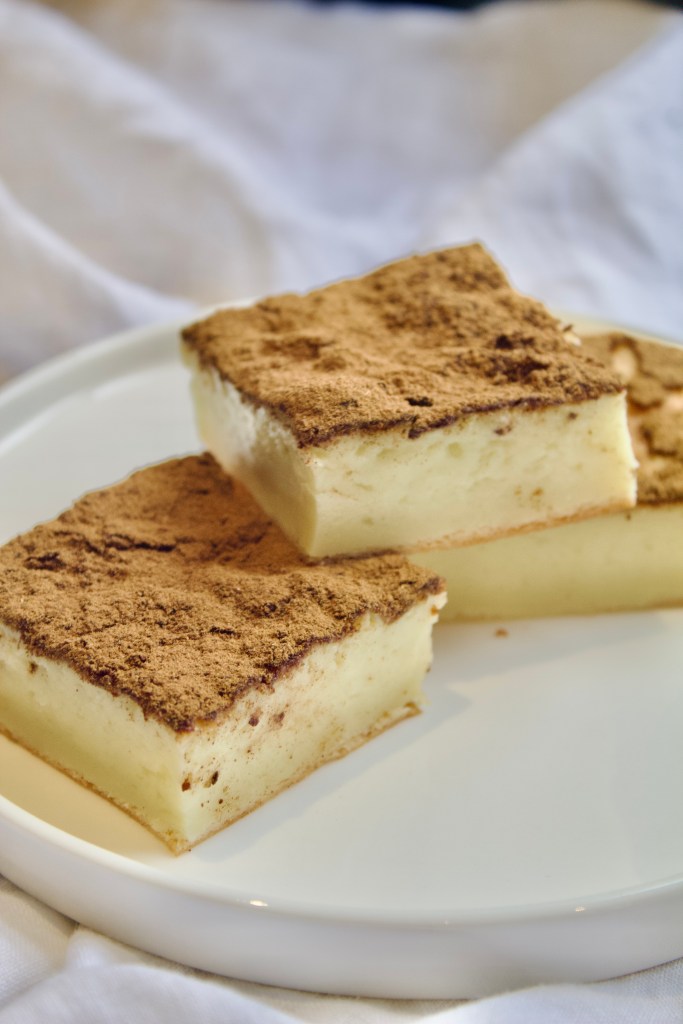
This is a crustless milk tart, easy to put together and produces one large (38cm x 26cm) or two medium (28cm x 20cm) tarts.
6 eggs 375ml sugar 90g butter, melted 375ml flour 7,5ml baking powder a pinch of salt 1,5litres of milk 15ml vanilla ground cinnamon
Preheat your oven to 180℃ and spray a 38cm x 26cm ceramic dish with cooking spray. Add the eggs and sugar to the bowl of a stand mixer fitted with the paddle attachment. Mix on medium-high speed for 2 minutes. Turn the mixer to a low speed and drizzle in the melted butter. Turn off the mixer. Sift the flour, baking powder and salt into the bowl and turn the mixer back on to a low speed until the ingredients are incorporated. Add the vanilla to the milk and drizzle the milk in to the batter with the engine running. Scrape the batter into the prepared ceramic dish. Bake in the oven for 1 hour. Take the milk tart from the oven and immediately sift over some ground cinnamon. Set aside for at least 30 minutes before slicing. Keep refrigerated.
This recipe makes about 300 biscuits and keeps brilliantly when stored in an airtight container.
1,5kg self-raising flour 30ml cream of tartar 30ml bicarbonate of soda 30ml ground ginger 5ml salt 500g butter, cubed 500g golden syrup 1kg brown sugar 6 eggs, whisked together
Preheat your oven to 180℃ and spray 2 large baking sheets with cooking spray. Sift together the flour, cream of tartar, bicarb, ginger and salt. Add the cubed butter and rub it in with your fingertips. Pour the golden syrup into a saucepan and set over medium heat until the syrup is very runny. Add the brown sugar and stir until almost dissolved. Take the saucepan from the heat and allow the mixture to cool for 5 minutes. Whisk the eggs together and slowly add it to the syrup mixture while whisking continuously. Now add the butter and flour mixture and stir through until there is no trace of flour left. Refrigerate the mixture for 1 hour. Roll the dough into balls the size of walnuts and place them on a baking sheet, evenly spaced and about 3cm apart. Flatten each ball slightly with the tines of a fork (you don’t want them too flat!) and bake for 12 minutes. Cool the biscuits on the baking tray for 10 minutes or until set enough to handle. Keep going with making balls, flattening and baking until you have an abundance (about 300) of ginger biscuits. Store the biscuits in an airtight container.
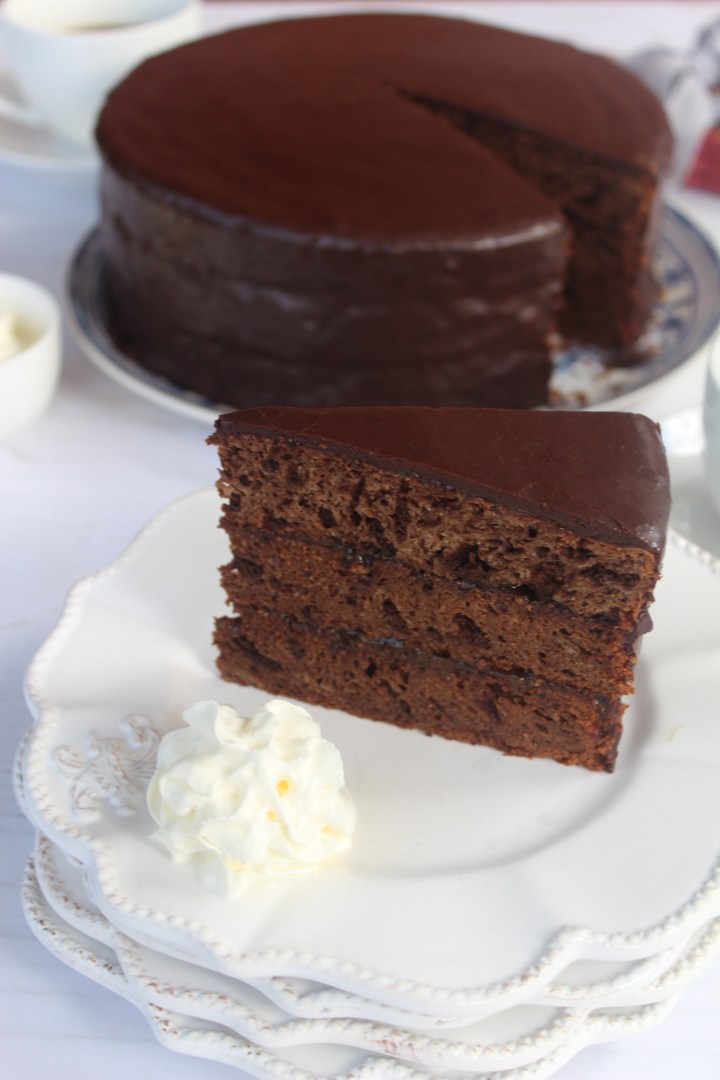
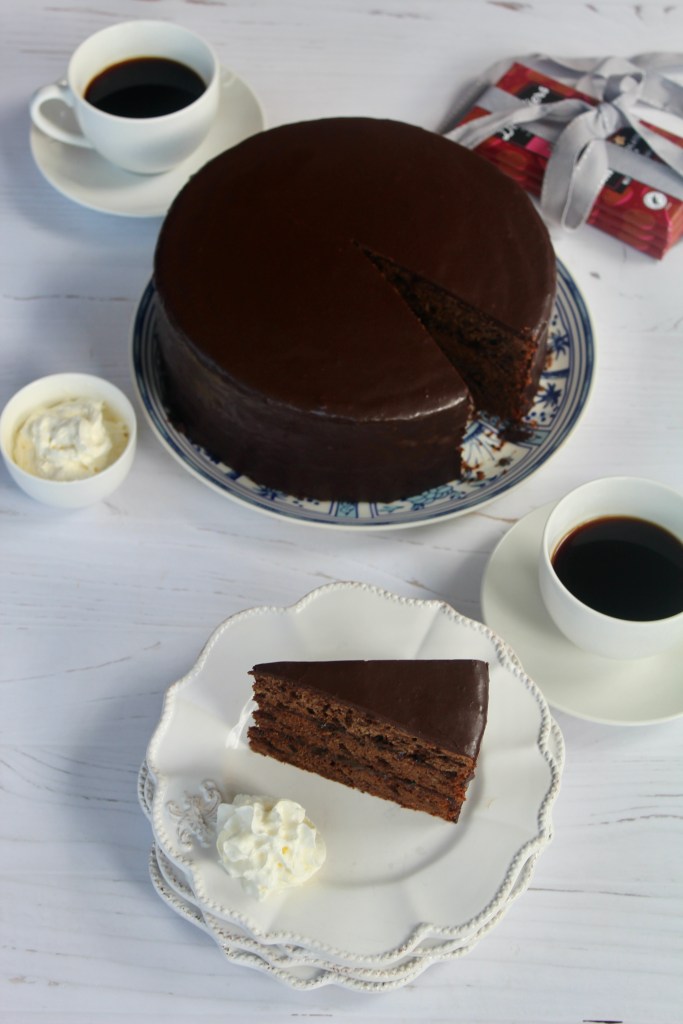
It has been said that a Viennese Sachertorte is a cake worth fighting over….! Hopefully without the fighting, you will bake this labour of love and indulge in the best chocolate cake in the world! Traditionally the cake is served with Chantilly cream on the side so that every bite may be dipped into the cream before eating. If you want a higher cake like the one in my photographs, bake the cake twice – the apricot and chocolate glaze is sufficient to cover a higher/larger cake.
Chocolate glaze: 220g sugar 125ml water 200g dark chocolate, chopped
Place an oven rack in the centre of your oven and preheat to 180℃. Lightly butter 22cm springform tin with butter and line the bottom with a round of baking paper. Dust the sides of the tin with flour and tap out the excess. Add the chocolate to a heatproof bowl set over a saucepan of simmering water and allow to melt. Remove from the heat. Stir the chocolate often until tepid but still fluid. Add the butter to the bowl of a stand mixer fitted with the paddle attachment and beat on medium-high speed for 1 minute. Turn the mixer to low speed and beat in the icing sugar. Set the mixer back on medium-high and beat until light in colour and texture. (about 2 minutes) Beat in the egg yolks, one at a time, scraping down the sides of the bowl. Now beat in the chocolate and vanilla with the machine running. Remove the bowl from the mixer. Add the egg whites and granulated sugar to a mixing bowl and beat with a hand-held electric mixer on high speed just until they form soft, shiny peaks. Do not overbeat. Stir about a fourth of the whites into the chocolate mixture to lighten it. Now fold in the remaining whites, leaving a few visible whisps of whites. Sift half the flour over and fold in with a spatula. Repeat with the remaining flour. Scrape the batter into the prepared cake tin and spread it evenly. Bake until a wooden toothpick inserted in the centre comes out clean, about 35 minutes. Remove the cake from the oven and cool on a wire rack for 10 minutes. Remove the sides of the tin and invert the cake onto the wire rack. Remove the baking paper. Re-invert the cake on another rack to turn it right side up and leave to cool completely.
For the apricot glaze: Melt the jam in a saucepan over medium heat, add the rum and pass through a sieve. Set aside to cool slightly.
Trim the top of the cake to make it level. (Optional) Cut the cake horizontally into 2 equal layers. Brush the top of one cake layer with a third of the apricot glaze. Place the second layer on top and brush the top and sides of the cake with the remaining glaze. Allow to cool until the glaze is set/less sticky. Half an hour in the refrigerator should be sufficient.
For the chocolate glaze: Bring the sugar and water to a boil in a saucepan. Stir until the sugar dissolves. Add the chocolate, remove from the heat and stir until the chocolate has melted and you are left with a smooth, glossy glaze.|Set aside to cool and thicken slightly.
Transfer the cake to a wire rack set over a rimmed baking sheet. Pour the slightly warm chocolate glaze over the cake. Take care to cover the entire cake and the sides. Allow to cool and set completely – 2 hours minimum. Trim away any hardened glaze on the bottom of the cake and transfer it to a serving plate. Serve each slice of sachertorte with a generous dollop of cream so that each bite may be dipped in the cream before eating.
2.5 – 3kg oxtail vegetable oil 3 onions, chopped 4 clove of garlic, minced 60ml flour 5 carrots, peeled and chopped into chunks 2 bay leaves 2 x 400g tins of chopped tomato 250ml red wine 1,5l beef stock Worcestershire sauce
Dumplings: 250ml flour 7,5ml baking powder 2ml salt 60g butter, cut into small cubes 10ml dried mixed herbs 60-80ml milk
For the stew: Preheat your oven to 220℃. Add the oxtail to 2 large roasting tins and drizzle with the vegetable oil. Season with salt and pepper. Roast the oxtail for 20-25 minutes, until beautifully caramelised and golden. Set aside. Place a large saucepan on medium-high heat, add some vegetable oil and then add the onions. Cook until soft. Add the garlic and stir-fry for one minute. Sprinkle over the flour and stir while cooking for another minute. Now add the carrots, bay leaves, tomatoes, red wine, beef stock and about 6 dashes of Worcestershire sauce. Add the oxtail and whatever pan juices you have and bring to a simmer. Reduce the heat to a low simmer and partly cover with a lid. Simmer the oxtail for 3 hours, stirring every now and then. Remove the lid and check the consistency of the sauce – if it is too watery, simmer without the lid for 20-30 minutes longer. The sauce should be thick and rich and the meat should be fork tender.
For the dumplings: Add the flour, baking powder and salt to a mixing bowl and stir through. Add the butter and rub it into the flour mixture with your fingertips until it resembles breadcrumbs. Add the herbs and enough milk to form a soft dough. Spoon teaspoonful of the dough onto the oxtail stew and cover with a lid. Simmer for 15 minutes without opening the lid.
This is one of the easiest ways of roasting a chicken and will leave you with juicy, fall-off-the-bone meat and a delicious gravy.
1 whole chicken 10ml salt 30ml vegetable oil 30ml butter 60ml sage leaves, roughly chopped the juice of two lemons one garlic bulb, halved horizontally 500ml buttermilk 100ml milk
Preheat your oven to 190℃. Wash and dry the chicken and rub the salt over the entire bird. Add the oil and butter to a saucepan over high heat and brown the chicken, turning it as you go along. Turn off the heat and add the remaining ingredients to the saucepan. Put a lid on/cover with aluminium foil and cook in the oven for 40 minutes. Remove the lid and cook uncovered for a further 50 minutes. Place the chicken on a serving dish. Strain the sauce through a fine mesh/sieve and serve it on the side with the chicken.
240g flour 230g butter, room temperature 120g caster sugar plus a handful or so for dusting after baking 2,5ml salt
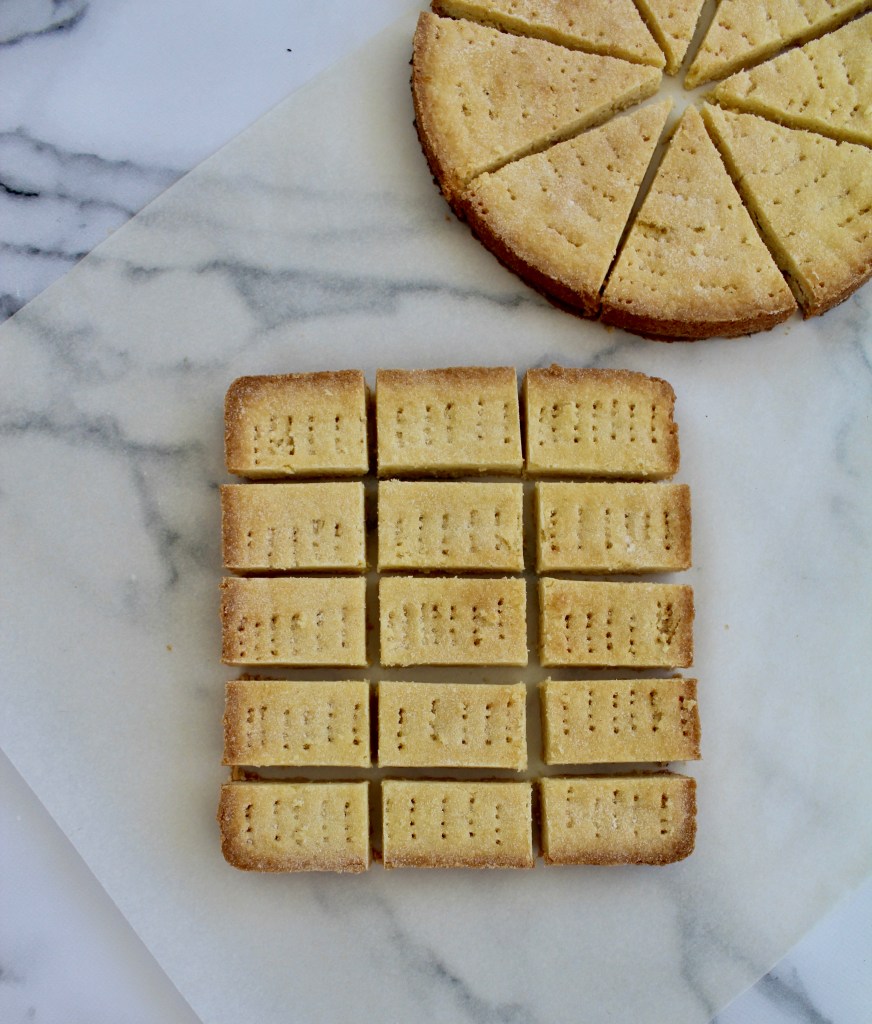
Preheat your oven to 180℃ and spray a 20cm x 20cm square or 20cm round baking tin with cooking spray. Add the flour, butter, caster sugar and salt to the bowl of a food processor and pulse together until combined. Check that the mixture is soft and pliable and comes together in a dough when you press it together between your fingers. If not, pulse the mixture some more. Scrape the mixture into the prepared tin and use your hands to push it down firmly. Prick the shortbread with the tines of a fork, creating rows. Run the back of a knife’s blade between each row of fork tines to make cutting the shortbread easier once it’s baked. Place the baking tin in the oven and bake for 35 minutes. Take the shortbread from the oven and sprinkle with caster sugar while warm. You may also enhance the cutting lines and prick the biscuit with a fork once more. Allow the shortbread to cool completely in the baking tin before removing and slicing into squares or triangles.
Shortbread is best kept in an airtight container and will last for several weeks.




 My Whisk and I