Russian Honey Cake

Russian Honey Cake

Burnt honey:
190ml honey
63ml water

Cake:
63ml burnt honey
190ml honey
280ml granulated sugar
200g butter, cubed
6 eggs
12,5ml baking powder
3,7ml salt
5ml ground cinnamon
940ml flour

Honey-cream:
125ml burnt honey
360g tin of caramel treat
2,5ml salt
600ml whipping cream

Preheat your oven to 180℃.
Cut 11 pieces of baking paper to the size of a large baking sheet and trace a 22cm circle onto each. Set aside.

For the burnt honey:
Pour the honey into a small saucepan and place it over high heat. Turn the heat down to medium when it start to bubble.
Cook until it becomes an amber colour – about 3 minutes.
Take the honey from the heat and add the water – stand back as it will sputter!
Whisk together once it stops bubbling.
Pour the burnt honey into a measuring jug and set aside to cool.

For the cake:
Pour the burnt honey, honey, sugar and butter into a heatproof bowl set over a saucepan of simmering water.
Stir until the butter has melted and then whisk by hand to combine.
Add the eggs one at a time while whisking continuously, still over the simmering water.
Add the baking powder, salt and cinnamon and whisk together for 30 seconds.
Remove the bowl from the heat.
Sift the flour into the mixture in 3-4 batches, whisking after each addition until the batter is smooth. (You may use an electric hand-held whisk)
Scoop a heaped 125ml measuring cup of the batter onto the baking paper circle and spread it out evenly with a spatula.
Bake each layer/disc for 7 minutes until it is a dark caramel colour.
Place the baked discs on a flat surface to cool completely.

For the honey-cream:
Add 125ml burnt honey, the caramel treat and salt into a mixing bowl and whisk by hand to combine.
Add 190ml cream, a little at a time, while whisking.
Place the bowl in the refrigerator for 30 minutes.
Pour the remaining 410ml cream into the bowl of a stand mixer fitted with the whisk attachment and beat to medium soft peaks.
Add the honey and caramel mixture and beat to medium stiff peaks.

Assembly:
Assemble the cake on your serving plate so that you don’t have to move it later on.
Place the first cake disc on the plate and scoop a generous amount of the honey-cream on top. Spread out evenly not worrying that it will crawl down the sides.
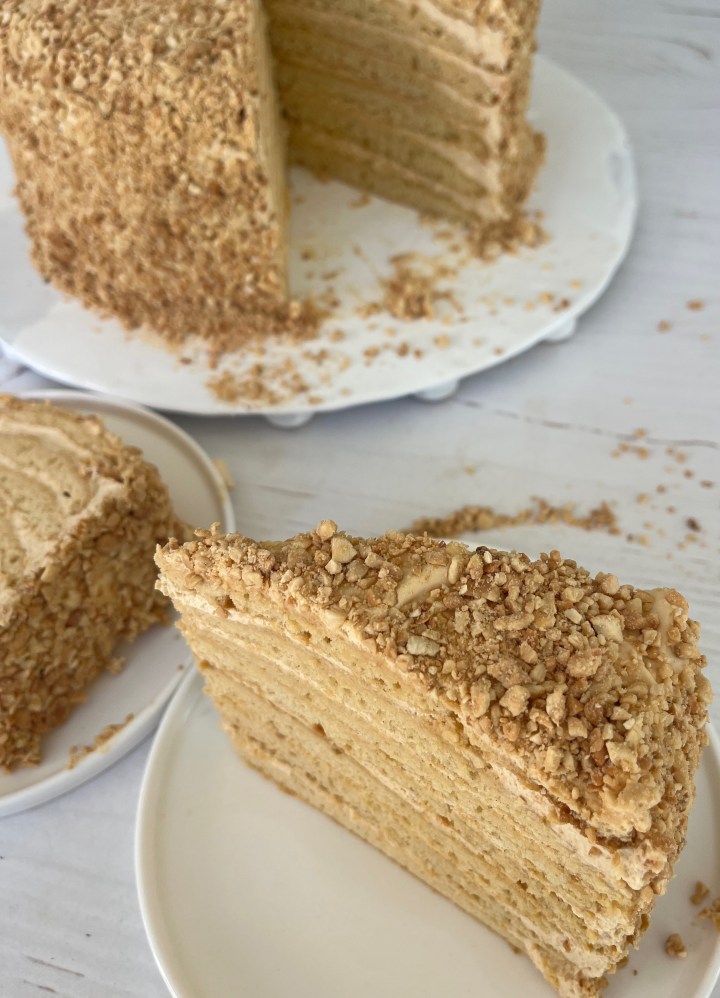
Keep going until all the cake discs have been stacked.
cover the top and sides of the cake with the remaining honey-cream and smooth it out.
Place the cake in the refrigerator for a minimum of 8 hours.

If you would like to, blitz up a selection of salted nuts and cover the sides and top of the cake with it before slicing to serve.

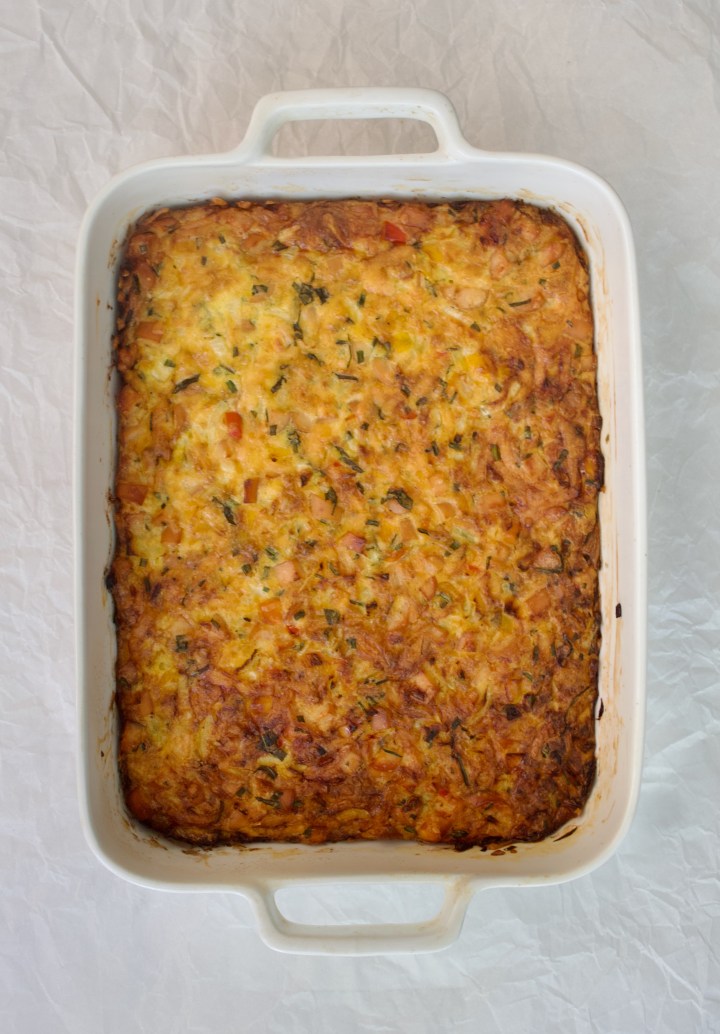
“Souttert”

“Souttert”

2 medium onions, finely chopped
250ml finely chopped sweet pepper
500ml chopped smoked chicken viennas (about 7)
500ml grated mature cheddar cheese
a handful of soft herbs (chives, basil, coriander), chopped
6 eggs
60ml cream
2,5ml salt
black pepper

Preheat your oven to 180℃ and spray a 30cm x 20cm ovenproof dish with cooking spray. Set aside.
Add the onion, sweet pepper, Viennas, cheese and herbs to a mixing bowl and mix together.
Add the eggs, cream, salt and a few grindings of pepper to another bowl and whisk together.
Pour the egg mixture into the dry ingredients and mix.
Spoon into the prepared baking dish and bake for 40 minutes.
Serve warm or at room temperature.

Milktart Cake

Milktart Cake

250ml + 30ml + 30ml granulated sugar
2,5ml + 2,5ml + 2,5ml ground cinnamon
1litre + 250ml milk
125g butter, cubed
125ml cornflour
125ml self-raising flour
5ml salt
6 eggs, separated

Preheat your oven to 180℃ and line the bottom and sides of a 22cm diameter loose-bottom cake tin, with baking paper. NB: the paper should stick 10cm above the rim of the cake tin as the cake will rise up.
Sprinkle 30ml of the sugar and 2,5ml of the ground cinnamon on the bottom of the baking tin and then set it aside.
Place a saucepan on medium-high heat and pour in the 1 litre milk, butter, 250ml sugar and another 2,5ml cinnamon.
Remove the saucepan from the heat as soon as small bubbles start appearing on the sides of the pan.
Add the cornflour, flour, salt, egg yolks and 250ml milk to a bowl and whisk together.
Drizzle the milk into this mixture while whisking.
Pour the mixture back into the saucepan and place it over medium heat. Stir the mixture until it thickens and has a custard consistency. Remove from the heat.
Whisk the egg whites to stiff peaks and fold it into the custard.
Gently pour the custard into the prepared cake tin.
Sprinkle the leftover 30ml sugar and 2,5ml cinnamon over the batter.
Bake the military in the oven for 50 minutes.
Remove and cool completely before serving.


Sicilian Milk Pudding/Biancomangiare

Sicilian Milk Pudding/Biancomangiare

Yields 4 small portions.

60ml cornstarch
125ml + 375ml milk
125ml sugar
1 lemon
ground cinnamon
crushed biscuit, to serve

Add the cornstarch to a small saucepan.
Pour in the 125ml milk and whisk the mixture until there are no lumps and it is completely smooth.
Now add the sugar and whisk again.
Add the 375ml milk once you are sure there are no lumps.
Cut two or three strips of zest from the lemon and add it to the mixture.
Place the saucepan over medium heat and stir continuously for 3-4 minutes until it thickens.
Stir and cook the mixture for another 2 minutes after the first bubbles appear.
Turn off the heat and remove the lemon zest.
Wet your moulds under running water and shake out any excess water.
Pour the not milk mixture into the moulds and refrigerate for 4-6 hours.
Unmould the puddings onto serving plates.
Sprinkle a pinch of ground cinnamon on the crushed biscuit and spoon over each pudding to serve.

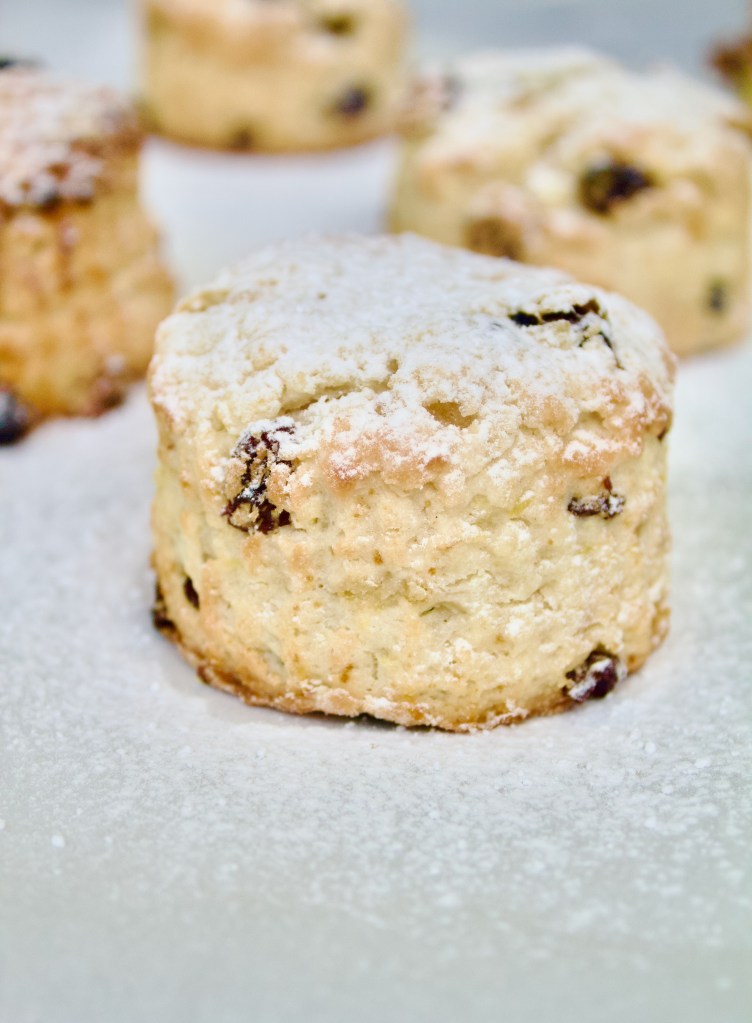
PaneScone

PaneScone

450g flour
2,5ml salt
10ml baking powder
150g butter, cubed
120g sugar
120g candied citrus peel
120g raisins
1 orange, zested
1 lemon, zested
250ml milk

Preheat your oven to 200℃ and line a baking sheet with baking paper.
Add the flour, salt and baking powder to a mixing bowl and stir to mix.
Add the cubed butter and rub it into the flour mixture with your fingertips until it resembles breadcrumbs.
Add the sugar, citrus peel and raisins and lightly mix through.
Add the grated zest of the orange and lemon and stir again.
Add small quantities of milk, stir and repeat until the mixture comes together as a dough.
Flour a work surface and place the dough on it. Flatten with your hands so that it is 5cm thick.
Cut out rounds with a biscuit cutter or a glass and place the scone on the prepared baking sheet, spaced apart evenly.
Bring the dough together to a 5cm thickness again and cut out some more rounds.
Bake in the oven for 15 minutes.
Remove the scones and cool on a cooling rack.
Dust with icing sugar to serve.

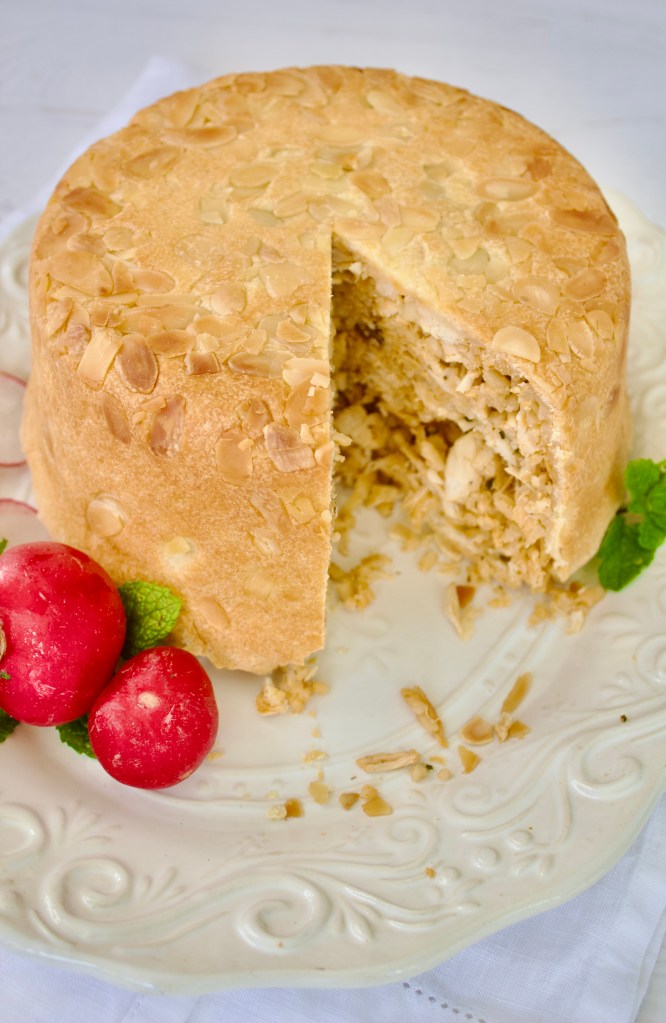
Perde Pilavi

Perde Pilavi

Perde Pilavi is a traditional Turkish dish made of chicken and rice flavoured with nuts, fruit and spices and wrapped up in a delicious pastry, specked with flaked almonds.

1 chicken (1-1,5kg)
1 litre chicken stock
40g butter
40g flaked almonds
330g short grain rice (like Arborio)
30g raisins
5ml salt
5ml paprika
10ml mint, chopped
660ml chicken stock

Pastry:
2 eggs
60ml yoghurt
60g butter
50ml vegetable oil
5ml salt
350g flour
5ml baking powder
50g flaked almonds

Place the chicken in a large saucepan and pour in the stock.
Cook on medium heat for an hour, until done.
Remove the chicken from the stock and set aside to cool slightly.
Reserve the stock.
Place a large frying pan on medium-high heat, add the butter and wait for it to melt.
Add the almonds and stir-fry until golden.
Add the rice and cook for a minute or so, stirring all the while to coat in the butter.
Now add the raisins, salt, a few grindings of black pepper, paprika and mint.
Pour in 660ml of the reserved stock (add boiling water if you dont have enough), stir the mixture and cover with a lid.
Turn the heat to a gentle simmer and cook until the liquid is absorbed and the rice is almost cooked.
Remove from the heat and set aside.
Shred the chicken into strips and discard the bones and skin.
Add the chicken to the rice mixture and stir through.

For the pastry:
Preheat your oven to 180℃.
Add the eggs, yoghurt, butter and vegetable oil to a bowl and whisk together. Set aside.
Add the salt, flour and baking powder to a bowl and whisk through.
Gradually add the dry ingredients to the wet.
Lightly knead the pastry to bring it together.
Flour a work surface and roll the pastry to a 45cm diameter circle. It should be large enough to line the dish and have enough hanging over the sides to close around the filling.
Spray a 18cm diameter x 8cm deep ceramic dish with cooking spray.
Scatter the almonds on the bottom of the dish.
Line the bottom and sides of the dish with the pastry, leaving the overhang.
Spoon the cooled rice mixture into the pastry.
Fold the overhang-pastry over the filling to enclose it completely – trim off any excess.
Bake for 40 minutes, until golden.
Take the dish from the oven and rest it for 15 minutes.
Place a serving plate over the baking dish and invert it.
Serve the pilavi with a crispy salad.

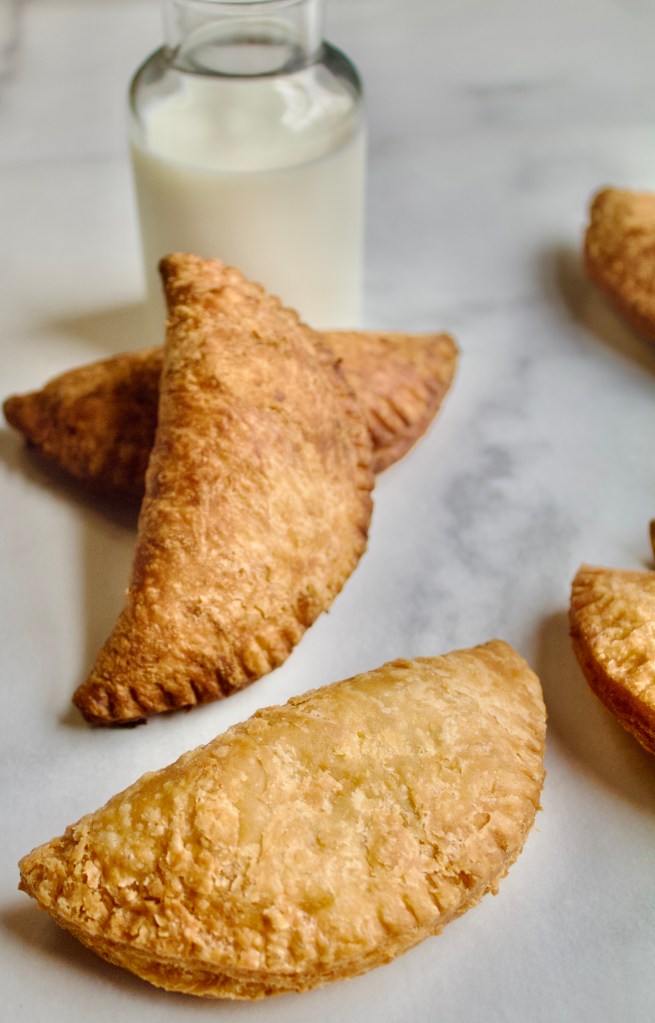
Milk Tart Hand Pies

Milk Tart Hand Pies

420g flour
10ml baking powder
5ml salt
5ml sugar
220g butter, grated
190ml milk
vegetable oil for frying

Filling:
40g corn flour
50ml + 450ml milk
4 egg yolks
50g + 50g caster sugar
5ml ground cinnamon
5ml vanilla

For the pastry:
Add the flour, baking powder, salt and sugar to a mixing bowl.
Add the grated butter and rub the mixture between your fingertips until it resembles coarse breadcrumbs.
Drizzle the milk over the mixture and bring it together with your hands.
Shape the pastry into a ball, slice it in half and flatten each into a flat disc.
Wrap in plastic and refrigerate for one hour.

For the filling:
Add the corn flour to a large mixing bowl and stir in 50ml of the milk.
Add the egg yolks and 50g caster sugar and whisk together. Set aside.
Pour the 450ml milk into a small saucepan and add the other 50g caster sugar and ground cinnamon to it.
Place the saucepan over medium heat and stir until the sugar has dissolved.
Take it from the heat as tiny bubbles start to appear around the edges.
Drizzle the warm milk mixture into the egg mixture while whisking vigorously.
Now pour the mixture back into the saucepan and place it on medium-low heat.
Stir continuously until thickened.
Allow to cook for 30 seconds before removing from the heat.
Add the vanilla and mix through.
Pour the mixture into a shallow bowl and then place plastic wrap directly on its surface.
Allow to cool completely.

Lightly flour a work surface and roll the dough to a 5mm thickness.
Cut 12 circles with a 12cm diameter from the dough.
Spoon 30ml of the filling on the pastry circle.
Wet the edges of the circle with water and fold the dough over into a half-moon shape.
Seal and crimp the edges with a fork.
Refrigerate the pies for 30 minutes.
Heat 6cm vegetable oil in a saucepan and fry 3 pies at a time for 6 minutes, flipping them over every now and then.
Drain on paper towels.
The hand pies may be served as is or sprinkled with cinnamon sugar.

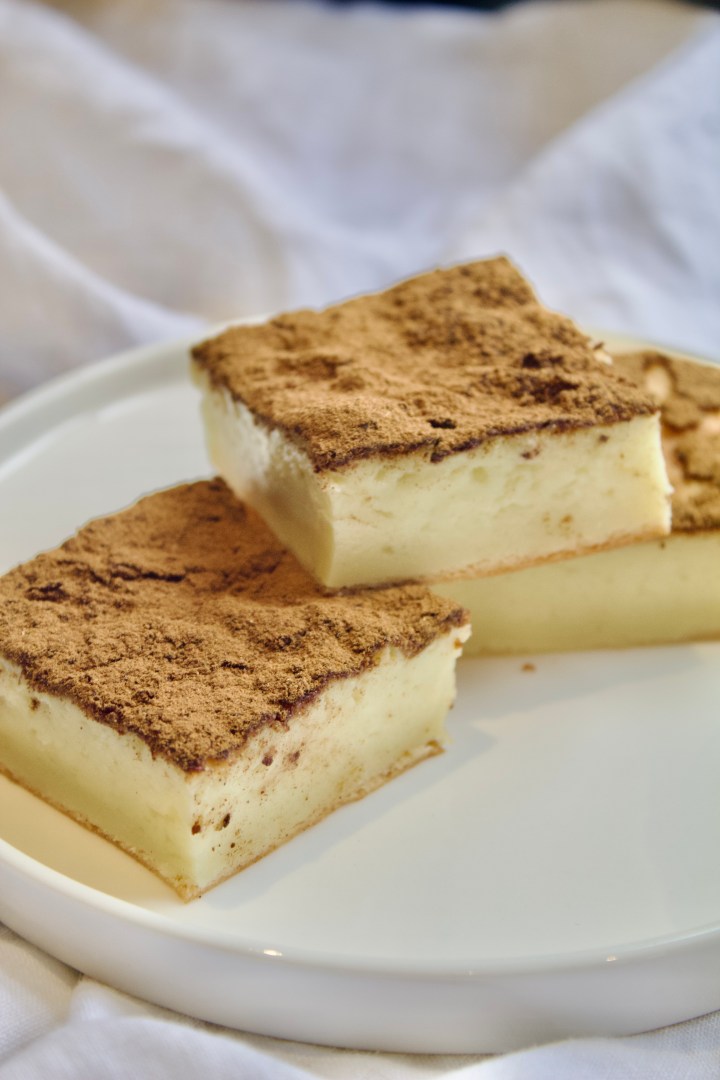
Naked Milk Tart

Naked Milk Tart

This is a crustless milk tart, easy to put together and produces one large (38cm x 26cm) or two medium (28cm x 20cm) tarts.

6 eggs
375ml sugar
90g butter, melted
375ml flour
7,5ml baking powder
a pinch of salt
1,5litres of milk
15ml vanilla
ground cinnamon

Preheat your oven to 180℃ and spray a 38cm x 26cm ceramic dish with cooking spray.
Add the eggs and sugar to the bowl of a stand mixer fitted with the paddle attachment.
Mix on medium-high speed for 2 minutes.
Turn the mixer to a low speed and drizzle in the melted butter.
Turn off the mixer.
Sift the flour, baking powder and salt into the bowl and turn the mixer back on to a low speed until the ingredients are incorporated.
Add the vanilla to the milk and drizzle the milk in to the batter with the engine running.
Scrape the batter into the prepared ceramic dish.
Bake in the oven for 1 hour.
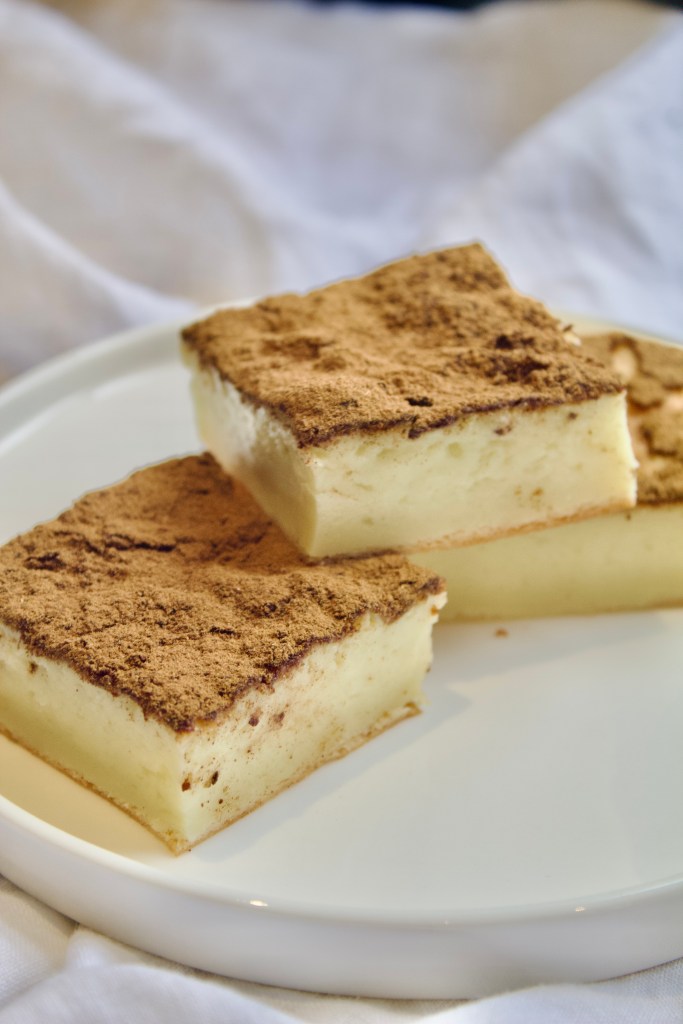
Take the milk tart from the oven and immediately sift over some ground cinnamon.
Set aside for at least 30 minutes before slicing.
Keep refrigerated.

Turkish eggs

Turkish eggs

You may poach or fry the eggs for this traditional recipe.

250ml Greek yoghurt
1 clove of garlic, minced
30ml chopped mint leaves
grated rind of 1 lemon

45ml olive oil
30g butter
5ml smoked paprika
5ml chilli flakes
5ml Szechuan pepper
1ml ground cumin

4 eggs

Add the yoghurt, garlic, mint and lemon rind to a small bowl.
Season with salt and whisk to mix.
Divide the mixture between 2 serving plates and set aside.

Pour the olive oil into a small pan, add the butter and allow to melt over a medium heat.
Add the smoked paprika, chilli flakes, Szechuan pepper and cumin to the pan and stir around for a minute or so.
Take the pan from the heat and set aside.

Place a saucepan on high heat and fill it 10cm deep with water. Bring to the boil and then reduce to a very low simmer.
Crack one egg at a time, into a cup and gently slide it into the simmering water.
Wait about 20 seconds before adding the next egg.
Poach the eggs for 3 minutes, remove them with a slotted spoon and set 2 eggs on the yoghurt mixture.
Spoon the spicy butter over the eggs and drizzle the rest on the plate.
Serve with small pita breads to mop up the sauce.

Traditional Clafoutis

Traditional Clafoutis

125ml sugar
125ml flour
3 eggs
5ml vanilla
30ml butter, melted
250ml milk
enough pitted cherries to cover the bottom of a pie/flan dish

Preheat your oven to 180℃ and grease a ceramic pie/flan dish.
Add the sugar and flour to a mixing bowl.
Whisk the eggs, vanilla, melted butter and milk together in a wide-mouth jug.
Slowly pour the milk mixture into the dry ingredients while whisking.
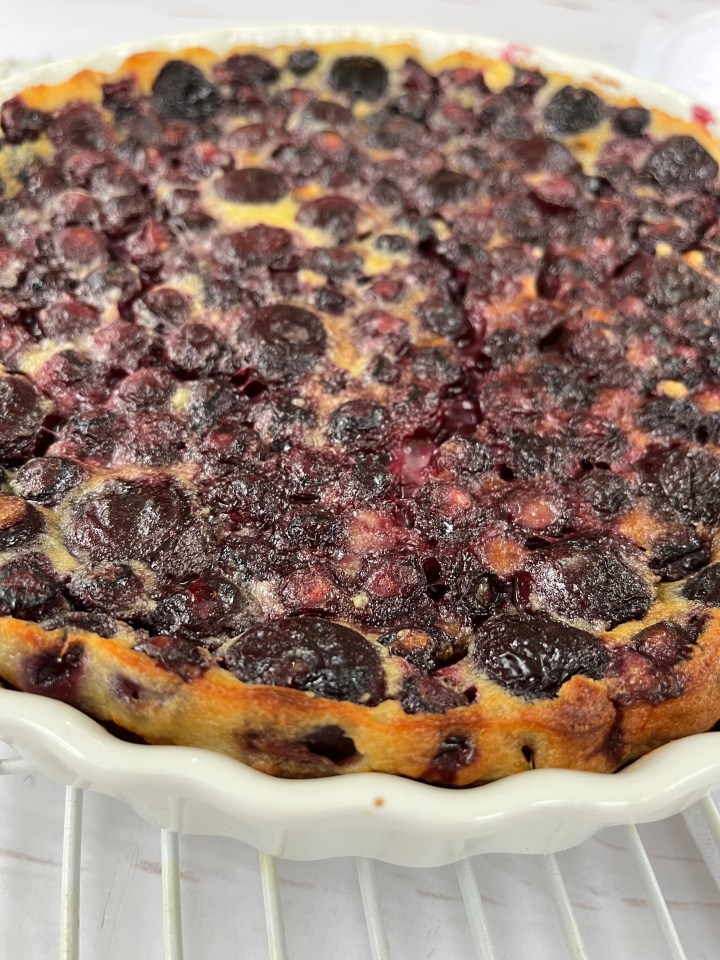
Fill the bottom of the pie dish with an even layer of cherries and pour the batter over the cherries.
Bake in the oven for 40 minutes.
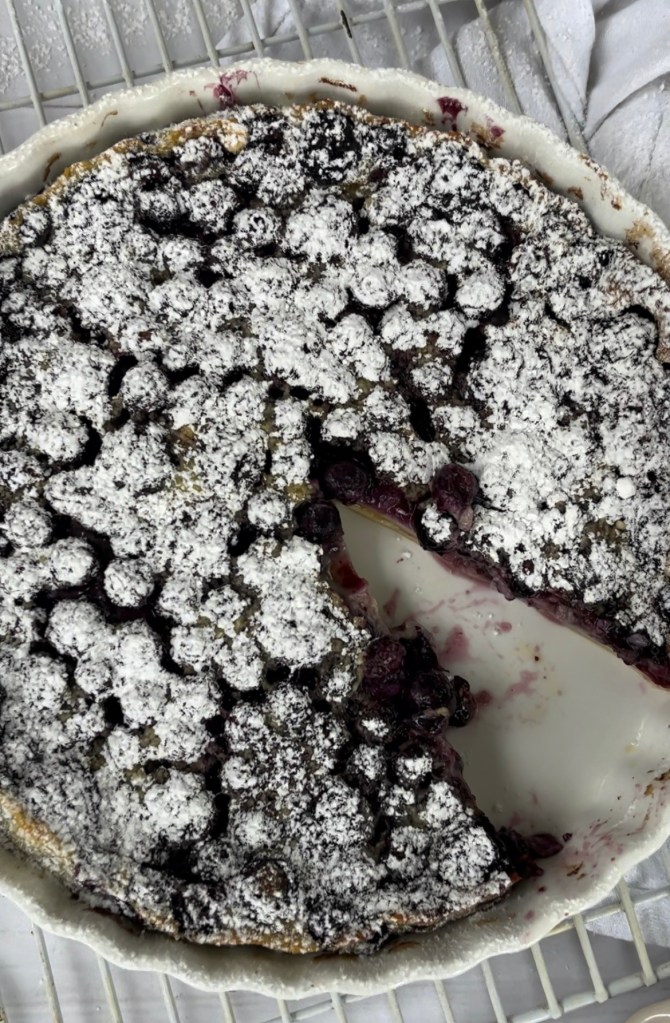
The clafoutis will puff up in the oven and fall back on itself as it cools.
Dust with icing sugar once cooled.