6 hot cross buns, halved 240g cream cheese, room temperature 125ml cream 2,5ml vanilla 160g Biscoff spread 4 bananas, sliced
Toast the halved buns in a dry pan. Add the cream cheese and cream to a mixing bowl and whisk together. Refrigerate until needed. Add the biscoff spread to a small bowl and warm in the microwave for about 30 seconds at a time, until you have a very soft spread. Spoon the cream cheese mixture on the buns. Slice the bananas and arrange on top. Drizzle with the biscoff spread.
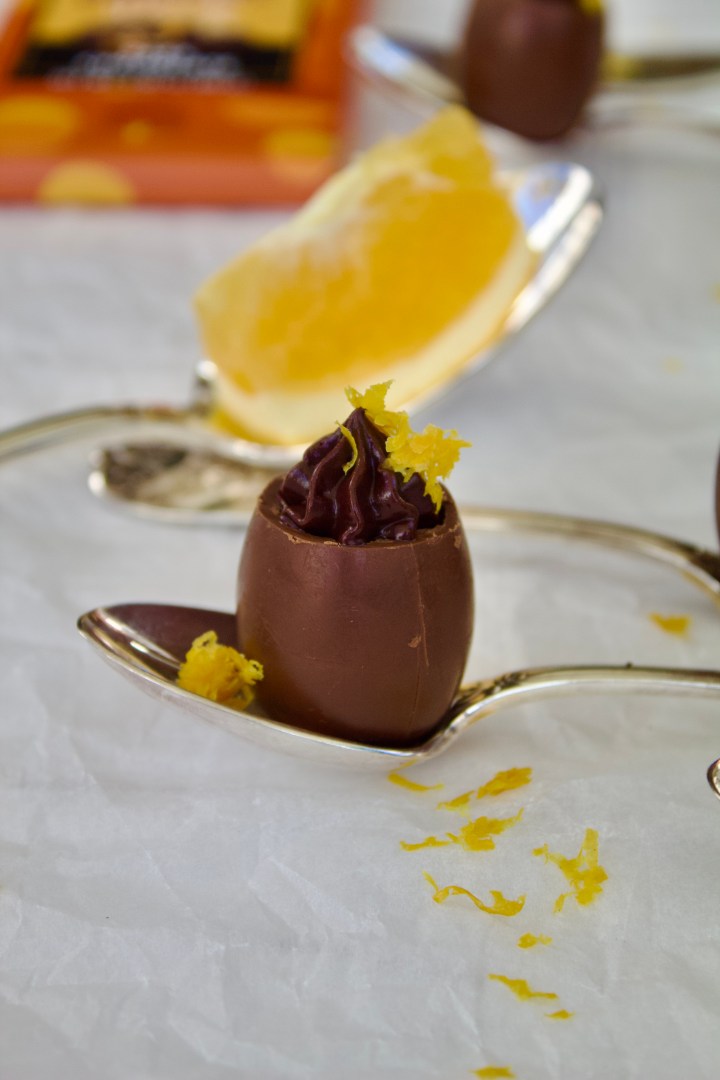
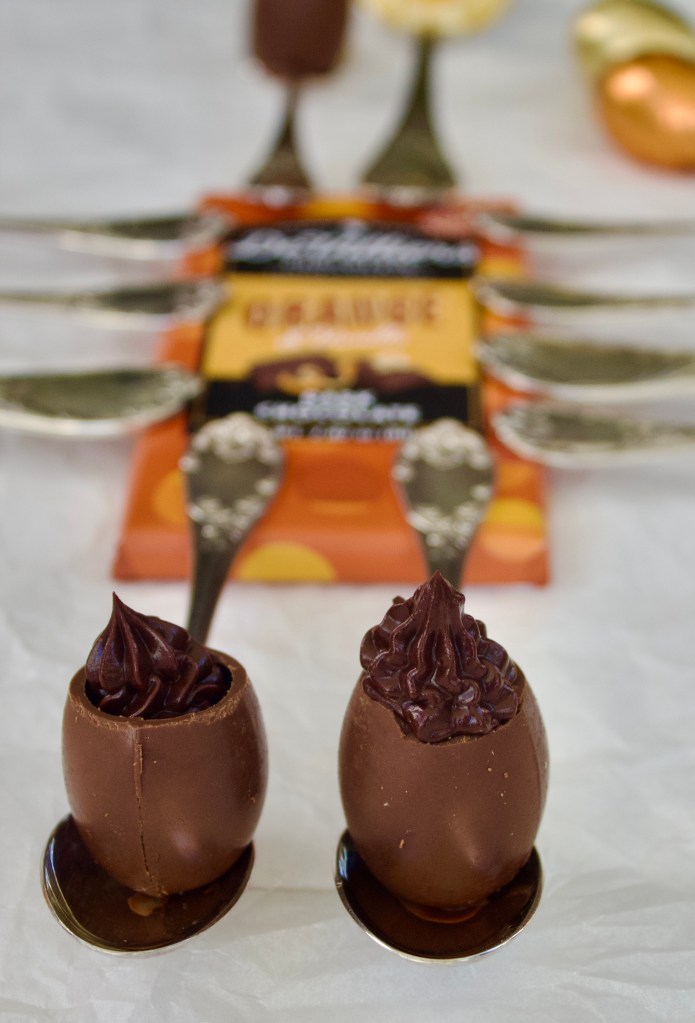
160g Orange flavoured De Villiers Chocolate 160g cream 12 De Villiers Chocolate hollow easter eggs
Chop the chocolate finely and add it to a mixing bowl. Pour the cream into a small saucepan and allow it to warm up – it should be hot when you stick your finger in it but it should not boil. Pour the warm cream on the chopped chocolate and stir until all the chocolate has melted. Set the bowl somewhere in your kitchen and stir every time you walk past. The ganache will take about 40 minutes to come to piping consistency, depending on the temperature of your kitchen. In the meantime, slice the top off the Easter eggs. I warm the bottoms of the eggs and then stick them on to a spoon so that they sit upright. Spoon the ganache into a piping bag and fill the eggs. Scatter some orange zest over to serve.
These little cakes can be baked in a 12-hole muffin tin when lined with paper cups. Baking time remains the same.
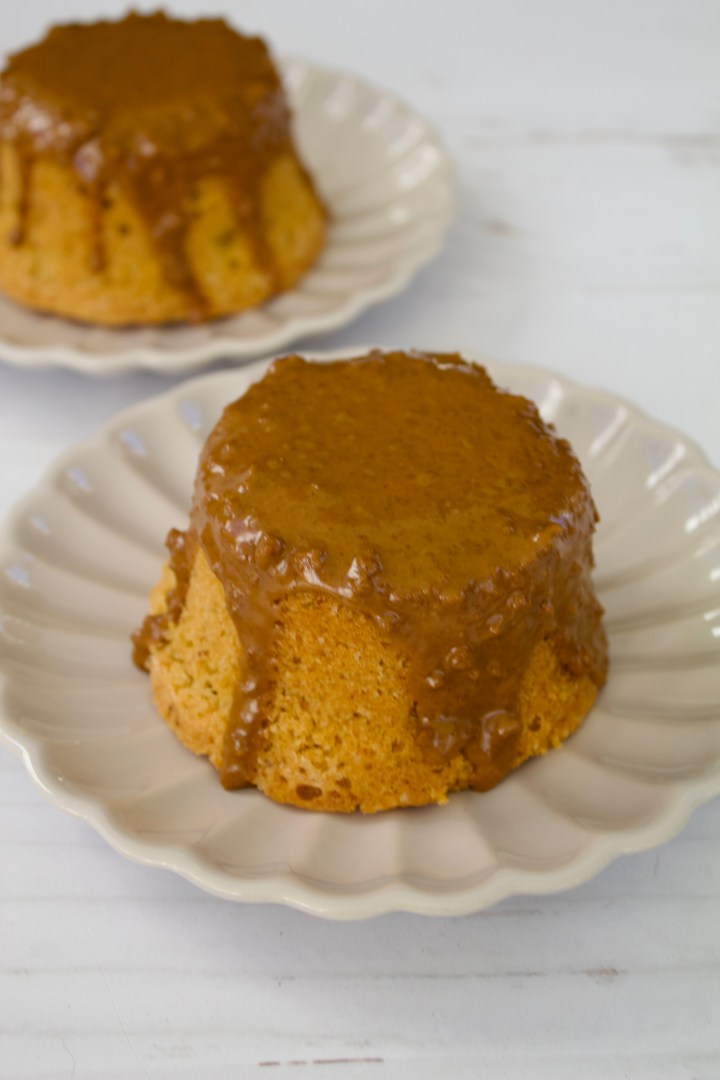
175g butter, room temperature 175g brown sugar 30g + 200g Biscoff spread 3 eggs 175g self-raising flour
Preheat your oven to 160℃ and spray 6 ramekins with cooking spray. Add the butter, sugar and Biscoff spread to a mixing bowl. Whisk with an electric mixer until smooth. Add the eggs one at a time while mixing. Add the self-raising flour and mix on low speed until incorporated. Divide the batter between the 6 ramekins. Bake for 25 minutes until golden brown and a skewer inserted in the centre comes out clean. Cool the cakes on a wire rack.
Decant about 200g of Biscoff spread and place in the microwave oven for 20 second spurts. Stir the spread and micro again until you have a pourable consistency. Place the cooled cakes on a cooling rack set over a baking sheet and pour over the spread. Stand for 30 minutes until set.
If there had to be a cake that I could not live without, it would be this Vanilla Cake. It is plain and simple, has the finest, most delicate crumb and can be dressed up or down with icing, cream, fresh fruit, steamed fruit or a compote. Whichever way you choose to eat yours, I hope this becomes one of your very favourite cakes too! Please note: THERE ARE DIFFERENT BAKING TIMES DEPENDING ON WHETHER YOU BAKE THE CAKE IN ONE OR TWO CAKE TINS.
Preheat your oven to 180℃ and spray two 22cm loose-bottom cake tins and line the base and sides with baking paper. Add the flour, baking powder and salt to a mixing bowl and whisk to mix through. Add the eggs to the bowl of a stand mixer fitted with the whisk attachment and beat on high speed for 30 seconds. Slowly pour in the sugar with the mixer still running. Now beat on high speed until the mixture is three times its original volume – about 7 minutes or so. Scatter a third of the flour on the surface and mix on the lowest speed until the flour is just incorporated. Keep going until there is no flour left. Add the butter and milk to a saucepan and place over medium heat. Stir until the butter has melted and the mixture is warm when you put your finger in it. NB: you want the butter to melt but NOT boil the milk! Pour the milk-mixture into a large mixing bowl. Add the vanilla and vegetable oil and whisk through with a hand whisk. Add about 250ml of the egg and flour mixture and vigorously whisk to combine. The batter must be smooth. Turn the mixer on to a low speed and very slowly pour in the milk mixture. Scrape down the sides and base of the bowl. Beat on low speed for 20 seconds. Divide the batter between the prepared cake tins. Lift each tin 5cm from the work surface and drop it – repeat a few times to knock out the large air bubbles. Place the cake tins in the oven and bake for 30 minutes. Remove and cool in the tins for 15 minutes before turning out onto cooling racks and removing the baking paper. Leave to cool completely before filling with whipped cream and fresh fruit.
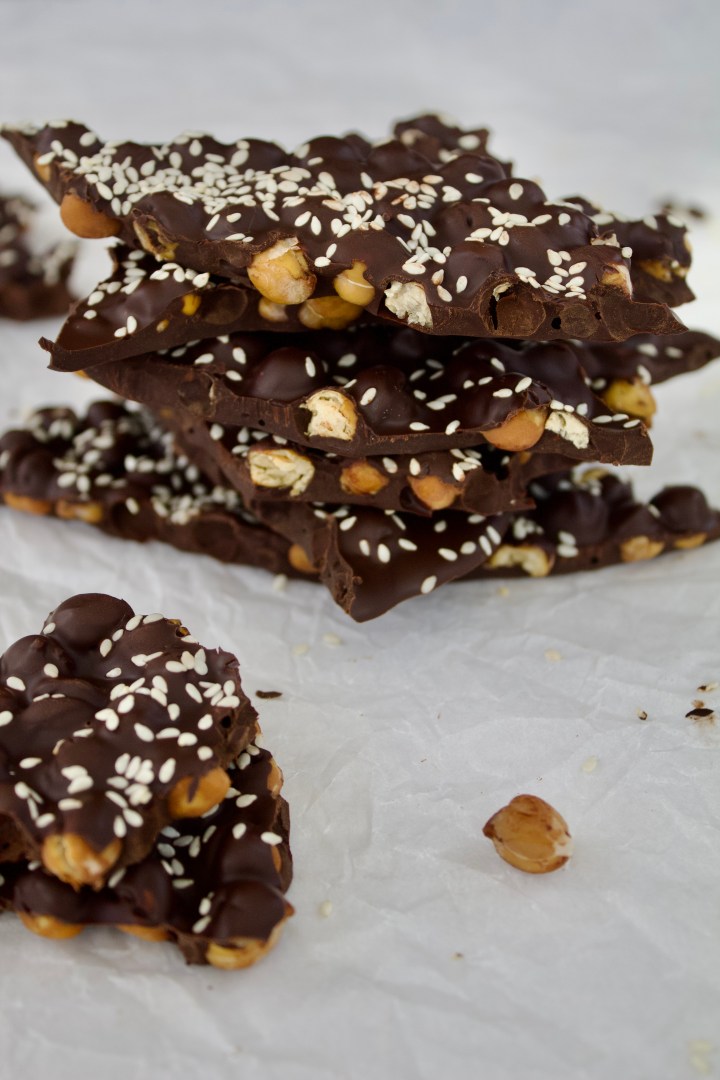
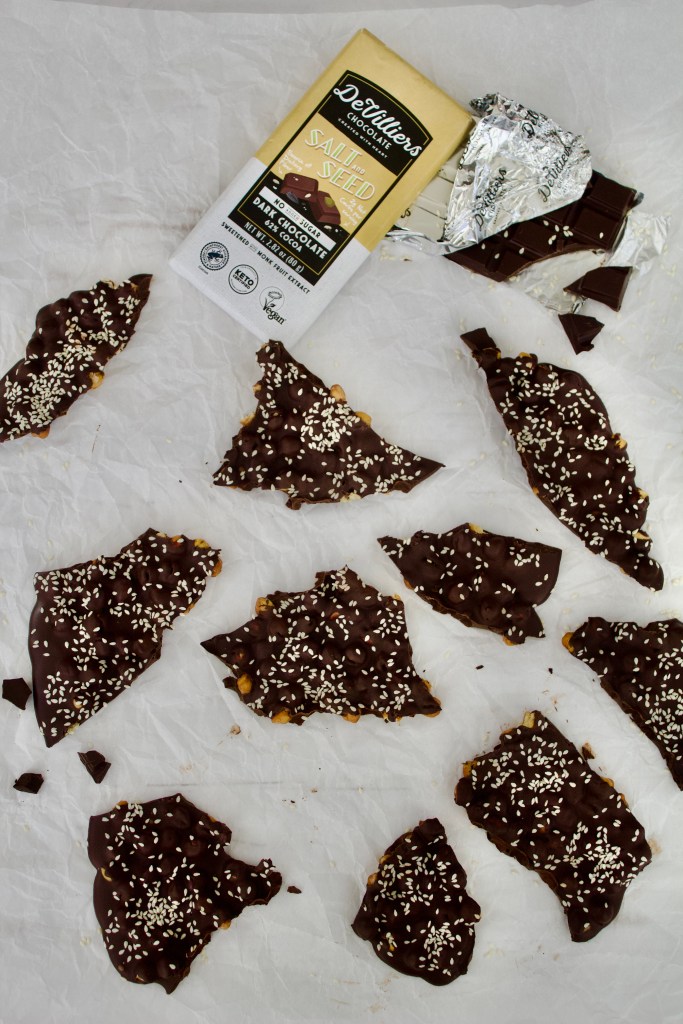
1 x 400g tin chickpeas 240g chocolate 10ml sesame seeds
Preheat your oven to 180℃ and line a baking sheet with baking paper. Rinse the chickpeas under running water and spread them out on a kitchen towel. Place another towel on top and dry the chickpeas. Spread them out on the prepared baking sheet and spray them with cooking spray. Roast in the oven for 20 minutes, giving them a shake every now and then so that they bake evenly. Remove from the oven and cool completely. Break up the chocolate and add it to a heatproof bowl set over a saucepan with barely simmering water. Allow to melt. Pour the chocolate over the chickpeas and scatter the sesame seeds over. Refrigerate until set, about an hour. Break into shards.
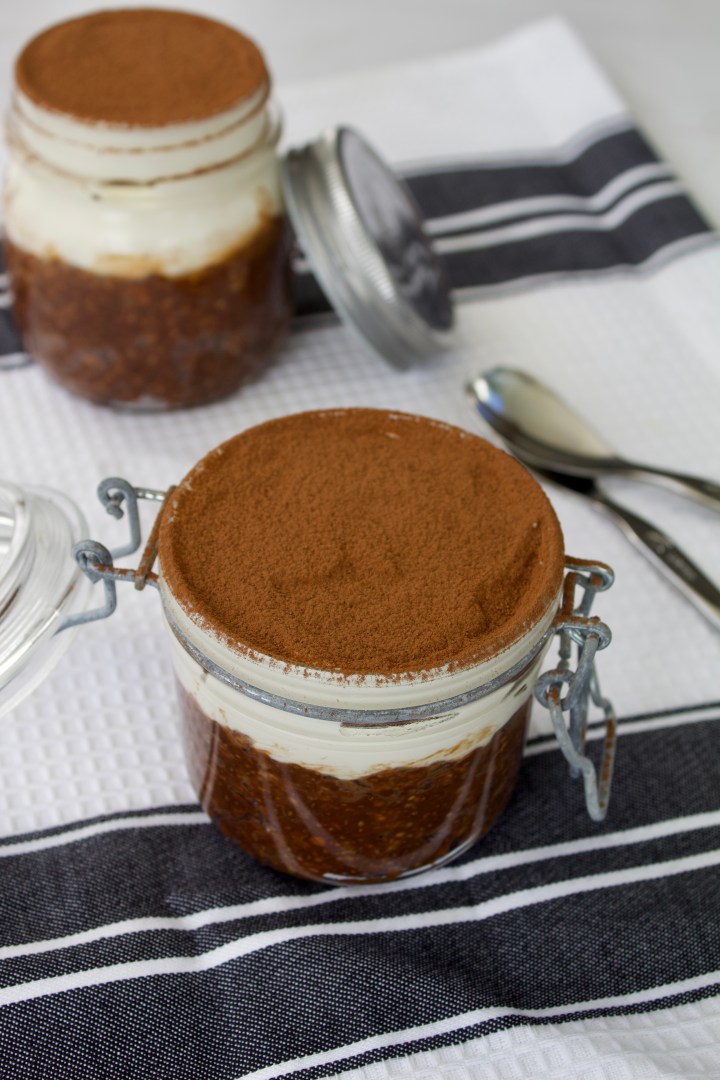
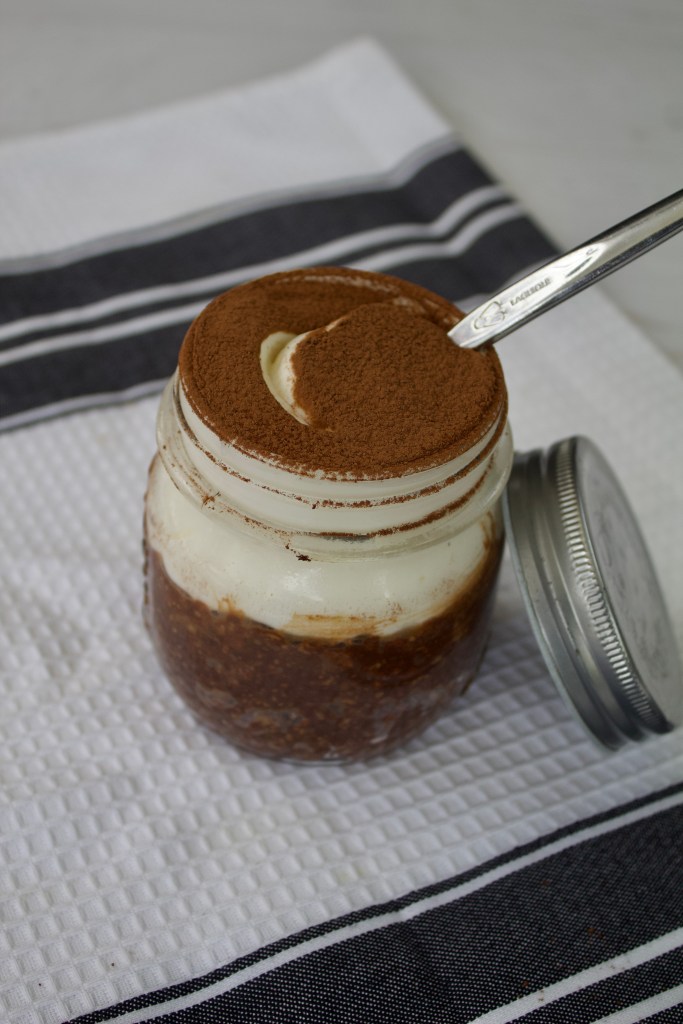
250ml rolled oats 30ml chia seeds 45ml cocoa powder, sifted 45ml honey 80ml milk 125ml coffee, room temperature 2,5ml vanilla a pinch of salt Top layer: 150ml greek yoghurt 30ml honey cocoa powder to dust
Add the oats, chia seeds, cocoa powder, honey, milk, coffee, vanilla and a pinch of salt to a mixing bowl. Whisk together for 1 minute. Cover the bowl with plastic wrap and refrigerate overnight.
Prepare the top layer by stirring together the yoghurt, honey and vanilla. Spoon half the oats into two serving glasses and top with half the yoghurt mixture. Repeat the oats layer and then top it off with the yoghurt layer. Dust an even layer of cocoa powder on top to serve.
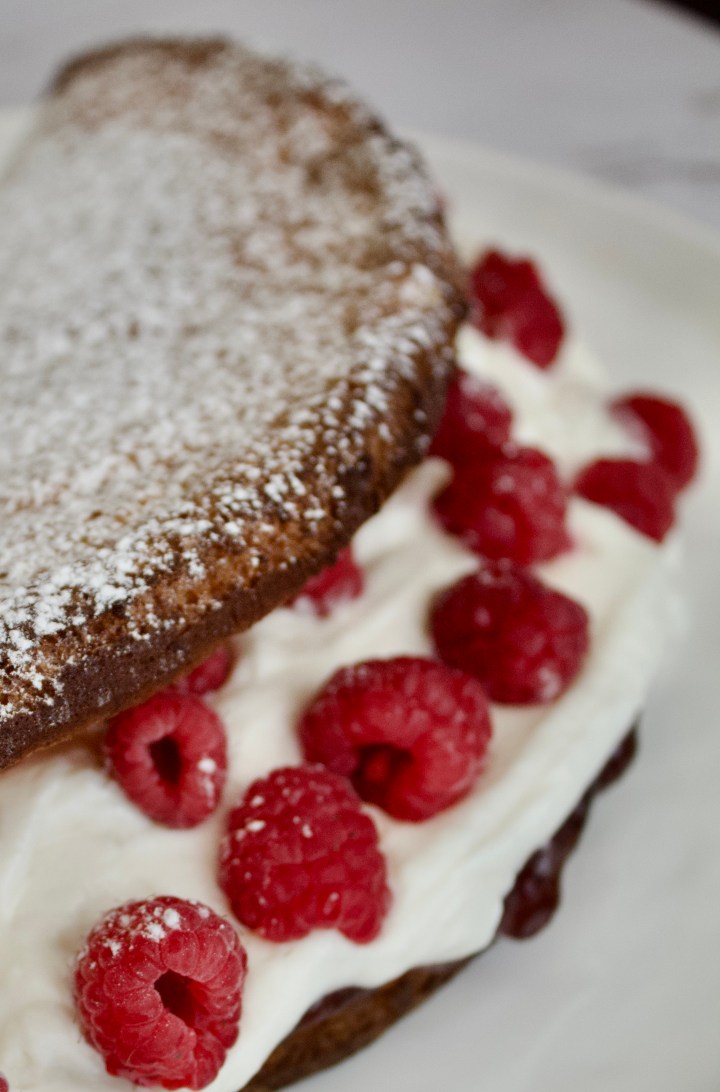
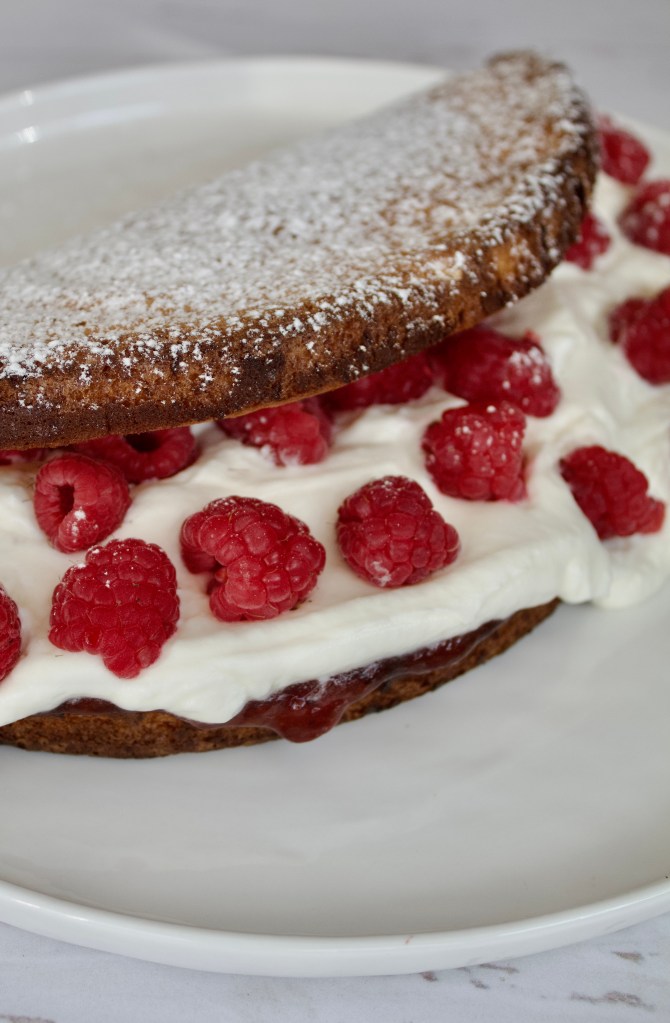
A sweet omelet may be a strange/unusual idea but this traditional omelet with vanilla and fresh berries will surprise and delight your tastebuds!
3 eggs, separated 30ml + 30ml sugar 1ml + 1ml salt 45ml flour 125ml cream 2,5ml vanilla 80ml strawberry/raspberry jam fresh berries icing sugar, for dusting
Preheat your oven to 220℃ and line the base of a 22cm loose-bottom cake tin with baking paper. Spray with cooking spray and set aside. Add the egg whites to a mixing bowl and beat with an electric whisk until stiff peaks form. Set aside. Add the egg yolks, 30ml sugar and 1ml salt to a separate mixing bowl. Beat on high speed for 2-3 minutes until you have a very thick, very pale mixture that falls from the whisk in ribbons. Fold a third of the egg whites into the mixture, add the rest and fold in until just combined. Sift the flour over and fold in with a metal spoon until smooth. Spoon the mixture into the prepared baking tin and gently smooth the top. Bake in the oven for 10-12 minutes. The omelet should be fluffy and golden brown and a toothpick inserted in the centre should come out clean. Add the cream, vanilla, 30ml sugar and 1ml salt to a mixing bowl and whisk until medium-stiff peaks form. Refrigerate until needed. Remove the omelet from the oven and remove the ring of the cake tin. Invert the omelet onto a plate and gently peel off the baking paper. Allow to cool to room temperature. Spread the jam on half the omelet. Spread the cream over the jam and sprinkle over the fresh berries. Gently fold the omelet over. Dust with icing sugar to serve.
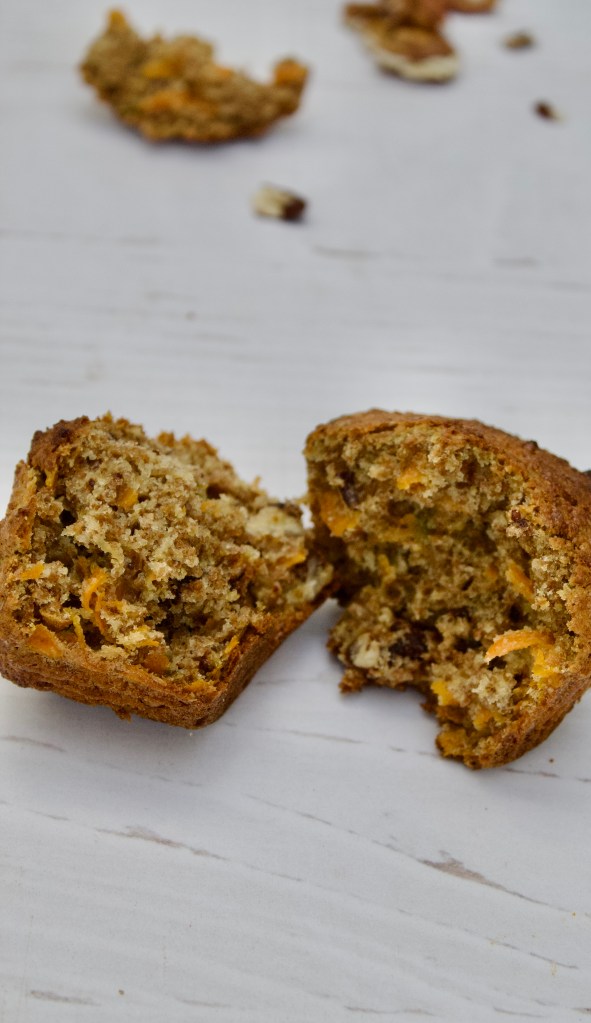
This recipe makes 12 muffins but can easily be doubled. You may also keep the batter in the refrigerator for a week. Be sure to take the batter out and leave it at room temperature for 40 minutes BEFORE baking. They store really well in a sealed container.
50ml + 200ml buttermilk 6ml bicarbonate of soda
375ml bran 125ml boiling water 60ml butter, melted 190ml brown sugar 1 egg, beaten 160ml flour 160ml wholewheat flour 2ml salt 125ml grated carrot 125ml pecan nuts, roughly chopped
Preheat your oven to 220℃ and line a 12-hole muffin tin with paper cups. Pour the 50ml buttermilk into a small bowl, sprinkle in the bicarbonate of soda and stir to dissolve. Set aside. Add the bran to a large mixing bowl and pour over the boiling water. Stir through. Drizzle over the melted butter and stir together. Now add the brown sugar, egg and 200ml buttermilk. Pour the buttermilk and bicarb into the mixture and stir through.|Add the flour, wholewheat flour, salt, grated carrot and nuts and mix together. Divide the mixture between the paper cups and bake for 20 minutes. Cool the muffins on a wire rack and keep stored in an airtight container.
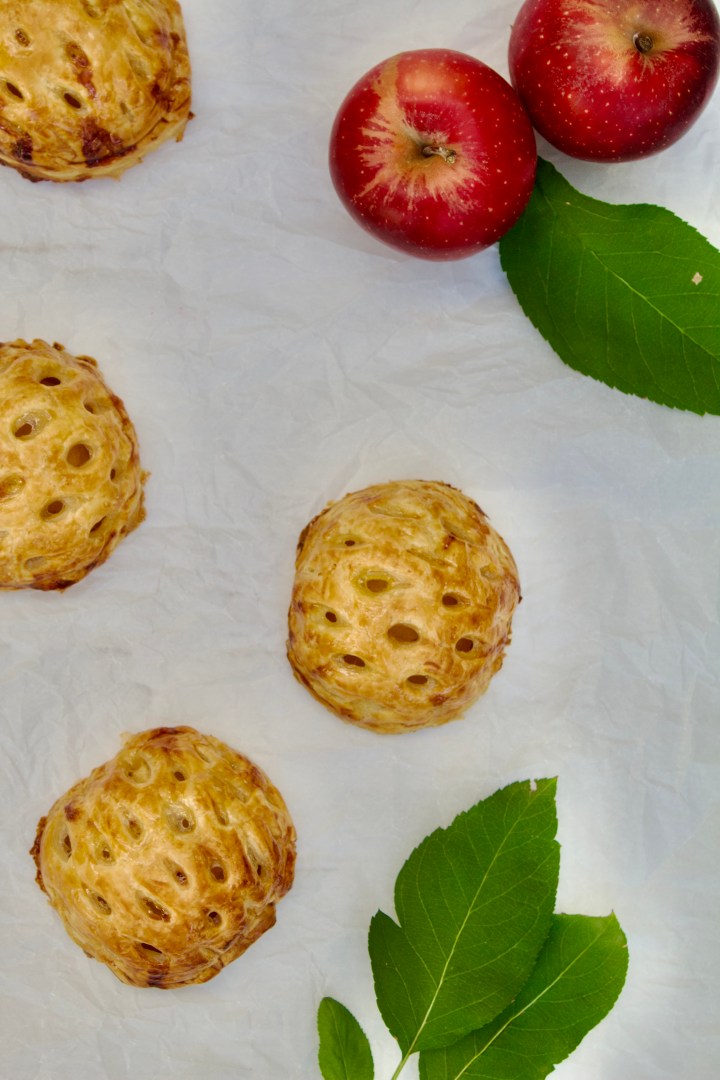
1 x 400g Today Puff Pastry 2 large apples egg-wash: egg yolk + 15ml water whisked together
Preheat your oven to 200℃ and line a baking sheet with baking paper. Unroll your pastry and divide and cut it into 8 equal squares. Place 4 squares on the prepared baking tray and set aside. Make 0,5cm incisions in a vertical line on the other pastry squares. Fill the squares with these incisions following a “brick-laying” pattern. Peel, halve and core the apples. Place half an apple on a square on the baking sheet and cover with a square with incisions. Press down to seal and trim off the excess pastry. Brush with egg-wash and repeat with the rest of the squares and apple. Bake in the oven for 20 minutes and serve with custard.
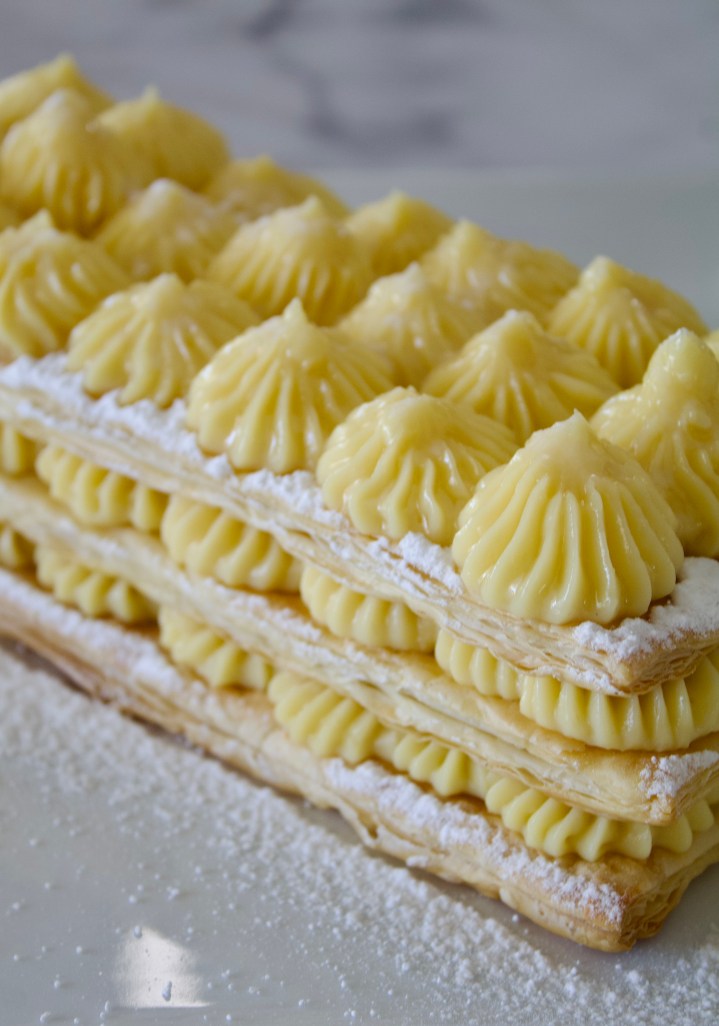
For the crème pâtissière: Add the corn flour to a mixing bowl. Pour a small amount of milk into the bowl and stir to dissolve. Add the yolks and half the sugar. Whisk to gather by hand until the sugar has dissolved. Set aside. Pour the rest of the milk and the rest of the sugar into a small saucepan. Set over medium heat and stir until the sugar has dissolved. Take the milk from the heat as soon as tiny bubbles start to appear around the edge of the saucepan. Drizzle the warm mixture onto the egg mixture while whisking continuously. Now pour the mixture back into the saucepan and place on a medium-low heat. Stir continuously until the mixture is thick and smooth. Allow to cook for 30 seconds before removing from the heat. Add the vanilla and stir through. Pour the mixture into a shallow bowl, place a piece of plastic wrap directly onto the surface and allow to cool completely.
Preheat your oven to 200℃ and line a large baking sheet with baking paper. Unroll the pastry sheet and cut it into 4 equal rectangles (cut through lengthwise and then halve each strip). Place the rectangles on the prepared baking sheet, spacing them evenly apart. Place another sheet of baking paper on top of the pastry and then place another baking sheet on top of that. Bake for 12 minutes. Remove from the oven and transfer to a cooling rack to cool completely.
Assembly: Whisk your room temperature crème pâtissière by hand until it is smooth. Spoon into a piping bag fitted with a large (1,5/2cm) nozzle. Lay a pastry sheet on a serving plate and pipe dollops over the entire sheet. Repeat until you have one pastry sheet left. Sift the icing sugar into a bowl and add a tablespoon of milk. Stir the mixture, adding a few drops more until you have a very thick paste. Spread the icing paste on the pastry sheet and set aside to dry. Place the iced pastry on top of the custard slice. Slice into portions once you have displayed your beautiful creation.









 My Whisk and I