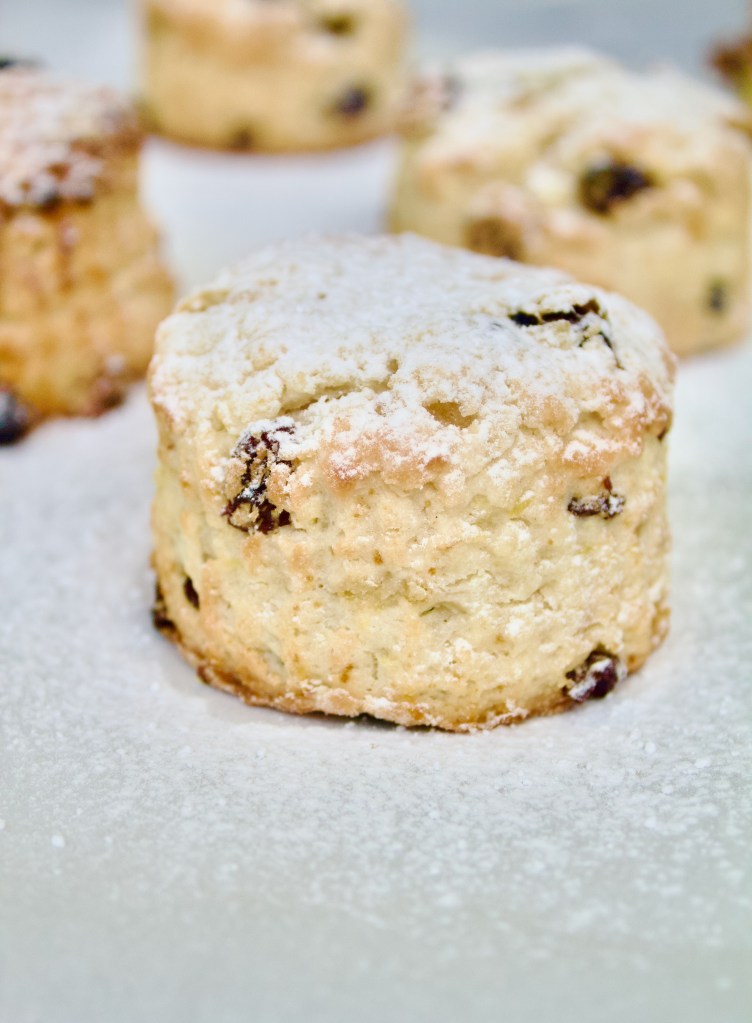
Preheat your oven to 200℃ and line a baking sheet with baking paper. Add the flour, salt and baking powder to a mixing bowl and stir to mix. Add the cubed butter and rub it into the flour mixture with your fingertips until it resembles breadcrumbs. Add the sugar, citrus peel and raisins and lightly mix through. Add the grated zest of the orange and lemon and stir again. Add small quantities of milk, stir and repeat until the mixture comes together as a dough. Flour a work surface and place the dough on it. Flatten with your hands so that it is 5cm thick. Cut out rounds with a biscuit cutter or a glass and place the scone on the prepared baking sheet, spaced apart evenly. Bring the dough together to a 5cm thickness again and cut out some more rounds. Bake in the oven for 15 minutes. Remove the scones and cool on a cooling rack. Dust with icing sugar to serve.
Preheat your oven to 200℃ and brush a 12-hole muffin tin with the 30g melted butter. Add the mashed potato, 150g melted butter and cream cheese to a mixing bowl and mix together until the ingredients are well distributed. Add 180ml cheddar, eggs, parmesan, 15ml chives, garlic flakes and salt and mix together. Divide the mixture between the muffin cups and sprinkle the remaining 180ml cheddar over. Bake in the oven for 25 minutes. Remove the baking tin from the oven and allow it to cool for about 15 minutes. Run a small knife around the edges of each cup and gently lift out the puffins. Scoop a dollop of sour cream onto each potato puffin and scatter the 15ml chives over to serve.
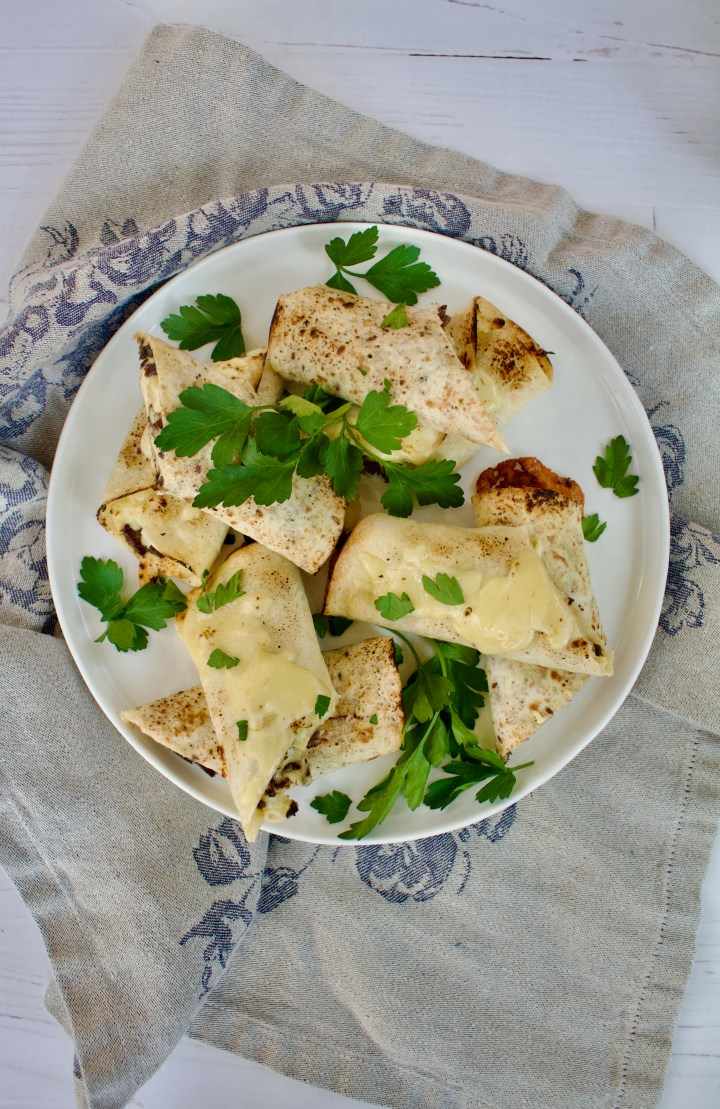
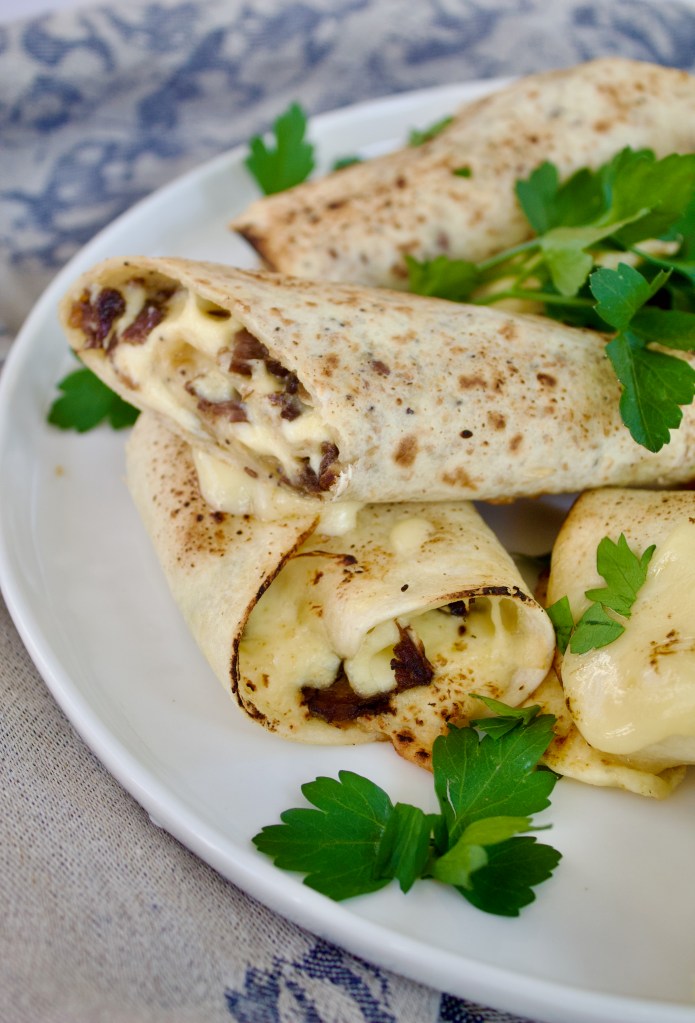
These rolls are made with tortilla wraps and sliced into three portions once done. The quantities given is for ONE TORTILLA WRAP.
1 tortilla wrap 15ml mayonnaise 25-30g biltong, sliced and then roughly chopped (it makes it easier to eat) 25-30g mozzarella cheese, grated
Preheat your oven to 180℃ and line a baking tray with baking paper. Lay a tortilla wrap on a work surface and brush a thin layer of mayonnaise over the entire surface. Flip the wrap over and brush the rest of the mayonnaise over the surface in a much thicker layer. Sprinkle the chopped biltong evenly over the tortilla and then top it with a cheese layer. Roll the wrap up into a tight roll and place it on the baking tray, open side facing down. Make as many rolls as you need. Bake in the oven for 15 minutes but start checking after 10 minutes. Remove from the oven, slice in three even portions and arrange on a serving platter.
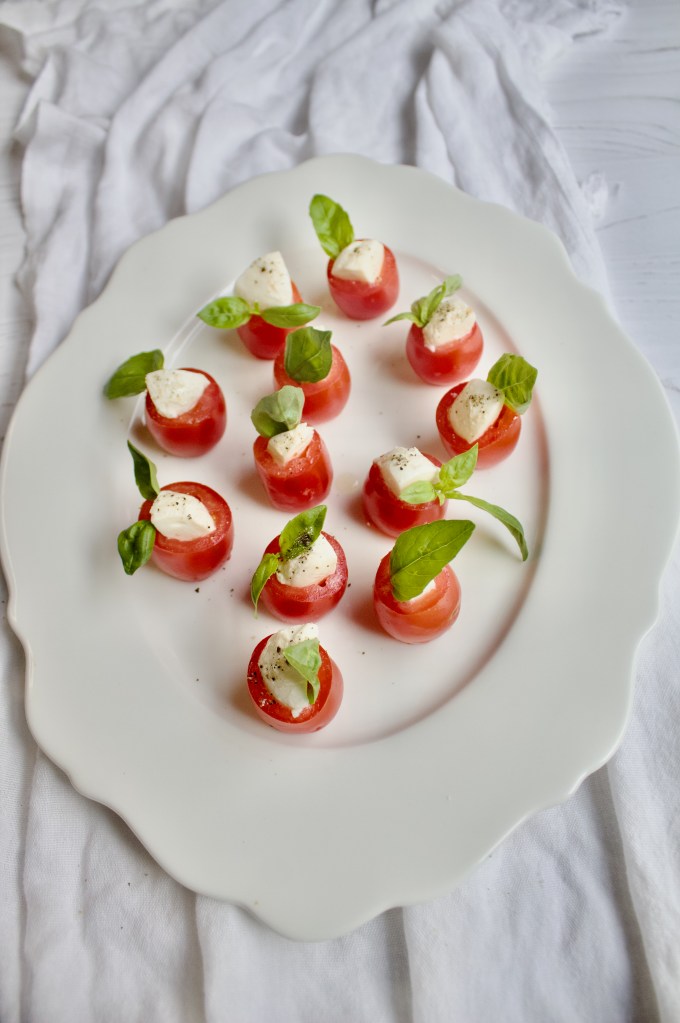
12 cocktail tomatoes, about 3,5cm in diameter 150g tub of small bocconcini cheese olive oil salt and pepper 12 basil leaves
Trim a sliver off the base of each tomato so that it can sit on a plate. Slice about 0,3 cm off the top of the tomato and scoop the pulp out with a teaspoon or back of a teaspoon. Season the inside of the tomato with salt and pepper. Slice the bocconcini in quarters and stuff a piece in each tomato. Drizzle with olive oil and season again with salt and pepper. Place a basil leaf on top of each tomato and serve.
250g butter, room temperature, cubed 300g sugar 6 eggs 4-5 lemons, 80ml of finely grated zest 4 x 250ml self-raising flour 5ml salt 80ml poppyseeds 500ml cultured buttermilk
Preheat your oven to 180℃ and line two 23cm loaf tins with baking paper. Add the butter and sugar to the bowl of a stand mixer fitted with the paddle attachment and beat on high speed until creamy. Add the eggs one at a time and beat well to incorporate. Scrape the mixture down once or twice. Add the lemon zest and mix through. Now add the flour, salt and poppyseeds to another mixing bowl and stir through. Alternatively add a few spoonfuls of flour and buttermilk, starting and ending with the flour mixture. Mix on high speed for one minute. Spoon the mixture into the loaf tins and bake for one hour. Remove from the baking tins and cool on a cooling rack. Cut the loaf into slices about 2 cm thick and then cut each slice into three pieces. Space the rusks evenly on a baking sheet and dry in the oven at 100℃ for 3-4 hours. Cool completely and store in a glass container.
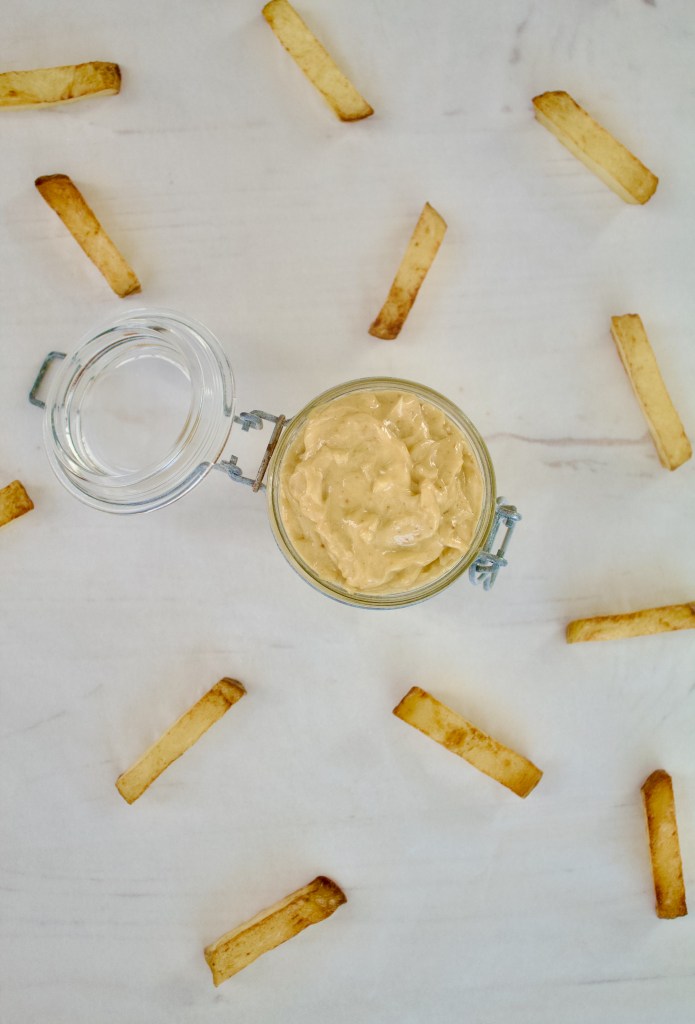
250m vegetable oil 15 cloves of garlic, peeled 1 bay leaf a few sprigs of rosemary a few sprigs of thyme 2 egg yolks 5ml English mustard juice of half a lemon 5ml salt
Pour the vegetable oil into a small saucepan and place over medium heat. Add the garlic, bay leaf, rosemary and thyme and wait for the oil to start simmering. Turn the heat down so that you have the lowest simmer possible. Simmer for 40 minutes, remove from the heat and set aside for 20 minutes. Remove the garlic cloves and strain the oil. Set the oil aside to cool completely. Place the garlic on a chopping board and cream it by pushing the flat side of the blade of a utility knife onto it. Lift the blade, push down and drag. Repeat until you have no lumps and the garlic is smooth. Add the egg yolks, mustard, lemon juice, salt and garlic to a small bowl. Blitz together with a stick blender. Drizzle the cold oil into the bowl with the stick blender running. Keep drizzling and blitzing until all the oil has been added and you have a thick mayonnaise. Spoon the mayo into a pretty bowl and serve with potato chips or wedges.
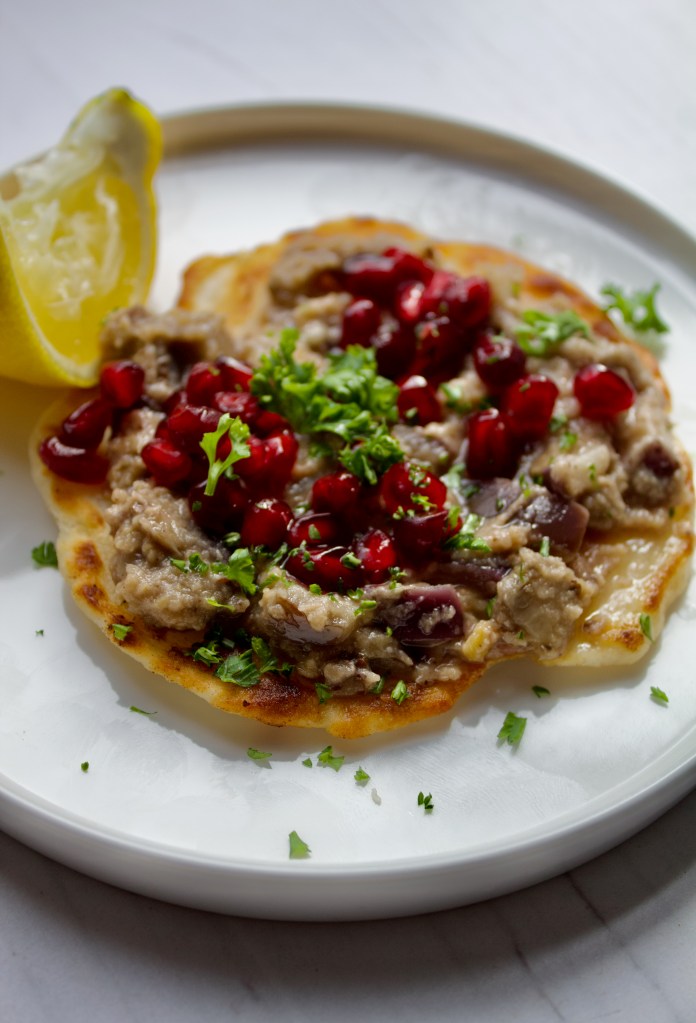
60ml olive oil 1 x 400g can chickpeas, drained 150g – 200g aubergine, cubed 3 cloves of garlic, minced 5ml sumac lemon juice pomegranate seeds 8 – 10 small flatbreads, about 8cm diameter
Pour the olive oil in to a pan and set it over medium to medium-high heat. Add the chickpeas, aubergine cubes, garlic and sumac and cook for about 10 minutes, until the aubergine is soft. Take from the heat and roughly mash together so that you have mashed chickpeas with texture. Smear the mixture on to the flatbreads, drizzle with lemon juice and sprinkle over some pomegranate seeds. Serve as a canapé with drinks.
It is best not to attempt making Turkish delight when rainy – the moisture in the air prevents the sweets from setting properly.
50ml water 45ml powdered gelatine 300ml water 100ml red grape juice, store bought 450g sugar 1ml citric acid (you will find it in the baking isle) 5ml rose water 50ml cornstarch 25ml icing sugar
Line a 28cm x 18cm container with plastic wrap. Leave an overhang of the plastic so that you can lift the Turkish delight out of the tin once it has set. (2 x 14cmx9cm Tupperware containers also work well) Pour the 50ml water in to a small heatproof bowl and sprinkle the gelatine on top. Set aside for 5 minutes. Pour the 300ml water and grape juice in to a small saucepan and set it over medium-high heat. Add the sugar and citric acid and stir the mixture until the sugar is completely dissolved. Bring it to a boil, turn the heat down to a simmer and cook for 20 minutes. Melt the gelatine by placing it in the microwave for 5 second bursts at a time – it should be liquid. Remove the grape juice mixture from the heat and drizzle in the melted gelatine . Mix well and set aside until the mixture is at room temperature. Add the rose water, mix through and pour in to the prepared container. Refrigerate for 8 hours.
Lift the Turkish delight from its container, pull off the plastic wrap and slice into even-sized squares. Sift the cornstarch and icing sugar together and roll the Turkish delight in it. Place it on a pretty serving dish and be the star of the show!!
For the filling: Add the corn flour to a large mixing bowl and pour in 50ml milk. Add the egg yolks and 50g sugar and whisk together. Set aside. Pour the 450ml milk and 50g sugar into a small saucepan set over medium-high heat. Stir until the sugar has dissolved. Bring the mixture to just before boiling point and take off the heat. Drizzle the warm milk mixture into the egg mixture while whisking continuously. Pour the mixture back into the saucepan and place it over medium-high heat. Stir until very thick and then cook for 30 seconds. Remove from the heat, add the vanilla and stir through. Pour the custard onto a dinner plate and cover with plastic wrap. Push the wrap directly onto the surface of the custard. Allow to cool to room temperature.
Your should make TWO batches of filling, separately.
For the cake: Preheat your oven to 180℃ and spray two loose-bottom cake tins and line the base and sides with baking paper. Add the flour, baking powder and salt to a bowl and whisk to mix. Add the eggs to the bowl of a stand mixer fitted with the whisk attachment and beat on high speed for 30 seconds. Slowly pour in the sugar while the mixer is running. Now beat on high speed until the mixture is three times its original volume – about 7 minutes or so. Scatter a third of the flour on the surface and mix on the lowest speed. Add another third, mix and then the remaining flour and mix again. Add the butter and milk to a saucepan set over medium heat. Stir until the butter has melted and the mixture is warm when you put your finger in it. NB: YOU WANT THE BUTTER TO MELT, YOU DONT WANT TO BOIL THE MILK! Pour the milk mixture into a large mixing bowl. Add the vanilla and vegetable oil and whisk through with a hand whisk. Add about 250ml of the egg and flour mixture and vigorously whisk to combine. The batter must be smooth. Turn the mixer on to a low speed and very slowly, pour in the milk. Scrape down the sides and the base of the bowl. Beat on low speed for 20 seconds. Divide the batter between the two prepared cake tins. Lift each tin 5cm from the work surface and then drop it – repeat a few times to knock out the large air bubbles. Place the cake tins in the oven and bake for 30 minutes. Remove from the oven and cool in the tins for 15 minutes before turning the cakes out on cooling racks and removing the baking paper. Leave to cool completely.
Assembling the cake: Slice the cake horizontally so that you have 4 cake discs. Spread the custard evenly on to each cake layer and stack them on a serving platter. Roast the flaked almonds in a dry pan, allow to cool and scatter over the cake to serve.
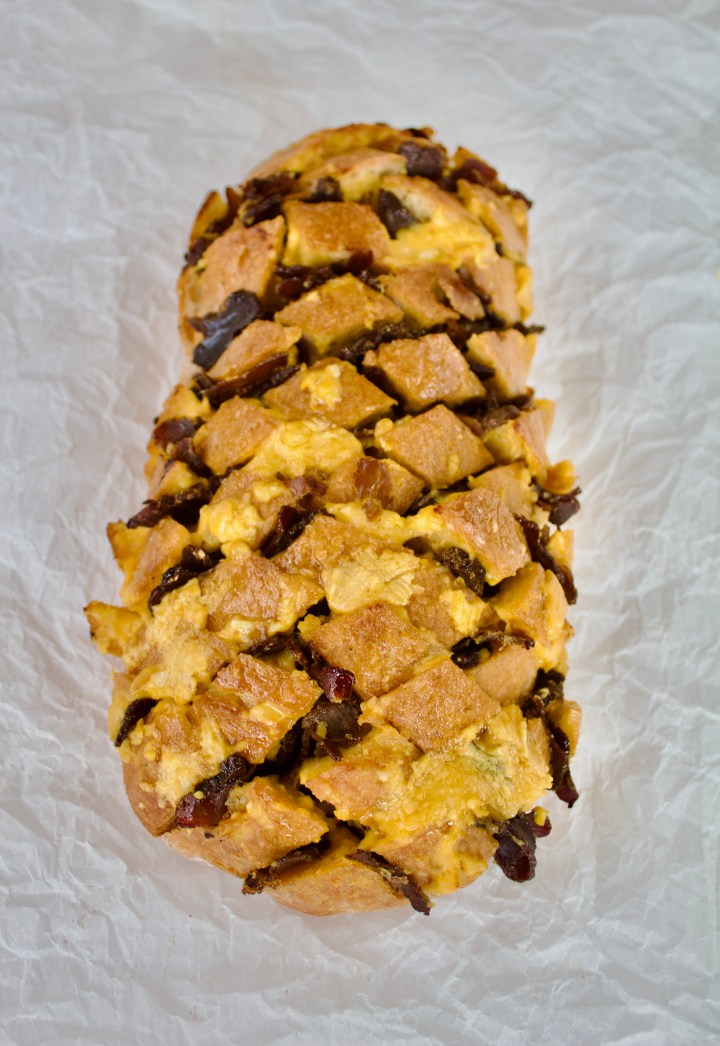
Preheat your oven to 180℃. Place the bread on a wooden board and place a wooden spoon on either side of it, in its length. Slice the bread on the diagonal, into 1,5cm thick slices WITHOUT slicing through – the wooden spoons should prevent this. Now turn the bread and slice again so that you are left with squares that are attached at the bottom. Place the sliced bread on a large piece of aluminium foil and then onto a baking sheet. Set aside. Add the cheese spread, butter and garlic to a small saucepan and set it over a medium-low heat. Stir every now and then until the mixture has melted and is amalgamated. Remove from the heat and stir in the parsley. Spoon generous amounts of the cheese mixture in between the sliced bread. Push the biltong slices between the bread squares and cover with the aluminium foil. Bake in the oven for 30 minutes. Serve immediately as a casual starter.












 My Whisk and I