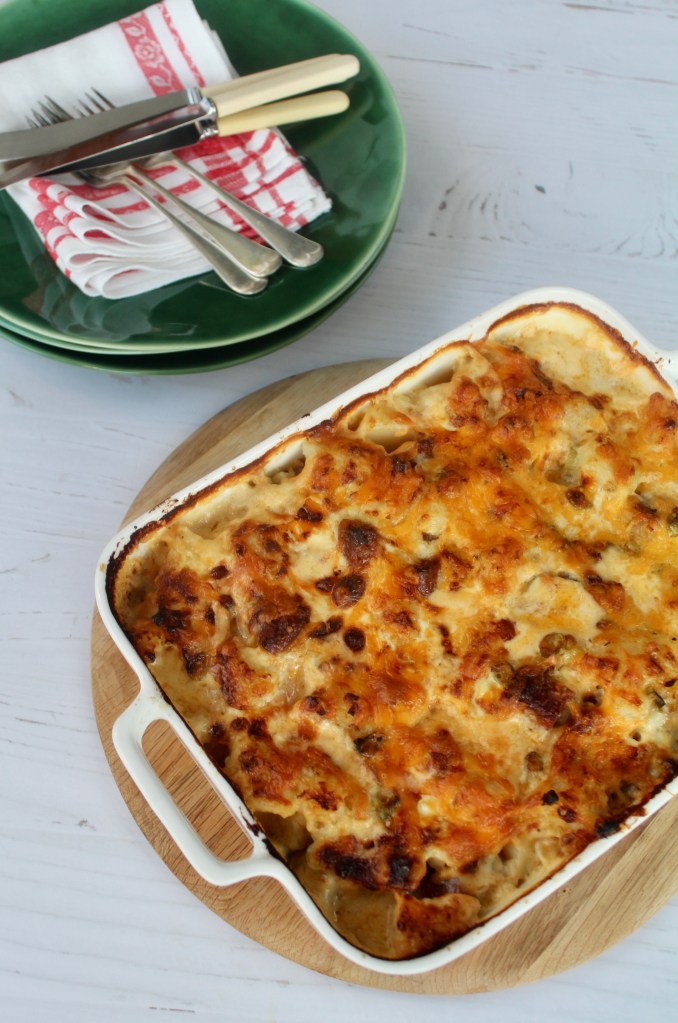
1,5kg potatoes, peeled and cut into 2cm chunks 2 onions, chopped 2 cloves of garlic, minced 300g chorizo sausage, diced 200g cheddar cheese, grated 300ml cream 200ml milk
Preheat your oven to 200℃. Place the potato chunks in a large saucepan, pour in enough water to cover and bring to a boil. Cook the potato for 10-15 minutes, until a knife can easily be inserted, but not mushy. Drain the chunks and put it back into the same saucepan. Add the onion, garlic and chorizo to a large frying pan set over medium-high heat and stir-fry for about 10 minutes. Spoon the mixture into the saucepan with the potato chunks and mix through. Add the cheddar cheese and give it another mix. Spoon everything into a 28cm x 22cm ovenproof dish. Combine the cream and milk in a jug and season with salt and pepper. Pour the mixture over the potato. Place in the oven and bake for 40 minutes – check the casserole after 20 minutes or so and loosely cover with aluminium foil if it has browned enough. Serve warm with a fresh green salad.
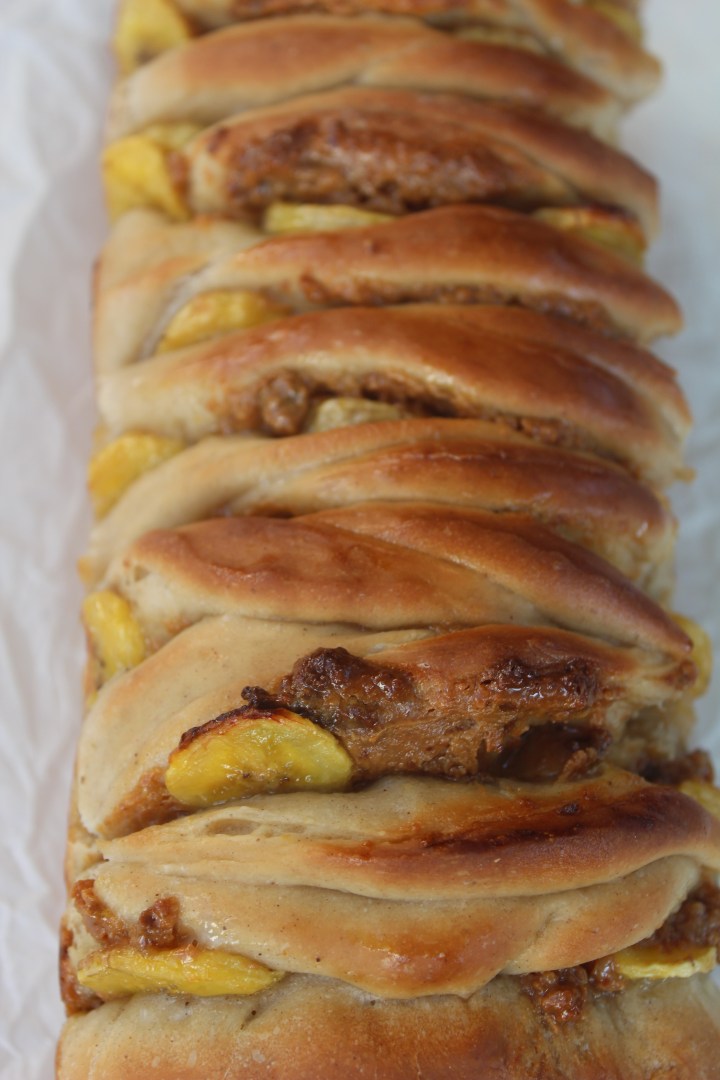
62ml tepid water 10g instant yeast 250ml milk, warm 30ml sugar 7,5ml salt 5ml ground cinnamon 62ml butter, melted 2 eggs 4 x 250ml + 83ml flour 1 x can/portion Dulce de Leche or Caramel Treat 3 bananas, sliced
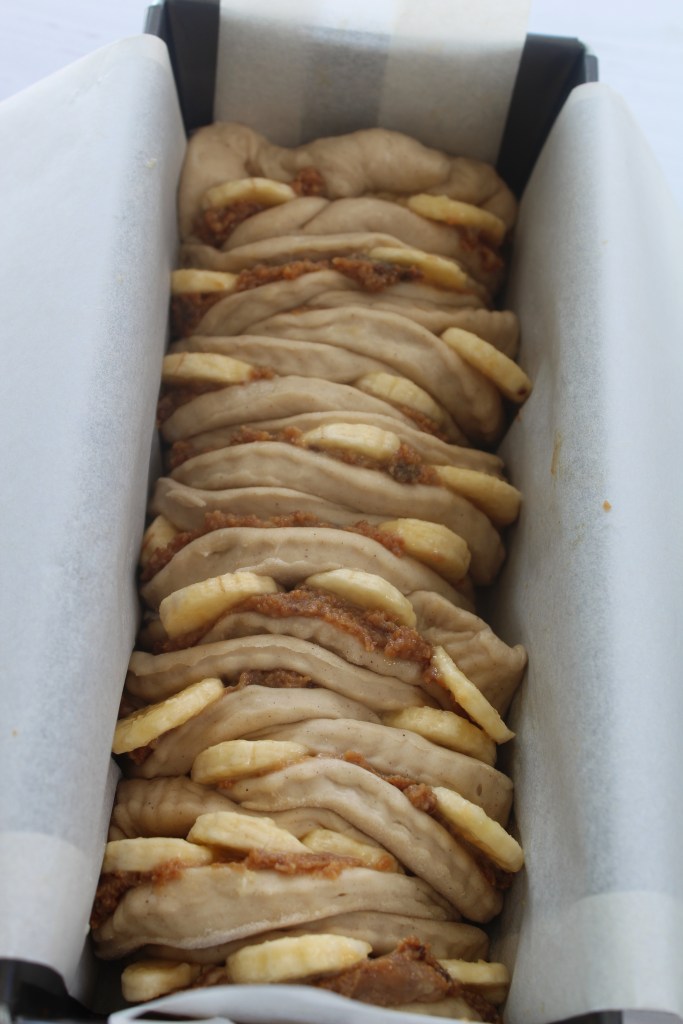
Pour the tepid water into a small mixing bowl and sprinkle over the yeast. Stir until dissolved and set aside. Add the milk, sugar, salt and cinnamon to the bowl of a stand mixer fitted with the dough hook and whisk together by hand. Stir in the butter, eggs and yeast mixture. Turn the mixer to a low speed and gradually add the flour. You are looking for a dough that is soft enough to handle. It is usually ready when it easily pulls away from the sides. Knead/mix for another 5 minutes. Rub a few drops of oil on the inside of a mixing bowl, place the dough in the bowl and cover with a tea towel. Allow to rise until double in size. (about 90 minutes) Punch the dough down and turn it out onto a work surface lightly dusted with flour. Roll the dough to a 0,5cm thickness and cut circles of dough with a biscuit cutter, about 8 cm in diameter. You need about 22 circles to make two small breads. Line two 11cm X 25cm loaf tins with baking paper. Spread a teaspoon of caramel on half of each circle and place 3 slices of banana on top. Fold the circle in half and place it in the prepared tin with the open ends facing up.
Continue until all the discs are in the loaf tin. Cover with a kitchen towel and allow to rise at room temperature for 40 minutes. Preheat your oven to 180℃. Bake the breads for 30 minutes. Remove from the oven, cool on a wire rack for 10 minutes and then remove from the baking tin. Serve the pull-apart bread warm or at room temperature.
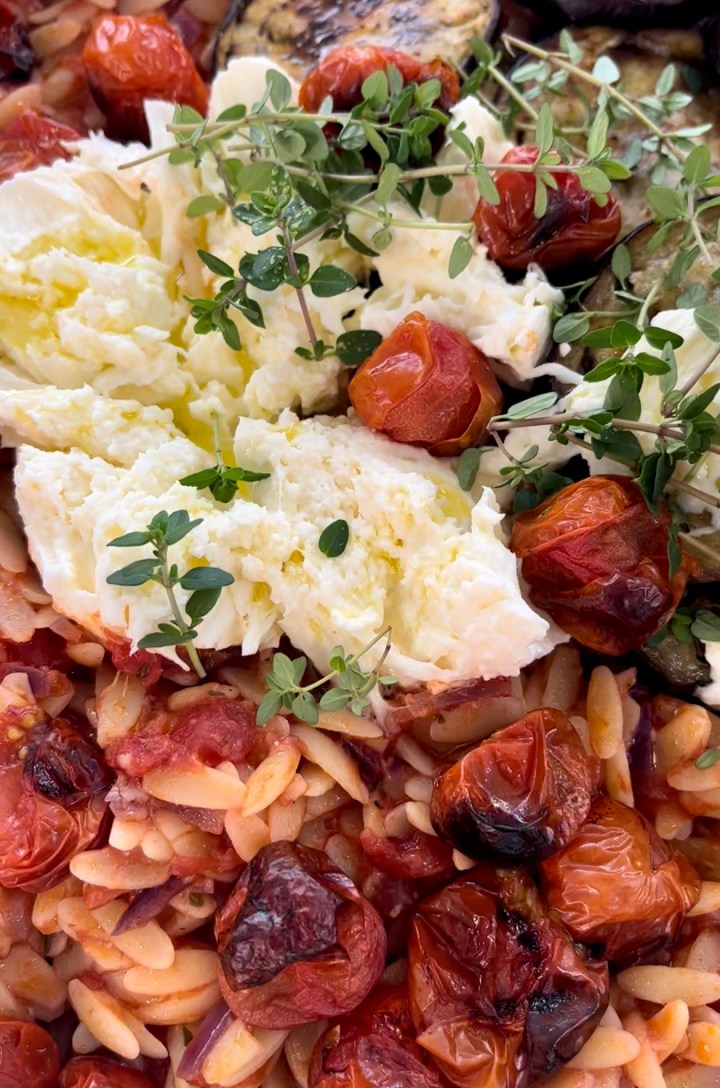
2 aubergine olive oil 250g cherry tomatoes 1 red onion, chopped 3 cloves of garlic, minced 2 x 400g tins of chopped tomato 15ml thyme, chopped 300g orzo pasta 100g parmesan cheese, grated 1 burrata cheese or a few small mozzarella balls
Preheat your oven to 200℃ and line a baking sheet with baking paper. Slice the aubergine into discs about 5mm thick, spread them out on the prepared baking sheet and drizzle with a generous amount of olive oil. Scatter the cherry tomatoes over the aubergine slices and bake in the oven for about 25 minutes. Place a saucepan on medium-high heat and add some olive oil. Fry the onion and garlic until soft. Add the chopped tomato and thyme and season with salt and pepper. Simmer the sauce for 15 minutes while stirring occasionally. Cook the orzo according to packet instructions. Drain and add it to the tomato sauce. Add the grated parmesan and stir through. Spoon the orzo into a serving dish and top with the aubergine, roasted tomato and burrata.
Add all the ingredients, except the pork chops, to a mixing bowl and whisk together. Place the chops in a shallow baking dish and pour the mixture over. Leave to marinate for one hour, turning the chops once.
Preheat your oven to 180℃. Place a cast-iron pan (or any other oven-friendly pan) on high heat, and pour in some vegetable oil. Scrape most of the marinade off the meat and fry for 2 minutes before turning and frying another 2 minutes. Turn the heat down to medium and pour in the marinade sauce. Stir and cook for about 3-4 minutes and then place the pan in the oven and cook for 20 minutes. Serve the chops with fragrant rice or couscous.
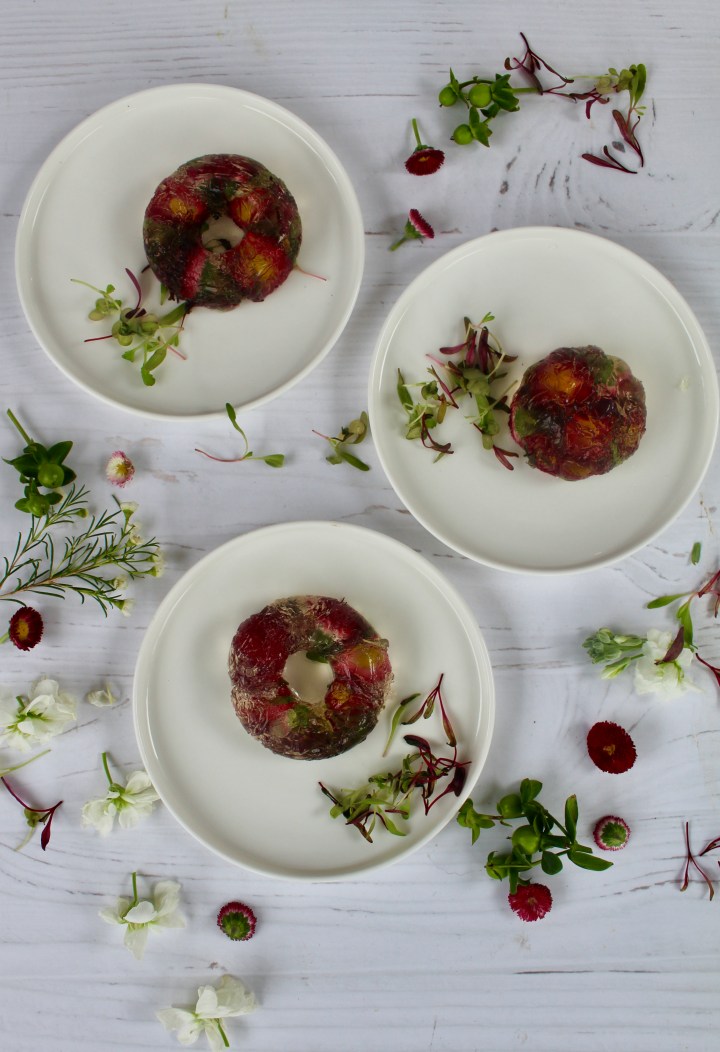
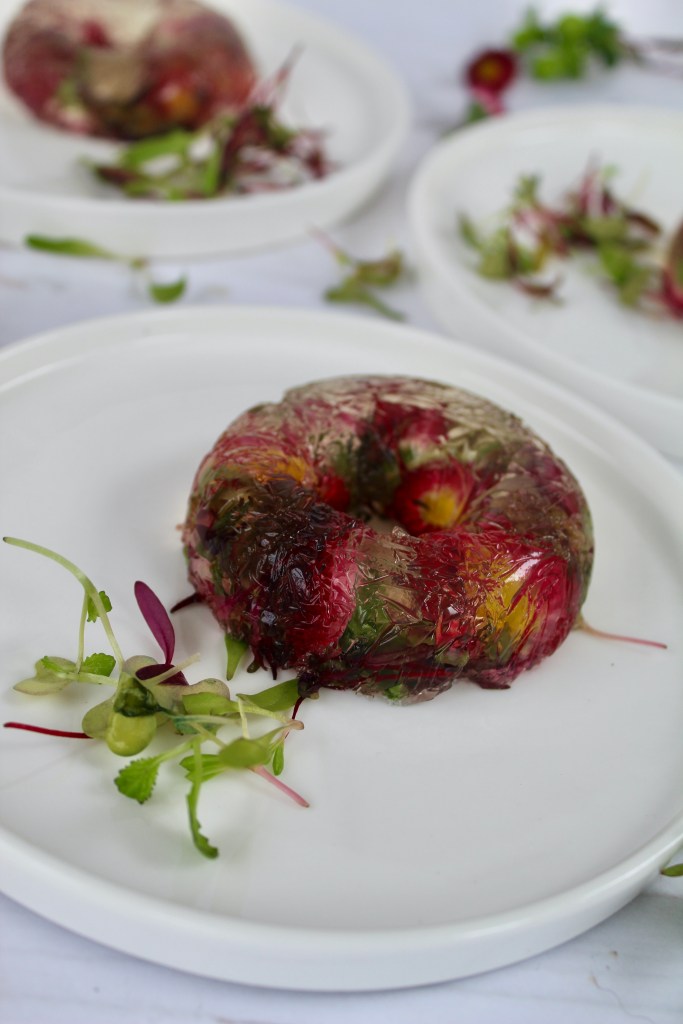
Edible flowers (or fruits like berries) 45ml water 10ml powdered gelatine 45ml sugar 150ml hot water 75ml sparkling wine
Prepare your moulds/cups by lining them with plastic wrap. Place the flowers inside the moulds and set aside. Pour 45ml cold water into a small mixing bowl and sprinkle the gelatine over. Set aside to bloom for 5 minutes. Add the sugar to the gelatine and pour in the hot water. Stir to dissolve. Add the sparkling wine and mix well. Allow the liquid to cool to the point where it is cold but still completely runny. Pour into the moulds and refrigerate until set.
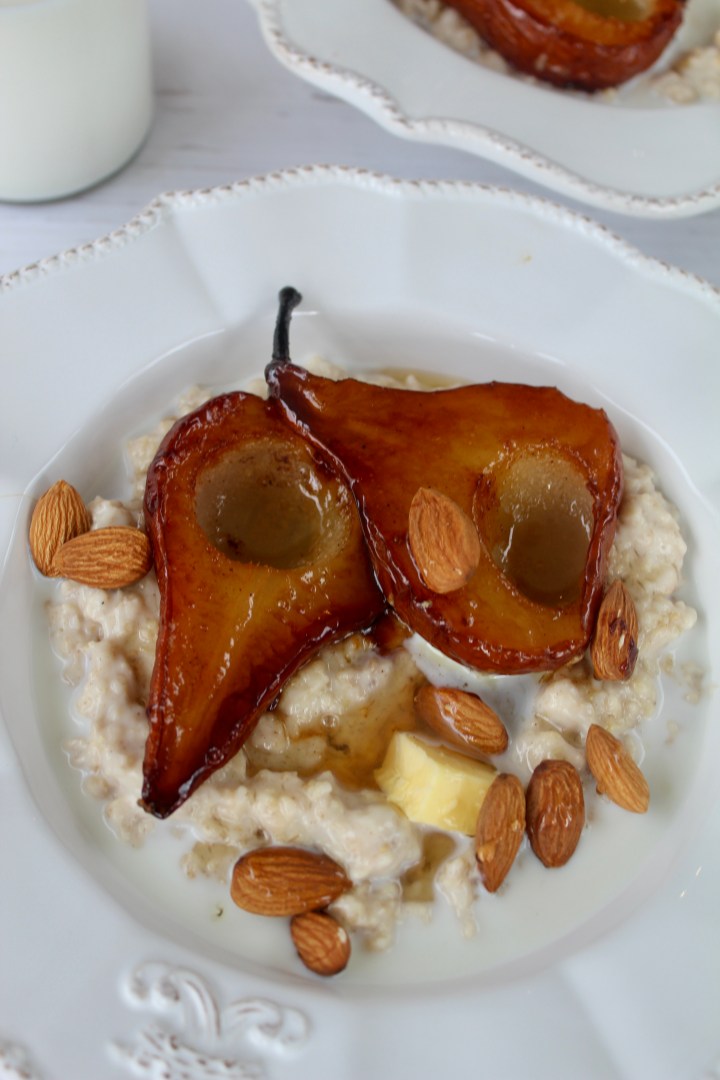
2 pears 30ml lemon juice 60ml brown sugar 2,5ml ground cinnamon 30g butter, cubed
For the oatmeal: 250ml rolled oats 250ml water 250ml milk a pinch of salt 1,2ml ground cinnamon honey a handful (or two) of almonds
For the pears: Preheat your oven to 180℃ and line a small baking tray with baking paper or aluminium foil. Halve the pears and remove the core. (I use a melon scoop for this) Place the pears, cut-side up, on the prepared baking tray and drizzle with the lemon juice. Sprinkle the sugar and cinnamon on the fruit and place a piece of cubed butter on each. Bake in the oven for 20 minutes, flip them over and bake for another 10 minutes.
For the oatmeal: Pour the oats, water, milk, salt and cinnamon into a saucepan and place on medium-high heat. Bring to a simmer and cook for 5-6 minutes, while stirring often.
Spoon the porridge into 2 bowls and place 2 pear half on top of each bowl. Drizzle the oatmeal with honey and a generous scattering of almonds and serve warm.
1,5kg lamb shoulder or leg, cut into 2cm cubes vegetable oil 10 whole cardamom pods 15ml mustard seeds 2 bay leaves 6 whole cloves 10 black peppercorns 1 stick cinnamon 2 onions, finely chopped 8 cloves of garlic, minced 5ml ground coriander 10ml ground cumin 20ml paprika 15ml ground ginger 5ml crushed dried chillies 5ml salt 2 red chillies, chopped 120ml yoghurt 2,5ml garam masala
Place a heavy-bottom saucepan on a medium-high heat and cover the base with vegetable oil. Brown the meat in batches and set aside in a bowl. Add the cardamom, bay leaves, cloves, peppercorns and cinnamon and stir the mixture for about 1 minute. Add the onion and fry for about 5 minutes. Add the garlic and fry for another minute. Now add the coriander, cumin, paprika, crushed chillies, salt and fresh chillies and stir-fry for another 30 seconds or so. Add the meat and stir through to cover with the spices. Add a spoonful of yoghurt and stir-fry for 30 seconds. Add the remaining yoghurt in the same way, so that the sauce does not split. Pour in 375ml of water and bring the curry to a boil. Turn the heat down to a slow simmer and cover the saucepan with a lid. Cook for 1 hour or until the lamb is tender, stirring frequently. Remove the lid and cook the curry for another 30 minutes, stirring and waiting for the sauce to become beautifully thick. Sprinkle over the garam masala, mix through and serve with fragrant rice.
3 cardamom pods 750ml red wine 1 orange, sliced 2,5ml allspice berries 2,5ml whole cloves 2 star anise 2 cinnamon quills/sticks 62ml brown sugar
Bruise the cardamom pods by placing them on a work surface. Place a saucepan on top and press down onto it to crack the pods. Add the pods, wine, orange, allspice, cloves, star anise and cinnamon to a saucepan set over medium heat. Heat the mixture but do not allow it to boil – you want the wine warm to the point before boiling. Remove the saucepan from the heat, add the sugar and stir to dissolve. Allow the wine and spices to sit for 30 minutes at room temperature so that it can infuse. Strain the Glühwein and serve warm with fresh orange slices.
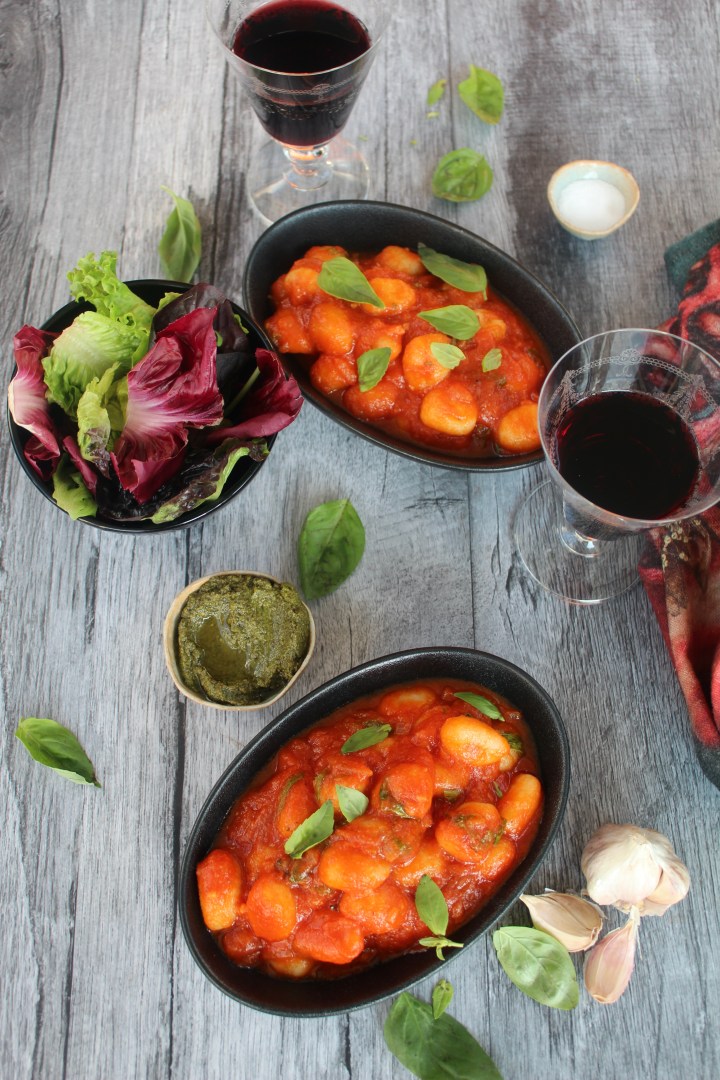
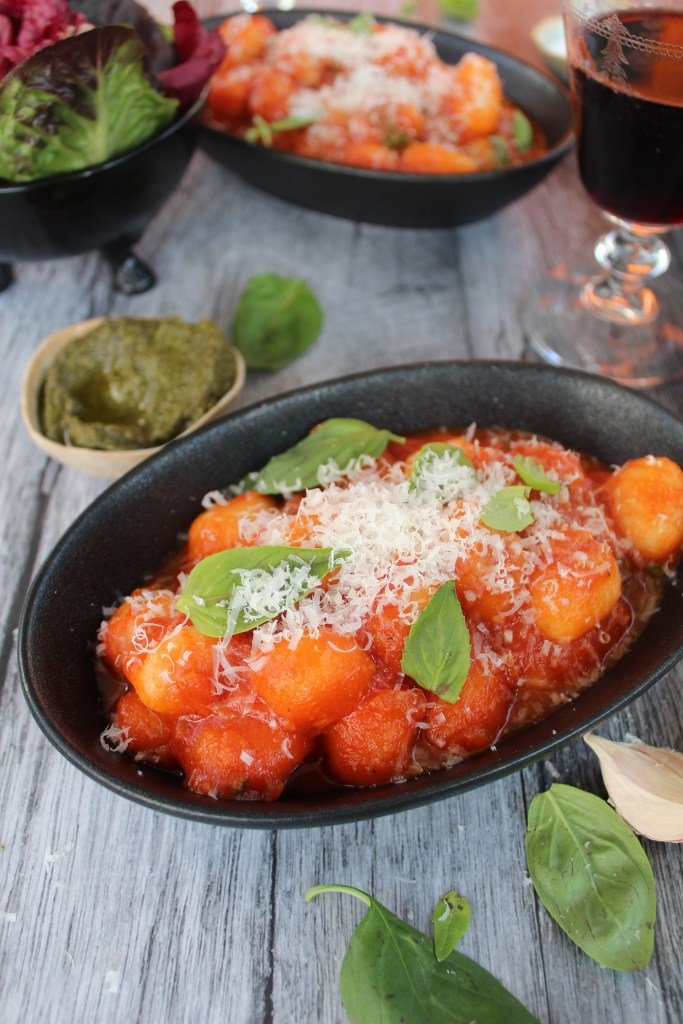
Pomodoro is a simple tomato sauce that is smooth, thick and concentrated. Cook it in a wide sauté pan as it will help the moisture from the tomato to evaporate. Pomodoro can be served with pasta and chicken and may be kept in the refrigerator for one week.
1 onion, chopped 2 cloves of garlic, minced 2 x 400g cans chopped tomato 30ml sugar 2 x 500g packs of gnocchi a handful of basil parmesan cheese
Set a large, wide sauté pan over medium-low heat and add 45ml of vegetable oil to it. Add the onion and garlic to the saucepan and gently cook for about 10 minutes, stirring every now and then. Add the tomato to a liquidiser and blitz until smooth. Pour the tomato into the saucepan and add the sugar. Stir through. Simmer the sauce on a medium-low heat for 10 minutes. You want the liquid from the sauce to evaporate so that you are left with a thick, concentrated tomato sauce. Cook the gnocchi according to the packet instructions. Drain and add it to the sauce. Tear up the basil leaves, stir it through and remove the saucepan from the heat. Serve the gnocchi with freshly grated parmesan cheese.
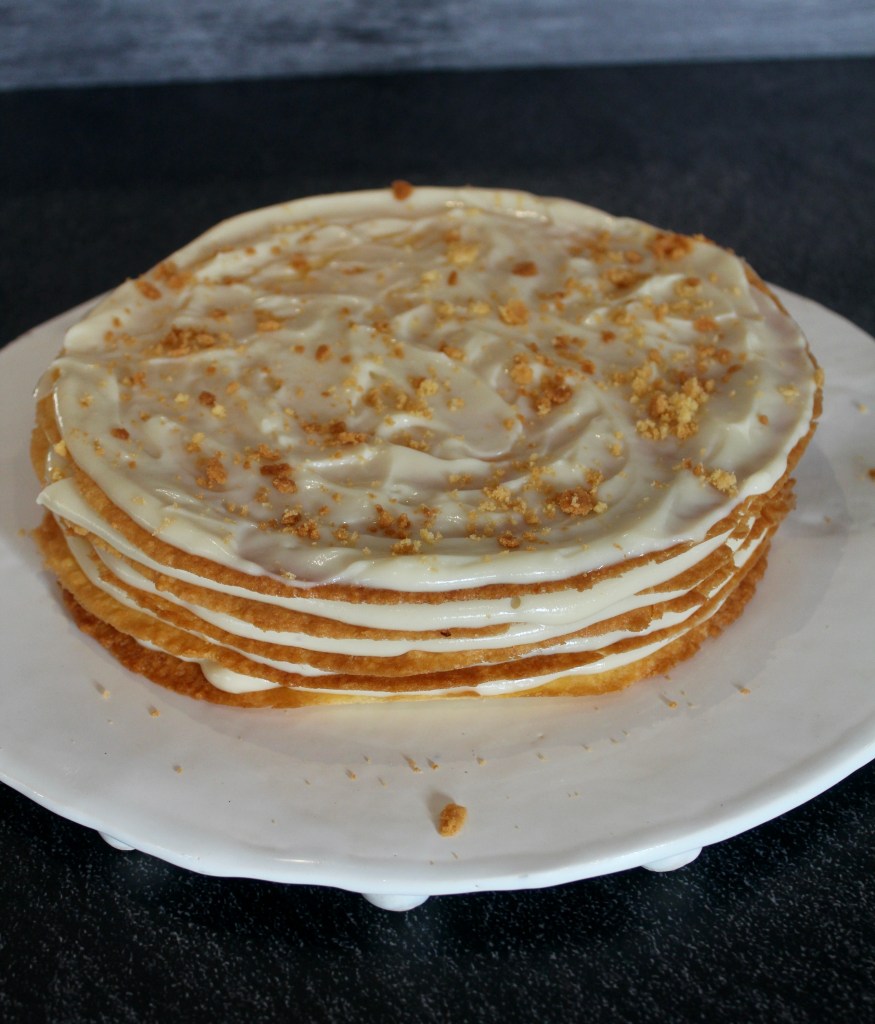
Jodetert is a traditional South African bake of years gone by. It is a wonderful concoction of light and buttery biscuit discs, layered with a soft custard and literally melts in one’s mouth. Without doubt, one of my all-time favourite eats – do try it!
For the biscuit: Preheat your oven to 180℃. Cut 8 pieces of baking paper the size of a large baking tray. Spray each paper sheet with cooking spray. Add the butter, flour, sugar, baking powder and salt to the bowl of a food processor. Pulse to mix. Add the beaten egg in a thin stream while the engine is running, until the mixture comes together in a dough ball. Wrap the dough in plastic wrap and refrigerate for 20 minutes. Divide the dough in to 7 equal portions. Place one piece of dough on a sprayed piece of baking paper and dust with flour. Place another piece of baking paper on top and roll the dough to a thickness of 5 mm and a 20cm diameter circle. Remove the baking paper on top and place the dough circle on the baking sheet. Bake for 8-10 minutes, until golden. Repeat with the other 6 pieces of dough.
For the filling: Add the flour, sugar, egg yolks and vanilla to a large mixing bowl and whisk together. Pour the milk into a saucepan and bring to a boil. Drizzle the milk onto the flour mixture in a thin stream while whisking continuously. Pour the mixture back into the saucepan and place over a low heat. Stir with a whisk until it thickens. Allow to simmer for 5 minutes. Pour the custard into a clean bowl and place some plastic wrap directly onto the surface. Allow to cool completely.
Assembly: Spoon the custard into a piping bag fitted with a 1cm nozzle. Place the first biscuit disc on a serving plate, pipe a spiral of custard onto it and place the second biscuit circle on top of it. Repeat the process of piping custard and stacking the biscuit discs until you have none left. Dust the Jodetert with some icing sugar and serve with a good cup of coffee.










 My Whisk and I