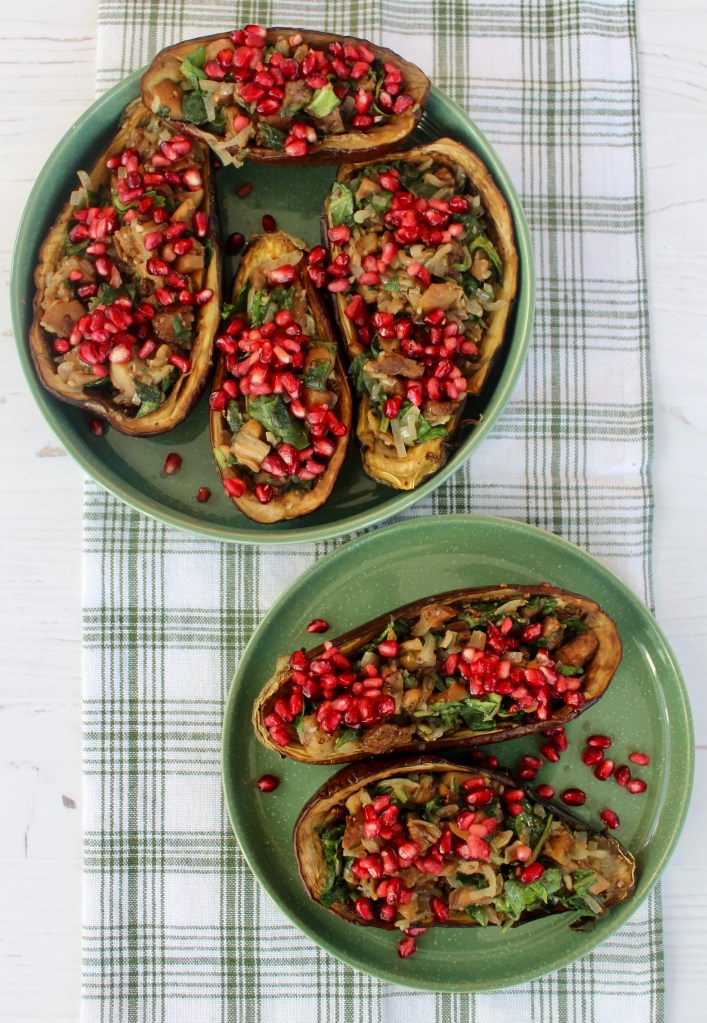
Baked Aubergine

Baked Aubergine

This is a lighter, healthier version of the traditional Greek Papoutsakia with all its tomato and cheese. The recipe is vegan and is a wonderful way of boosting one’s fibre intake.

3-4 large aubergine
45ml olive oil
2 onions, chopped
2 cloves of garlic, minced
30ml thyme leaves
4 medium zucchini/baby marrows, finely chopped
100g baby spinach, roughly chopped
1 pomegranate, deseeded

Preheat your oven to 190℃.
Cut the aubergine in half lengthwise.
Insert a small sharp knife 0,5cm from the skin on the cut side and cut around the outside of the aubergine, taking care not to break the skin.
Now score a diamond pattern on the flesh, cutting as deep down as you can without piercing the skin. Gently loosen and scoop out the flesh.
Place the halved aubergine on a baking sheet and set aside.
Set a frying pan over medium-high heat and add the olive oil to it.
Add the onion and fry until soft.
Add the garlic and stir-fry for another minute.
Turn the heat down to medium and add the thyme, zucchini, baby spinach and chopped aubergine flesh that you scooped out earlier.
Cook until the spinach is wilted – about 3 minutes.
Remove the pan from the heat and spoon the mixture into the aubergine halves.
Place the baking sheet in the oven and bake for 30 minutes.
Scatter a handful of pomegranate seeds on the baked aubergine and serve.
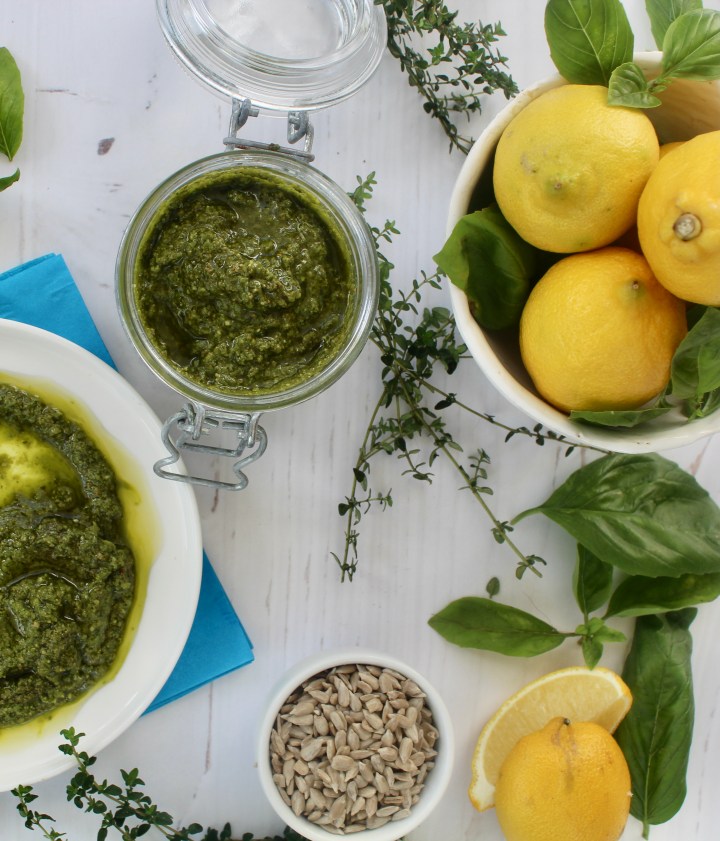
Greek Pesto

Greek Pesto

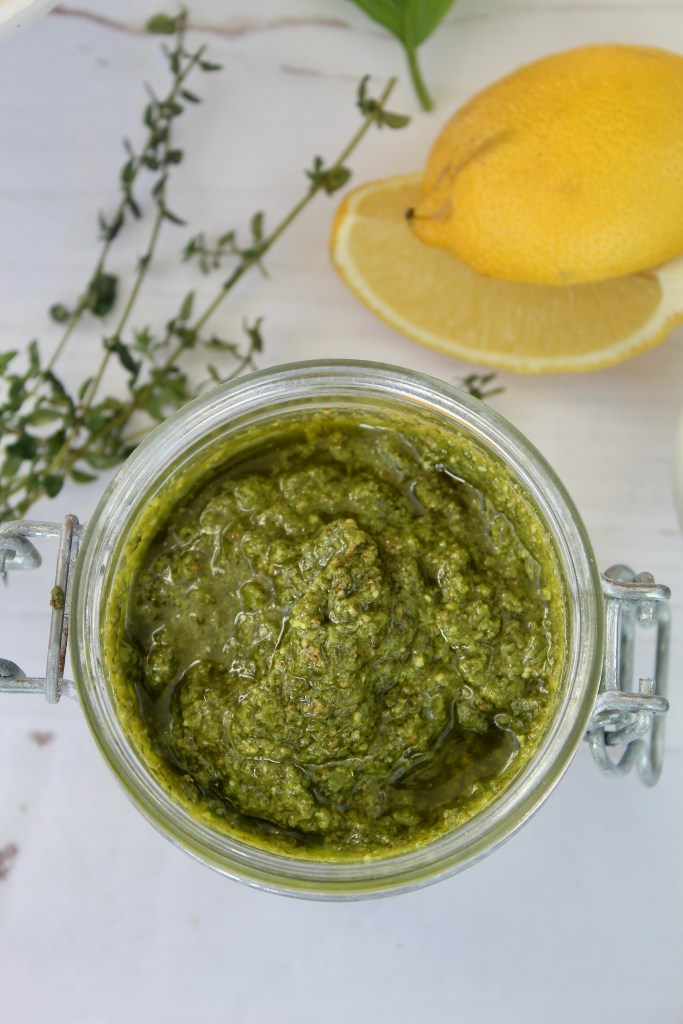
A much lighter pesto than what normally pops up under the name but truly refreshing with a wide range of foods. I especially like to thin the pesto down with olive oil and lemon juice and utilise it as a salad dressing.

500ml basil leaves, tightly packed when measured
80ml thyme/oregano leaves
3 cloves of garlic, minced
60ml pine nuts
salt
juice of one lemon
about 125ml – 250ml olive oil, depending on the consistency you are after

Add the basil, thyme, garlic, pine nuts, lemon juice and a pinch of salt to the bowl of a blender .
Drizzle in 125ml olive oil with the machine running and process the mixture until very finely minced. Scrape down in between blitzing so that you get all of the bits. The additional olive oil may also be added now, depending on the consistency you want – it can always be thinned down at a later stage.
Taste the pesto and adjust the seasoning/salt.
Store the pesto in a glass jar in the refrigerator.


Baklava Cheesecake

Baklava Cheesecake

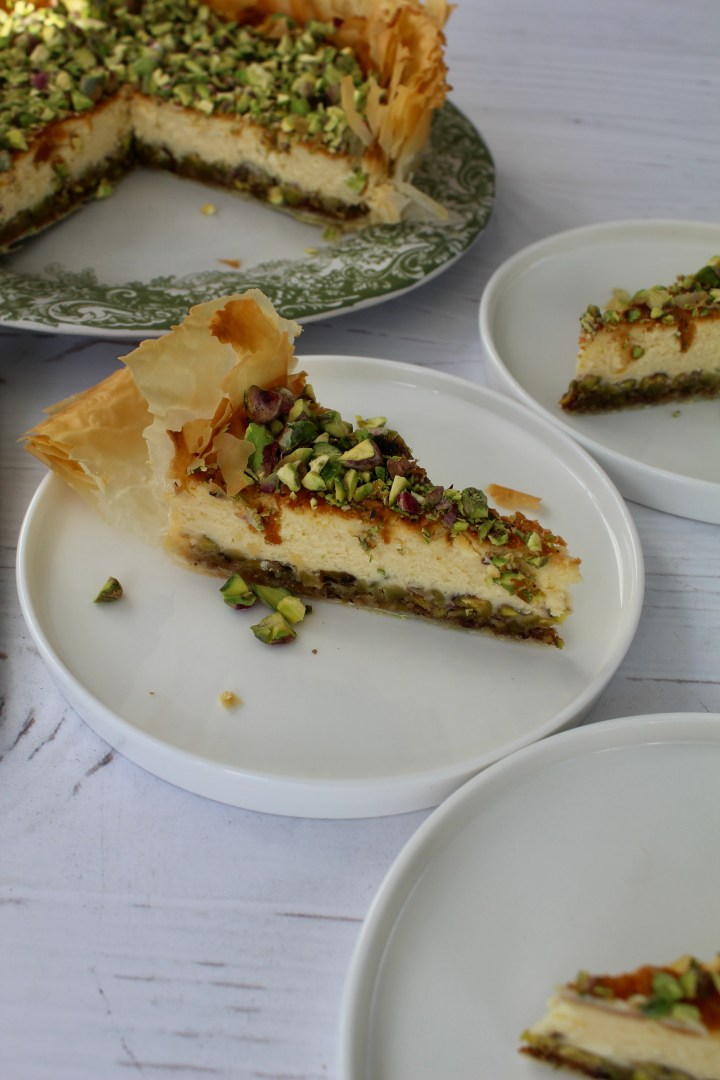
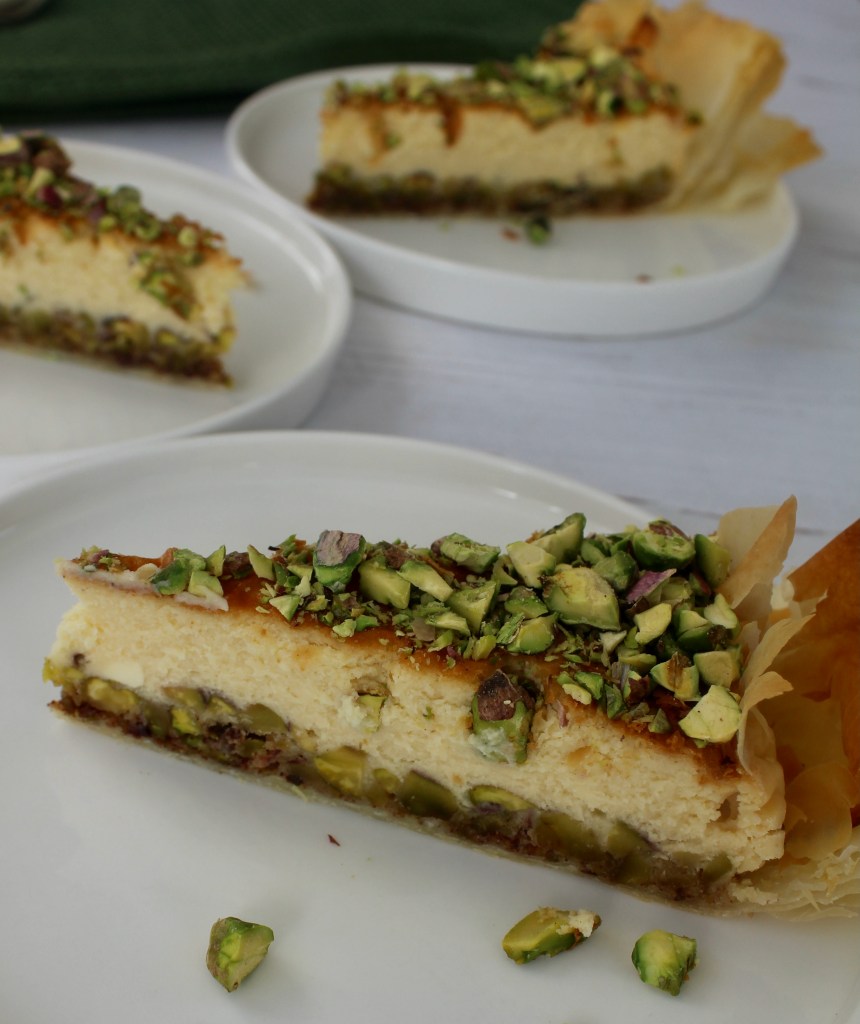
This Greek cheesecake takes the ever popular cheesecake to a whole new level. If you try one new recipe, it should be this one!!! Yields 16 slices.

12 sheets phyllo pastry
83ml butter, melted
250ml + 250ml pistachio nuts, finely chopped
62ml sugar
2,5ml ground cinnamon
1,2ml ground allspice
250g cream cheese, room temperature
250g mascarpone cheese, room temperature
83ml honey
62ml milk
45ml flour
3 eggs, lightly beaten

Preheat your oven to 220℃ and lightly spray a 22cm loose-bottom cake tin with cooking spray. Place the cake tin on a baking sheet.
Place one sheet of phyllo in the cake tin and very lightly press it onto the bottom and sides of the pan, leaving the extra pastry as an overhang at this stage. Brush the pastry with the melted butter.
Do the same with the 11 other phyllo sheets, brushing each and rotating the sheets slightly so that the corners are staggered. Set aside.
Add 250ml chopped pistachio, sugar, ground cinnamon and allspice to a mixing bowl and stir to mix.
Sprinkle the mixture evenly over the phyllo in the cake tin.
Place in the oven and bake for about 7 minutes or until the edges of the pastry are golden.
Remove and cool on a wire rack.
Turn your oven temperature down to 170℃.
Add the cream cheese and mascarpone to the bowl of a stand mixer fitted with the paddle attachment.
Turn the mixer on to a low speed and mix until the mixture is smooth.
Add the honey, milk and flour with the machine running.
Finally add the eggs and, still on low speed, beat until just blended.
Pour the batter into the phyllo crust and bake for 1 hour or until the centre of the cheesecake is barely set.
Cool the cake on a wire rack for at least an hour and then cover with plastic wrap.
Refrigerate the cake overnight.
Take the cake from the baking tin and sprinkle with the 250ml chopped pistachio to serve.

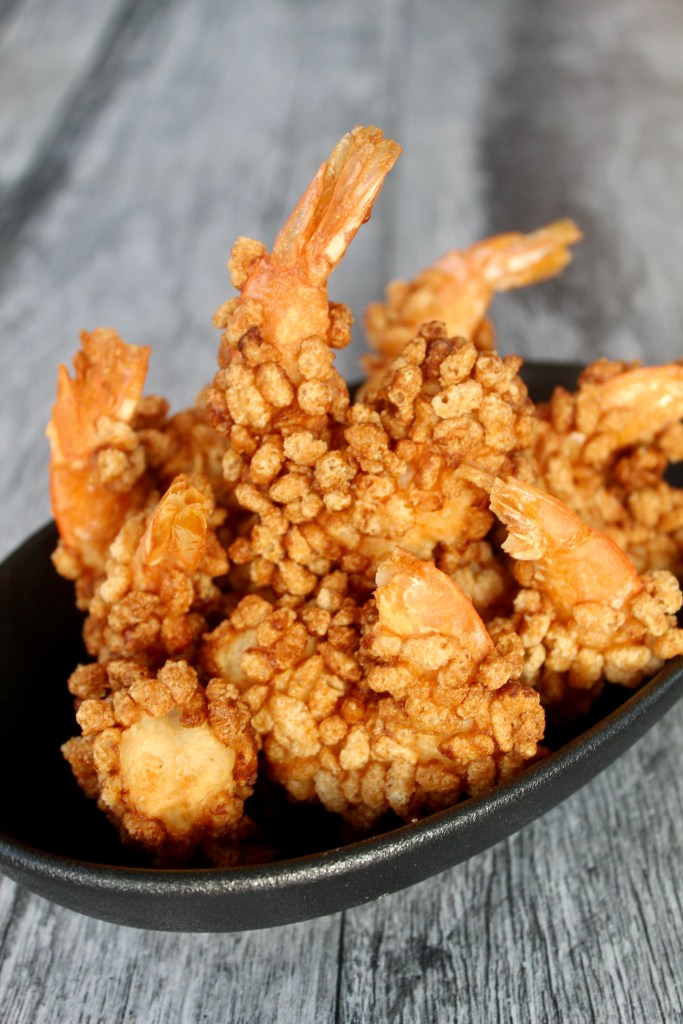
Crispy Prawn Canapés

Crispy Prawn Canapés

500g prawns, shelled and deveined – keep the tail ends on
2 eggs, lightly beaten
83ml flour
250ml popped rice (rice crispies)
vegetable oil for frying

Clean and dry the prawns.
Add the eggs to a shallow dish and beat together.
Add the flour and popped rice to a second and third bowl.
Heat the oil in a saucepan to about 170℃.
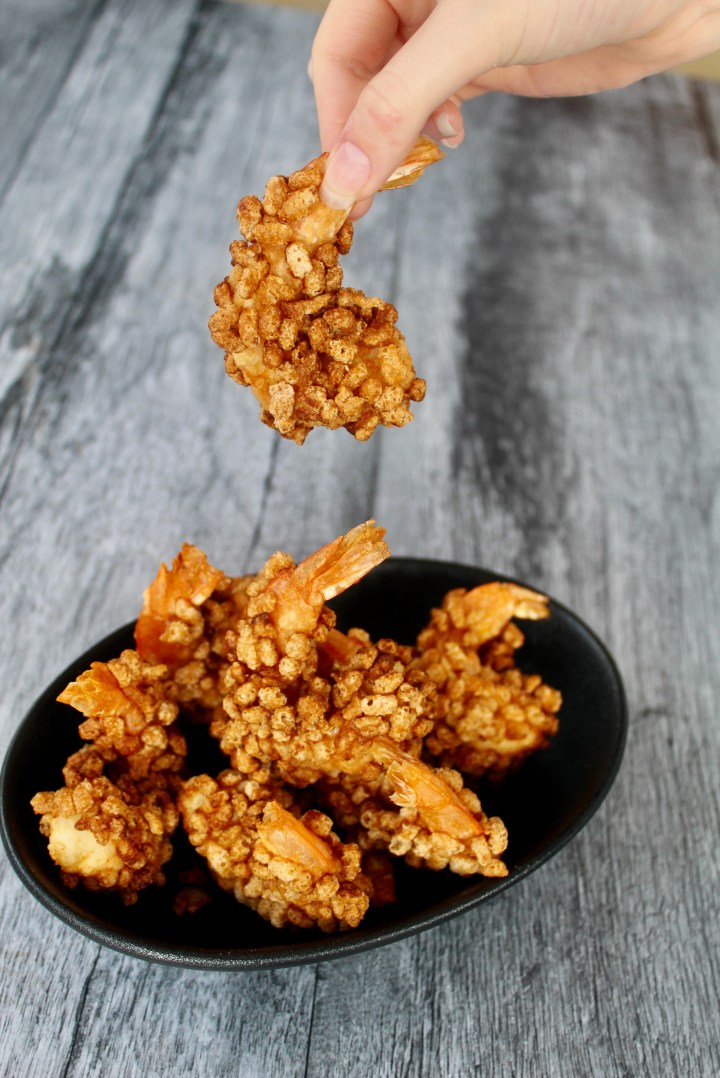
Now dredge each prawn in flour, then egg and finally in the popped rice.
Fry the prawn in the oil for 2-3 minutes.
Serve with a dipping sauce, as a canapé.

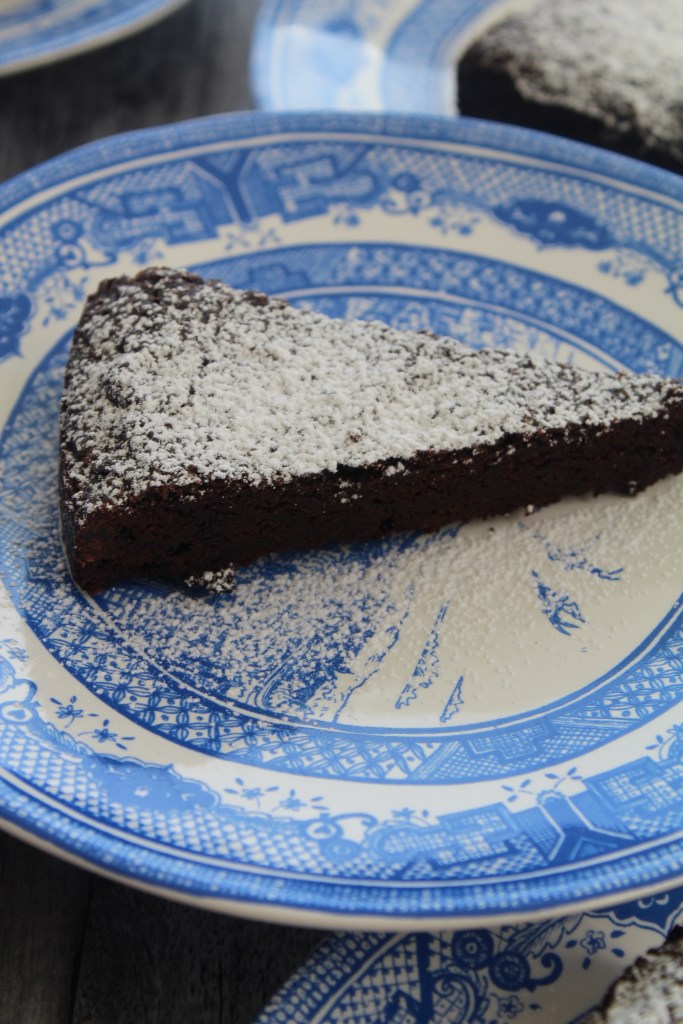
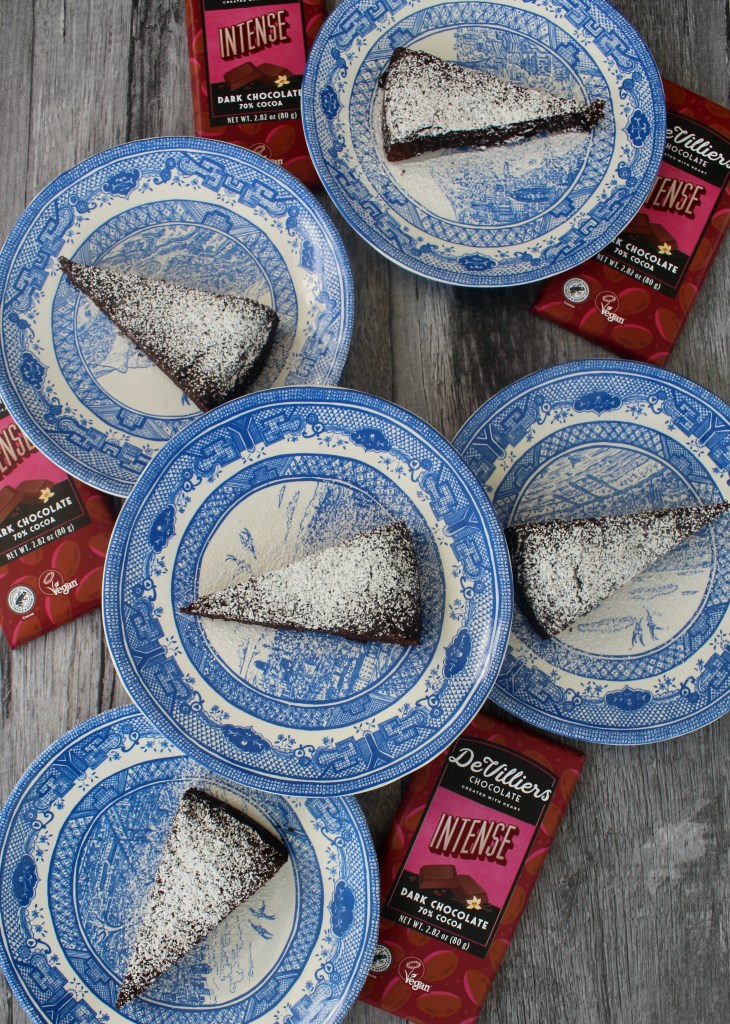
Warm Chocolate Cake

Warm Chocolate Cake

The original cake, Kladdkaka, is a traditional Swedish bake but this is my take on it, resulting in a warm dessert that is somewhere between a brownie and a lava cake. From start to finish it will take you 30 minutes to put together this more-ish chocolate cake!

80g chocolate, chopped
130g butter
250ml flour
125ml cocoa powder, sifted
330ml sugar
3 eggs, lightly beaten
5ml vanilla

Preheat your oven to 180℃ and spray a 22cm loose-bottom cake tin with cooking spray. Dust the bottom of the tin with cocoa powder. Set aside.
Add the chocolate and butter to a heatproof bowl set over a saucepan of simmering water and stir every now and then until completely melted. Pour the chocolate-butter mixture into a mixing bowl.
Add the flour, cocoa powder and sugar to the bowl and stir together by hand.
Add the eggs and vanilla and stir until combined.
Pour the batter into the cake tin and bake for 25 minutes.
The cake should have a firm top that cracks when you apply pressure to it with your finger.
Allow the cake to cool slightly in the cake tin. Run a knife between the cake and the tin and remove the cake ring.
Serve warm with a dusting of icing sugar.