Crêpes Suzette

Crêpes Suzette

This is one of my favourite French desserts and really easy to make. Make the crêpes the day before you need them and simply reheat them in the orange-caramel-syrup before serving.

Crêpes:
750ml cake flour
2,5ml baking powder
5ml salt
500ml milk
250ml water
125ml sunflower oil
4 eggs

Orange sauce:
45ml caster sugar
250ml orange juice
the zest of one orange
5ml lemon juice
15ml brandy
50g butter, cubed

For the crêpes:
Add the flour, baking powder and salt to the bowl of a stand mixer fitter with the whisk attachment.
Whisk the milk, water, oil and eggs together in a separate wide-mouthed jug.
Turn the mixer on to a low speed and add the liquid ingredients in a very thin stream. Keep whisking and pouring until all the liquid has been added.
Turn the mixer on to a higher speed and whisk for at least two minutes.
Remove the bowl from the mixer, cover with plastic wrap and allow to stand for 1 hour.
Heat a crêpe pan/frying pan until hot. Add a small amount of vegetable oil and swirl it around the pan. Pour the oil out and put the pan back onto a medium-high heat.
Spoon a ladle-full of the batter into the pan and cook until small holes appear over the entire surface of the crêpe.
Flip the crêpe and cook for 1 minute on the other side.
Slide the cooked crêpe onto a plate and continue baking the rest.

For the orange sauce:
Tip the caster sugar into a non-stick frying pan on medium to low heat.
Allow the sugar to melt without stirring it. You want the sugar to turn a caramel colour without burning it – watch it like a hawk and do not walk away from it!
Take the pan from the heat when the sugar is brown enough and add the orange juice, orange zest, lemon juice and brandy.
Return the pan to a very low heat. Do not panic if the sugar has seized, continue heating over a low heat and stir lightly until the sugar has dissolved completely.
Now start adding the butter, one or two cubes at a time while stirring constantly. Keep going until you have incorporated all the butter.
Bring the mixture to the boil, turn down the heat and simmer until the sauce has thickened slightly and has a lovely gloss to it.

Fold each crêpe into half, and then fold it again so that you have a more-or-less triangular shape.
Gently slide the folded crêpe into the pan and spoon the sauce over it.
Serve immediately.

Potato-Rösti Vegetable Bake

Potato-Rösti Vegetable Bake

This is an easy vegetarian bake for weekday dinners and needs only a salad to accompany it. Serves 6 hungry adults.

Potato crust:
600g potato, unpeeled
5ml garlic salt
40ml flour
1 egg

Filling:
2 onions
250g mushrooms
250g zucchini
250g cheddar cheese
4 eggs
125ml cream
5ml salt
5ml mustard

For the potato crust:
Preheat your oven to 180℃ and grease a loose-bottomed cake tin.
Spread a clean tea towel onto a work surface and grate the potato directly onto it, with the skin on.
Fold the towel over the potato, gathering all ends together and twist and squeeze the potato over your kitchen sink until all the excess moisture has been removed. Put the potato into a mixing bowl.
Sprinkle the garlic salt and flour over the grated potato and mix through with your hands in order to distribute all ingredients as evenly as possible.
Now add the egg and mix in the same way.
Spoon the mixture into the prepared cake tin and press it tightly into the base and sides of the tin with the back of a spoon.
Place the cake tin on a flat baking sheet and bake in the oven for 30 minutes.
Remove from the oven and set aside.

For the filling:
Put a frying pan on to medium heat and add some oil to it.
Slice the onions and fry them until soft and translucent. Spoon the onion into a large mixing bowl.
Turn the heat up to high, slice the mushrooms and add them to the hot pan. Cook until caramelised. Spoon into the bowl with the onion.
Grate the zucchini and cheese directly into the mixing bowl with the onion and mushroom. Mix together.
Spoon the vegetable-cheese mixture in to the potato crust. Set aside.
Add the eggs, cream, salt and mustard to a mixing bowl and whisk together. Gently pour over the vegetable mixture.
Bake in the preheated oven for 40 minutes, until golden and set.
Remove from the oven and stand in the baking tin for 30 minutes.
Slice and serve warm.

Pistachio Butter

Pistachio Butter

Pistachio nut butter is relatively low in calories and fat but high in protein. Spread it on toast, stir it into oatmeal porridge or mix it into a cookie batter. You will need a powerful food processor to process the nuts.

Choose the amount of nuts – I used 500ml
Blanch the pistachios for two minutes, drain and spread them onto a tea towel.
Rub the between the cloth to remove the skins. The more skin you remove, the greener the pistachio butter!

Now roast the nuts at 170℃ for 7 minutes.
Add the pistachio to a food processor and blitz until creamy.
Scoop the nut butter into a glass jar and store in the fridge.

Middle-Eastern Rice Pudding

Middle-Eastern Rice Pudding

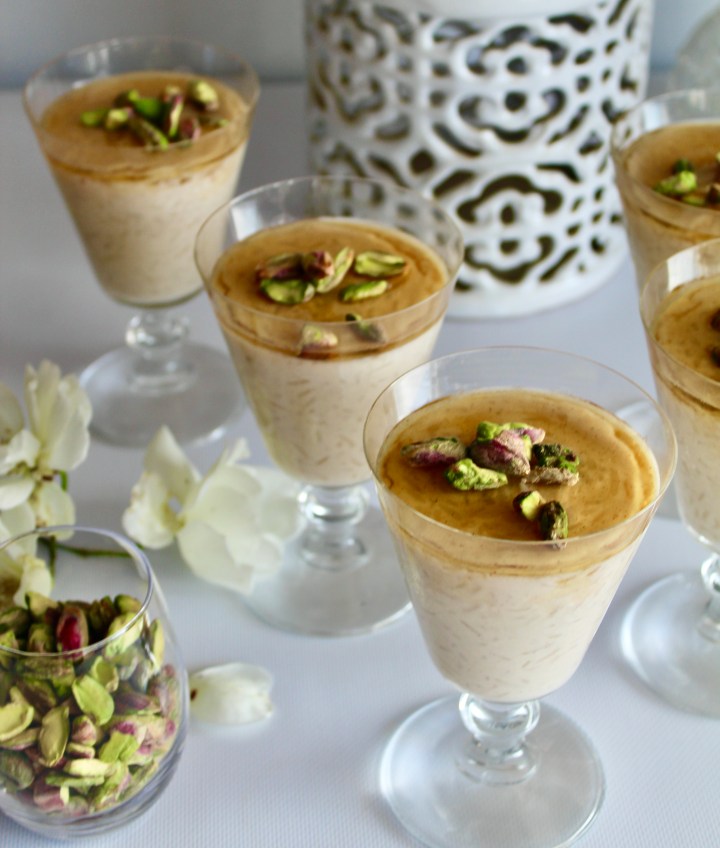
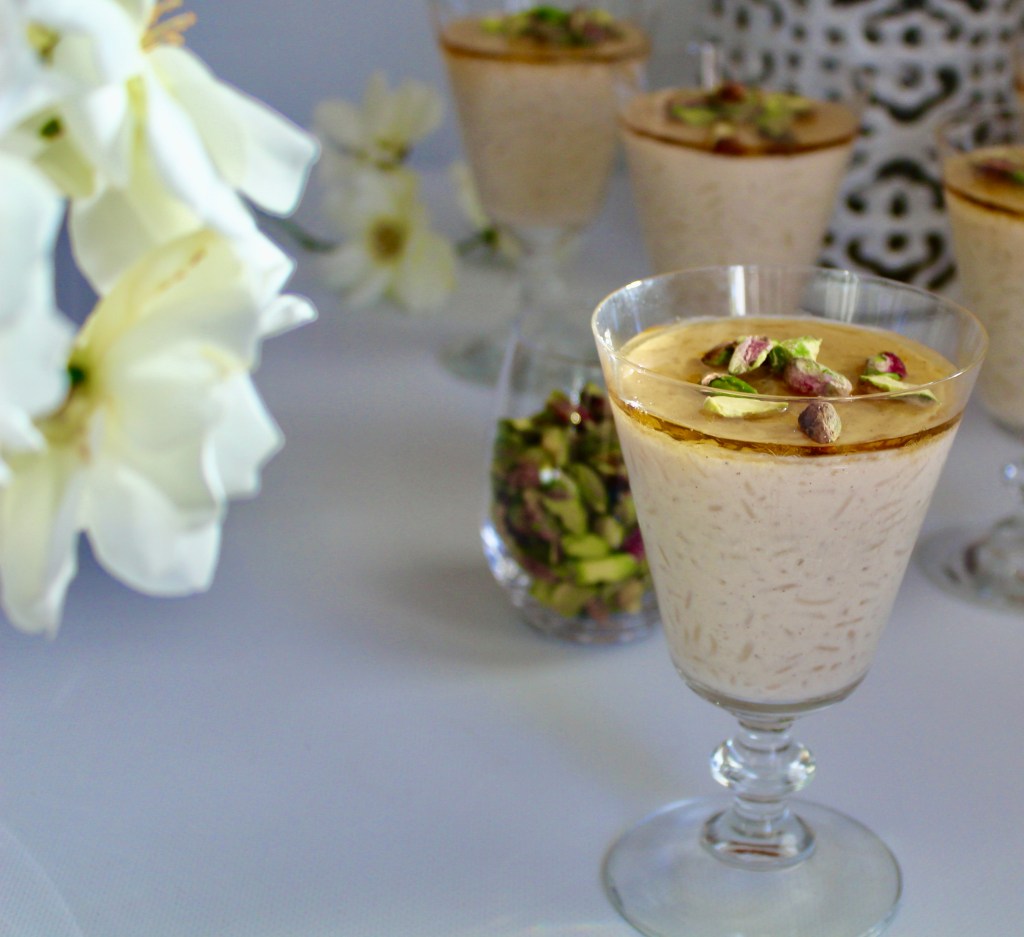
This is fragrant dessert with rose water and honey and is based on the traditional Roz bel Laban. The recipe provides 6 generous portions depending on the size of the glasses or bowls it is served in.

500ml milk
250ml cream
2 cinnamon quills
6 cloves
1,2ml ground cardamon
250ml rice
30ml sugar
500ml water
83ml condensed milk
30ml butter
30ml rose water
honey and pistachio nuts to serve

Add the milk, cream, cinnamon, cloves and cardamon to a saucepan.
Turn the heat on medium and wait for the mixture to come to the boil.
Turn the heat down so that the mixture simmers and add the rice, sugar and water.
Allow the mixture to simmer until the rice is cooked, stirring continuously. This will take 30 – 40 minutes. Do not leave the mixture – keep an eye on it!
Take the saucepan from the heat and add the condensed milk, rose water and butter. Stir thoroughly.
Spoon the rice pudding into glasses or serving bowls.
Drizzle each dessert with honey and a sprinkling of pistachio nuts.
The rice pudding is best served warm.

Roasted Cauliflower Soup

Roasted Cauliflower Soup

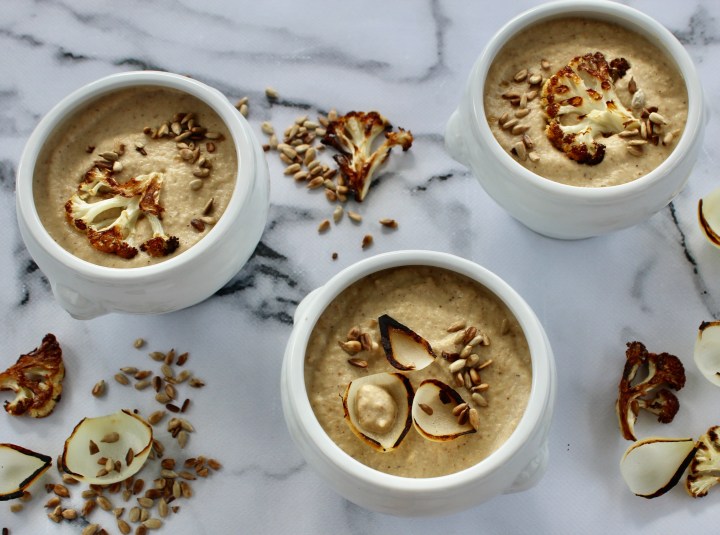
This roasted cauliflower soup is deliciously light and complex at the same time. The sunflower seeds add a creaminess and depth of taste and makes this a soup you can entertain with. Yields 6 – 8 servings.

2 heads of cauliflower
2 onions
3 cloves of garlic, minced
1l vegetable/chicken stock
250ml water
250ml cream
125ml sunflower seeds, toasted
1,2ml grated/ground nutmeg
15ml lemon juice
30ml butter
salt and pepper

Preheat your oven to 220℃ and line a baking tray with baking paper.
Cut the cauliflower heads into florets and place them on the line baking tray.
Drizzle with vegetable oil and a sprinkling of salt.
Roast the florets in the oven for 20 minutes, stirring halfway through the roasting time.

Peel and chop the onions.
Put a large saucepan on to medium heat, add some oil and the onions and fry until the onions start to caramelise.
Turn the heat down, add the garlic and cook for 1 minute.
Pour the stock, water and cream into the saucepan and add the sunflower seeds and nutmeg.
Add the roasted florets and cook at medium heat for 20 minutes.
Add the lemon juice and butter to the soup and stir through.
Decant the soup, in batches, into a liquidiser and blend until smooth.
Pour the soup back into the same saucepan and taste it – adjust the seasoning with salt and pepper.
Serve the soup warm with a crusty bread.

Biscuit Brownies

Biscuit Brownies

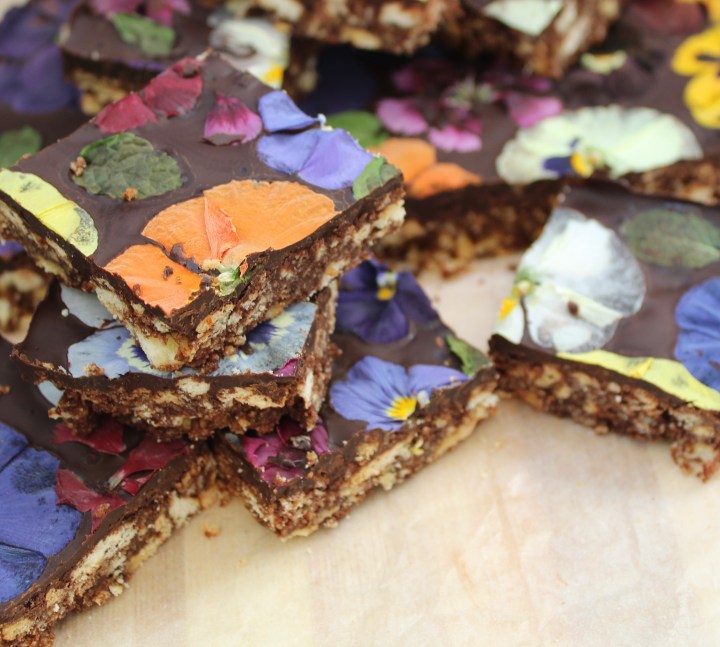
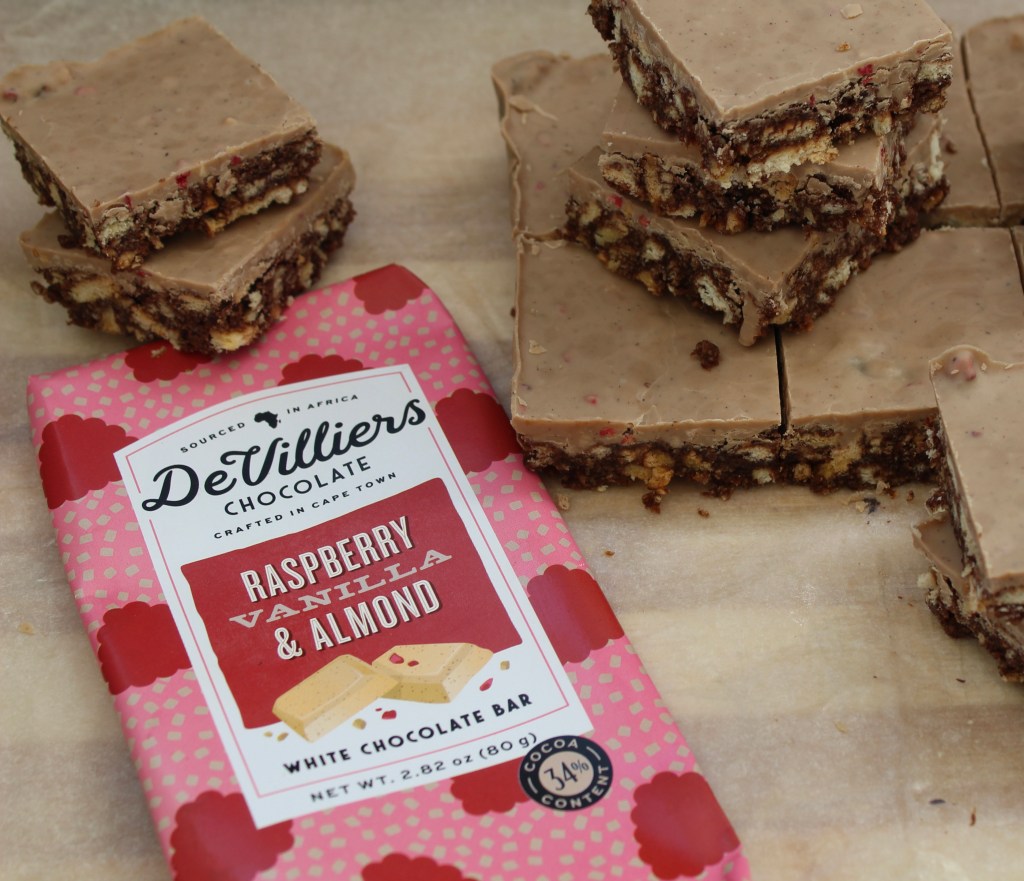
This is an old favourite which most of us have eaten in one form or the other. The addition of the chocolate layer on top adds a creaminess and turns a kids-party-favourite into an adult snack! Keeps well in a sealed container at room temperature.

2 X 200g packets plain biscuits
250g butter
60ml condensed milk
30ml golden syrup
45ml cocoa powder, sifted
30 sugar
160g dark chocolate; I used De Villiers Dark Chocolate, Intense
160g white chocolate; I used De Villiers White Chocolate, Raspberry, Vanilla and Almonds

Line two 20cm X 20cm baking tins with baking paper.
Put the biscuits into a plastic bag and crush them with a rolling pin. Pour the biscuit pieces into a large mixing bowl.
Add the butter, condensed milk, syrup, cocoa powder and sugar to a small saucepan and melt together over a low heat.
Stir the mixture until completely smooth and amalgamated.
Pour the runny mixture onto the biscuit pieces and mix well, making sure that all the pieces are covered in it.
Divide the mixture between the two prepared baking tins and smooth the top with the back of a spoon. Press down to compact the mixture.
Refrigerate for 10 minutes.
Chop the dark chocolate into small pieces and add it to a heatproof bowl that sits on a saucepan of simmering water. Stir every now and then until the chocolate is melted. Pour onto one of the baking tins with brownies.
Repeat the process with the white chocolate and pour over the other batch of brownies.
If you want to prettify the brownies with edible flowers, now is the time!
Place the two baking tins in the refrigerator for 30 minutes.
Slice before serving.

Nut Brittle

Nut Brittle

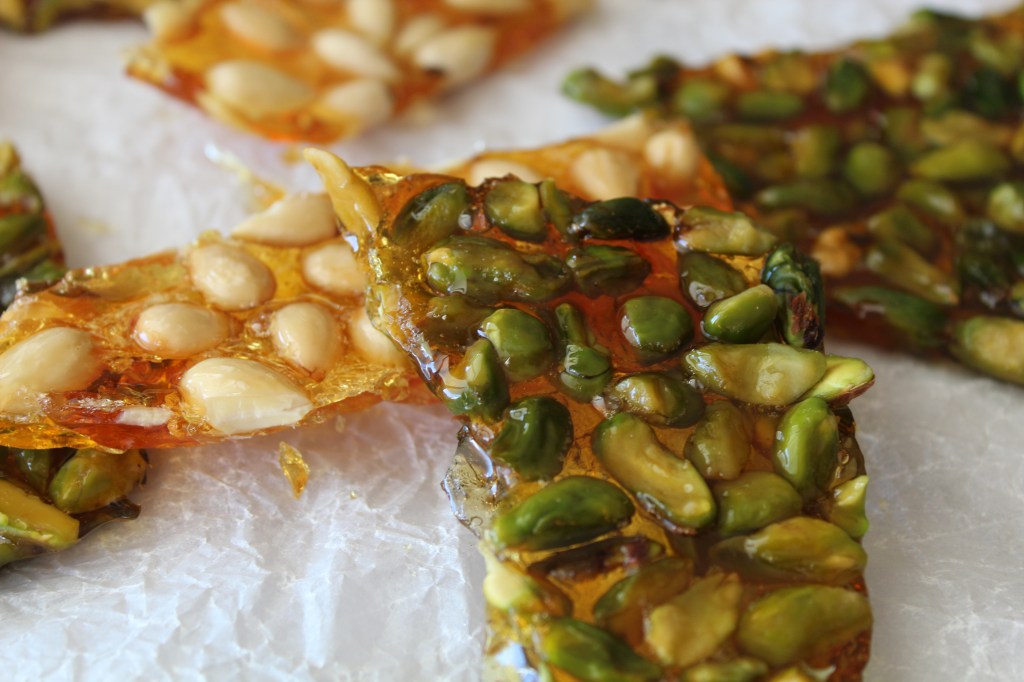
This is a simple recipe and requires no thermometer. Brittle is best made on days with sunshine as the moisture from mist and rain will cause the brittle to become/stay sticky. Best kept in an airtight container lined with wax paper, at room temperature.

250ml sugar
62ml water
2,5ml salt
375ml peanuts, cashew, blanched/raw almonds or pistachio nuts

Line a rimmed baking sheet with baking paper and spray it with cooking spray.
Spread the nuts onto the prepared baking sheet and set aside.
Add the sugar, water and salt to a small saucepan.
Place onto a high heat and stir until the sugar has dissolved.
Cook the mixture for 4 minutes WITHOUT stirring and start checking the colour – you are aiming for an amber colour. You may cook the sugar for longer until it reaches the colour you like.
Remove from the heat and pour over the nuts.
Set aside to cool and set.
Keep the brittle in a sealed container lined with wax paper, at room temperature.


Polish Rye Bread

Polish Rye Bread

This recipe provides a quick method for a rye bread with loads of flavour. The addition of buttermilk gives the typical tangy taste that one associates with a traditional rye and adds to a really good texture. This recipe makes two medium-sized, oblong breads.

500ml rye flour
1 500ml cake flour
10ml salt
15ml instant yeast
250ml water, tepid
5ml sugar
375ml buttermilk, room temperature
62ml butter, melted

Add the flours and salt to the bowl of a stand mixer fitted with the dough hook.
Add the yeast, water, sugar, buttermilk and melted butter to a separate bowl and whisk together to dissolve the sugar and yeast.
Turn the mixer on to a low speed and add the liquids.
Mix/knead for 7 minutes.
Place the dough in a lightly greased bowl, cover with plastic wrap and let rise in a warm place until double the volume.
Preheat your oven to 190℃ and line a large baking sheet with baking paper.
Knead the dough down by hand for 2 minutes.
Divide the dough in half and shape two oblong loaves.
Place the shaped dough on the prepared baking sheet, cover with oiled plastic wrap and allow to proof until almost doubled in size.
Brush the bread with egg white or water for a shiny crust. Make 4 diagonal, shallow cuts in the top of the bread.
Bake the breads for 30 minutes.
Cool on wire racks until completely cold.

Chocolate Cake with Pinot Noir Glaze

Chocolate Cake with Pinot Noir Glaze

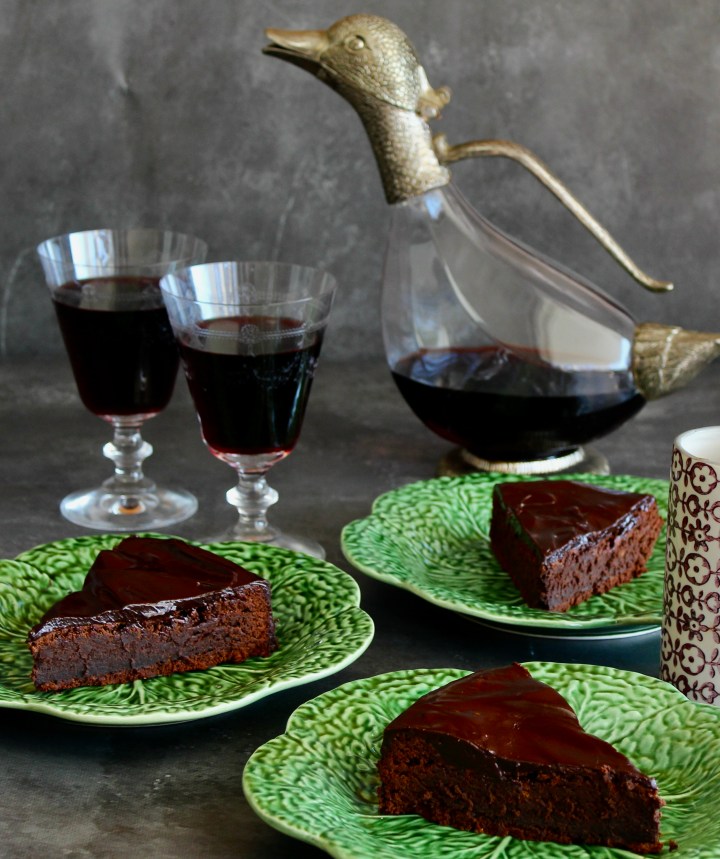
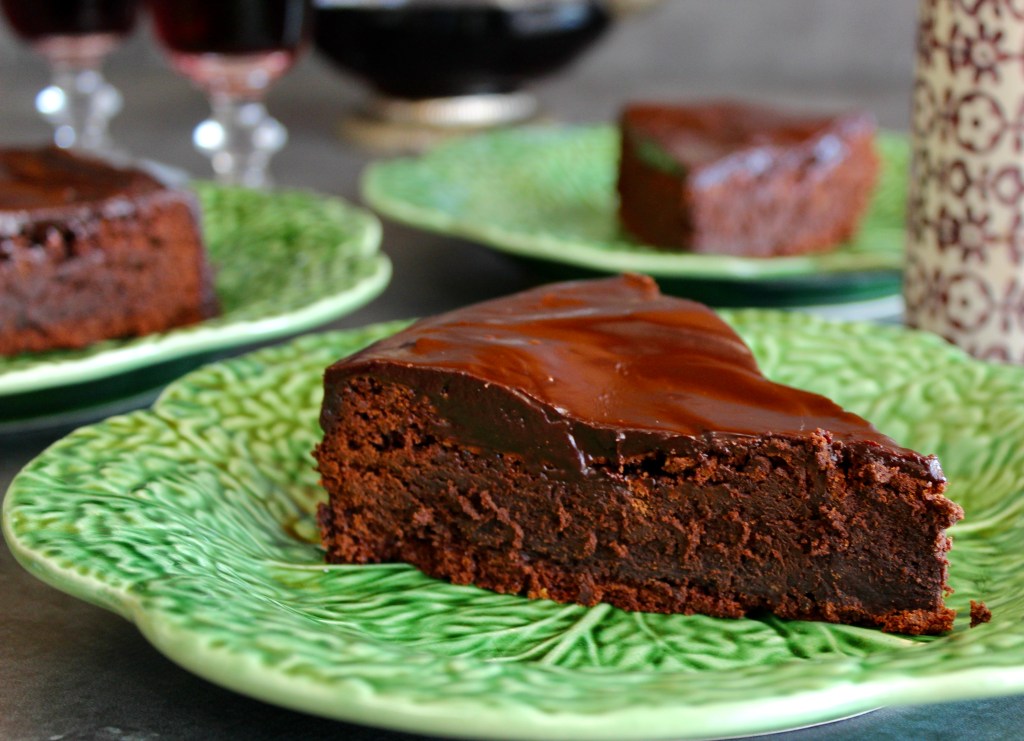
This is a glorious, genuine dark chocolate cake with an intense chocolate and red wine glaze. I use a Pinot Noir red wine as the berry notes mix perfectly with the dark chocolate aromas.

220g DeVilliersChocolate Intense or other dark chocolate, chopped
250ml sugar
200g butter, cubed
4 eggs
3,7ml salt
83ml flour

Glaze:
220g DeVilliersChocolate Intense or other dark chocolate, chopped
62ml butter, cubed
2,5ml salt
125ml icing sugar
125ml pinot noir or any other red wine

Preheat your oven to 180℃ and grease and flour a loose-bottom cake tin of 22cm in diameter.
Add the chocolate, sugar and butter to a heatproof bowl and set it oven a saucepan of simmering water.
Stir the mixture for 3 minutes or until melted and remove from the heat. Keep on stirring until the chocolate is completely smooth.
Scrape the chocolate mixture into the bowl of a stand mixer fitted with the whisk attachment.
Set aside and allow to cool completely.

Set the mixer onto medium speed and add the eggs, one at a time.
Turn the mixer onto its highest speed.
Keep beating on high speed until the mixture has a very thick, mousse-like consistency.
Turn the mixer down to a low speed and add the salt and flour. Mix until smooth.
Pour the batter into the prepared cake tin and bake for 60 minutes.
It is important to test the cake for doneness by inserting a toothpick into the cake’s centre and checking that it comes out clean. If the toothpick/cake tester is sticky, bake the cake for a few minutes longer and test again.
Remove the cake from the oven and place it on a cooling rack. Cool the cake in the tin.

For the glaze:
Add the chopped chocolate, butter and salt to a heatproof bowl set over a saucepan with simmering water.
Stir for 3 – 5 minutes until melted.
Remove the bowl from the saucepan.
Sift the icing sugar directly into the melted chocolate mixture and whisk to combine.
Add the red wine to a small saucepan and place on the heat to warm the wine.
Remove the wine from the heat as soon as small bubbles start appearing at the edges of the pan.
Drizzle the wine into the chocolate mixture while whisking continuously until all the wine is incorporated.
Set the glaze apart for about 10 minutes so that it can thicken.
Place the cold cake onto a cooling rack set inside a baking sheet and pour the glaze evenly over the cake.
Allow the glaze to set – about 2 hours.


Cinnamon Rolls

Cinnamon Rolls

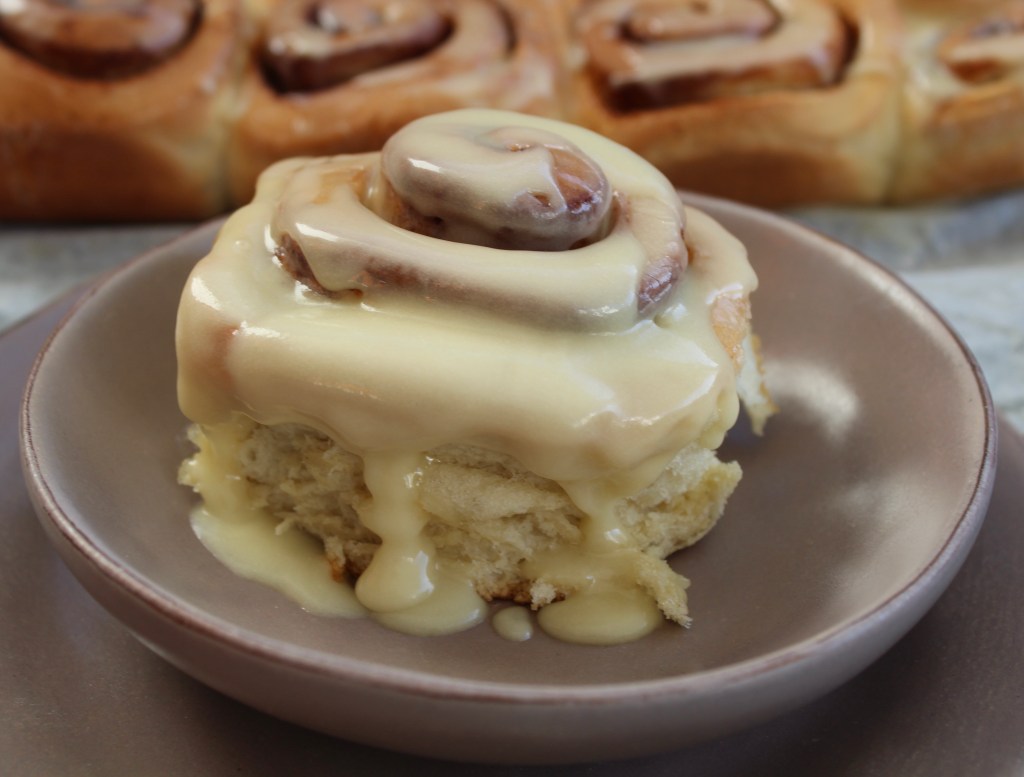
Few things beat an aromatic cinnamon roll on a cold day and these rolls are no exception! I like to hero the yeasty bread and therefore the sugar glaze is toned done in this recipe. Yields 20 rolls but may easily be halved.

1250ml bread flour
7,5ml salt
75ml butter
450ml milk
45ml sugar
15ml instant yeast

30ml butter
30ml white sugar
30ml brown sugar
10ml cinnamon

Add the flour, salt and sugar to the bowl of a stand mixer fitted with the dough hook.
Add the butter and milk to a jug and warm it in the microwave oven. Stir until the butter has melted and the milk is tepid and NOT hot.
Add the sugar and yeast to the milk mixture and stir to dissolve.
Turn the mixer onto low speed and add the milk mixture. Mix/knead for 2 minutes.
Now turn the speed to medium and knead for a further 5 minutes.
Transfer the dough to a clean, lightly oiled bowl and cover with a plastic bag and a tea towel.
Set aside to proof for 1 hour or until doubled in volume.
Line an overproof baking dish/baking tray of about 25cm X 35cm with baking paper.
Dust a work surface with flour and roll the dough into a large rectangle. About 65cm X 30cm.
Melt the 30ml butter and brush an even layer onto the rolled dough.
Mix together the sugars and cinnamon and sprinkle evenly onto the dough.
Roll into a sausage, in the length.
Cut the sausage of dough into 20 even pieces. I do this by halving the sausage, and again halving the half sections and then simply slicing it into five more-or-less equal pieces.
Arrange the dough spirals in the prepared baking dish, cut side facing up and about 1 – 2 cm between them, or as evenly spaced as you can manage.
Slip the baking dish into a plastic bag and leave to proof for 30 minutes.
Preheat your oven to 180℃.
Bake the rolls for 30 minutes.

For the glaze:
500ml icing sugar
30ml butter
10ml vanilla
60ml milk

Sift the icing sugar into a mixing bowl.
Melt the butter and add the vanilla and milk to it.
Pour the wet ingredients into the icing sugar while stirring.

Remove the cinnamon rolls from the oven and immediately drizzle the glaze onto the rolls.
Serve warm or cooled down.