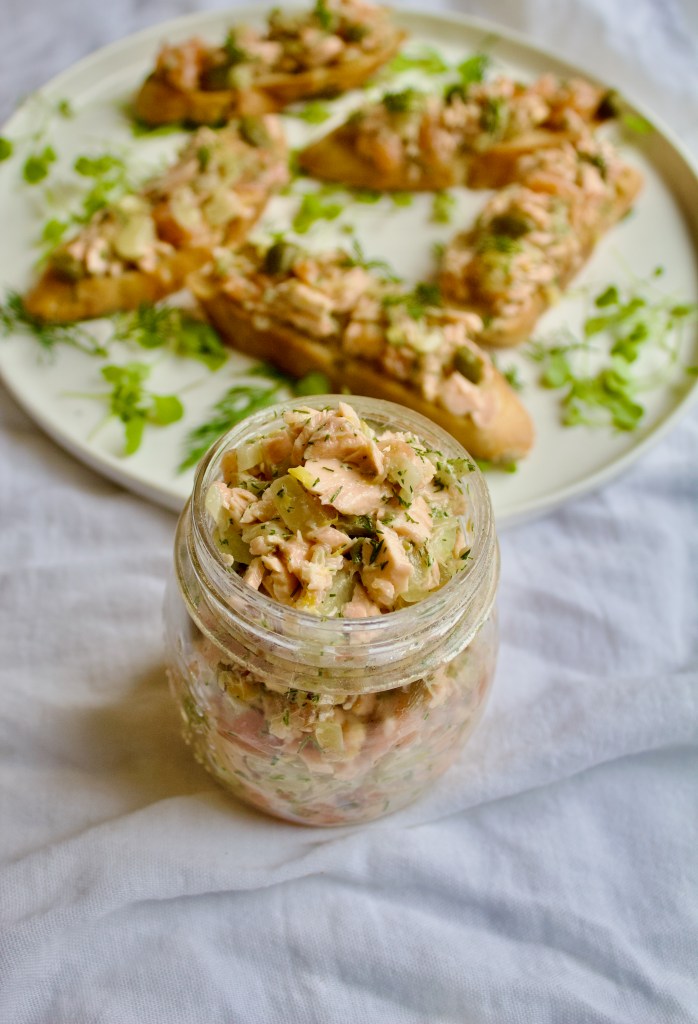
Salmon Rillettes

Salmon Rillettes

1 onion, chopped
250ml dry white wine
750ml water
5ml whole black peppercorns
1 bay leaf
1 lemon, zested and juiced
250g fresh salmon, skin removed
125g smoked salmon, chopped
30ml + 30ml butter, cubed and at room temperature
30ml sour cream
45ml dill/parsley, chopped
15ml capers, finely chopped
15ml olive oil

Add half of the chopped onion, all of the white wine, water and peppercorns to a saucepan.
Add the bay leaf and lemon juice and bring the mixture to the boil.
Add the fresh salmon to the liquid, reduce the heat and simmer for 10 minutes.
Remove the salmon from the liquid and allow it to cool. You may discard the poaching liquid.
Gently flake the salmon with your fingers and add it to a bowl. Set aside to cool completely.
Add 30ml of the butter to a pan set over medium heat.
Add the remaining onion and cook until soft.
Now add the lemon zest, smoked salmon, sour cream, dill, capers, olive oil, the remaining 30ml butter and the cooked onion to the flaked salmon.
Stir the mixture together to combine evenly but be careful not to mush the salmon.
Cover the bowl with plastic wrap and refrigerate for 2 hours.
Take the salmon from the fridge and allow 30 minutes for it to come back to room temperature.
Serve on crostini or crackers.

The salmon can be kept in the refrigerator for three days. Spoon it into a glass jar, melt about 50g of butter and pour over before sealing with the lid.

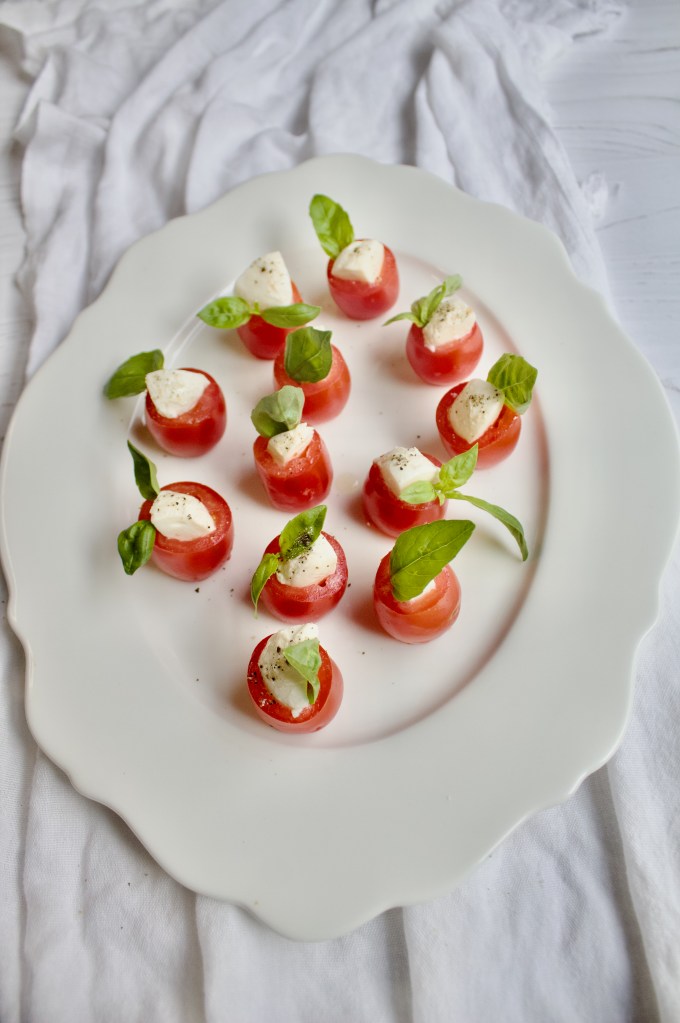
Mini Caprese Tomatoes

Mini Caprese Tomatoes

12 cocktail tomatoes, about 3,5cm in diameter
150g tub of small bocconcini cheese
olive oil
salt and pepper
12 basil leaves

Trim a sliver off the base of each tomato so that it can sit on a plate.
Slice about 0,3 cm off the top of the tomato and scoop the pulp out with a teaspoon or back of a teaspoon.
Season the inside of the tomato with salt and pepper.
Slice the bocconcini in quarters and stuff a piece in each tomato.
Drizzle with olive oil and season again with salt and pepper.
Place a basil leaf on top of each tomato and serve.

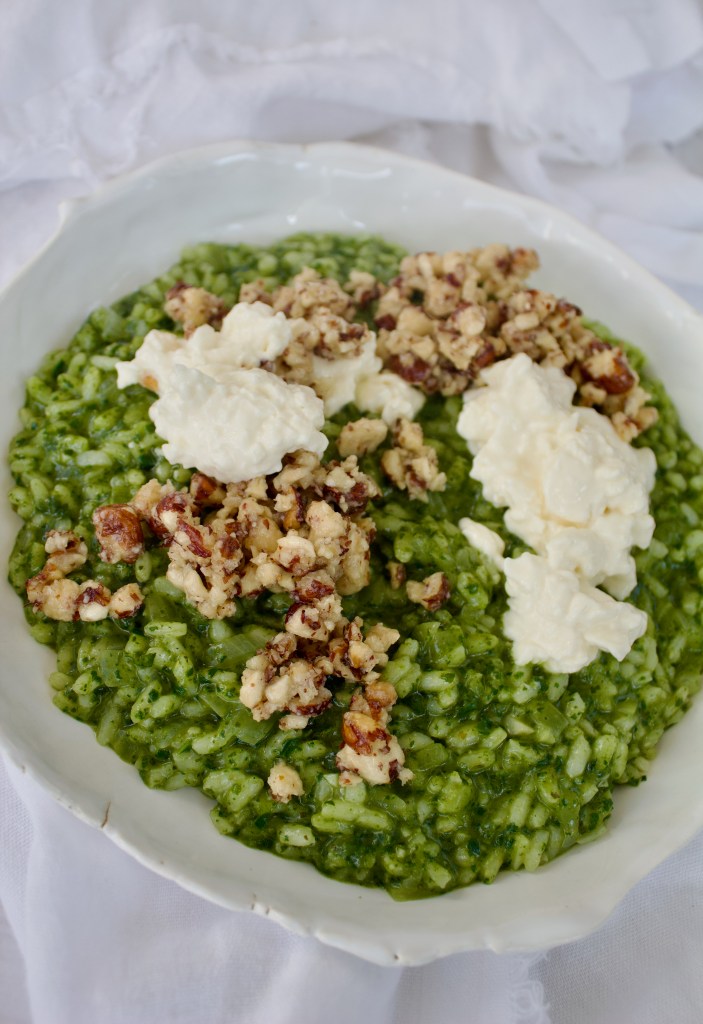
Goat’s Cheese and Hazelnut Risotto

Goat’s Cheese and Hazelnut Risotto

100g hazelnuts, roasted
45ml grated parmesan
45ml olive oil
10 drops sesame oil
5ml red wine vinegar
a pinch of salt

100g goat’s cheese
45ml cream

50g kale, thick stalks removed
50g baby spinach
50g basil leaves
75ml olive oil

1,5 litres vegetable stock
45ml butter
45ml olive oil
1 onion, finely chopped
2 cloves of garlic, minced
200g arborio rice
80ml white wine
50g parmesan cheese, grated

For the hazelnut topping:
Place the hazelnuts in a pestle and mortar and grind it to a coarse texture. If you don’t have a pestle and mortar you may chop the nuts with a knife but make sure that you have a good mix of fine and coarse texture.
Add the parmesan cheese, olive oil, sesame oil, red wine vinegar and salt and stir through. Set aside.

For the goat’s cheese topping:
Break up the cheese into a small bowl, add the cream and mix through to loosen the cheese slightly. Set aside.

For the green sauce:
Blanche the kale and spinach in a saucepan of boiling water for 2 minutes.
Drain and run under cold water until cool.
Add to a bowl with the basil and olive oil and blitz to a paste/sauce with an immersion blender. Set aside.

Pour the stock into a saucepan set over medium-high heat and bring it to a simmer.
Place a large, wide saucepan on medium-high heat and add the butter and oil.
Wait for the butter to melt and add the onion.
Cook until translucent.
Add the garlic and stir-fry for one minute.
Now add the rice and stir to coat for 2 minutes.
Pour in the wine and wait for it to evaporate.
Add about 125ml of stock (two soup ladles) to the risotto, stir it around until most of the liquid has been absorbed and then add some stock again. Keep going – adding stock, stirring until the rice is tender but still firm to the bite.
Remove the saucepan from the heat and stir in the parmesan cheese.
Add the kale mixture to the risotto and stir until the risotto is bright green.
Spoon the risotto on to serving plates and top with some hazelnut mixture and a generous dollop of goat’s cheese.

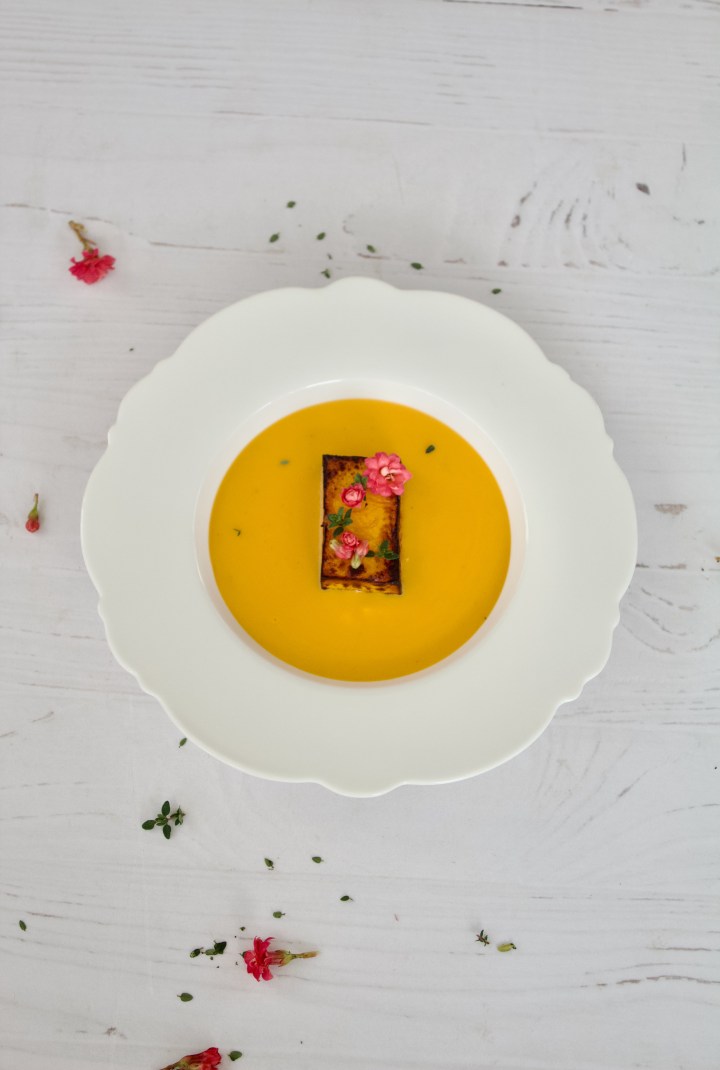
Dressed-Up Butternut Soup

Dressed-Up Butternut Soup

This recipe yields enough soup for 6 people.

olive oil
3 medium butternuts
800g butternut, cut into 1,5cm chunks
1 onion, chopped
1 apple, peeled and chopped
2 x 400g tins of coconut milk
250ml vegetable stock
10ml curry powder
5ml ground ginger
small flowers and herbs to garnish

Preheat your oven to 180℃ and line a baking sheet with alluminium foil.
Peel and half the butternuts.
Cut a 7cm x 3cm rectangle of butternut from each halved veg.
Place a pan on medium-high heat and add a splash of oil to it.
Brown the butternut on its 6 flat sides and place on the prepared baking sheet.
Arrange the butternut chunks alongside, drizzle with olive oil and a sprinkling of salt.
Roast in the oven until just cooked. (about 15 minutes but check it by inserting a toothpick)
Place a large saucepan on medium heat, add some olive oil and the onion and cook until soft.
Add the cubed butternut, apple, curry powder and ginger and stir-fry for a minute or two.
Pour in one of the tins of coconut milk as well as the stock.
Bring the soup to a simmer and cook for 20 minutes.
Insert an immersion blender into the saucepan and blitz until completely smooth.
Pour in the other tin of coconut milk and bring the soup back to a gentle simmer for another 10 minutes.
Taste the soup and season with salt and white pepper.

Ladle the soup into soup bowls and place a roasted butternut triangle in the centre of each soup bowl.
Decorate the top surface of the butternut with small flowers and herbs to serve.

Biltong and Fig Camembert Ring

Biltong and Fig Camembert Ring

125g cream cheese, room temperature
2 preserved green figs, finely chopped
45ml syrup from the preserved figs
1 x 400g roll of puffed pastry
200g thinly sliced biltong
250g camembert cheese, top rind removed
egg wash: 1 egg yolk and 15ml water whisked together

Preheat your oven to 180℃ and line a baking sheet with baking paper.
Add the cream cheese, chopped figs and the syrup to a bowl and mix to distribute the fig evenly.
Lay the pastry flat on a work surface and halve it in its length – you want to shorter pieces.
Divide the cream cheese mixture between the pastry and spread it out evenly.
Now arrange the biltong on top of the cream cheese.
Cut each piece of pastry into 8 even strips.
Twist each strip like you would when making cheese straws.
Place a saucer/heatproof bowl, more or less the size of the camembert, on the lined baking sheet.
Arrange the twisted pastry around the saucer until you have an entire ring of pastry around it.
Brush the pastry with the egg wash and bake for 15 minutes.
Take the baking sheet from the oven, remove the saucer and replace it with the camembert. (the top with its rind removed, should face up)
Return the baking sheet to the oven and bake for another 8 minutes or so – the cheese should be melted and runny.
Serve warm with fresh herbs scattered over.

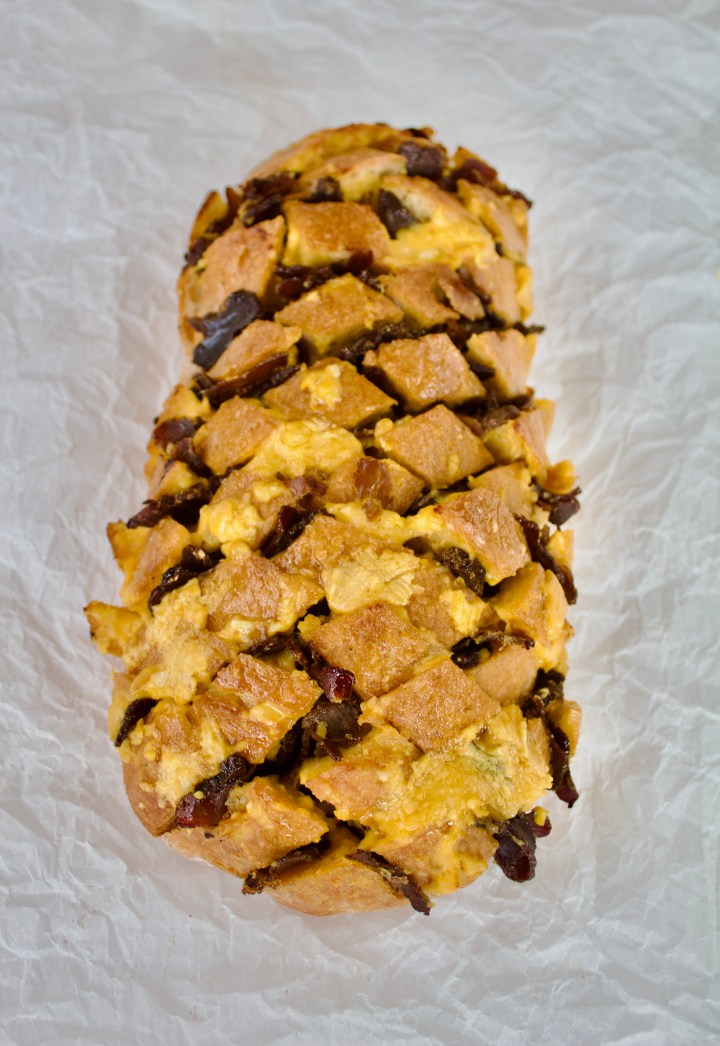
Biltong Borrelbrood

Biltong Borrelbrood

1 sourdough bread
200g cheese spread
100g butter
4 cloves of garlic, minced
80ml parsley, chopped
200g biltong, sliced

Preheat your oven to 180℃.
Place the bread on a wooden board and place a wooden spoon on either side of it, in its length.
Slice the bread on the diagonal, into 1,5cm thick slices WITHOUT slicing through – the wooden spoons should prevent this.
Now turn the bread and slice again so that you are left with squares that are attached at the bottom.
Place the sliced bread on a large piece of aluminium foil and then onto a baking sheet. Set aside.
Add the cheese spread, butter and garlic to a small saucepan and set it over a medium-low heat.
Stir every now and then until the mixture has melted and is amalgamated.
Remove from the heat and stir in the parsley.
Spoon generous amounts of the cheese mixture in between the sliced bread.
Push the biltong slices between the bread squares and cover with the aluminium foil.
Bake in the oven for 30 minutes.
Serve immediately as a casual starter.


Pull-Apart Tortilla Wraps

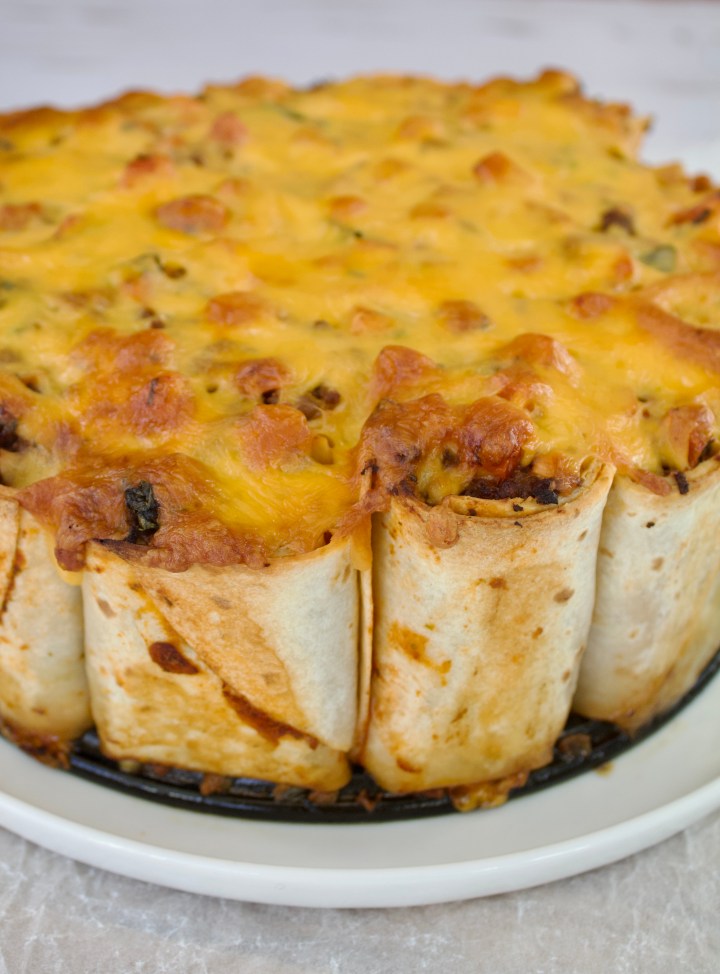
Pull-Apart Tortilla Wraps

1 onion, diced
2 cloves of garlic, minced
2 sweet peppers, diced
600g minced beef
30ml tomato purée
30ml Worcestershire sauce
3 large tomatoes, diced
3 spring onions, sliced
60ml coriander, chopped
10 large tortilla wraps
150g + 150g cheddar cheese, grated

Preheat your oven to 180℃ and spray a 22cm loose-bottom cake tin with cooking spray.
Place a saucepan on medium-high heat and add a dash of vegetable oil.
Add the onion and cook until translucent.
Add the garlic and sweet pepper and cook while stirring occasionally until the peppers are softened.
Add the minced beef, tomato purée and Worcestershire sauce, season with salt and pepper and turn up the heat.
Break the mince up with the back of a wooden spoon and cook until there is no liquid left.

For the salsa:
Add the diced tomato, spring onions and coriander to a bowl.
Season with salt and pepper. Set aside.

To assemble:
Lay the tortilla wraps on a chopping board and trim the left and right edges so that they are square.
Spoon some of the mince mixture on the curved edge closest to you.
Spoon some salsa on the mince and scatter with grated cheese.
Roll the tortilla into a fairly tight cylinder.
Repeat with the other ingredients.

Slice each tortilla roll into 3 equal rolls.
Pack the rolls cut side up, in the cake tin. Start on the outer edges and work towards the centre.
Sprinkle the remaining 150g cheese over the rolls.
Bake in the oven for 30 minutes.
Remove the outer ring of the cake tin and serve immediately.

Green Peppercorn Sauce

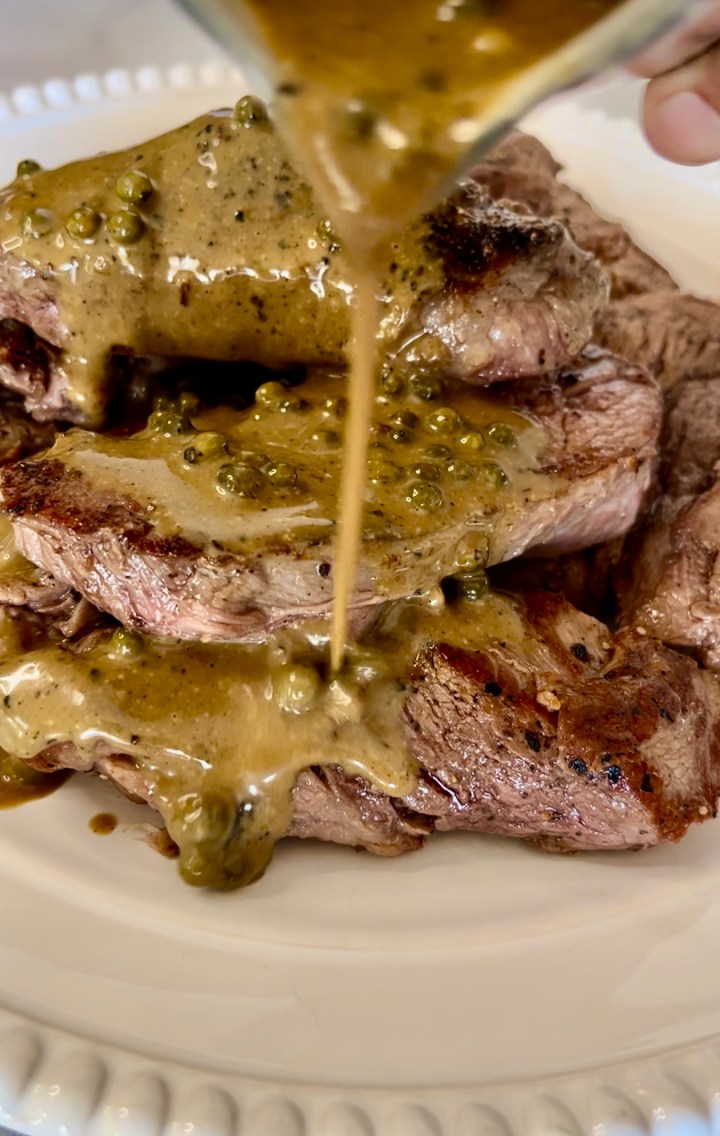
Green Peppercorn Sauce

This peppercorn sauce can obviously be served with any meat of your choice but is really elevated when made in the same pan as the steaks.

80ml brandy
180ml beef stock
125ml cream
45ml canned green peppercorns

Cook your steak in a cast-iron pan, remove the meat but keep the pan on the heat.
Add the brandy to the hot pan.
Turn the heat to medium-high and simmer for a few minutes while scraping down the pan.
Reduce the brandy by half and until you can no longer smell the alcohol.
Pour in the beef stock, bring to a quick simmer and cook until it has also reduced by half.
Turn the heat down to medium and pour in the cream.
Add the peppercorns and cook for 2 minutes.
Taste and season the sauce with salt and a few good grindings of black pepper.
Serve as needed.

Greek Chicken Souvlaki Skewers

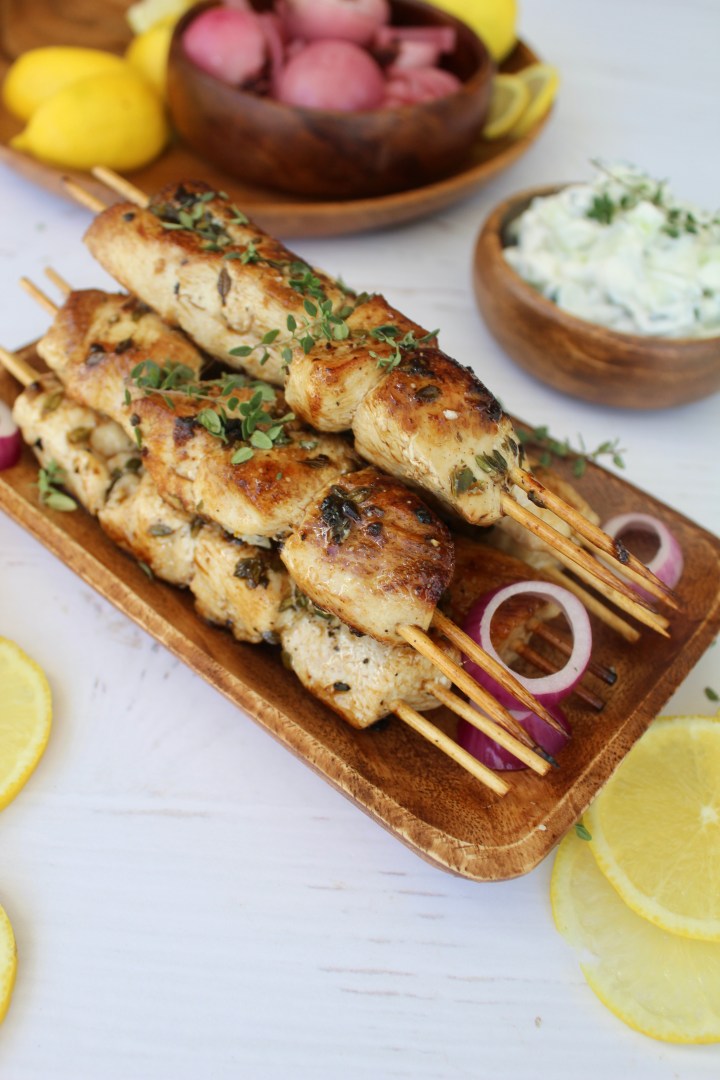
Greek Chicken Souvlaki Skewers

Souvlaki captures all the tastes of Greece and so these chicken skewers will not only transport you back to the azure sea and clear skies, but delight your tastebuds!

10 chicken breasts, skin removed
60ml olive oil
the juice of one lemon
1 clove garlic, minced
30ml dried oregano
salt and pepper
10-24 wooden skewers

Cut each chicken breast into 3 equal sized pieces.
Add the chicken and all the ingredients to a mixing bowl and rub everything together with you hands so that the chicken gets coated with it.
Cover the bowl with plastic wrap and refrigerate for at least an hour (you may leave it overnight).

Cut the wooden skewers to fit inside your griddle pan.
Now thread 4-5 pieces of chicken onto a skewer. Lay it flat on a work surface and push another skewer through all the pieces of chicken so that you have to parallel skewers.
Place a griddle pan on high heat and wait for it to warm up.
Cook the chicken for 8-10 minutes, turning 2/3 times during cooking. You may add a few splashes of olive oil if you think the pan needs it.
Serve warm or at room temperature with plenty of lemon on the side.