This tart is makes for the perfect summer dessert when served with a scoop of ice cream and extra passionfruit pulp drizzled on top. It is so easy to make, you only need to take out a mixing bowl and a whisk!!
4 eggs 250ml milk 5ml vanilla 125g butter, melted 250ml caster sugar 125ml passionfruit pulp and extra for drizzling once you serve 125ml flour 250ml desiccated coconut
Preheat your oven to 170℃ and spray a 24cm tart tin with cooking spray. Add the eggs, milk, vanilla, butter, sugar, passionfruit pulp, flour and coconut to a mixing bowl and whisk together. Pour the batter into the prepared tin and bake for 50 minutes. Cool the tart for 10 minutes before refrigerating for at least 2 hours. Dust with icing sugar and drizzle with passionfruit pulp.
This is one of the easiest ways of roasting a chicken and will leave you with juicy, fall-off-the-bone meat and a delicious gravy.
1 whole chicken 10ml salt 30ml vegetable oil 30ml butter 60ml sage leaves, roughly chopped the juice of two lemons one garlic bulb, halved horizontally 500ml buttermilk 100ml milk
Preheat your oven to 190℃. Wash and dry the chicken and rub the salt over the entire bird. Add the oil and butter to a saucepan over high heat and brown the chicken, turning it as you go along. Turn off the heat and add the remaining ingredients to the saucepan. Put a lid on/cover with aluminium foil and cook in the oven for 40 minutes. Remove the lid and cook uncovered for a further 50 minutes. Place the chicken on a serving dish. Strain the sauce through a fine mesh/sieve and serve it on the side with the chicken.
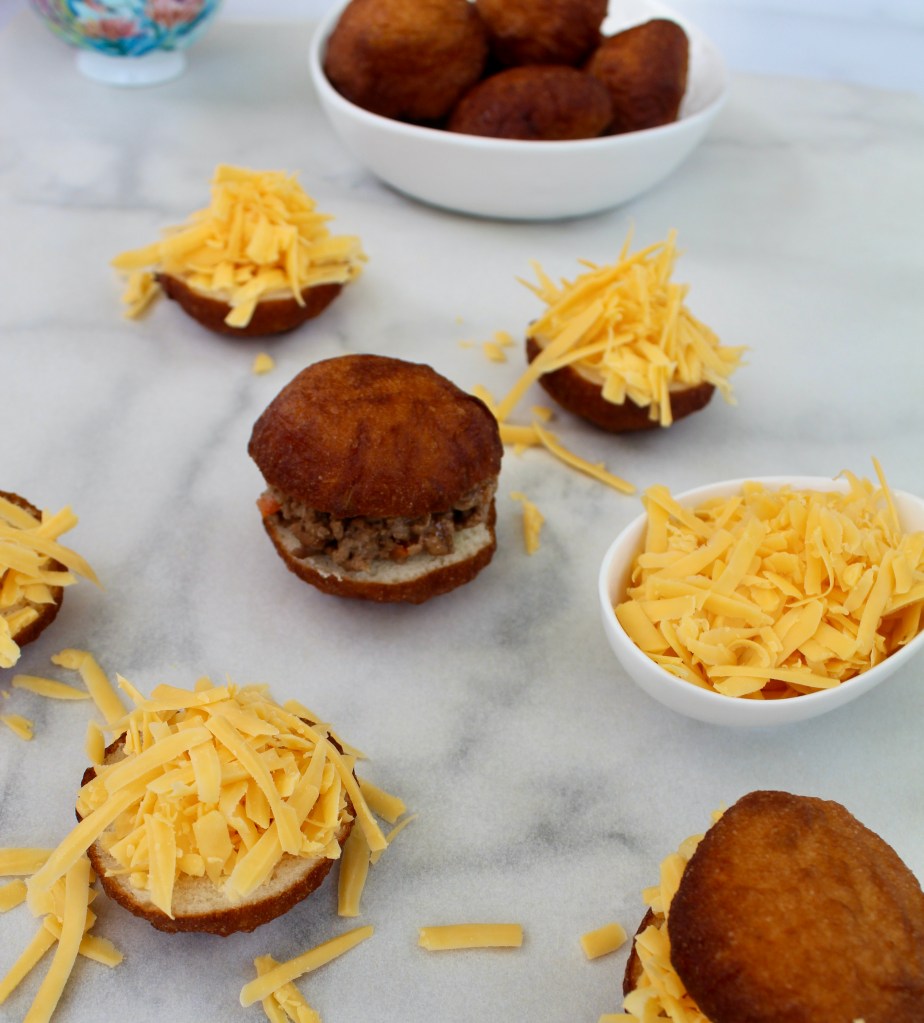
This is a traditional South African food that is popular as a quick meal and often eaten as is, filled with minced meat or with cheese and syrup. Vetkoek literally means “fat cakes” as it is basically a deep-fried bread. Magwinya is simply shaped differently, smaller than tennis balls and often found in Townships or sold as a on-the-go breakfast at taxi ranks.
10g dried yeast 900g cake flour 10ml salt 10ml sugar vegetable oil for frying
Pour 250ml of warm water (tepid) into a mixing bowl and sprinkle the yeast on top. Stir to dissolve the yeast and set aside. Add the flour, salt and sugar to the bowl of a stand mixer fitted with the dough hook. Run the mixer on low speed and add the yeast mixture. Now add some more lukewarm water (about 400ml) until the mixture comes together in a soft dough. Knead on medium speed for 6 minutes. Transfer the dough to an oiled mixing bowl, cover with a tea towel and set aside for 90 minutes. Knock back the dough by kneading it by hand for 1 minute. Pour about 2 litres of vegetable oil into a saucepan over medium-high heat. If you are making Magwinya, pinch off some dough and shape it into a ball, about the size of a golf ball. If you are making vetkoek, pinch off twice the amount of dough, roll into a ball and then press it flat between your hands. Place the shaped dough on an oiled tray until you have shaped all the dough and the oil is warm. Test the oil with a small piece of dough: if the dough starts bubbling and rises when dropped into the oil, it is hot enough. Deep-fry the magwinya/vetkoek in the oil, turning them often for about 3 minutes or until they are a deep golden brown. Scoop out and drain on kitchen paper. Serve warm with mince/ragou or grated cheddar cheese and golden syrup.
Add the chocolate and 100ml of the cream to a heatproof bowl set over a saucepan with barely simmering water. Allow the chocolate to melt, stirring every now and then until the mixture has amalgamated. Remove the bowl from the heat and set aside for 10 minutes to cool. Stir the mixture every now and then to help the cooling along. Add the 300ml cream to the bowl of a stand mixer fitted with the whisk attachment. Beat the cream until it forms soft peaks when you lift the whisk. Continue whisking on medium speed while adding a spoonful of the chocolate mixture at a time. Keep going until you have added all of the chocolate and the mixture forms stiff peaks. Spoon the mousse into serving bowls/glasses and refrigerate for at least 2 hours.
Caramel Pop Corn: 60ml vegetable oil 83ml popping corn
Add the vegetable oil to a heavy-base saucepan set over medium-high heat. Add the corn, cover the saucepan with a lid and wait for the corn to pop. Turn the pop corn out into a large mixing bowl and set aside.
For the caramel: 100g butter 220g brown sugar 170g liquid glucose (or corn syrup or honey) 2,5ml salt 5ml vanilla 2,5ml baking powder
Preheat your oven to 110℃. Add the butter to a saucepan over medium heat and allow it to melt. Now add the sugar, glucose and salt and stir together. Stop stirring as soon as the mixture starts to bubble and allow it to simmer for 4 minutes – WITHOUT STIRRING! Remove the saucepan from the heat and immediately add the vanilla and baking powder while whisking. Pour the caramel over the pop corn and mix through – be careful, it is extremely hot!!! Spread the mixture on 2 oven trays and bake in the oven for 45 minutes, tossing the pop corn every 10 minutes with a wooden spoon. Remove from the oven and cool completely. Gently break the pop corn into pieces.
Place a small handful of the caramel pop corn on the chocolate mousse and serve immediately.
The pop corn can be stored for a week in an airtight container.
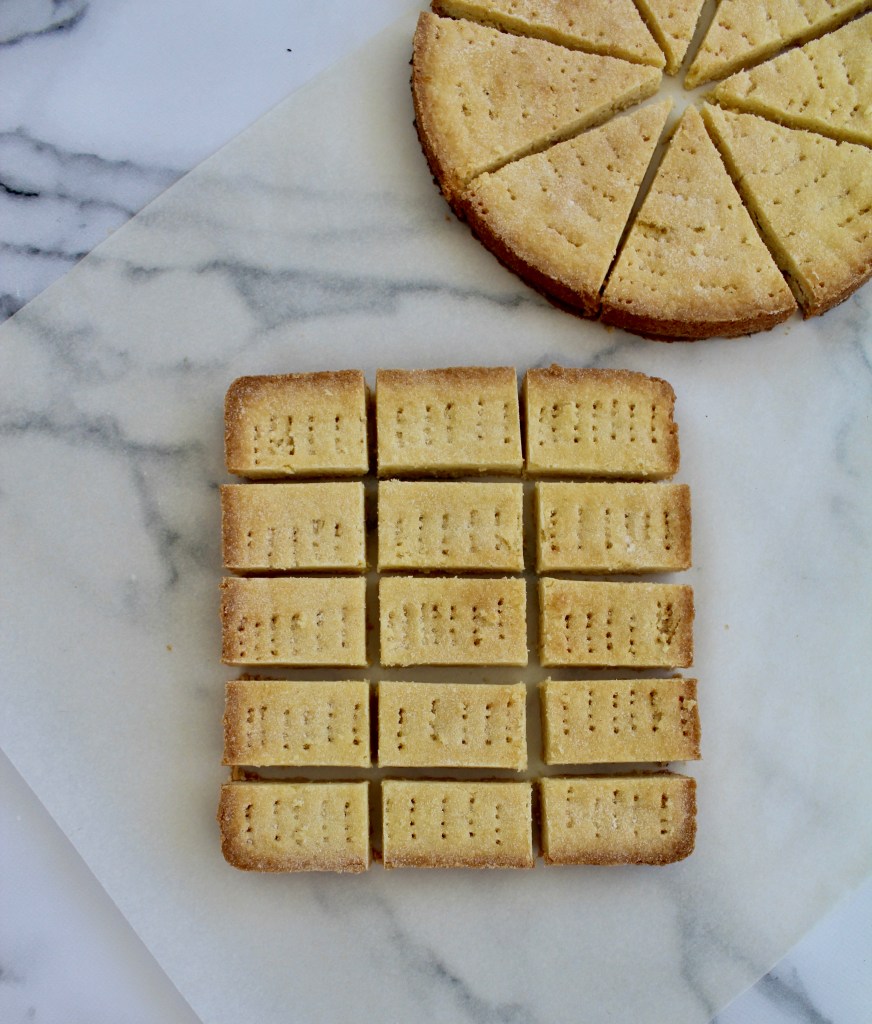
240g flour 230g butter, room temperature 120g caster sugar plus a handful or so for dusting after baking 2,5ml salt
Preheat your oven to 180℃ and spray a 20cm x 20cm square or 20cm round baking tin with cooking spray. Add the flour, butter, caster sugar and salt to the bowl of a food processor and pulse together until combined. Check that the mixture is soft and pliable and comes together in a dough when you press it together between your fingers. If not, pulse the mixture some more. Scrape the mixture into the prepared tin and use your hands to push it down firmly. Prick the shortbread with the tines of a fork, creating rows. Run the back of a knife’s blade between each row of fork tines to make cutting the shortbread easier once it’s baked. Place the baking tin in the oven and bake for 35 minutes. Take the shortbread from the oven and sprinkle with caster sugar while warm. You may also enhance the cutting lines and prick the biscuit with a fork once more. Allow the shortbread to cool completely in the baking tin before removing and slicing into squares or triangles.
Shortbread is best kept in an airtight container and will last for several weeks.
6-8 pork chops 45ml + 30ml olive oil 10ml ground turmeric 10ml salt 125ml apple cider vinegar 375ml olives, pitted and crushed 3 cloves garlic, chopped 250ml soft herbs (sage, basil, parsley, chives) chopped 30ml water
Preheat your oven to 200℃. Place the pork chops on an oven tray and drizzle the front and back with 45ml olive oil. Sprinkle the turmeric and salt on the chops and give it a rub with your hands to spread evenly. Put a cast iron pan on high heat and brown the chops on both sides. Place them back on the oven tray. Mix the 30ml olive oil, vinegar, crushed olives, garlic, chopped herbs and water together and spoon over the meat. Place in the oven and cook for 30 minutes. Serve the chops warm or at room temperature.
Preheat your oven to 160℃ and line the sides only, of a 22cm loose-bottom cake pan with baking paper. Add the biscuits to the bowl of a food processor and drizzle in the melted butter, with the engine running. Scoop the mixture into the prepared cake pan and press it evenly on the bottom. Place in the refrigerator. Put a frying pan on medium heat and add about 5ml vegetable oil to it. Add the bacon and onion to the pan and cook until done. Take the pan from the heat and set aside to cool. Add the ricotta, cream cheese, grated parmesan and eggs to the bowl of a food processor and process until you have a smooth mixture. Pour this mixture over the cooled bacon and onion and stir to combine. Spoon into the prepared base and bake the cheesecake for 45 minutes. Serve at room temperature with balsamic roasted beetroot (recipe on this site) and roasted onions.
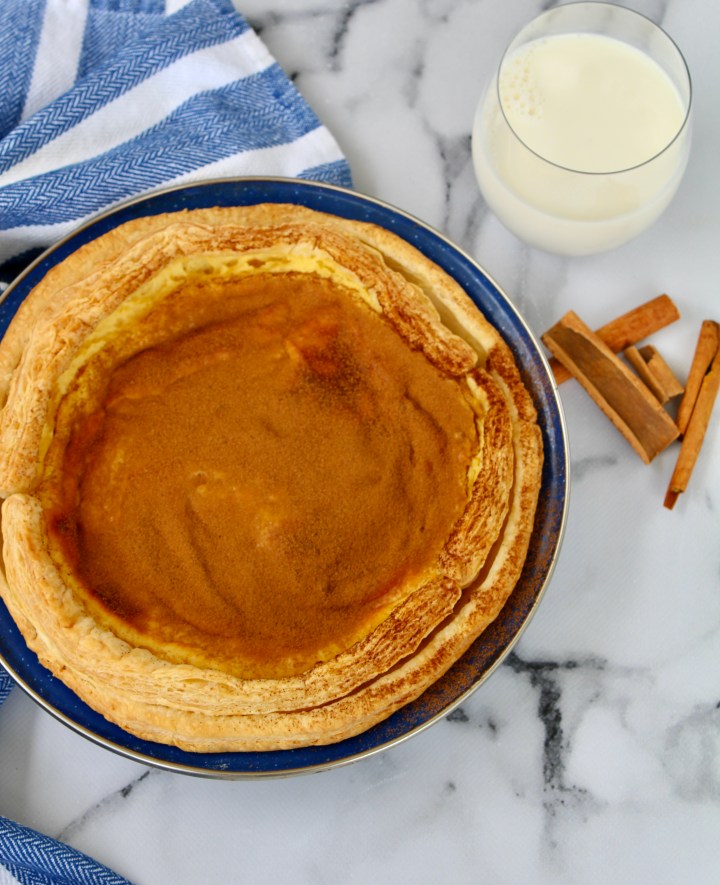
Preheat your oven to 200℃ and spray two 22cm tart tins with cooking spray. Dust a work surface with flour and roll the pastry to 3mm thickness. Line the tart tins – the pastry should be about 1cm larger that the tins to allow for shrinkage during baking. Place the prepared tart tins in the refrigerator until needed.
Pour 1 litre milk into a saucepan and add the sugar and cinnamon quill. Turn the heat on medium-high and stir the mixture until the sugar has dissolved. Heat the milk mixture until it starts forming tiny bubbles around the edges of the saucepan. Remove from the heat and take out the quill. Set aside. Add the flour, custard powder and cornflour to a mixing bowl. Drizzle in the remaining 250ml milk while whisking, to make a slurry. Add the egg yolks to the slurry and whisk together. Slowly pour the warm milk-mixture into the slurry while whisking continuously. Remember: pour slowly, whisk quickly! Pour the mixture back into the saucepan and return to a low heat. Stir the mixture until it thickens and starts to bubble. Take off the heat, add the butter and vanilla, stir through and set aside. Add the baking powder to the egg whites and beat until stiff peaks form. Fold the egg whites into the custard and divide the mixture between the two prepared tart tins. Bake the tarts in the oven for 25 minutes. Remove from the oven and immediately sift some ground cinnamon on the surface. Serve with your favourite brew of coffee.
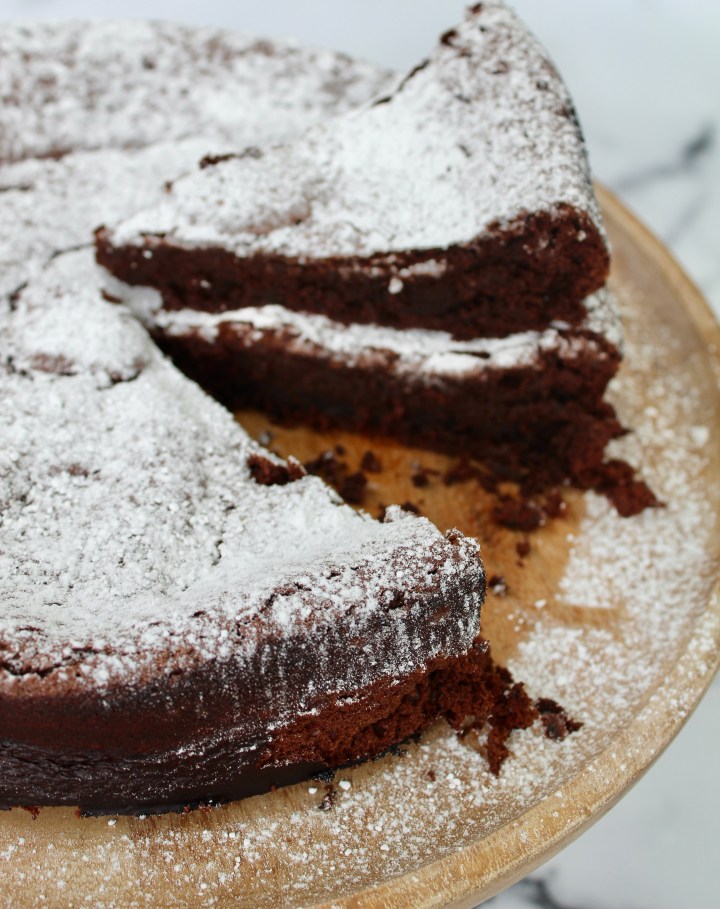
220g best quality dark chocolate (I use De Villiers Chocolate), chopped 125g butter, cubed 5 eggs, separated 190ml sugar 10ml vanilla 2,5ml salt 30ml cocoa powder
Preheat your oven to 170℃ and spray a 22cm loose bottom cake pan with cooking spray. Dust the pan with cocoa powder ensuring the bottom and sides of the pan has an even coating of cocoa powder. Set aside. Add the chocolate and butter to a heatproof bowl set over a saucepan of simmering water. Stir every now and then until the chocolate has melted completely and the mixture has amalgamated. Take the bowl from the heat and set aside to cool. Add the egg whites to the bowl of a stand mixer fitted with the whisk attachment. Beat the whites on medium until it reaches soft peak stage. Increase the mixers speed and add the sugar a spoonful at a time. Beat until medium stiff peaks and set aside. Add the egg yolks, one at a time, to the chocolate mixture and beat well with a spatula after each addition. Add the vanilla, salt and cocoa powder and mix together. Now fold in the egg whites by adding a third of the mixture at a time. Mix/fold until no white streaks are visible. Scrape the batter into the prepared pan and spread it around evenly. Bake for 50 minutes. The edges of the cake will pull away from the sides of the pan once it is done. Cool the cake in the pan before unmoulding it. Dust with icing sugar and serve.









 My Whisk and I