12 shortbread biscuits 250ml cream 5ml rose water 12 squares of Turkish delight, chopped into small pieces 1 punnet fresh raspberries a small bunch of mint leaves, finely chopped icing sugar
Line up 6 small glasses. Crush the shortbread biscuits roughly and place in a bowl. Pour the cream in to a mixing bowl and add the rose water. Whisk until medium-stiff peaks. Spoon some of the biscuit into the glasses and add 2 spoonful of cream. Top with a few raspberries and scatter some of the chopped Turkish delight and mint leaves over. Repeat the layers once more. Sift the icing sugar over the cups to serve.
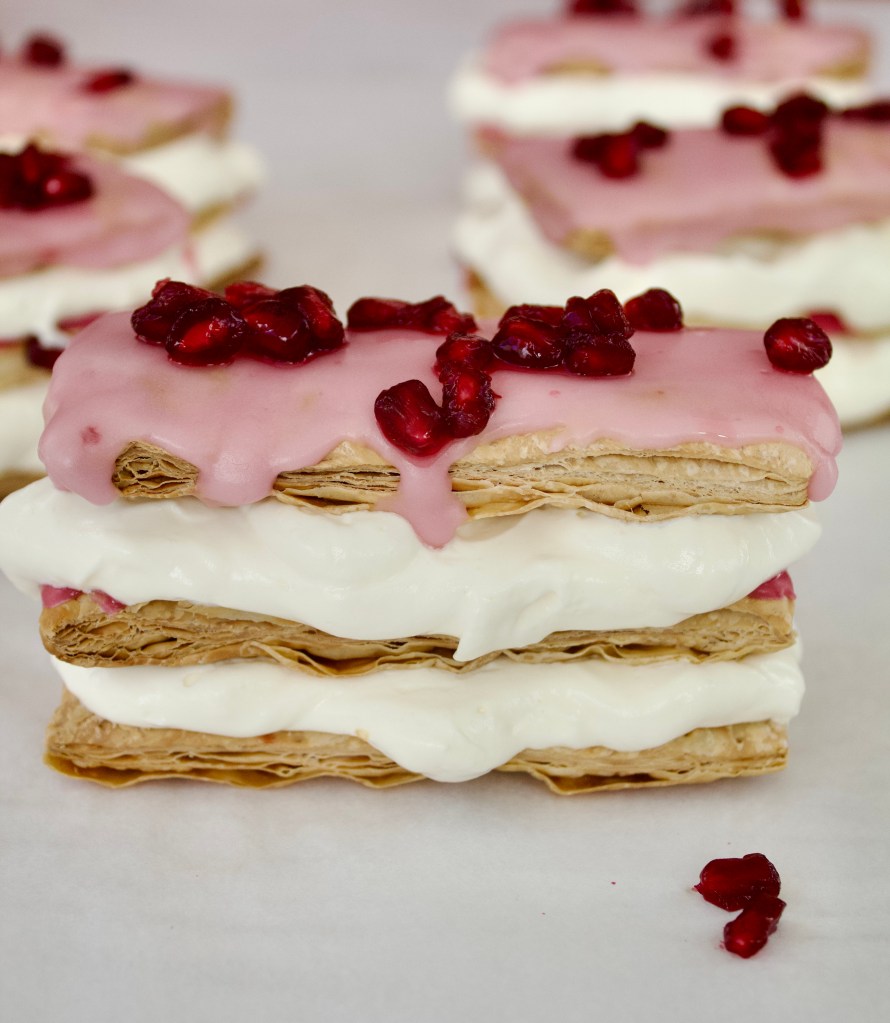
1 x 375g puff pastry 45ml pomegranate seeds + extra to scatter over 125ml + 30ml icing sugar, sifted 250ml whipping cream 110g mascarpone 10ml rosewater
Preheat your oven to 200℃ and line a baking sheet with baking paper. Lightly dust a work surface with flour and unroll the pastry. Cut into 16 rectangles, place on the baking sheet and prick the surface with a fork. Lay another sheet of baking paper over the pastry and place another baking tray on top. Bake for 35 minutes. Remove from the oven and cool on a cooling rack. Add the pomegranate seeds to a small bowl and muddle it with the back of a wooden spoon. Pour through a small sieve and reserve the juice. Add the 125ml icing sugar to the pomegranate juice and mix to a thick paste. If you need more liquid, add a few drops of water. Spoon the paste over 5 of the pastry rectangles and set aside. Add the cream to the bowl of a stand mixer fitted with the whisk attachment and whisk to soft peaks. Add the mascarpone, rosewater and 30ml icing sugar and whisk to stiff peaks. Place 5 pastry rectangles on a serving platter. Spread half the mascarpone mixture onto the pastry, place another piece of pastry on top and add the rest of the mascarpone on top. Now place the pastry with the icing sugar on top of each mille-feuille and scatter over some pomegranate seeds.
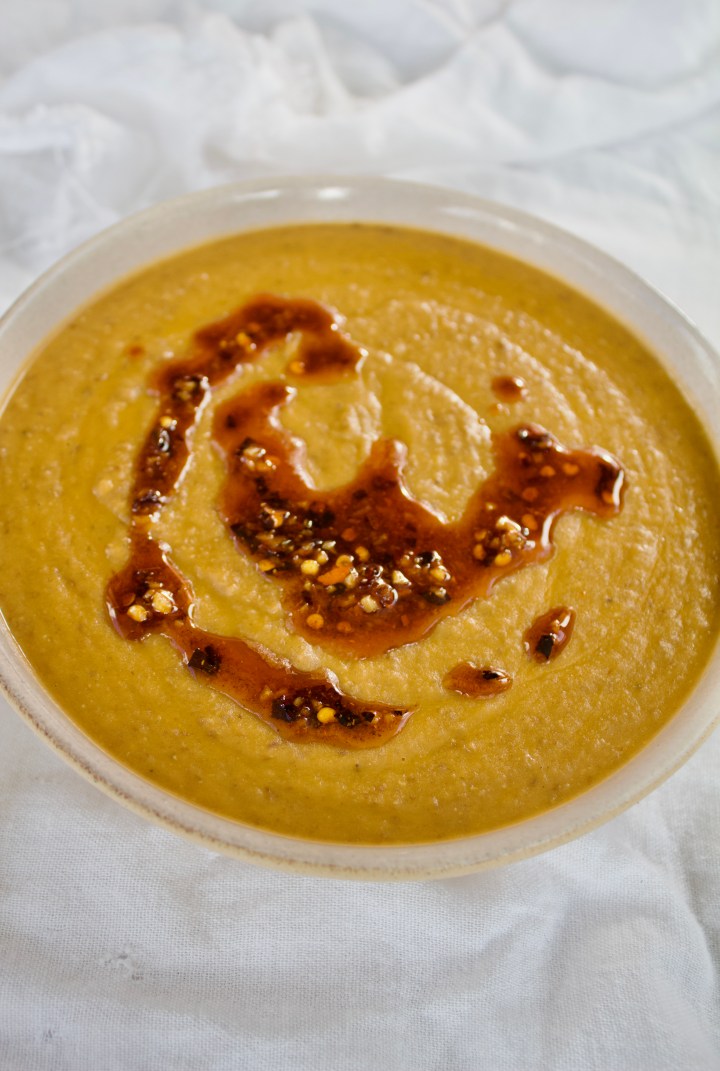
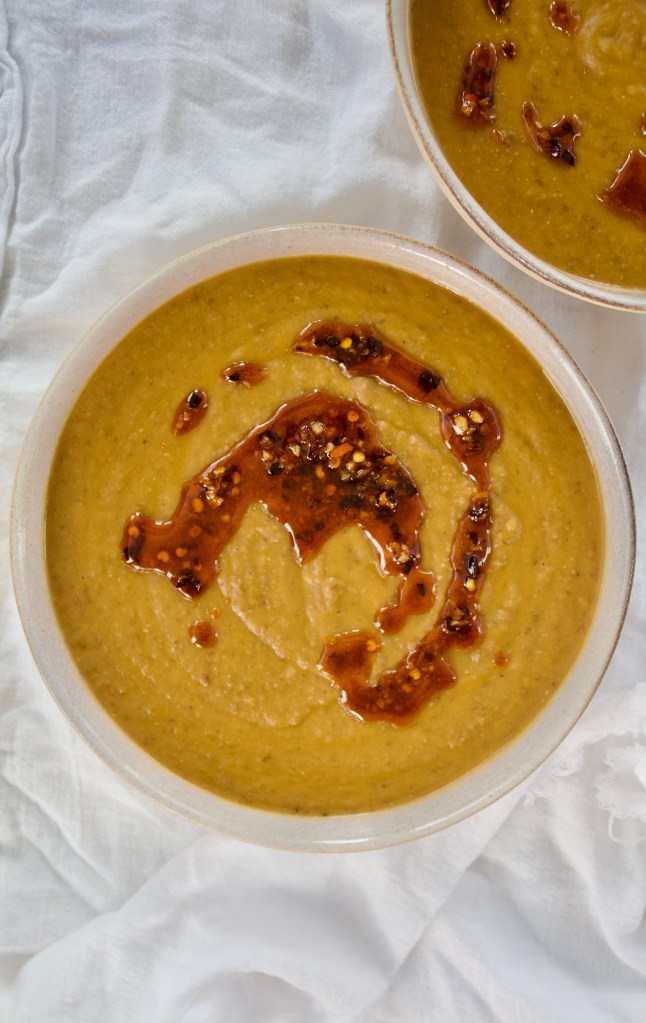
Place a large saucepan over medium-high heat and pour in 30ml of the olive oil. Add the onion and fry until translucent. Add the 2 cloves of garlic (minced) and tomato paste and stir-fry for one minute. Now add the carrots and potato and pour in the stock. Add 5ml smoked paprika, about half a teaspoon of salt and the lentils. Bring the soup to a boil, turn down the heat to a gentle simmer and cook for 25 minutes. Take the soup from the heat and blitz with an immersion blender, until smooth. Pour the remaining 30ml oil, 1 clove of garlic (minced), 5ml smoked paprika, cumin and coriander to a pan and stir-fry over medium heat for 2 minutes. Taste the soup and season with salt and black pepper. Spoon the soup into bowls and drizzle over the flavoured oil. Serve with a lemon wedge.
3 egg whites 190ml caster sugar 7,5ml rose water rose petals
Preheat your oven to 120℃ and line two baking sheets with baking paper. Trace circles with an 8cm diameter on the baking paper and then flip the baking paper over on the tray. Add the egg whites to the bowl of a stand mixer fitted with the whisk attachment. Whisk the whites to soft peaks. Turn the mixer to high and start adding the sugar one tablespoon at a time and waiting for the sugar to be incorporated before adding the next spoonful. Whisk for 5 minutes or until you have a very stiff, glossy mixture. Drizzle over the rose water and fold in with a spatula. Spoon the meringue mixture into a piping bag fitted with a 5mm nozzle. Pipe the meringue on the inside perimeter of each circle. Now spread the meringue from the outside of the circle to its centre, forming an even disc. Bake in the oven for 1 hour 15 minutes. Turn off the oven but do not open the door for another hour. Carefully remove the discs from the baking paper. Wet your finger, touch a rose petal and then stick the petal on the disc. Serve the meringue discs with a cup of mint tea or use as a decoration for a dessert.
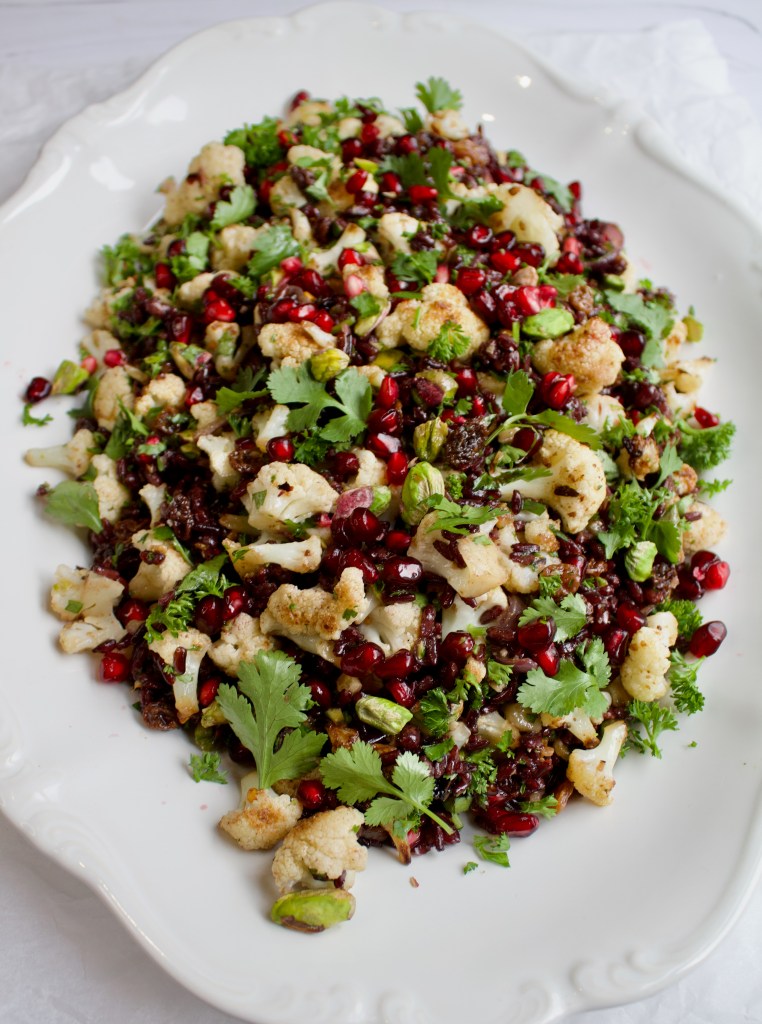
500g cooked grains (choose from or combine barley, quinoa, brown rice) 100g raisins 1 cauliflower head, cut into small florets 10ml ground coriander 2 cloves of garlic, minced 2,5ml chilli flakes 55ml + 75ml olive oil 5ml salt 1 red onion, halved and thinly sliced 30g pistachio nuts, roughly chopped 30g pomegranate seeds 15ml finely grated lemon zest 30ml lemon juice a small handful of mint leaves a small handful of parsley
Preheat your oven to 200℃. Add the raisins to a small bowl and pour 60ml boiling water over it. Set aside. Add the cauliflower, coriander, garlic, chilli flakes, 55ml olive oil and salt to a mixing bowl and toss together to coat the cauliflower florets. Tip the florets into a roasting tray and spread it out in a single layer. Pour 60ml hot water into the now empty mixing bowl, swirl it around to collect any left-behind spices and then pour it around (NOT ON TOP!) the cauliflower. Cover the tray with aluminium foil and roast for 10 minutes. Remove the tray from the oven and leave to cool. Place a pan on medium-high heat, add about 30ml oil and fry the red onion for about 15 minutes, until starting to caramelise. Add the cooled cauliflower, onion, pistachios, pomegranate, lemon zest, lemon juice, raisins and cooked grains to a mixing bowl. Drizzle 45ml olive oil over and season with salt. Mix through. Mix the mint and parsley together on a chopping board and chop roughly. Add the herbs to the rest of the salad, mix through and serve.
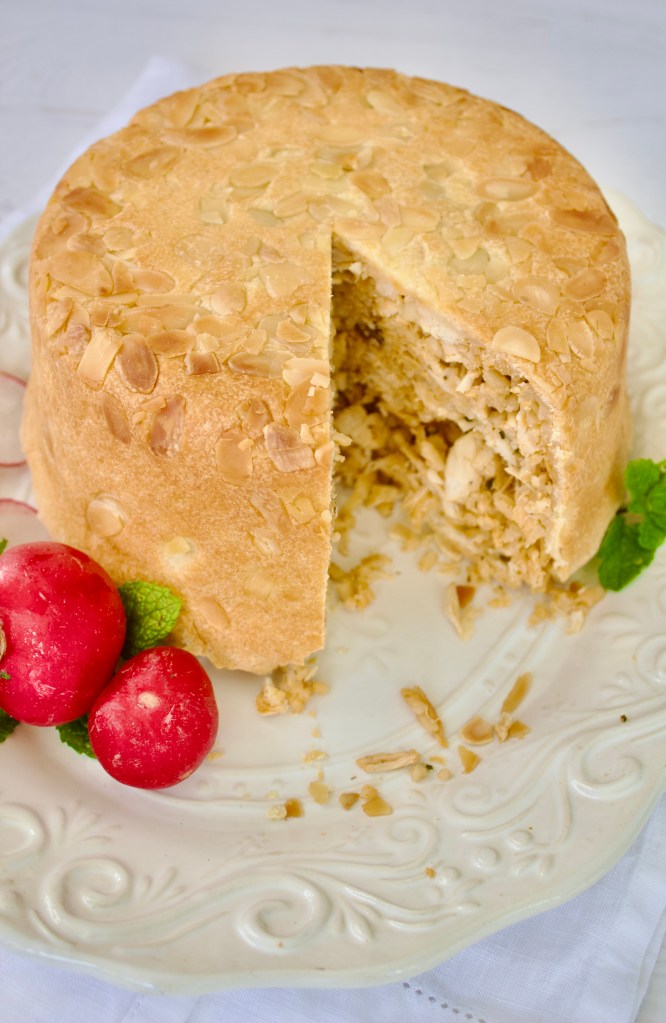
Perde Pilavi is a traditional Turkish dish made of chicken and rice flavoured with nuts, fruit and spices and wrapped up in a delicious pastry, specked with flaked almonds.
Place the chicken in a large saucepan and pour in the stock. Cook on medium heat for an hour, until done. Remove the chicken from the stock and set aside to cool slightly. Reserve the stock. Place a large frying pan on medium-high heat, add the butter and wait for it to melt. Add the almonds and stir-fry until golden. Add the rice and cook for a minute or so, stirring all the while to coat in the butter. Now add the raisins, salt, a few grindings of black pepper, paprika and mint. Pour in 660ml of the reserved stock (add boiling water if you dont have enough), stir the mixture and cover with a lid. Turn the heat to a gentle simmer and cook until the liquid is absorbed and the rice is almost cooked. Remove from the heat and set aside. Shred the chicken into strips and discard the bones and skin. Add the chicken to the rice mixture and stir through.
For the pastry: Preheat your oven to 180℃. Add the eggs, yoghurt, butter and vegetable oil to a bowl and whisk together. Set aside. Add the salt, flour and baking powder to a bowl and whisk through. Gradually add the dry ingredients to the wet. Lightly knead the pastry to bring it together. Flour a work surface and roll the pastry to a 45cm diameter circle. It should be large enough to line the dish and have enough hanging over the sides to close around the filling. Spray a 18cm diameter x 8cm deep ceramic dish with cooking spray. Scatter the almonds on the bottom of the dish. Line the bottom and sides of the dish with the pastry, leaving the overhang. Spoon the cooled rice mixture into the pastry. Fold the overhang-pastry over the filling to enclose it completely – trim off any excess. Bake for 40 minutes, until golden. Take the dish from the oven and rest it for 15 minutes. Place a serving plate over the baking dish and invert it. Serve the pilavi with a crispy salad.
Dough: 330ml warm/tepid water 5ml salt 5ml sugar 10ml instant yeast 750ml bread flour
Filling: about 350g cooked, ground beef 250ml grated mozzarella cheese a handful of basil leaves
For the dough: Add the water, salt, sugar and yeast to the bowl of a stand mixer fitted with a dough hook. Stir the mixture together until the sugar has dissolved and leave to stand for 10 minutes. Add the bread flour and mix on low speed to form a dough. Turn the speed up to medium and mix/knead for 5 minutes. You will be left with a soft but slightly sticky dough. Place the dough in a clean, oiled bowl, cover with a clean tea towel and leave to rise for 1-2 hours or until doubled in size. Preheat your oven to 240℃ and line a baking sheet with baking paper. Dust a work surface with flour and divide the dough into 6 portions. Roll out each piece of dough to form an oval. Place the dough ovals on the baking sheet and brush with olive oil. Top the dough with mozzarella and a few spoons of beef, but keep a 1cm border on the edges. Fold the edges of the dough over the filling and pinch the ends together to form a boat shape. Bake for 13 minutes. Scatter over the basil leaves. Serve warm or at room temperature.
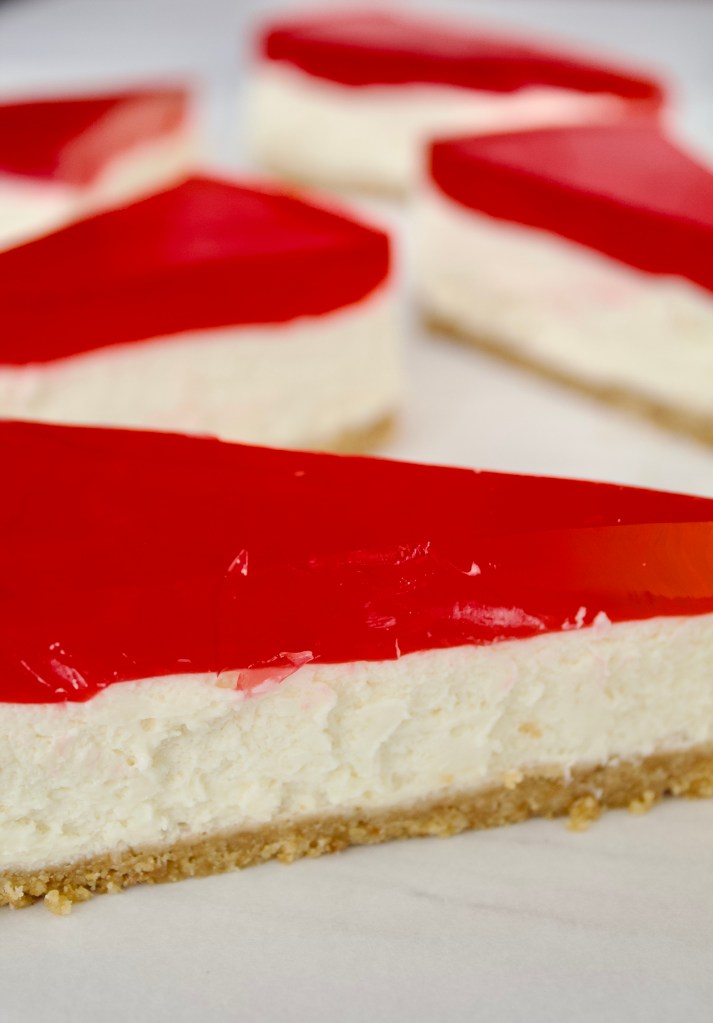
250g digestive biscuits 80g butter, melted 50ml water 10g powdered gelatine 450g cream cheese 10ml + 5ml rose water 160ml cream 2 x 80g packets jelly, cherry flavour
Spray a 22cm loose bottom cake tin with cooking spray. Break up the digestive biscuits and add them to a food processor. Blitz to fine crumbs. Melt the butter and drizzle it in with the engine running. Spoon the mixture into the prepared cake tin, spread it out evenly and press down. Refrigerate until needed. Pour the water into a smal bowl and sprinkle the gelatine on top. Set aside for 10 minutes. Add the cream cheese to the bowl of a stand mixed fitted with the paddle attachment and beat until soft. Add the icing sugar and beat until incorporated. Scrape the bowl down every now and then. Add the 10ml rose water and mix through. Set aside. Add the cream to a large bowl and whisk to form soft peaks. Fold the cream into the cream cheese mixture. Melt the gelatine in the microwave – a few seconds!!! It should be liquid and dissolved. Scoop 2 tablespoons of the cream cheese mixture into the gelatine and mix well. Now add this mixture to the cream cheese mixture and thoroughly fold through. Pour the mixture into the cake tin and refrigerate for 2 hours. Prepare the jelly according to packet instructions and stand to cool but not set. Add the 5ml rose water once the mixture is cooled and pour on to the cheesecake. Refrigerate until set.
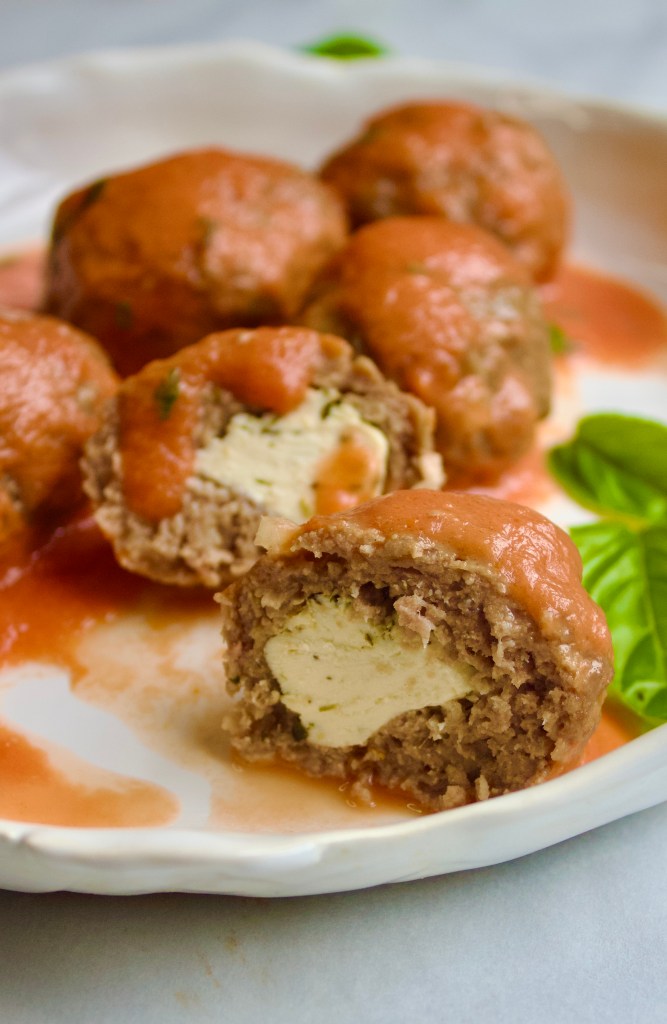
500g lamb mince 4 slices white bread, crusts removed 60ml milk 1 small onion, finely chopped 10ml chopped parsley 10ml chopped mint 2 cloves of garlic, minced 5ml salt 5ml ground cumin 5ml ground coriander 100g feta cheese, cubed (1,5cm x 1,5cm)
Sauce: 1 x 400g tin chopped tomato 5ml salt 10ml sugar 60ml cream
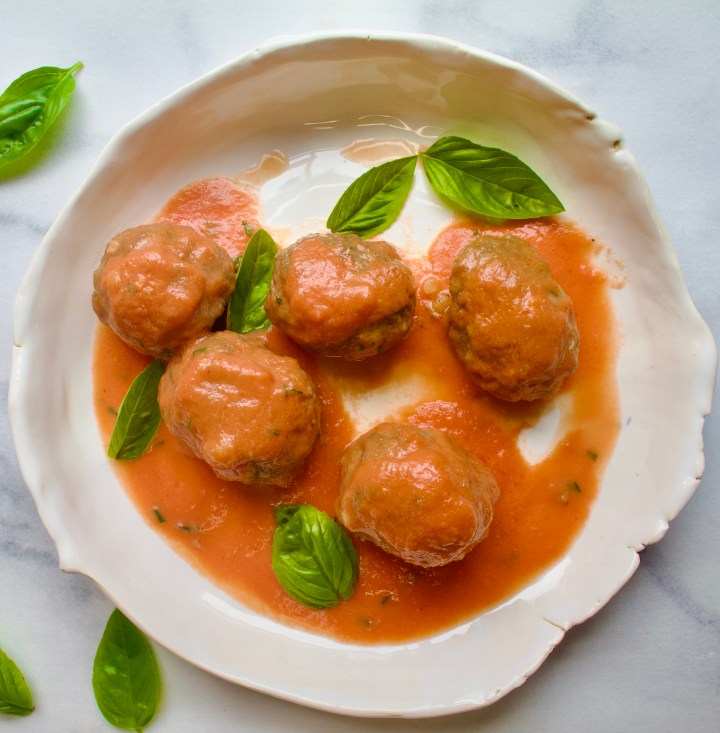
For the meatballs: Preheat your oven to 180℃. Place the minced meat in a large mixing bowl and break it up with your hands. Break up the bread, add it to the bowl and pour over the milk. Mix well. Now add the onion, parsley, mint, garlic, cumin, coriander, salt and a few good grindings of black pepper. Mix again. Scoop 30ml of the meat into your hands, form a ball and press it flat in your palm. Place a feta cube on the mince and bring the sides up and around it. Roll the mince ball between your hands to seal. Place the balls on an oven tray and keep going until you have no meat left. Drizzle a few drops of olive oil over the meatballs and bake in the oven for 15 minutes.
For the sauce: Add the tomato, salt and sugar to a liquidiser and blitz until smooth. Pour the sauce into a saucepan set over medium-high heat and simmer for 15 minutes. Add the cream, stir through and add the meatballs. Simmer for a further 20 minutes. Serve the meatballs with rice or bulgar wheat.
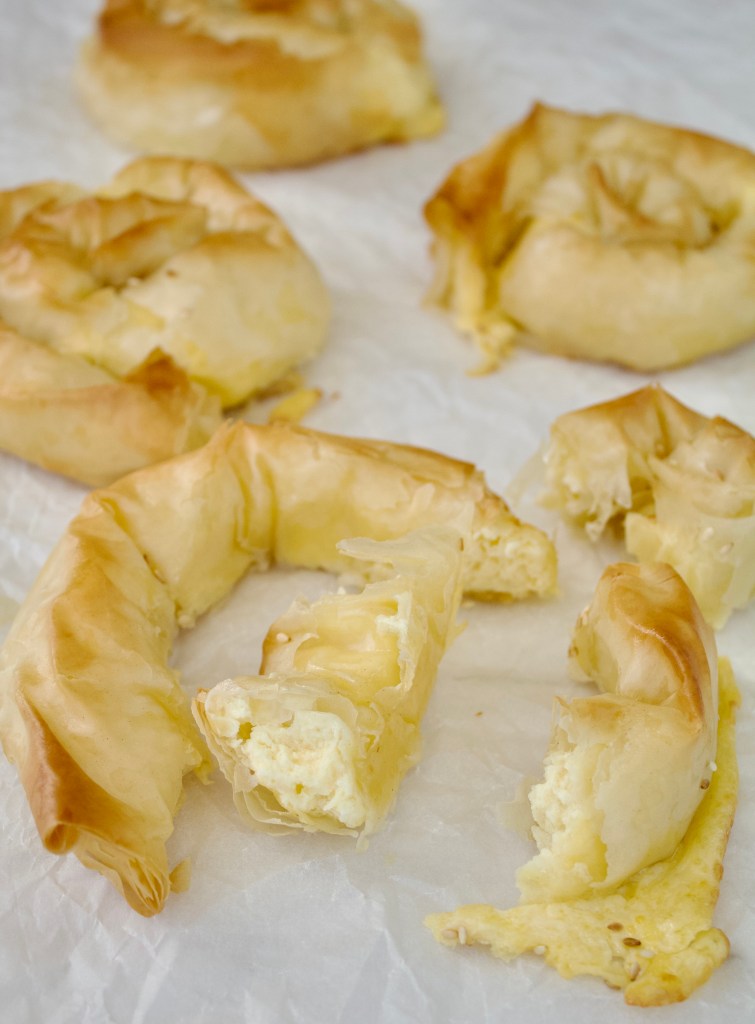
Preheat your oven to 190℃ and line a baking sheet with baking paper. Add the butter to a bowl and melt it in the microwave oven. Add the eggs to another bowl and beat together. Add the grated mozzarella and feta to the eggs and mix together. Set aside. Now lay one phyllo sheet on a work surface and brush all over with the melted butter. Lay another sheet on top and brush again. Spoon 125ml of the cheese mixture evenly across the length of the pastry, about 2cm away from the edge. Fold the edge over the cheese and roll the pastry into a long log. Now roll the log into a coil. Place the coils on your prepared baking sheet and brush with the melted butter. Bake in the oven for 25 minutes. Serve the cheese pies with a sweet sauce.









 My Whisk and I