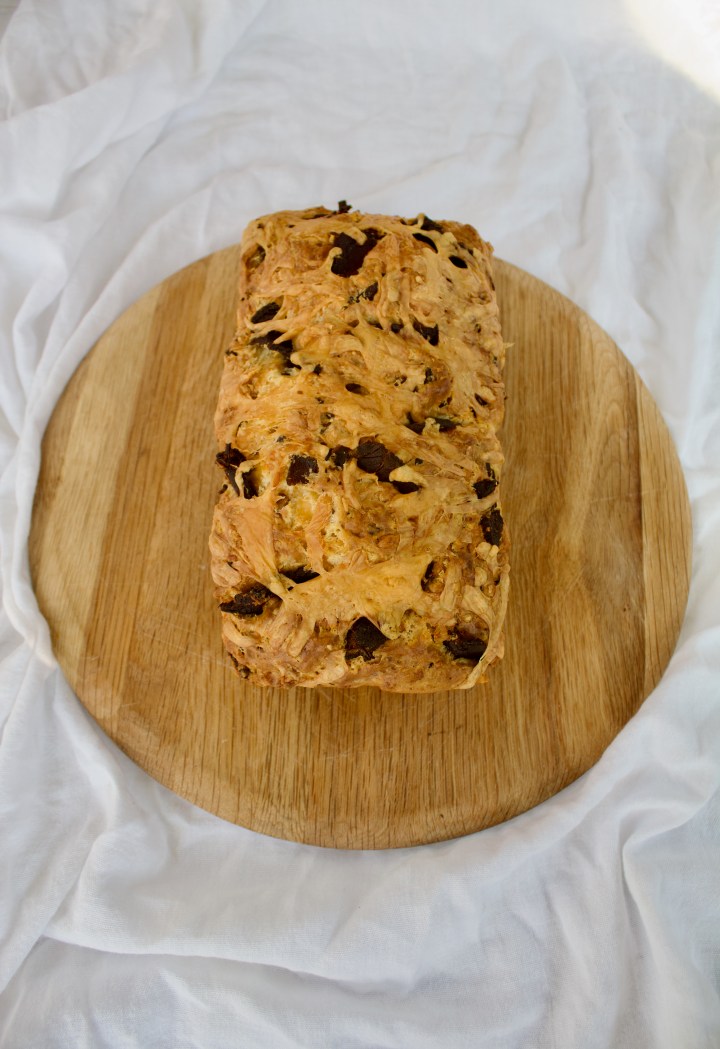
500ml flour 15ml sugar 7,5ml baking powder 2,5ml bicarbonate of soda 2,5ml salt 250ml buttermilk 1 egg 62ml vegetable oil 200g mature cheddar cheese, grated 150g biltong, sliced and chopped
Preheat your oven to 180℃ and line a 22cm x 12cm loaf tin with baking paper. Add the flour, sugar, baking powder, bicarbonate of soda and salt to a large mixing bowl and whisk together. Add the buttermilk, egg and vegetable oil to a jug and whisk together. Pour the liquid ingredients into the dry ingredients. Stir with a spatula until you can’t see any dry flour. Add the cheddar and biltong and stir really well so that the ingredients are distributed evenly. Spoon into the prepared loaf tin and level out the top. Bake in the oven for 50 minutes. Cool the bread in the baking tin for 15 minutes. Remove from the tin and cool completely on a cooling rack before slicing.
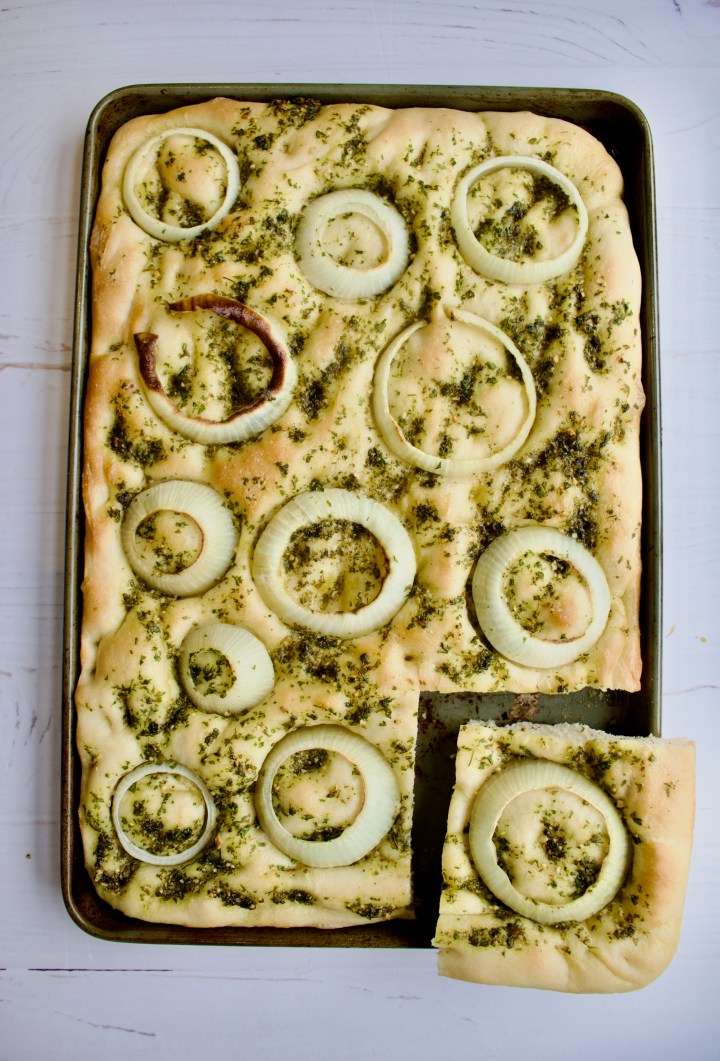
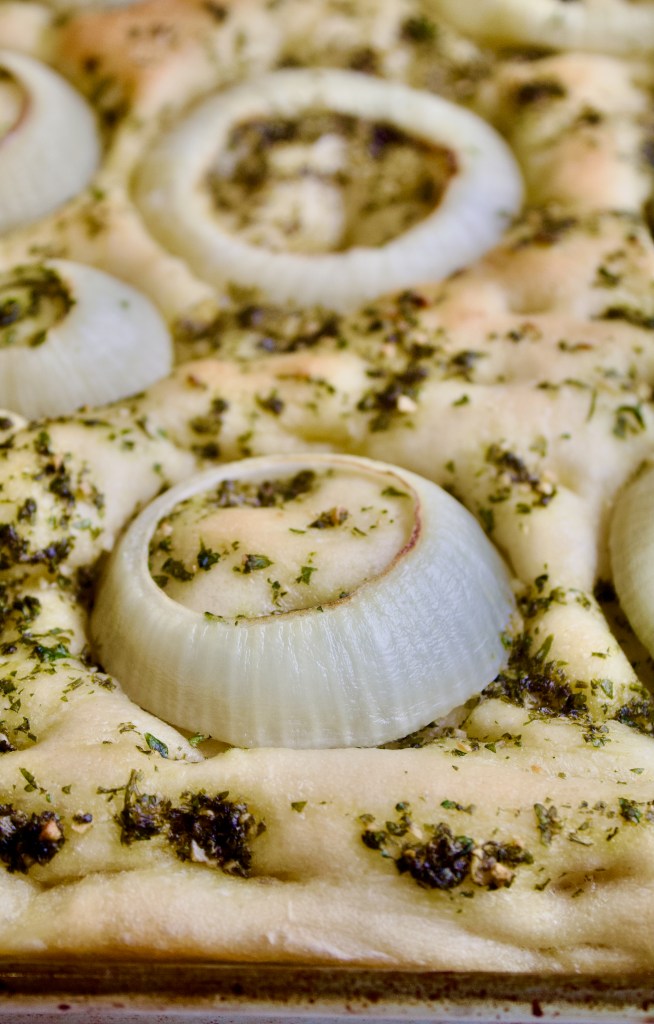
340ml lukewarm water 10g instant yeast 10ml sugar 10ml salt 20ml olive oil 500g flour Chimichurri Sauce: 60ml olive oil 15ml red wine vinegar 60ml finely chopped parsley 2 cloves of garlic, minced 5ml thyme leaves 2,5ml salt
1 onion, sliced into 1,5cm rings
Pour the water into the bowl of a stand mixer fitted with its dough hook. Sprinkle over the yeast and stir to dissolve. Set aside for 5 minutes. Add the sugar, salt and olive oil to the bowl with the yeast and stir to dissolve. Turn the mixer on a low speed and gradually add the flour. Mix/knead on medium speed for 6 minutes. Lightly oil a clean mixing bowl, place the dough in it and cover with a damp tea towel. Set aside to rise for 90 minutes.
For the chimichurri sauce: Blitz the olive oil, vinegar, parsley, garlic, thyme and salt together.
Preheat your oven to 180℃ and spray a 38cm x 23cm roasting tin with cooking spray. Place the dough in the tin and evenly spread it out by poking your fingers down into the dough. Randomly press the onion rings into the focaccia dough, cover with a tea towel and rest for another 15 minutes. Drizzle the chimichurri over the dough and bake in the oven for 35 minutes.
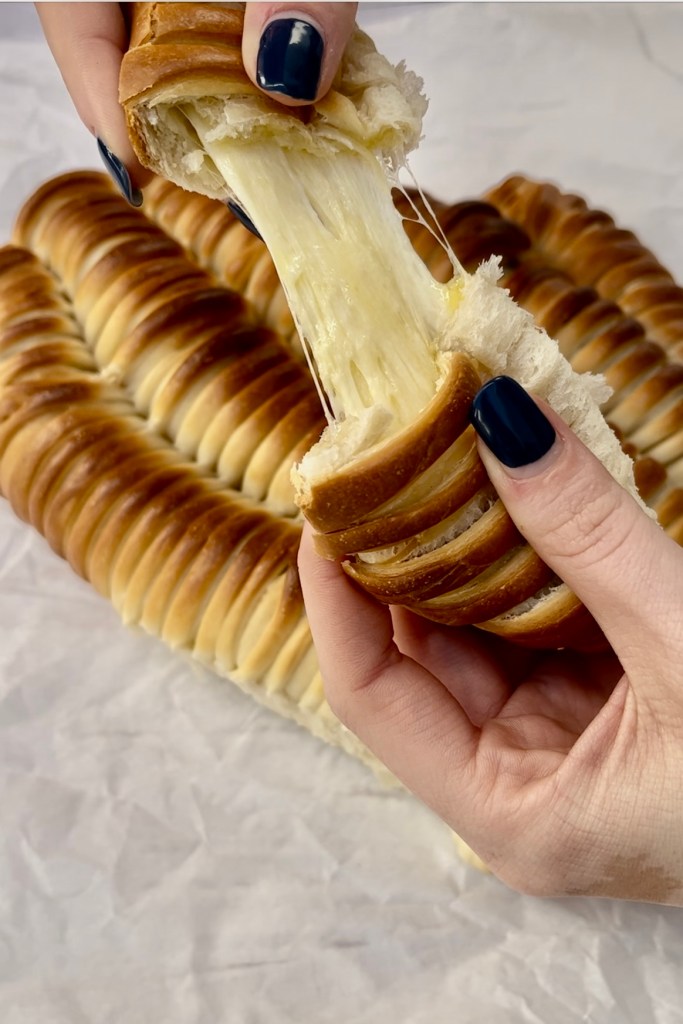
125ml warm milk 5ml instant yeast 325g flour 45ml sugar 5ml salt 95ml boiling water 30ml butter, room temperature 300g mozzarella cheese 30ml milk
Pour the milk in a bowl and sprinkle the yeast over. Stir to dissolve and set aside for 10 minutes. Add the flour, sugar and salt to the bowl of a stand mixer fitted with the dough hook. Turn the mixer on to a low speed and drizzle in the boiling water. Mix for 2-3 minutes. Turn the mixer on medium speed and add the milk and yeast mixture. Mix for another 3 minutes. Now add the butter a little at a time, with the mixer running on medium-high. Mix/knead for 10 minutes. Drizzle a few drops of oil in a large bowl , place the dough in it, cover with plastic wrap and stand in a warm place for an hour or until doubled in size. Take the dough from the bowl and place it on a work surface. Divide it into 12- 15 equal portions, cover lightly with plastic wrap and rest for 10 minutes. Grease a 22cm x 22cm dish with butter. Slice the mozzarella into sticks of 6-8cm x 1cm x1cm. Now roll the dough to a width of about 10cm x 15cm. Place a mozzarella stick on it, fold over and then cut the bottom of the pastry into thin strips. Roll the dough into a log and place in the prepared dish. Keep going until you have no dough and/or mozzarella left. Cover with a tea towel and leave to rise for 1 hour. Preheat your oven to 170℃. Brush the bread with the milk and bake for 25 minutes. Remove the wool bread, take it from the dish and serve while warm.
125ml warm milk 5ml instant yeast 625ml flour 45ml sugar 5ml salt 95ml boiling water 30ml butter, room temperature 155ml pesto 30ml milk
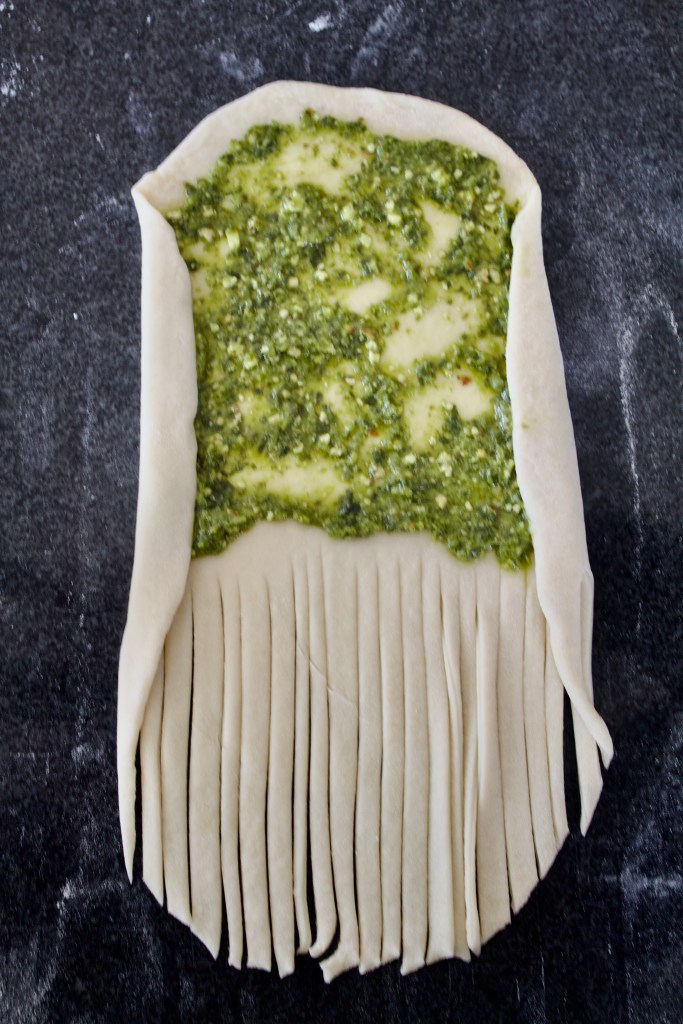
Pour the milk into a bowl, sprinkle over the yeast, stir and set aside for 10 minutes. Add the flour, sugar and salt to the bowl of a stand mixer fitted with the dough hook. Turn the mixer on a low speed and drizzle in the boiling water. Mix on medium speed for 2-3 minutes. Add the yeast mixture and mix on medium speed for another 3 minutes. Add the butter a little at a time with the machine running. Mix/knead for 10 minutes. Lightly oil a clean bowl, place the dough in it, cover with plastic wrap and stand in a warm place for one hour. Take the dough from the bowl and place it on a work surface. Gently fold the dough until deflated. Divide into 5 even portions and roll each into a ball. Cover lightly with plastic wrap and rest on the work surface for 10 minutes. Grease a 22cm loose-bottom cake tin with butter and line the base with baking paper. Set aside. Lightly flour a work surface and roll a dough ball into a 20cm long rectangle. Cut the bottom half into thin strips. (see Photograph beneath) Spoon 45ml pesto on the half that isn’t cut and spread it out evenly. Fold a 1cm edge on the sides, over the pesto and roll that section into a log. Roll over the part that are cut into strips. Repeat this process with the other 4 dough portions. Place the logs on the outside perimeter of the prepared cake tin. Cover with plastic wrap and proof in a warm area for 1 hour. Preheat your oven to 170℃. Brush the bread with milk and bake for 25 minutes. Remove from the oven, stand for 10 minutes and remove from the baking tin. Cool on a wire rack. The bread is easily broken into portions and is delicious served slightly warm.
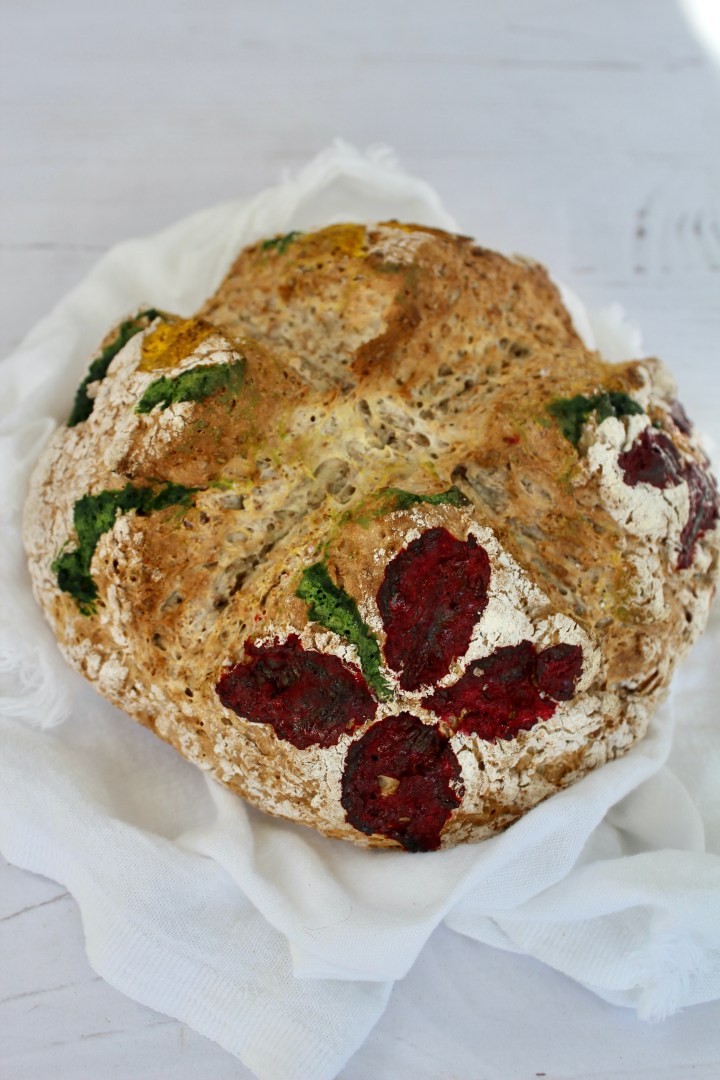
250g wholewheat flour 250g cake flour 5ml bicarbonate of soda 5ml salt 420ml cultured buttermilk edible food colourant paste if you want to decorate the bread
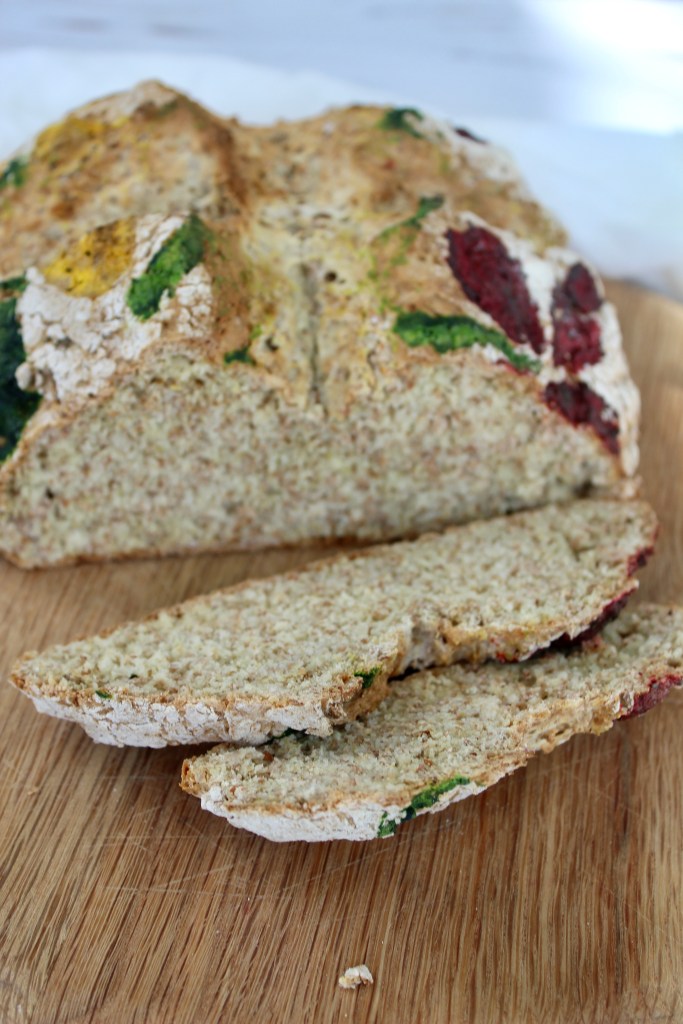
Preheat your oven to 200℃ and line a baking sheet with baking paper. Add the two flours, bicarbonate of soda and salt to a mixing bowl. Pour in the buttermilk and stir the ingredients until it comes together as a dough. Flour a work surface and tip the dough on it. Gently roll and fold the dough to form a ball shape – do not knead!! Place the shaped bread on the prepared baking sheet and dust off the excess flour with a pastry brush. If you would like to paint on the bread, now is the time. I used a paste colourant that I normally use to colour cake icing. Simply paint directly on the bread and voila!! Now make two cross cuts in the bread – be careful not to cut straight through. Cover with a tea towel and allow to rest for 15 minutes – If you are not painting and fiddling, allow the bread 30 minutes. Bake in the preheated oven for 30 minutes. Cool the quick bread completely before slicing.
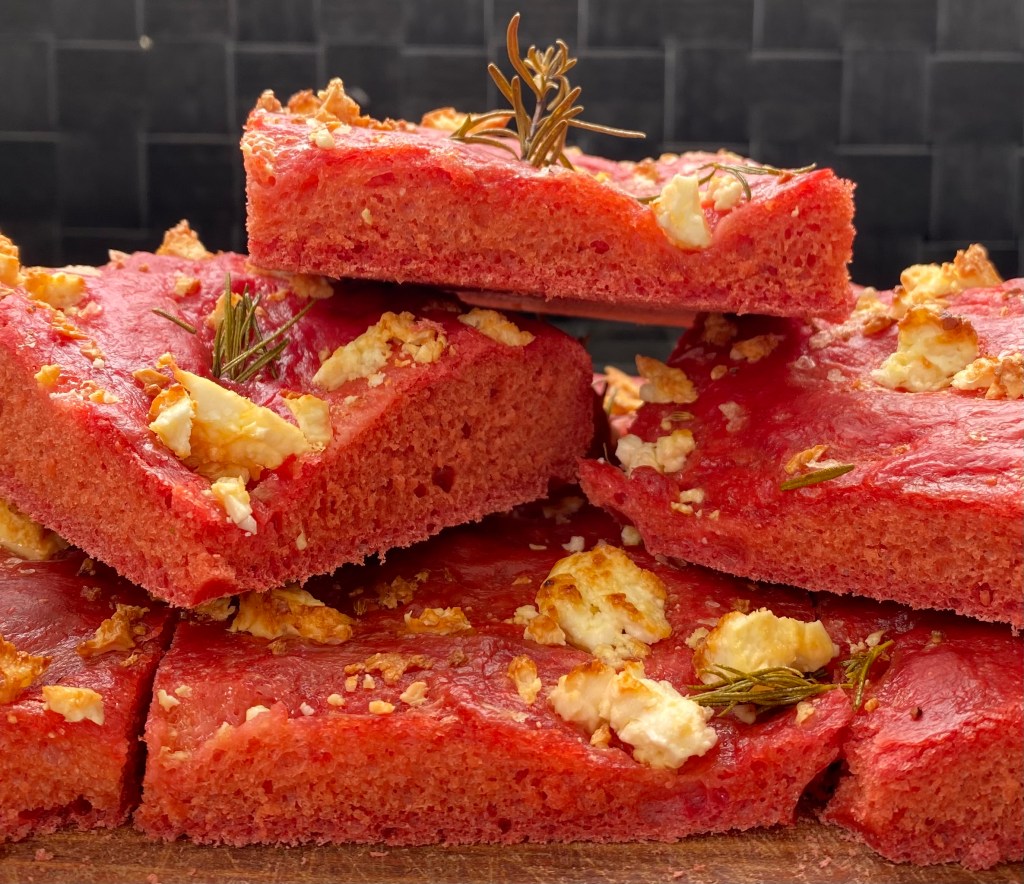
4 – 5 beets 340ml water and beetroot-water, lukewarm 10g dry yeast 10ml sugar 10ml salt 20ml olive oil 500g cake flour 100g feta cheese, crumbed rosemary sprigs extra olive oil to drizzle
Peel the beetroot and cut it into chunks. Cover with water and cook until a sharp knife easily pierces the beet chunks. Remove the beetroot from the cooking liquid, but reserve the liquid. Mash enough of the soft beetroot so that you have 45ml of pulp. (Keep the rest of the cooked beetroot in the refrigerator and add it to a salad). Measure 340ml of the beetroot water in a jug. If you don’t have enough, fill it to measurement with tap water. Warm the water so that it is lukewarm. Add the yeast, sugar and olive oil to the water and stir to dissolve. Set aside. Add the flour and salt to the bowl of a stand mixer fitted with the dough hook and mix on low speed. Add the yeast mixture and the 45ml beetroot pulp and turn the mixer to medium speed. Knead for about 4 minutes. Transfer the dough to an oiled bowl and cover with a clean tea towel. Set aside to rise for 1 -2 hours.
Preheat your oven to 180℃ and spray a 38cm X 25cm baking tray with non-stick spray. Transfer the dough to the baking tray and gently start spreading it by pushing down on it with the tips of your fingers. Keep pushing and prodding the dough until it fills the entire tray. Break the feta and spread over the dough. Add a few sprigs of rosemary and then drizzle a generous amount of olive oil over the dough. Lightly cover the bread with a plastic bag and allow to rise for about 20 minutes.
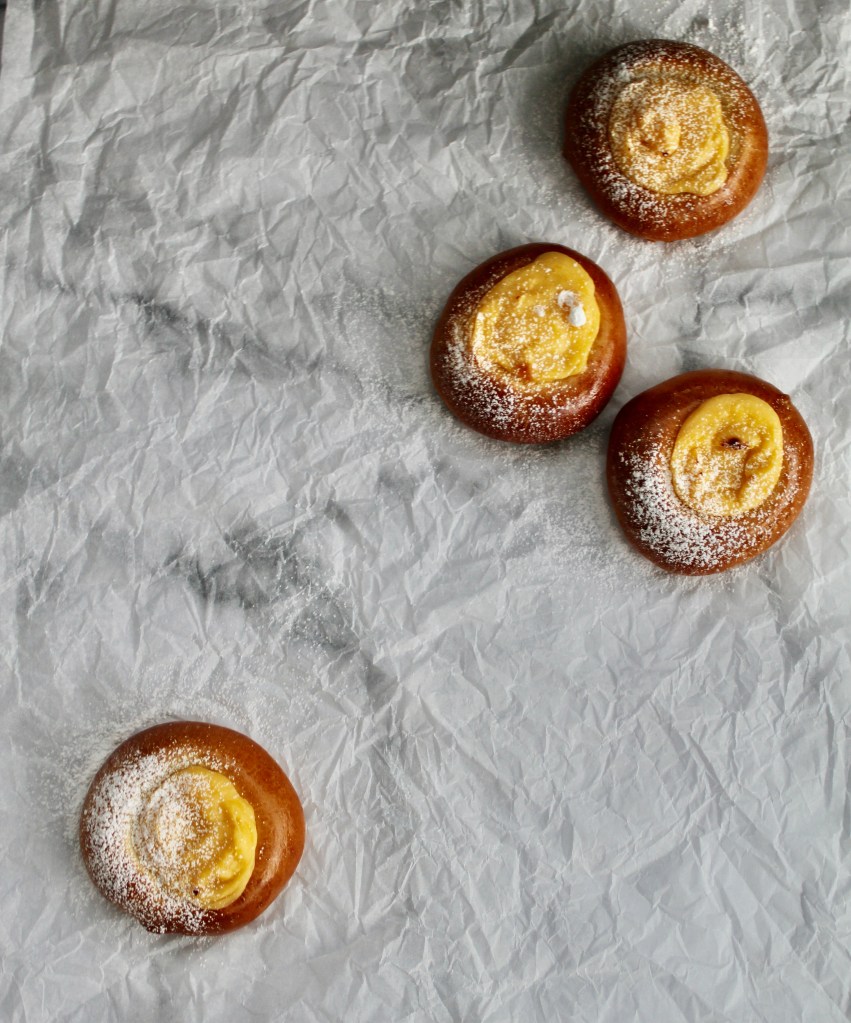
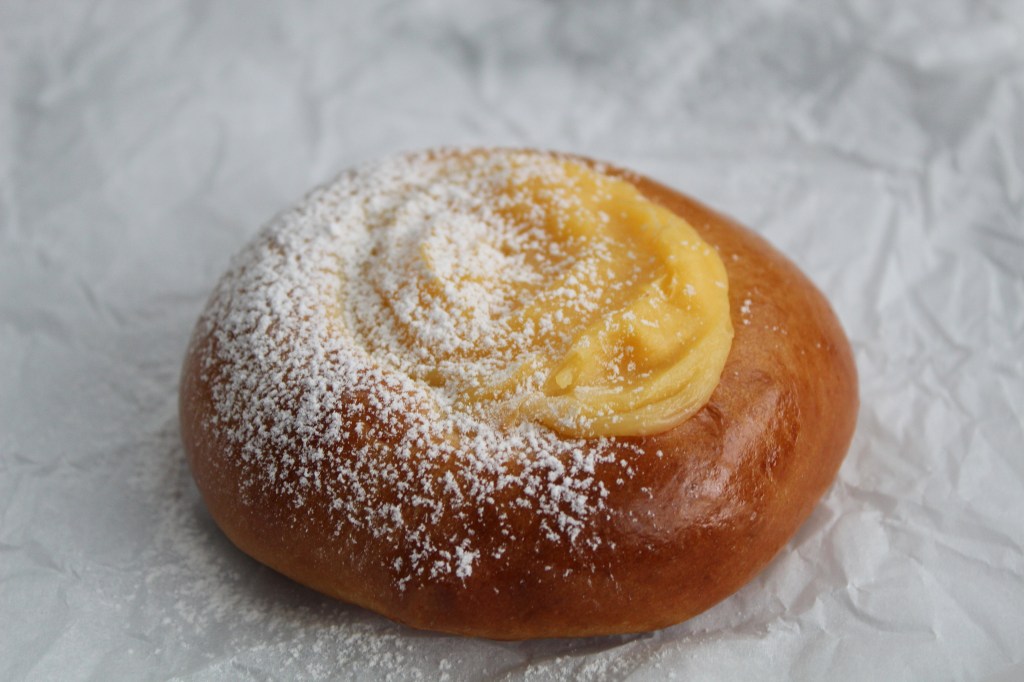
Who can say no to an espresso and pain à la crème on a sidewalk in Paris? I assure you, you might be in your own home but your tastebuds will be fooled into believing you were there….
For the buns: Line a large baking sheet with baking paper and put aside. Add the flour and salt to the bowl of a stand mixer fitted with the dough hook. Warm the milk until tepid and pour it into a mixing bowl. Add the butter, instant yeast and sugar to the milk and stir until the sugar has dissolved. Turn the mixer on to a low speed and add the liquids. Mix/knead for about 3 minutes. The dough will be very sticky! Turn the mixer to medium speed and knead for another 6 minutes. You are aiming for a soft, smooth, elastic dough. Divide the dough into 10 equal pieces – weigh them on a scale, they should be around 60g each. Roll each portion into a ball and place on the prepared baking sheet. Flatten the dough ball slightly with your hand. Now make an indent with a small cup/glass, pushing down onto the dough. Spray some plastic wrap with cooking spray and cover the buns lightly. Set aside in a warm place for 90 minutes.
For the crème pâtissière: Add the corn flour to a small bowl and pour a small amount of milk in to the bowl while stirring. You want to make a slurry, which is basically a runny, pourable paste. Put aside. Add the egg yolks and 50g caster sugar to a mixing bowl. Stir the corn flour slurry into the egg mixture. Set aside. Pour the milk into a small saucepan and add the other 50g caster sugar. Place the saucepan on medium heat and stir until the sugar has dissolved. Take the saucepan from the heat as soon as tiny bubbles start to appear around the edges of the pan. Drizzle the warm milk mixture into the egg mixture while whisking vigorously. Pour slowly, whisk quickly! Now pour the mixture from the mixing bowl, back into the saucepan and place it on a medium-low heat. Stir continuously until the mixture has thickened. Allow to cook for 30 seconds before removing it from the heat. Add the vanilla and stir to mix. Pour the crème pâtissière into a shallow bowl and place some plastic wrap directly on the surface. This will prevent a skin from forming while the custard cools down. Place in the refrigerator and allow to cool completely.
Preheat your oven to 180℃. Take the same cup/glass that you used to make the indents in the buns, and press down onto the exact same area again. Brush the buns with egg wash. Whisk the cold créme pâtissière to soften it. Spoon about 20ml or more if you can, of crème pâtissière into each round indent you have made. Bake the custard buns for 20 minutes. The custard filling will rise up as it bakes but do not panic, it will fall back on itself once it cools. Cool the buns to room temperature. Sieve with icing sugar and serve with coffee.
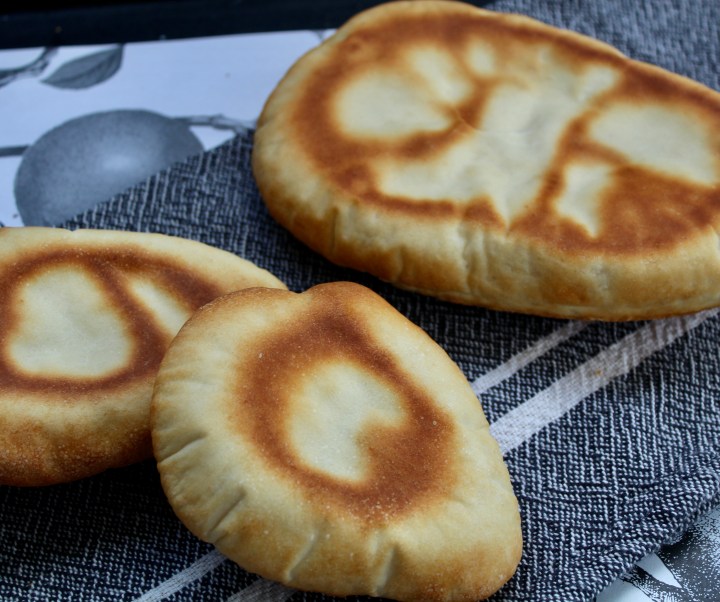
Although Naan is a flatbread it is also known for its softness and has a bit more “body” to it than other flatbreads. This recipe includes yoghurt and yeast which makes this a pillowy, soft bread with loads of taste and deliciousness! Makes four large breads or 8 “hand-sized” flatbreads.
Add the flour and salt to the bowl of a stand mixer fitted with the dough hook. Pour the milk into a glass jug and warm it slightly in the microwave oven. It should be tepid. Add the sugar, yoghurt and melted butter to the milk and stir until the sugar has dissolved. Stir in the yeast and set aside for 5 minutes. Start the mixer on a slow speed and then add the liquid ingredients. Mix for 2 minutes on slow speed until the dough comes together. Turn the mixer to medium speed and knead the dough for another 5 minutes, until smooth and elastic. Lightly oil a large mixing bowl and place the dough in it. Cover with plastic wrap and a clean tea towel and set aside to proof for an hour or until doubled in size.
Preheat your oven to its hottest setting. Place an empty baking sheet in the oven so that it can heat up. Knock down the dough and divide it in 4 portions for large breads or 8 equal smaller portions. Roll the dough into a disc shape with a rolling pin or the traditional tear shape: the important thing is for the dough to be about 5mm thick. Open the oven door and quickly place 3/4 of the breads onto the preheated baking sheet and immediately close the oven door. Bake the breads for 3 minutes, open the door and flip them. Cook this side for another 3 minutes. The naan will puff up and look like pita breads but once it cools it will fall back on itself. Take the cooked breads out of the oven and cover them lightly with a tea towel. Keep going until all the breads are baked. You may serve the naan as soon as they are cool enough to handle.
This recipe provides a quick method for a rye bread with loads of flavour. The addition of buttermilk gives the typical tangy taste that one associates with a traditional rye and adds to a really good texture. This recipe makes two medium-sized, oblong breads.
Add the flours and salt to the bowl of a stand mixer fitted with the dough hook. Add the yeast, water, sugar, buttermilk and melted butter to a separate bowl and whisk together to dissolve the sugar and yeast. Turn the mixer on to a low speed and add the liquids. Mix/knead for 7 minutes. Place the dough in a lightly greased bowl, cover with plastic wrap and let rise in a warm place until double the volume. Preheat your oven to 190℃ and line a large baking sheet with baking paper. Knead the dough down by hand for 2 minutes. Divide the dough in half and shape two oblong loaves. Place the shaped dough on the prepared baking sheet, cover with oiled plastic wrap and allow to proof until almost doubled in size. Brush the bread with egg white or water for a shiny crust. Make 4 diagonal, shallow cuts in the top of the bread. Bake the breads for 30 minutes. Cool on wire racks until completely cold.
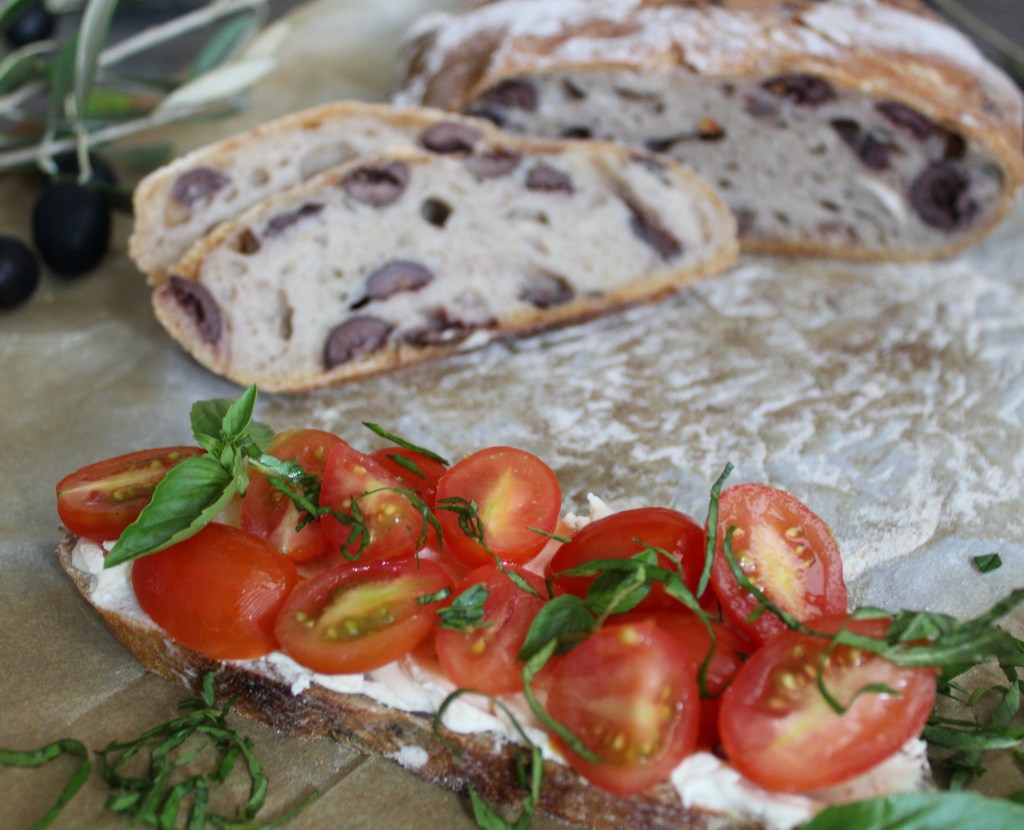
This bread involves absolutely no kneading or fussing and I guarantee you that it will be one of THE best olive breads you have ever tasted.
360g bread flour 1,2ml instant yeast 10ml salt 310ml tepid water 250ml olives, stoned and sliced in half
Add the flour, yeast and salt to a large mixing bowl. Pour the water into the bowl and mix. Add the olives to the dough mixture and make sure they are evenly distribute – squish them with your hands. Cover the bowl with a tea towel and leave at room temperature to rest for about 18 hours.
Flour a working surface and scrape the dough onto it. Form the dough into a ball shape and place it onto a square of baking paper. Cover with a tea towel and allow to rest for another hour.
Preheat your oven as well as a dutch oven to 230℃. (A dutch oven is simply a cast iron pot with a tight-fitting lid) Once the oven temperature is reached, remove the dutch oven and lift the bread in the paper, into the dutch oven. Replace the lid of the dutch oven and immediately place the bread into the oven. Bake for 30 minutes, remove the lid of the dutch oven and bake for another 25 minutes. Take the bread from the oven an cool for about ten minutes before removing it from the dutch oven. Cool the bread completely before slicing.









 My Whisk and I