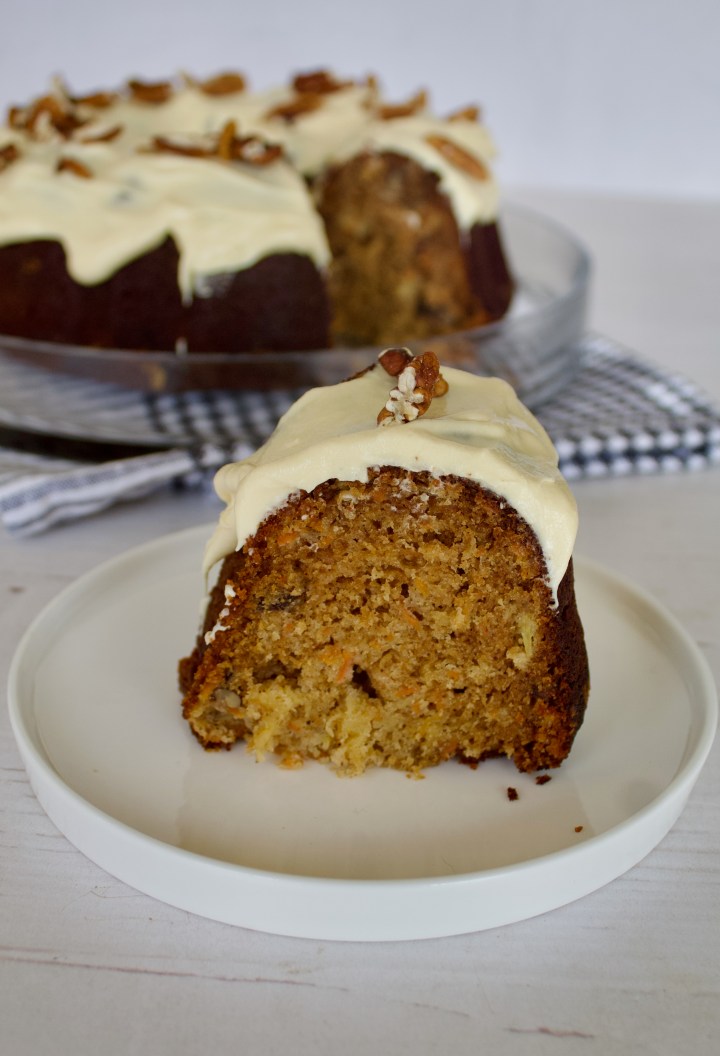
625ml flour 10ml baking powder 7,5ml bicarbonate of soda 15ml ground mixed spice 5ml salt 375ml brown sugar 310ml sunflower oil 62ml smooth apricot jam 4 eggs 500ml grated carrot 1 x 440g tin of crushed pineapple, drained 125ml pean nuts, chopped
Preheat your oven too 190℃ and spray a ring tin with cooking spray. Coat the sprayed tin with dried breadcrumbs and shake out the rest. Set aside. Sift the flour, baking powder, bicarbonate of soda, mixed spice and salt into a bowl. Set aside. Add the sugar and oil to the bowl of a stand mixer fitter with the paddle attachment and beat on high speed for 2 minutes. Add small amount of the apricot jam to the mixture with the machine running on medium speed. With the mixer still running, add the eggs one-by-one. Scrape down and mix on high speed for a minute or so. Add the carrot, pineapple and nuts and mix on a low speed until the ingredients are well incorporated. Take the bowl from the mixer and add the flour mixture. Fold together until fully incorporated. Pour the batter into the prepared baking tin and bake for 45 minutes. Remove from the oven and allow to stand on a cooling rack for 10 minutes before inverting the cake onto a serving platter. Cool the cake completely before icing.
Cream Cheese Icing: 60g butter, room temperature 125g cream cheese, room temperature 30ml milk 2,5ml vanilla 125g icing sugar, sifted
Beat the butter and cream cheese together until soft and fluffy, scraping down every now and then. Keep the mixer running and drizzle in the milk and vanilla. Add the icing sugar a spoonful at a time until you have a smooth mixture. Spread the cream cheese icing on the cake and scatter a handful of pecan nuts over.
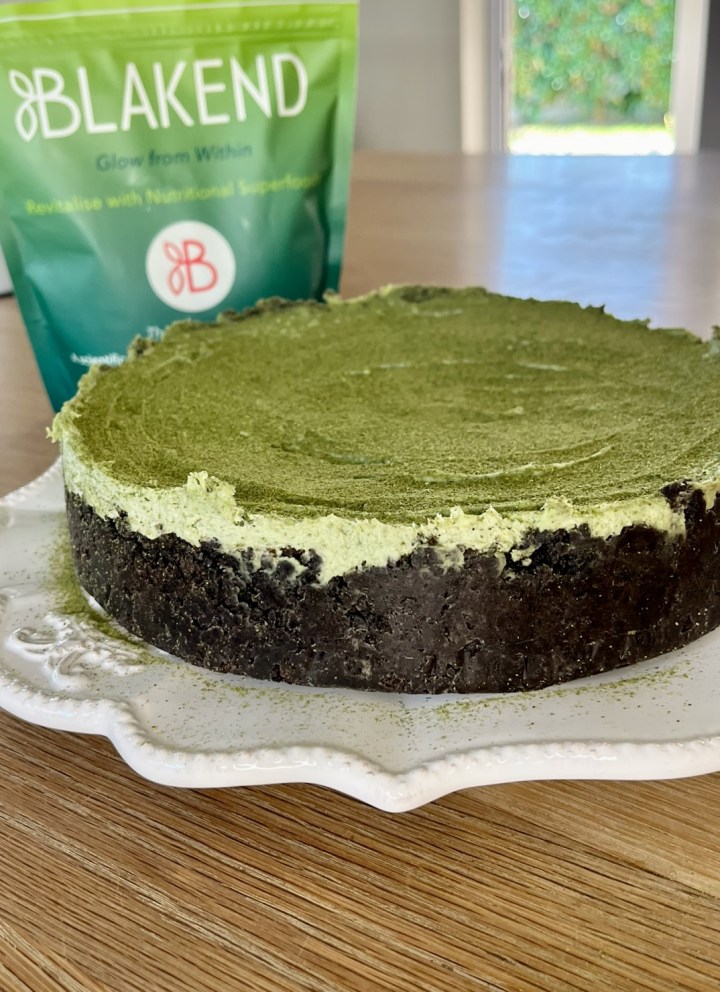
260g oreo biscuits 115g butter, melted 900g cream cheese, room temperature 83ml sour cream 15ml lemon juice 45ml matcha powder or protein shake 120g icing sugar, sieved 15ml vanilla 125ml whipping cream
Break up the Oreo biscuits and place them in the bowl of a food processor. Process on the pulse setting until the biscuits are broken down to crumbs. Drizzle in the butter while the engine is running. Sprinkle the sugar over the crumb mixture and stir through. Tip the mixture into a 22cm loose-bottom cake tin and press into the bottom and sides. Freeze the crust while preparing the filling. Add the cream cheese to the bowl of a stand mixer fitted with the paddle attachment and beat until soft. Add the sour cream, lemon juice, matcha powder, icing sugar and vanilla and beat on high speed for one minute. Scrape down the bowl and beat for another 1-2 minutes. Set aside. Pour the cream into a clean mixing bowl and whisk to stiff peaks. Fold the whipped cream into the cream cheese mixture. Remove the crust from the freezer and spoon the filling into it. Smooth the top and cover the cake tin with plastic wrap. Refrigerate for 6 hours. Sprinkle/sift over the macha and slice to serve.
Preheat your oven to 180℃ and line the bottom and sides of a 22cm diameter loose-bottom cake tin, with baking paper. NB: the paper should stick 10cm above the rim of the cake tin as the cake will rise up. Sprinkle 30ml of the sugar and 2,5ml of the ground cinnamon on the bottom of the baking tin and then set it aside. Place a saucepan on medium-high heat and pour in the 1 litre milk, butter, 250ml sugar and another 2,5ml cinnamon. Remove the saucepan from the heat as soon as small bubbles start appearing on the sides of the pan. Add the cornflour, flour, salt, egg yolks and 250ml milk to a bowl and whisk together. Drizzle the milk into this mixture while whisking. Pour the mixture back into the saucepan and place it over medium heat. Stir the mixture until it thickens and has a custard consistency. Remove from the heat. Whisk the egg whites to stiff peaks and fold it into the custard. Gently pour the custard into the prepared cake tin. Sprinkle the leftover 30ml sugar and 2,5ml cinnamon over the batter. Bake the military in the oven for 50 minutes. Remove and cool completely before serving.
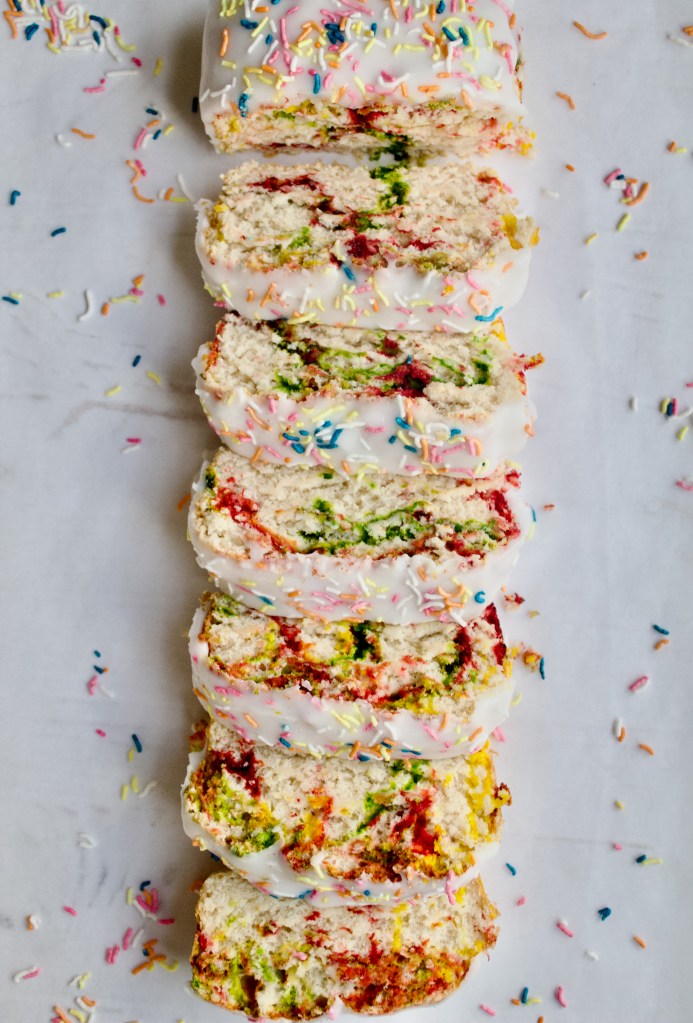
300g ice cream 225g self-raising flour food colouring, 3 colours of your choice 250ml icing sugar, sifted vermicelli sprinkles
Preheat your oven to 200℃ and line a 22cm x 12cm loaf tin with baking paper. Scoop the ice cream into a mixing bowl and allow it to melt. (You may melt it in the microwave as long as you don’t allow it to become hot). Beat with an electric whisk until it is really fluffy. Sift the flour over the ice cream and fold it in until well combined. Spoon the batter into a loaf tin and randomly drip some food colouring on to the batter. Swirl the colouring through with the tip of a knife. Bake the loaf for 30 minutes. Remove from the oven and cool on a cooling rack. Sift the icing sugar into a bowl and add 30ml of boiling water. Mix through and pour over the top of the loaf, allowing it to run down. Sprinkle the vermicelli over and allow 20 minutes to set. Slice and serve.
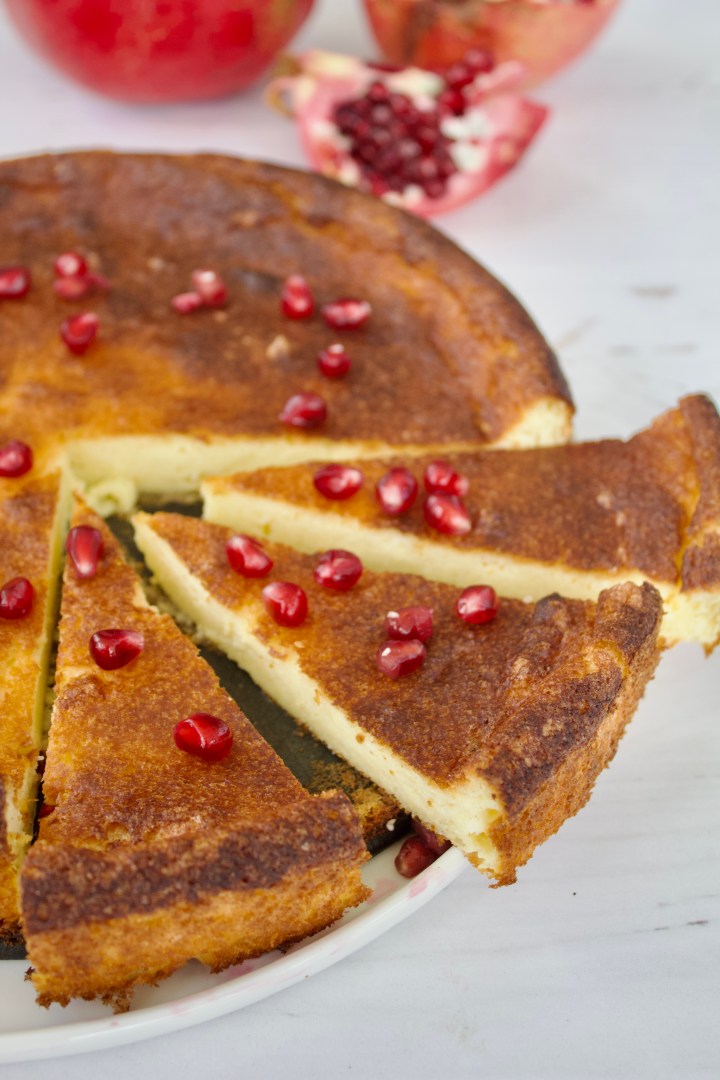
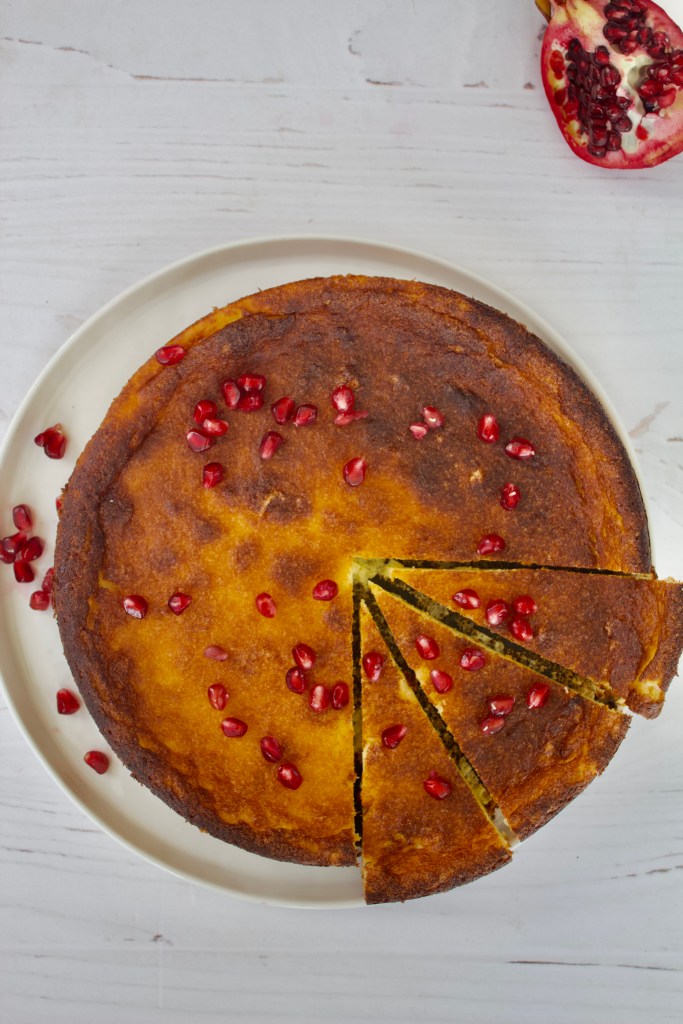
4 eggs, separated 100g granulated sugar 45mll flour 400g greek yoghurt grated zest and juice of 1 lemon a pinch of salt
Preheat your oven to 180℃ and spray a 22cm loose-bottom cake tin with cooking spray. Add the egg whites to the bowl of a stand mixer fitted with the whisk attachment. Whisk on a medium-low speed until the whites are frothy. Increase the speed to medium-high and whisk until soft peaks form. Spoon the whites into another bowl and set aside. Add the yolks and sugar to the mixer’s bowl and whisk on a high speed until pale and fluffy – about 3 minutes. Turn the mixer to medium speed and gradually add the flour, yoghurt, lemon zest, juice and salt. Continue whisking until the ingredients are fully incorporated. Take the bowl from the mixer and add half the egg whites. Gently fold through with a spatula. Add the rest of the whites and fold in. Scrape the bottom and sides of the bowl so that you end up with a very evenly mixed batter. Spoon the batter in to the prepared cake tin and smooth the top. Bake for 55 minutes – if the cake becomes too brown place a piece of aluminium foil loosely over it while baking. Take the cake from the oven and cool on a wire rack.
For the filling: Add the corn flour to a large mixing bowl and pour in 50ml milk. Add the egg yolks and 50g sugar and whisk together. Set aside. Pour the 450ml milk and 50g sugar into a small saucepan set over medium-high heat. Stir until the sugar has dissolved. Bring the mixture to just before boiling point and take off the heat. Drizzle the warm milk mixture into the egg mixture while whisking continuously. Pour the mixture back into the saucepan and place it over medium-high heat. Stir until very thick and then cook for 30 seconds. Remove from the heat, add the vanilla and stir through. Pour the custard onto a dinner plate and cover with plastic wrap. Push the wrap directly onto the surface of the custard. Allow to cool to room temperature.
Your should make TWO batches of filling, separately.
For the cake: Preheat your oven to 180℃ and spray two loose-bottom cake tins and line the base and sides with baking paper. Add the flour, baking powder and salt to a bowl and whisk to mix. Add the eggs to the bowl of a stand mixer fitted with the whisk attachment and beat on high speed for 30 seconds. Slowly pour in the sugar while the mixer is running. Now beat on high speed until the mixture is three times its original volume – about 7 minutes or so. Scatter a third of the flour on the surface and mix on the lowest speed. Add another third, mix and then the remaining flour and mix again. Add the butter and milk to a saucepan set over medium heat. Stir until the butter has melted and the mixture is warm when you put your finger in it. NB: YOU WANT THE BUTTER TO MELT, YOU DONT WANT TO BOIL THE MILK! Pour the milk mixture into a large mixing bowl. Add the vanilla and vegetable oil and whisk through with a hand whisk. Add about 250ml of the egg and flour mixture and vigorously whisk to combine. The batter must be smooth. Turn the mixer on to a low speed and very slowly, pour in the milk. Scrape down the sides and the base of the bowl. Beat on low speed for 20 seconds. Divide the batter between the two prepared cake tins. Lift each tin 5cm from the work surface and then drop it – repeat a few times to knock out the large air bubbles. Place the cake tins in the oven and bake for 30 minutes. Remove from the oven and cool in the tins for 15 minutes before turning the cakes out on cooling racks and removing the baking paper. Leave to cool completely.
Assembling the cake: Slice the cake horizontally so that you have 4 cake discs. Spread the custard evenly on to each cake layer and stack them on a serving platter. Roast the flaked almonds in a dry pan, allow to cool and scatter over the cake to serve.
These tiny loaves are deliciously moist and lemony and can be baked as cupcakes as well. The recipe yields about 10 mini loaves or 24 cupcakes.
200g flour 1,2ml baking powder 1,2ml bicarbonate of soda 1,2ml salt 15ml poppy seeds 105ml vegetable oil 210g sugar grated zest of 1 lemon 3 eggs 150g sour cream 7,5ml vanilla 15ml lemon juice
Lemon Buttercream: 200g butter, room temperature grated zest of half a lemon 10ml vanilla 15ml lemon juice 330g icing sugar, sifted
Preheat your oven to 160℃ and line 12 x mini-loaf tins with paper cups (2 x 12-hole muffin tins). Sift the flour, baking powder, bicarbonate of soda and salt together. Add the poppy seeds and set aside. Add the vegetable oil, sugar and lemon zest to the bowl of a stand mixer fitted with the paddle attachment. Turn the mixer on medium-high speed and mix for 1 minute. Turn the mixer down to a slow speed and add the eggs, one at a time. Turn off the mixer and scrape down the bowl. Turn back on to a low speed and add the flour mixture a spoonful at a time. Now add the sour cream, vanilla and lemon juice and mix until combined. Divide the batter among the paper cups and bake for 25 minutes. Remove from the oven and cool on a wire rack.
For the buttercream: Add the butter and lemon zest to the bowl of a stand mixer fitted with the paddle attachment. Mix on high speed for 2 minutes, scrape down the bowl and mix for another 2 minutes. Add the vanilla and lemon juice and mix until incorporated. Turn the mixer to medium speed and add the icing sugar a spoonful at a time. Pipe/spread on to the cupcakes.
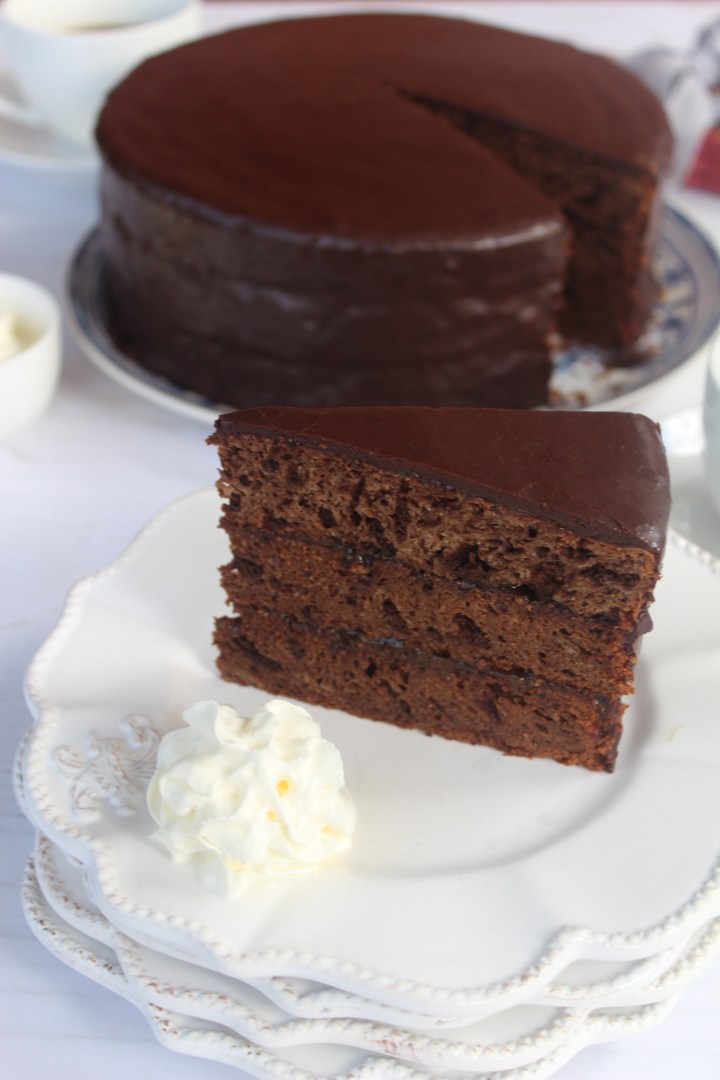
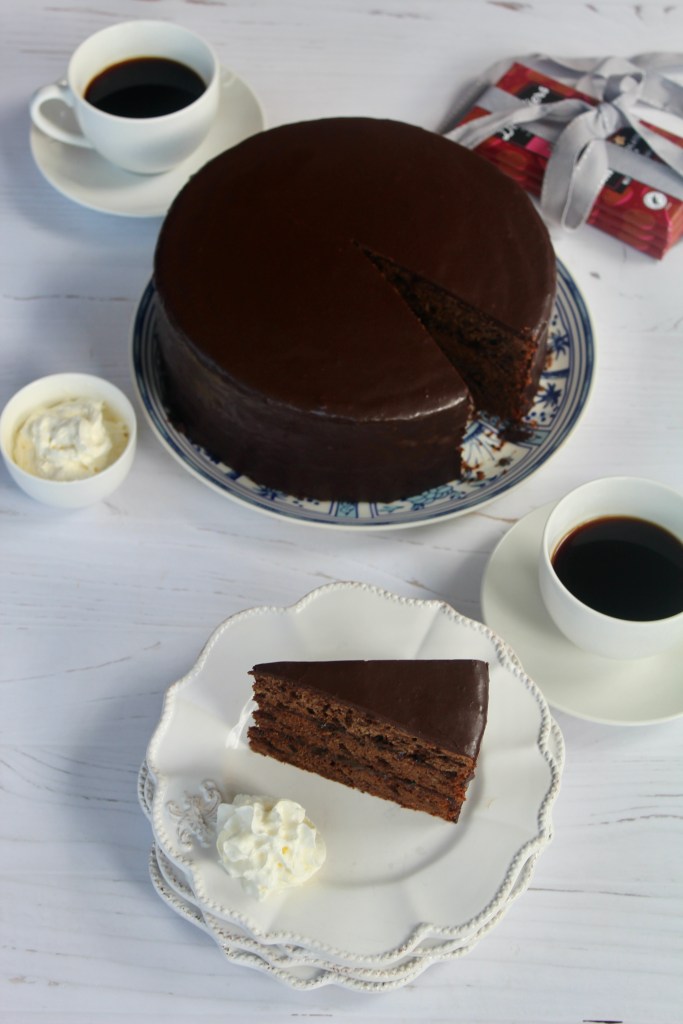
It has been said that a Viennese Sachertorte is a cake worth fighting over….! Hopefully without the fighting, you will bake this labour of love and indulge in the best chocolate cake in the world! Traditionally the cake is served with Chantilly cream on the side so that every bite may be dipped into the cream before eating. If you want a higher cake like the one in my photographs, bake the cake twice – the apricot and chocolate glaze is sufficient to cover a higher/larger cake.
Chocolate glaze: 220g sugar 125ml water 200g dark chocolate, chopped
Place an oven rack in the centre of your oven and preheat to 180℃. Lightly butter 22cm springform tin with butter and line the bottom with a round of baking paper. Dust the sides of the tin with flour and tap out the excess. Add the chocolate to a heatproof bowl set over a saucepan of simmering water and allow to melt. Remove from the heat. Stir the chocolate often until tepid but still fluid. Add the butter to the bowl of a stand mixer fitted with the paddle attachment and beat on medium-high speed for 1 minute. Turn the mixer to low speed and beat in the icing sugar. Set the mixer back on medium-high and beat until light in colour and texture. (about 2 minutes) Beat in the egg yolks, one at a time, scraping down the sides of the bowl. Now beat in the chocolate and vanilla with the machine running. Remove the bowl from the mixer. Add the egg whites and granulated sugar to a mixing bowl and beat with a hand-held electric mixer on high speed just until they form soft, shiny peaks. Do not overbeat. Stir about a fourth of the whites into the chocolate mixture to lighten it. Now fold in the remaining whites, leaving a few visible whisps of whites. Sift half the flour over and fold in with a spatula. Repeat with the remaining flour. Scrape the batter into the prepared cake tin and spread it evenly. Bake until a wooden toothpick inserted in the centre comes out clean, about 35 minutes. Remove the cake from the oven and cool on a wire rack for 10 minutes. Remove the sides of the tin and invert the cake onto the wire rack. Remove the baking paper. Re-invert the cake on another rack to turn it right side up and leave to cool completely.
For the apricot glaze: Melt the jam in a saucepan over medium heat, add the rum and pass through a sieve. Set aside to cool slightly.
Trim the top of the cake to make it level. (Optional) Cut the cake horizontally into 2 equal layers. Brush the top of one cake layer with a third of the apricot glaze. Place the second layer on top and brush the top and sides of the cake with the remaining glaze. Allow to cool until the glaze is set/less sticky. Half an hour in the refrigerator should be sufficient.
For the chocolate glaze: Bring the sugar and water to a boil in a saucepan. Stir until the sugar dissolves. Add the chocolate, remove from the heat and stir until the chocolate has melted and you are left with a smooth, glossy glaze.|Set aside to cool and thicken slightly.
Transfer the cake to a wire rack set over a rimmed baking sheet. Pour the slightly warm chocolate glaze over the cake. Take care to cover the entire cake and the sides. Allow to cool and set completely – 2 hours minimum. Trim away any hardened glaze on the bottom of the cake and transfer it to a serving plate. Serve each slice of sachertorte with a generous dollop of cream so that each bite may be dipped in the cream before eating.
1 x 385g can of condensed milk 60g butter, softened 190ml sugar 10ml vanilla 2 eggs 125ml flour 125ml cocoa powder, sifted 1,2ml salt 80g dark chocolate, finely chopped 80g dark chocolate, chopped a handful of pistachio nuts
Preheat your oven to 180℃ and line a 20cm x 20cm baking tin with baking paper. Add the condensed milk, butter and sugar to a large mixing bowl and cream together with a hand-held mixer, until smooth. Add the vanilla and eggs and mix for another minute. Now add the flour, cocoa powder and salt and mix again on low speed. Add the chopped chocolate and stir through with a spatula. Pour the batter into the prepared baking tin and bake for 45 minutes. Remove from the oven and cool in the baking tin. Add the 80g chocolate to a heatproof bowl set over a saucepan with simmering water and allow to melt. Drizzle the chocolate over the brownies and sprinkle the pistachio nuts on top. Slice and serve.
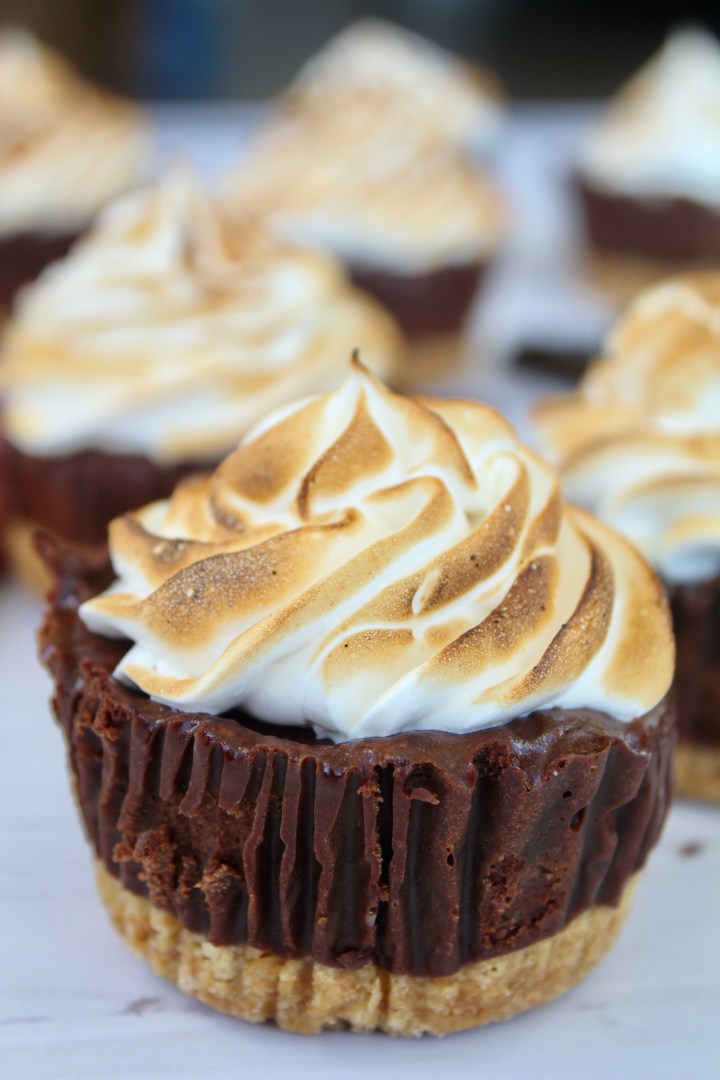
For the biscuit base: Preheat your oven to 180℃ and line a 12-hole muffin tin with paper cups. Spray the paper cups with baking spray and set aside. Process the biscuits to crumbs. Whisk the egg white with a fork until just frothy and add to the crumbs. Add the melted butter and give everything a good mix. The mixture should resemble wet sand. Divide between the cupcake liners and press the mixture down firmly into the bottom of each cup. Bake in the oven for 5 minutes. Remove and allow to cool.
For the filling: Turn you oven temperature down to 160℃. Chop the chocolate into small pieces and place it in a heatproof bowl set over a saucepan with simmering water. Allow to melt completely, remove from the heat and set aside to cool. Add the cream cheese, sugar and cocoa powder to the bowl of a stand mixer fitted with the paddle attachment. Beat on low speed until combined, scraping down once or twice between mixing. Remove the mixing bowl from the mixer, add the melted chocolate and fold in until no streaks remain. Divide the batter evenly between the cupcake cups. Bake for 15 minutes or until just set in the centre. Turn off the oven and leave the cheesecakes inside with the door closed, for 30 minutes. Remove from the oven and cool completely in the baking tin. Refrigerate the cheesecakes for 1 hour before adding the topping.
Marshmallow-Meringue Topping: Turn your oven to the grill setting and move the oven rack to the top position. If you are going to blow-torch your toppings you may leave your oven off. Add the egg whites and sugar to a heatproof bowl and place the bowl over a saucepan with simmering water. Whisk the mixture for about 3 minutes until the sugar has dissolved and the mixture is very frothy. Remove from the heat and pour the mixture into the bowl of a stand mixer fitted with the whisk attachment. Add the vanilla and cream of tartar. Beat on high speed for about 6 minutes, until very thick and glossy. Spoon or pipe the topping on the cheesecakes and either place under the grill to toast or blow-torch the topping.







 My Whisk and I