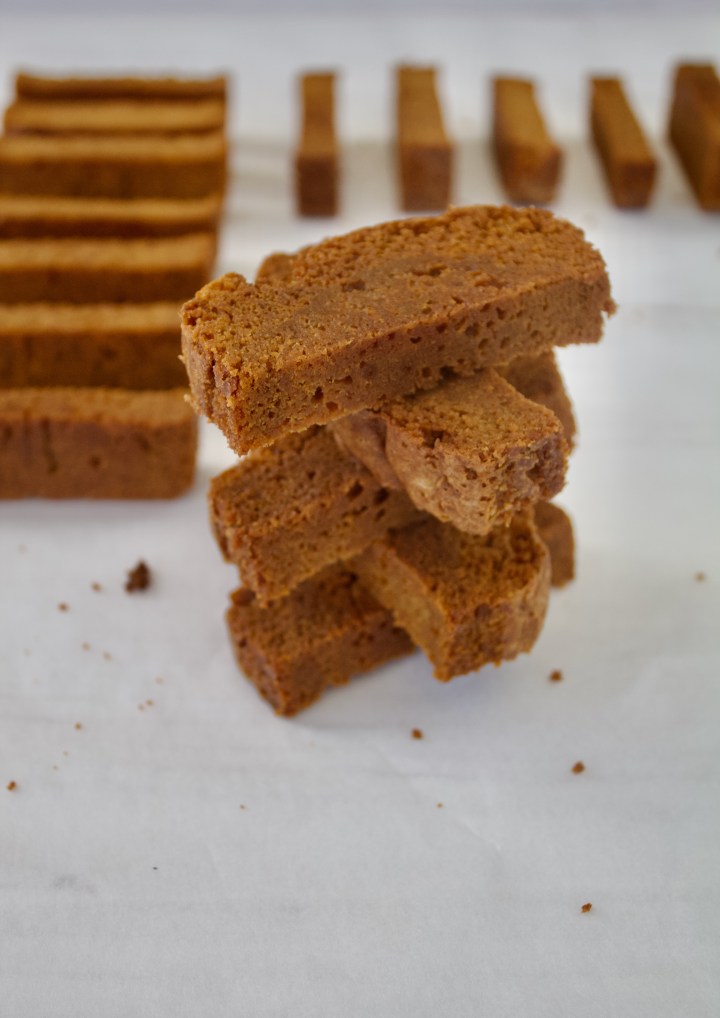
This is a small batch of rusks and yields about 24 pieces.
250g butter, room temperature 250ml caster sugar 4 eggs 10ml instant coffee dissolved in 30ml hot water 10ml vanilla 10ml baking powder 250ml flour
Preheat your oven to 170℃ and line a 23cm loaf tin with baking paper. Add the butter and sugar to the bowl of a stand mixer fitted with the paddle attachment. Beat together at high speed until creamy – scrape the mixture down once or twice in between mixing. Add the eggs one at a time, waiting for it to be incorporated into the mixture before adding the next one. Add the dissolved coffee and vanilla. Add the baking powder and flour to a bowl and mix through. Turn the mixer to a low speed and add two tablespoons of flour at a time, until you have no flour left. Spoon the batter in to the prepared loaf tin and bake for one hour. Cool the cake on a wire rack.
Slice the cake into rusk sizes: I like 2cm x 3cm. Preheat your oven to 150℃ and line a baking sheet with baking paper. Space the rusks evenly apart and place in the oven for 15 minutes. Flip the rusks over and bake for another 15 minutes. Remove from the oven and cool completely. Store the rusks in a glass container.
For the filling: Add the corn flour to a large mixing bowl and pour in 50ml milk. Add the egg yolks and 50g sugar and whisk together. Set aside. Pour the 450ml milk and 50g sugar into a small saucepan set over medium-high heat. Stir until the sugar has dissolved. Bring the mixture to just before boiling point and take off the heat. Drizzle the warm milk mixture into the egg mixture while whisking continuously. Pour the mixture back into the saucepan and place it over medium-high heat. Stir until very thick and then cook for 30 seconds. Remove from the heat, add the vanilla and stir through. Pour the custard onto a dinner plate and cover with plastic wrap. Push the wrap directly onto the surface of the custard. Allow to cool to room temperature.
Your should make TWO batches of filling, separately.
For the cake: Preheat your oven to 180℃ and spray two loose-bottom cake tins and line the base and sides with baking paper. Add the flour, baking powder and salt to a bowl and whisk to mix. Add the eggs to the bowl of a stand mixer fitted with the whisk attachment and beat on high speed for 30 seconds. Slowly pour in the sugar while the mixer is running. Now beat on high speed until the mixture is three times its original volume – about 7 minutes or so. Scatter a third of the flour on the surface and mix on the lowest speed. Add another third, mix and then the remaining flour and mix again. Add the butter and milk to a saucepan set over medium heat. Stir until the butter has melted and the mixture is warm when you put your finger in it. NB: YOU WANT THE BUTTER TO MELT, YOU DONT WANT TO BOIL THE MILK! Pour the milk mixture into a large mixing bowl. Add the vanilla and vegetable oil and whisk through with a hand whisk. Add about 250ml of the egg and flour mixture and vigorously whisk to combine. The batter must be smooth. Turn the mixer on to a low speed and very slowly, pour in the milk. Scrape down the sides and the base of the bowl. Beat on low speed for 20 seconds. Divide the batter between the two prepared cake tins. Lift each tin 5cm from the work surface and then drop it – repeat a few times to knock out the large air bubbles. Place the cake tins in the oven and bake for 30 minutes. Remove from the oven and cool in the tins for 15 minutes before turning the cakes out on cooling racks and removing the baking paper. Leave to cool completely.
Assembling the cake: Slice the cake horizontally so that you have 4 cake discs. Spread the custard evenly on to each cake layer and stack them on a serving platter. Roast the flaked almonds in a dry pan, allow to cool and scatter over the cake to serve.
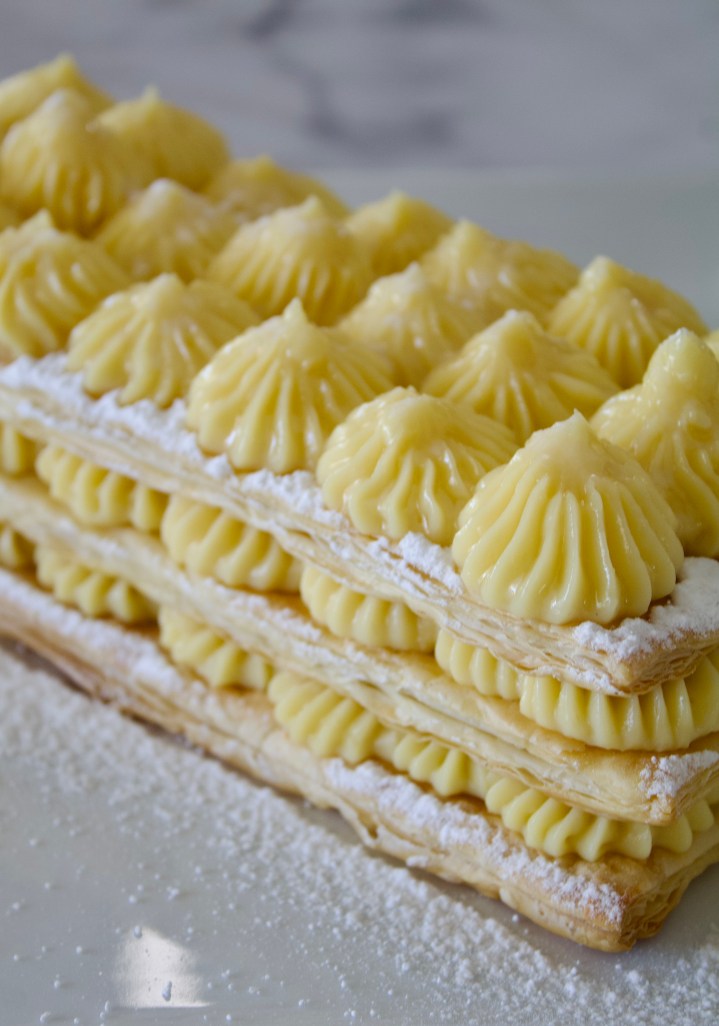
For the crème pâtissière: Add the corn flour to a mixing bowl. Pour a small amount of milk into the bowl and stir to dissolve. Add the yolks and half the sugar. Whisk to gather by hand until the sugar has dissolved. Set aside. Pour the rest of the milk and the rest of the sugar into a small saucepan. Set over medium heat and stir until the sugar has dissolved. Take the milk from the heat as soon as tiny bubbles start to appear around the edge of the saucepan. Drizzle the warm mixture onto the egg mixture while whisking continuously. Now pour the mixture back into the saucepan and place on a medium-low heat. Stir continuously until the mixture is thick and smooth. Allow to cook for 30 seconds before removing from the heat. Add the vanilla and stir through. Pour the mixture into a shallow bowl, place a piece of plastic wrap directly onto the surface and allow to cool completely.
Preheat your oven to 200℃ and line a large baking sheet with baking paper. Unroll the pastry sheet and cut it into 4 equal rectangles (cut through lengthwise and then halve each strip). Place the rectangles on the prepared baking sheet, spacing them evenly apart. Place another sheet of baking paper on top of the pastry and then place another baking sheet on top of that. Bake for 12 minutes. Remove from the oven and transfer to a cooling rack to cool completely.
Assembly: Whisk your room temperature crème pâtissière by hand until it is smooth. Spoon into a piping bag fitted with a large (1,5/2cm) nozzle. Lay a pastry sheet on a serving plate and pipe dollops over the entire sheet. Repeat until you have one pastry sheet left. Sift the icing sugar into a bowl and add a tablespoon of milk. Stir the mixture, adding a few drops more until you have a very thick paste. Spread the icing paste on the pastry sheet and set aside to dry. Place the iced pastry on top of the custard slice. Slice into portions once you have displayed your beautiful creation.
30g butter 200g sugar 5 eggs, separated 140g self-raising flour a pinch of salt 1 litre milk 5ml vanilla ground cinnamon for dusting
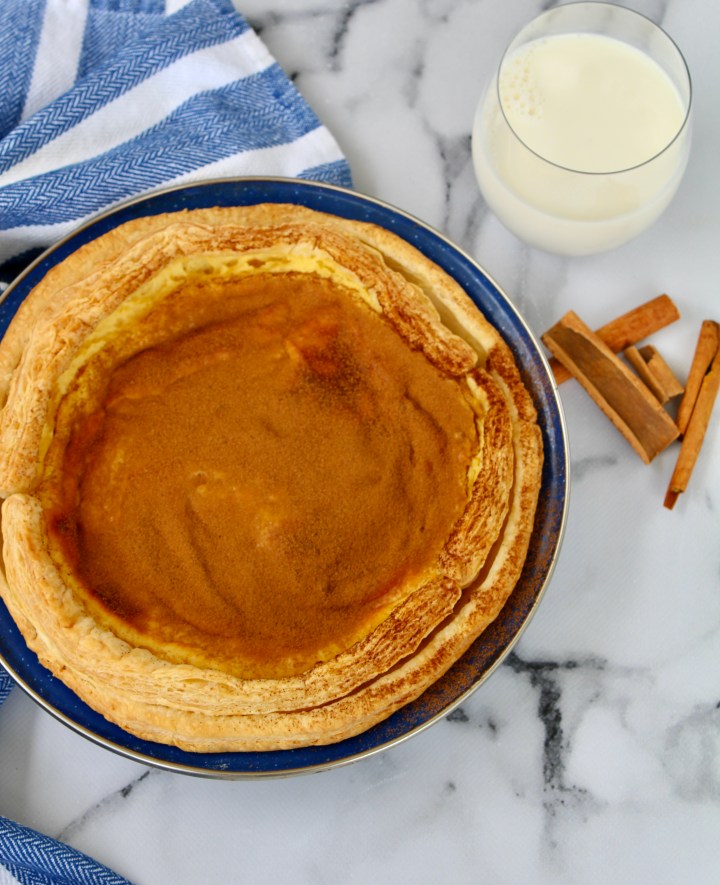
Preheat your oven to 180℃ and spray 2 x 22cm tart dishes with cooking spray. Add the butter and sugar to the bowl of a stand mixer fitted with the paddle attachment. Cream together until pale and fluffy. Add the egg yolks one at a time with the engine running. Scrape the mixture down a few times during mixing. Sift the flour and salt together and add spoonfuls to the mixture until everything is incorporated. Turn the mixer to its lowest speed and drizzle in the milk. Add the vanilla and mix through. Set aside. Add the egg whites to a clean mixing bowl and beat until it reaches stiff peaks. Add the stiff whites to the batter and fold it into the mixture. Scoop the batter into the two prepared tart dishes and bake for 40 minutes. Remove the milk tarts from the oven and sift over the ground cinnamon while the tarts are warm. Allow the milk tart to cool completely before serving.
Preheat your oven to 200℃ and spray two 22cm tart tins with cooking spray. Dust a work surface with flour and roll the pastry to 3mm thickness. Line the tart tins – the pastry should be about 1cm larger that the tins to allow for shrinkage during baking. Place the prepared tart tins in the refrigerator until needed.
Pour 1 litre milk into a saucepan and add the sugar and cinnamon quill. Turn the heat on medium-high and stir the mixture until the sugar has dissolved. Heat the milk mixture until it starts forming tiny bubbles around the edges of the saucepan. Remove from the heat and take out the quill. Set aside. Add the flour, custard powder and cornflour to a mixing bowl. Drizzle in the remaining 250ml milk while whisking, to make a slurry. Add the egg yolks to the slurry and whisk together. Slowly pour the warm milk-mixture into the slurry while whisking continuously. Remember: pour slowly, whisk quickly! Pour the mixture back into the saucepan and return to a low heat. Stir the mixture until it thickens and starts to bubble. Take off the heat, add the butter and vanilla, stir through and set aside. Add the baking powder to the egg whites and beat until stiff peaks form. Fold the egg whites into the custard and divide the mixture between the two prepared tart tins. Bake the tarts in the oven for 25 minutes. Remove from the oven and immediately sift some ground cinnamon on the surface. Serve with your favourite brew of coffee.
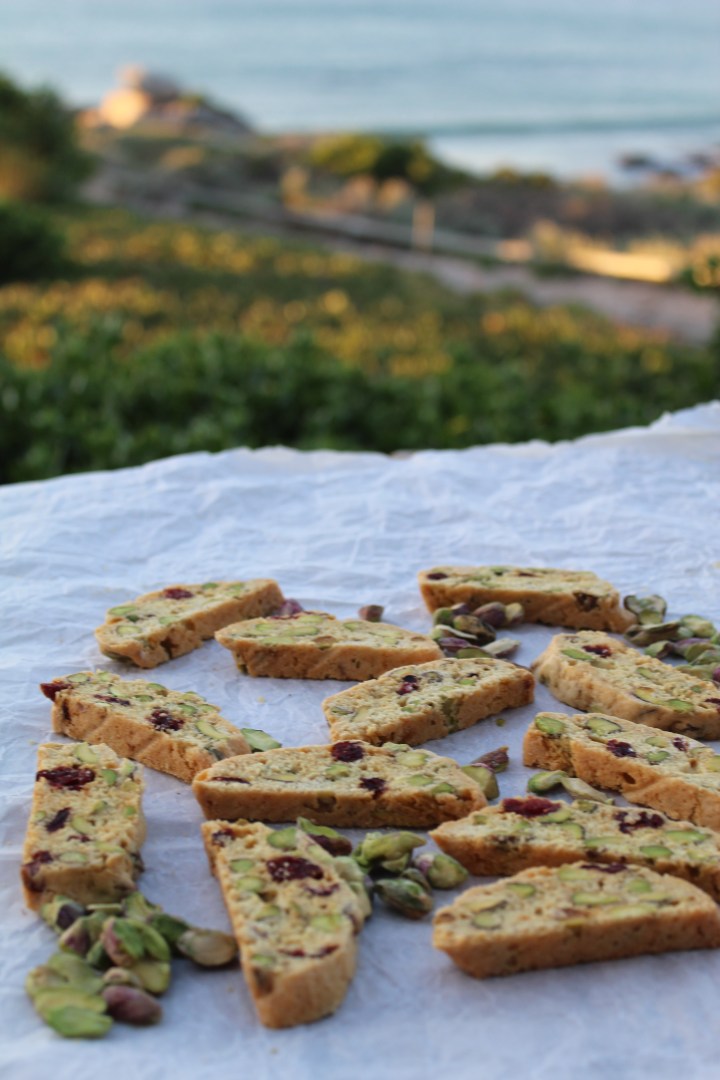
I love to bake snacks that can be kept in a glass jar for a few weeks (very optimistic!) and biscotti has a place of honour amongst them. The recipe yields about 36 slices and can be kept for 3-4 weeks when stored in a sealed glass container.
Preheat your oven to 160℃ and line two large baking sheets with baking paper. Add the oil and sugar to the bowl of a stand mixer fitted with the paddle attachment and beat on high speed until well blended. Add the vanilla and eggs and beat for another 2 minutes. Set aside. Add the flour, salt and baking powder to a large mixing bowl and give it a stir to mix. Run the mixer on the lowest speed and gradually add the flour mixture, allowing time to incorporate between additions. Remove the bowl from the mixer, add the cranberries and pistachios and mix through with a spatula. Divide the dough in half. Wet your hands (the dough is extremely sticky) and shape each half portion of the dough into a log shape about 25cm in length. The logs won’t look wide enough to “become” biscotti, but the mixture will spread during baking and end up being wider than the shaped log. Place the logs onto the prepared baking sheets and bake for 35 minutes. Remove the biscotti logs from the oven and allow to cool for 30 minutes. Turn the oven setting down to 130℃. Slice the logs diagonally into 1cm thick slices. Lay the slices flat onto the same baking sheets and dry in the oven for about 50 minutes. Feel the biscotti – it should be hard and shouldn’t give when you press it between your fingers. Cool the biscotti on a cooling rack before packing them into a glass jar.







 My Whisk and I