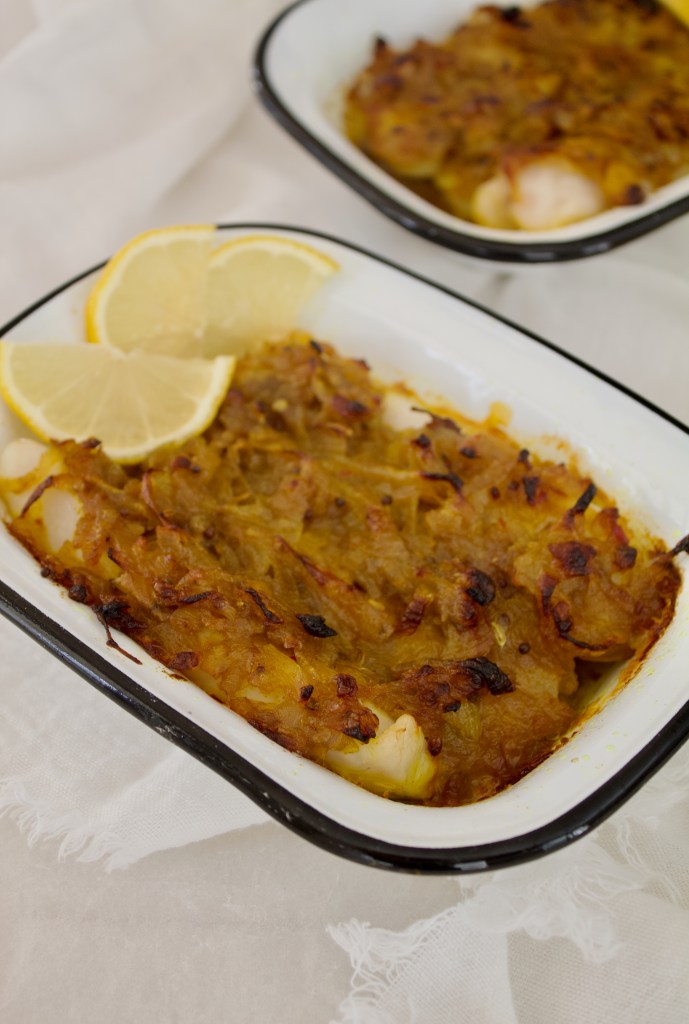
Roasted Hake with Onions

Roasted Hake with Onions

This recipe is my adaptation to make it easier/quicker/simpler to make Ottolenghi’s Roasted hake with fenugreek onions. The original recipe can be found in his book OTK on page 191.

5ml fennel seeds
5ml mustard seeds
10ml ground cumin
5ml ground turmeric
60ml + 45ml olive oil
40g + 40g + 20g butter, cubed
6 large onions, peeled and sliced
5ml salt
1 green chilli, finely chopped
5ml + 2,5ml sugar
12 hake medallions, unfrozen and dried on kitchen paper
10ml lemon juice
3 lemons cut into wedges

Mix the fennel, mustard, cumin and turmeric together in a small bowl.
Spoon 5ml of this spice mixture out into another small bowl and set both bowls aside.
Place a large pan over medium-high heat and add 60ml olive oil and 40g butter to it.
Wait for the butter to melt before adding the onions and salt.
Turn the heat down and cook for 20 minutes, stirring every now and then.
Add the chopped green chilli and cook for another 2-3 minutes.
Add the 5ml sugar and the spice mix, stir for 30 seconds and remove it from the heat. Set aside.
Preheat your oven to 200℃.
Add the 45ml olive oil, 40g butter, 2,5ml sugar, 5ml spice mix and a pinch of salt to a 24cm x 24cm ceramic dish and mix together in the dish so that it covers the bottom.
Pack the fish tightly into the dish and season with salt and pepper.
Spoon the onion mixture over the fish medallions in an even layer and dot the surface with small pieces of the 20g butter.
Place in the oven and roast for 25 minutes.
Drizzle 10ml lemon juice over the fish and serve with the lemon wedges on the side.
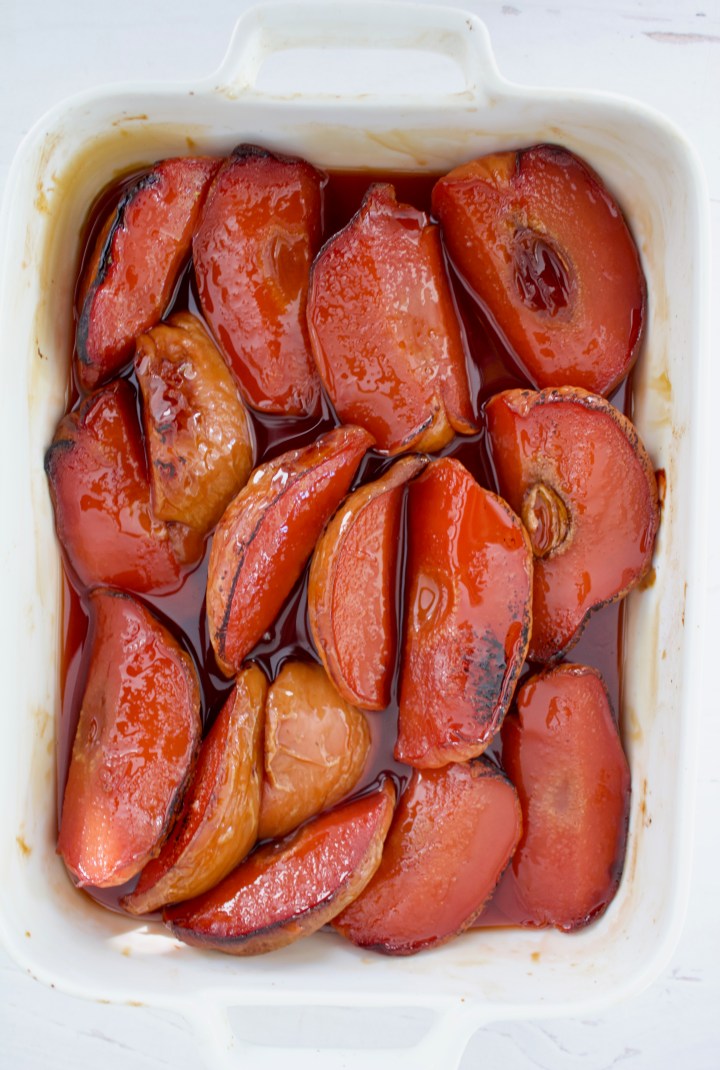
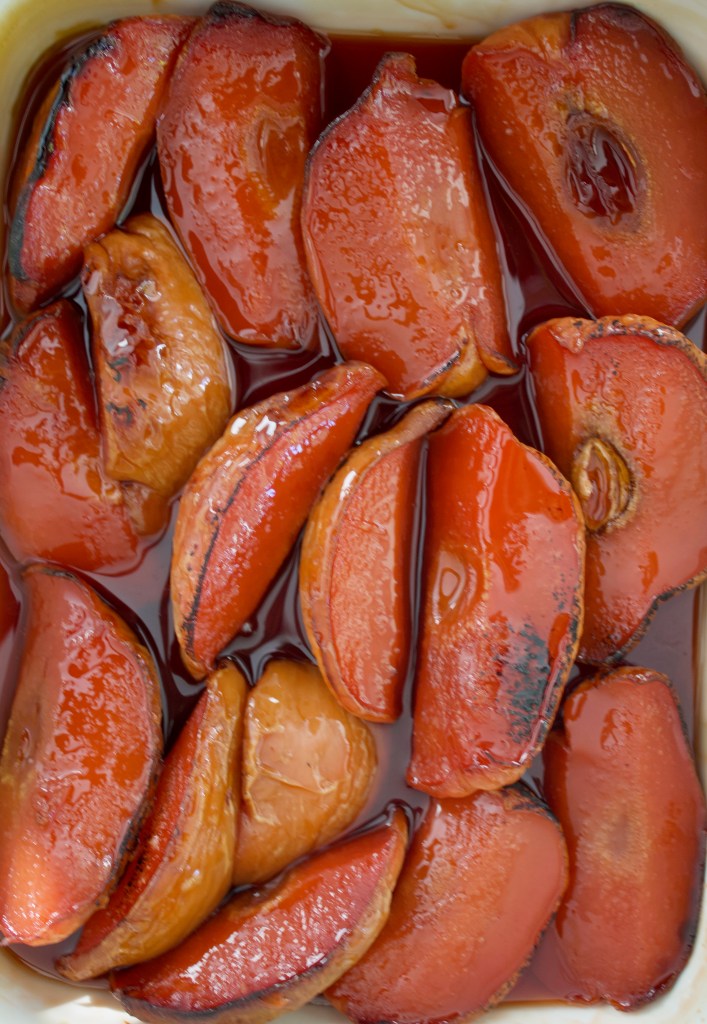
Honey Baked Quince

Honey Baked Quince

600ml water
100g honey
250g brown sugar
1 lemon
4 quince

Preheat your oven to 150℃.
Add the water, honey and brown sugar to a small saucepan.
Cut the zest from the lemon, add the strips and place the saucepan over a gentle heat.
Stir until the sugar has dissolved, bring to a boil and simmer for two minutes.
Take the syrup from the heat and set aside.
Wash the quince under running water and cut each into quarters. Remove the core but keep the skin on.
Slice the lemon (from which you took the zest) in half and rub it over the sliced quince to prevent it from turning brown.
Arrange the fruit in an ovenproof dish (they should sit snugly) and pour the honey-syrup over.
Place a piece of baking paper directly on the quince and then cover the dish with aluminium foil.
Bake in the oven for 3 hours.
Remove the foil and baking paper and spoon the syrup over the fruit.
Turn your oven to 180℃ and roast uncovered for 25 minutes.
Serve warm with roasted meat or with a scoop of ice-cream as dessert. Cold quince is delicious on top of cooked oats as breakfast.

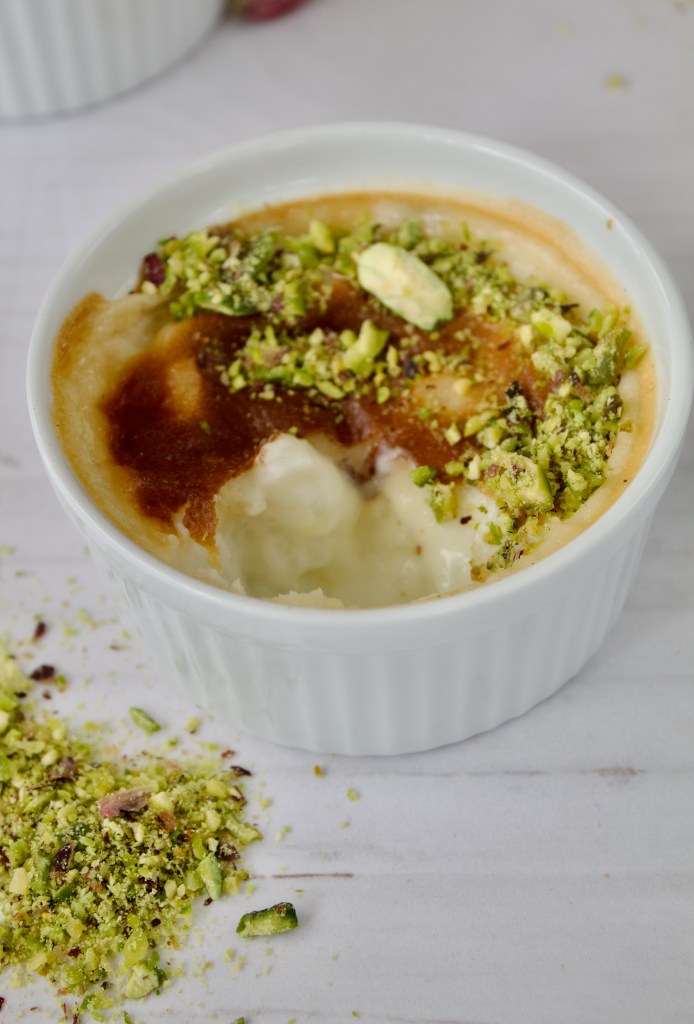
Turkish Rice Pudding / Sütlaç

Turkish Rice Pudding / Sütlaç

125ml uncooked rice
500ml water
1 litre + 125ml milk
250ml sugar
grated zest of 1 lemon
37,5ml cornstarch
50g pistachios nuts, finely ground

Preheat your oven to 200℃ and place 6 ramekins in an oven tray that is at least 7cm deep.
Add the rice and water to a saucepan and cook over medium heat until tender – the rice should be creamy and not dry.
Pour in the 1 litre milk and add the sugar.
Stir, bring to a boil and reduce the heat to a slow simmer.
Cook for 10 minutes.
Add the lemon zest and stir through.
Add the cornstarch to a small bowl and pour in the 125ml milk. Whisk together to make a slurry.
Now drizzle the slurry into the simmering rice mixture while stirring the whole time.
Keep stirring and allow the mixture to become thick – about 10-15 minutes.
Spoon the mixture into the ramekins and fill the oven tray with enough warm water to come halfway up the side of the ramekins.
Place the oven tray on the top shelf of your oven and bake for about 30 minutes, until golden brown on top. WATCH THE PUDDINGS AND REMOVE THEM FROM THE OVEN WHEN YOU ARE HAPPY WITH THE COLOUR – THEY BURN EASILY!
Take the ramekins from the tray, allow them to cool and then refrigerate them for 1 hour.
Sprinkle the ground pistachio over the rice puddings and serve.

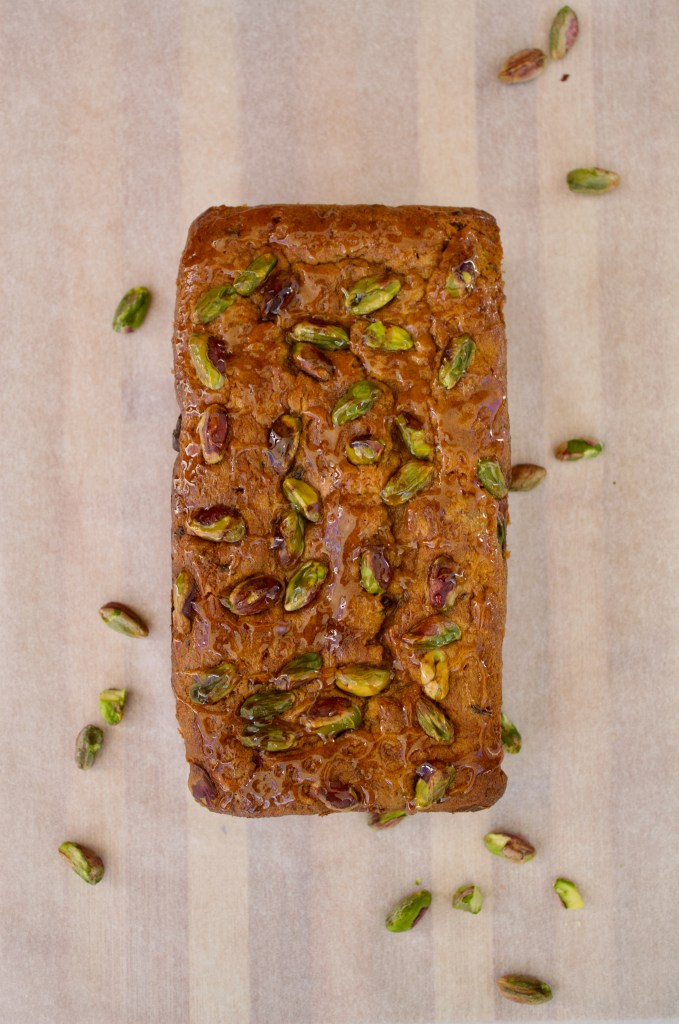
Pistachio, Date and Honey Cake

Pistachio, Date and Honey Cake

175g butter, cubed
100g brown sugar
30ml + 15ml honey
2 eggs
225g self-raising flour
2,5ml ground cinnamon
2 ripe bananas
100g stoned dates
50g pistachio nuts, roughly chopped

Preheat your oven to 160℃ and line a medium loaf tin with baking paper.
Add the butter and sugar to the bowl of a stand mixer fitted with the paddle attachment and cream together.
Add the honey with the mixer running and then add the eggs one at a time.
Scrape the mixture down and mix for another minute.
Mix the flour and ground cinnamon and add a tablespoon of flour to the mixture while mixing. Continue adding flour until you have none left.
Mash the bananas and cut the dates into small pieces with scissors.
Add the fruit to the the batter and mix for 2 minutes.
Spoon the batter in to the prepared loaf tin and level out the top.
Scatter the pistachios over and bake in the oven for 1 hour 10 minutes – check the loaf with a skewer to see if its done.
Allow the cake to cool for 15 minutes before lifting it out of the baking tin.
Drizzle the remaining 15ml honey over the warm cake and allow to cool.
Slice into thick slices and serve along a cup of Turkish coffee.


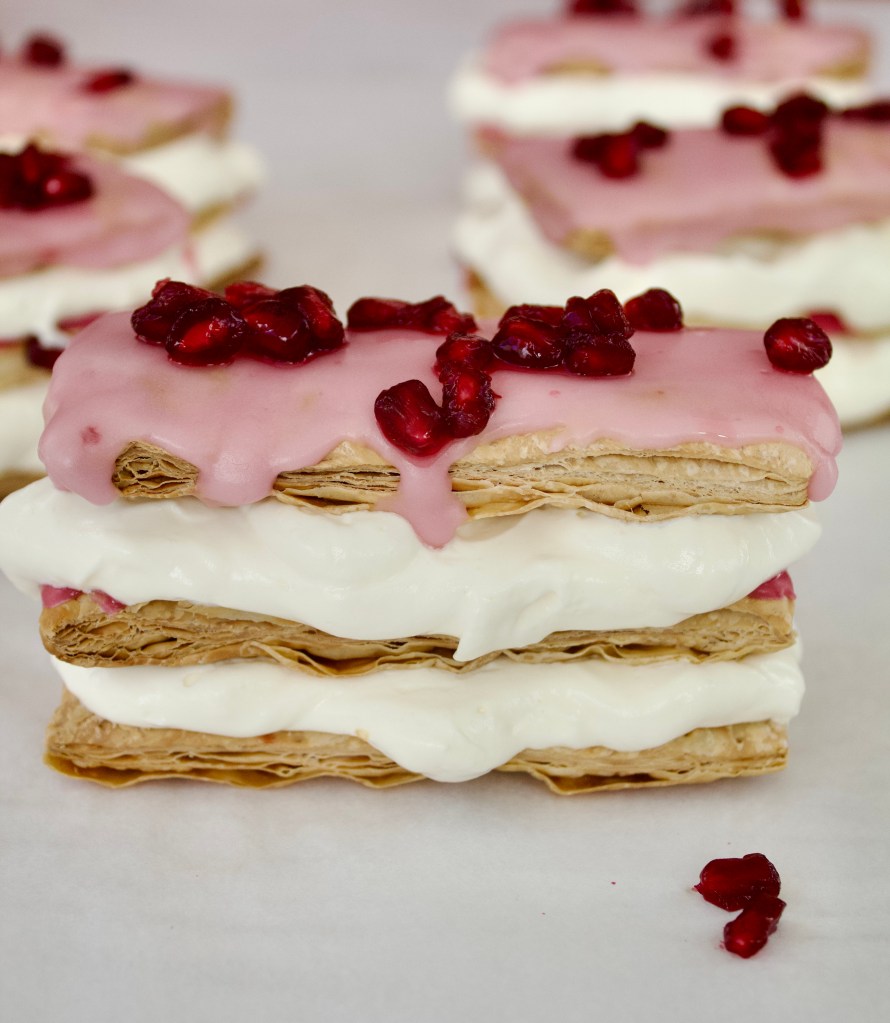
Pomegranate Mille-Feuille

Pomegranate Mille-Feuille

1 x 375g puff pastry
45ml pomegranate seeds + extra to scatter over
125ml + 30ml icing sugar, sifted
250ml whipping cream
110g mascarpone
10ml rosewater

Preheat your oven to 200℃ and line a baking sheet with baking paper.
Lightly dust a work surface with flour and unroll the pastry.
Cut into 16 rectangles, place on the baking sheet and prick the surface with a fork.
Lay another sheet of baking paper over the pastry and place another baking tray on top.
Bake for 35 minutes.
Remove from the oven and cool on a cooling rack.
Add the pomegranate seeds to a small bowl and muddle it with the back of a wooden spoon. Pour through a small sieve and reserve the juice.
Add the 125ml icing sugar to the pomegranate juice and mix to a thick paste. If you need more liquid, add a few drops of water.
Spoon the paste over 5 of the pastry rectangles and set aside.
Add the cream to the bowl of a stand mixer fitted with the whisk attachment and whisk to soft peaks.
Add the mascarpone, rosewater and 30ml icing sugar and whisk to stiff peaks.
Place 5 pastry rectangles on a serving platter.
Spread half the mascarpone mixture onto the pastry, place another piece of pastry on top and add the rest of the mascarpone on top.
Now place the pastry with the icing sugar on top of each mille-feuille and scatter over some pomegranate seeds.


Savoury Scones

Savoury Scones

280g flour
10ml baking powder
2,5ml salt
2,5ml garlic flakes
60ml chives, chopped
100g butter, cubed
1 egg
62ml cream
62ml yoghurt
50g cheese, grated
egg wash: one egg yolk whisked with 15ml water

Preheat your oven to 180℃ and line a baking sheet with baking paper.
Sift the flour, baking powder and salt into a mixing bowl.
Add the garlic flakes and chives and mix through.
Add the cubed butter and rub it into the dry ingredients with your fingertips.
Add the egg, cream, yoghurt and cheese to another bowl and mix to combine.
Add this mixture to the flour mixture and mix with a pallet knife until combined.
Lightly dust a work surface with flour and roll the dough out to a 3-4cm thickness.
Press the scones out with a 6cm biscuit cutter and place them on the prepared baking sheet.
Brush the tops with egg wash and bake in the oven for 15 minutes.
Serve immediately.

Dutch Custard Cake

Dutch Custard Cake

Filling:
YOU WILL NEED TWO BATCHES OF THIS IF YOU HAVE FOUR CAKE DISCs
40g corn flour
50ml + 450ml milk
4 egg yolks
50g + 50g sugar
5ml vanilla

Cake:
500ml flour
12,5ml baking powder
1,2ml salt
4 eggs, room temperature
375ml caster sugar
115g butter, cubed
250ml milk
15ml vanilla
15ml vegetable oil

125ml almond flakes

For the filling:
Add the corn flour to a large mixing bowl and pour in 50ml milk.
Add the egg yolks and 50g sugar and whisk together. Set aside.
Pour the 450ml milk and 50g sugar into a small saucepan set over medium-high heat.
Stir until the sugar has dissolved.
Bring the mixture to just before boiling point and take off the heat.
Drizzle the warm milk mixture into the egg mixture while whisking continuously.
Pour the mixture back into the saucepan and place it over medium-high heat. Stir until very thick and then cook for 30 seconds.
Remove from the heat, add the vanilla and stir through.
Pour the custard onto a dinner plate and cover with plastic wrap. Push the wrap directly onto the surface of the custard.
Allow to cool to room temperature.

Your should make TWO batches of filling, separately.

For the cake:
Preheat your oven to 180℃ and spray two loose-bottom cake tins and line the base and sides with baking paper.
Add the flour, baking powder and salt to a bowl and whisk to mix.
Add the eggs to the bowl of a stand mixer fitted with the whisk attachment and beat on high speed for 30 seconds.
Slowly pour in the sugar while the mixer is running.
Now beat on high speed until the mixture is three times its original volume – about 7 minutes or so.
Scatter a third of the flour on the surface and mix on the lowest speed. Add another third, mix and then the remaining flour and mix again.
Add the butter and milk to a saucepan set over medium heat. Stir until the butter has melted and the mixture is warm when you put your finger in it. NB: YOU WANT THE BUTTER TO MELT, YOU DONT WANT TO BOIL THE MILK!
Pour the milk mixture into a large mixing bowl.
Add the vanilla and vegetable oil and whisk through with a hand whisk.
Add about 250ml of the egg and flour mixture and vigorously whisk to combine. The batter must be smooth.
Turn the mixer on to a low speed and very slowly, pour in the milk.
Scrape down the sides and the base of the bowl. Beat on low speed for 20 seconds.
Divide the batter between the two prepared cake tins.
Lift each tin 5cm from the work surface and then drop it – repeat a few times to knock out the large air bubbles.
Place the cake tins in the oven and bake for 30 minutes.
Remove from the oven and cool in the tins for 15 minutes before turning the cakes out on cooling racks and removing the baking paper.
Leave to cool completely.

Assembling the cake:
Slice the cake horizontally so that you have 4 cake discs.
Spread the custard evenly on to each cake layer and stack them on a serving platter.
Roast the flaked almonds in a dry pan, allow to cool and scatter over the cake to serve.

I like having this cake slightly warmed up….

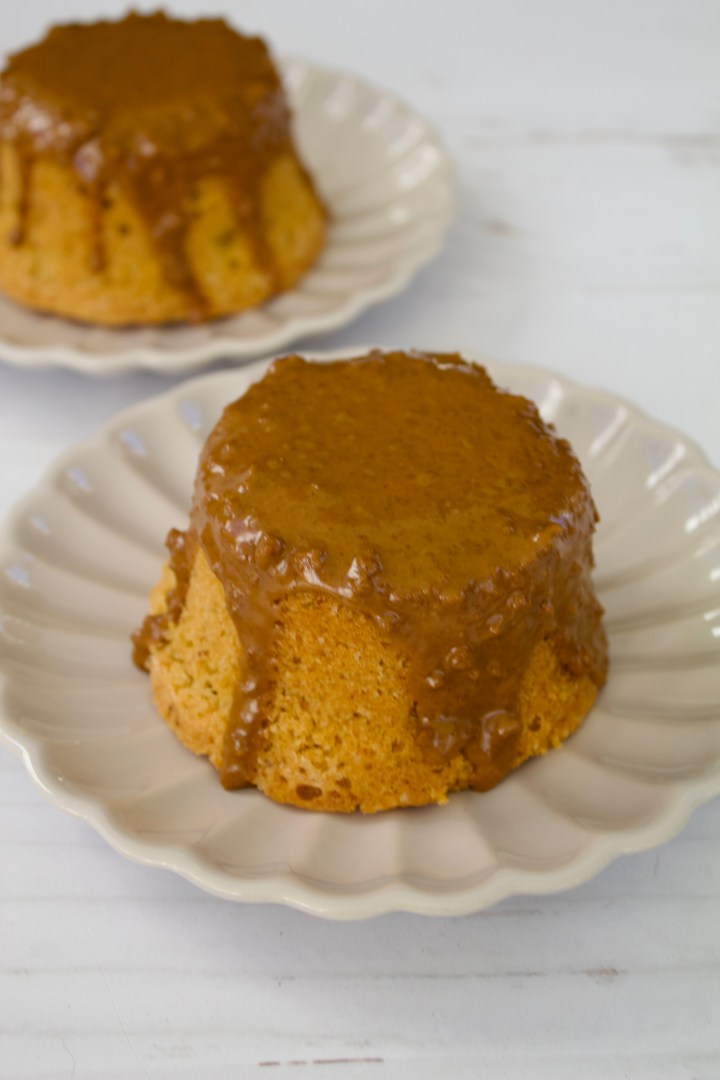
Biscoff Mini Cakes

Biscoff Mini Cakes

These little cakes can be baked in a 12-hole muffin tin when lined with paper cups. Baking time remains the same.

175g butter, room temperature
175g brown sugar
30g + 200g Biscoff spread
3 eggs
175g self-raising flour

Preheat your oven to 160℃ and spray 6 ramekins with cooking spray.
Add the butter, sugar and Biscoff spread to a mixing bowl.
Whisk with an electric mixer until smooth.
Add the eggs one at a time while mixing.
Add the self-raising flour and mix on low speed until incorporated.
Divide the batter between the 6 ramekins.
Bake for 25 minutes until golden brown and a skewer inserted in the centre comes out clean.
Cool the cakes on a wire rack.

Decant about 200g of Biscoff spread and place in the microwave oven for 20 second spurts.
Stir the spread and micro again until you have a pourable consistency.
Place the cooled cakes on a cooling rack set over a baking sheet and pour over the spread.
Stand for 30 minutes until set.

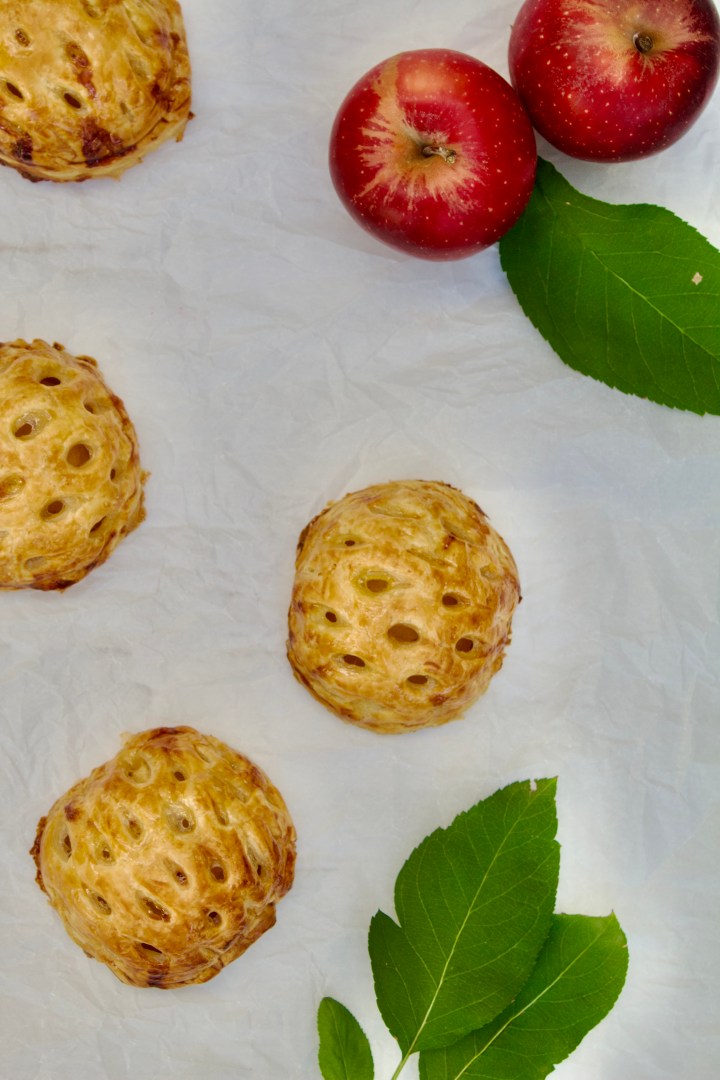
Puff-Baked Apples

Puff-Baked Apples

1 x 400g Today Puff Pastry
2 large apples
egg-wash: egg yolk + 15ml water whisked together

Preheat your oven to 200℃ and line a baking sheet with baking paper.
Unroll your pastry and divide and cut it into 8 equal squares.
Place 4 squares on the prepared baking tray and set aside.
Make 0,5cm incisions in a vertical line on the other pastry squares.
Fill the squares with these incisions following a “brick-laying” pattern.
Peel, halve and core the apples.
Place half an apple on a square on the baking sheet and cover with a square with incisions.
Press down to seal and trim off the excess pastry.
Brush with egg-wash and repeat with the rest of the squares and apple.
Bake in the oven for 20 minutes and serve with custard.

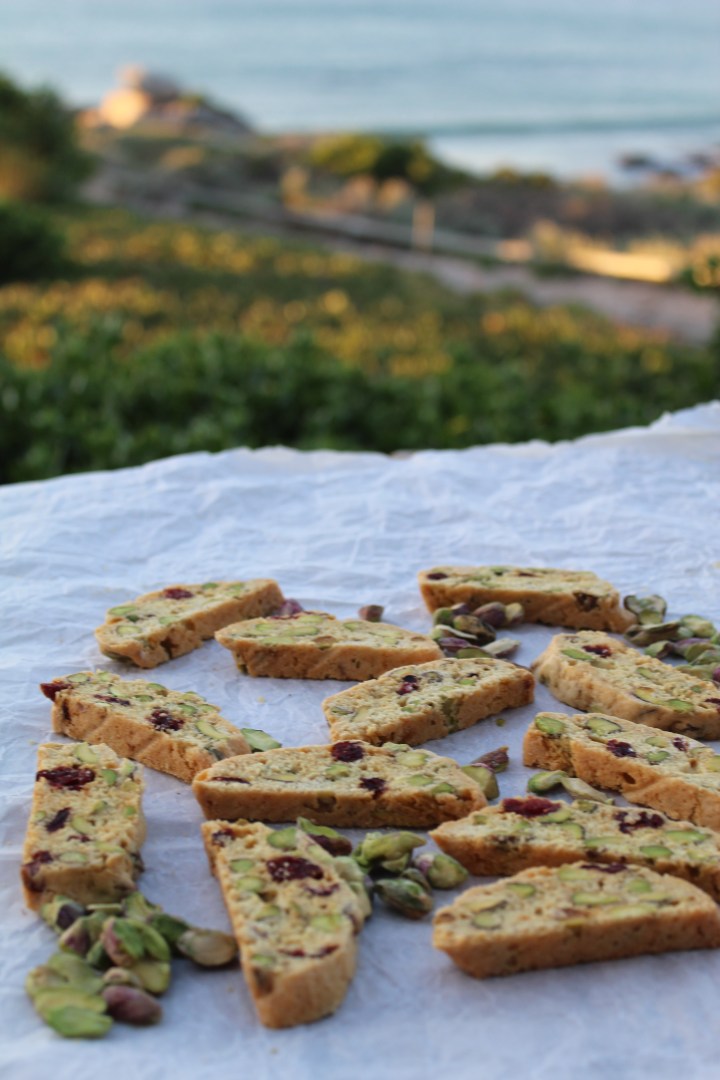
Cranberry-Pistachio Biscotti

Cranberry-Pistachio Biscotti

I love to bake snacks that can be kept in a glass jar for a few weeks (very optimistic!) and biscotti has a place of honour amongst them. The recipe yields about 36 slices and can be kept for 3-4 weeks when stored in a sealed glass container.

62ml vegetable oil
190ml sugar
10ml vanilla
2 eggs
440ml flour
1,2ml salt
5ml baking powder
125ml dried cranberries
190ml pistachio nuts

Preheat your oven to 160℃ and line two large baking sheets with baking paper.
Add the oil and sugar to the bowl of a stand mixer fitted with the paddle attachment and beat on high speed until well blended.
Add the vanilla and eggs and beat for another 2 minutes. Set aside.
Add the flour, salt and baking powder to a large mixing bowl and give it a stir to mix.
Run the mixer on the lowest speed and gradually add the flour mixture, allowing time to incorporate between additions.
Remove the bowl from the mixer, add the cranberries and pistachios and mix through with a spatula.
Divide the dough in half.
Wet your hands (the dough is extremely sticky) and shape each half portion of the dough into a log shape about 25cm in length. The logs won’t look wide enough to “become” biscotti, but the mixture will spread during baking and end up being wider than the shaped log.
Place the logs onto the prepared baking sheets and bake for 35 minutes.
Remove the biscotti logs from the oven and allow to cool for 30 minutes.
Turn the oven setting down to 130℃.
Slice the logs diagonally into 1cm thick slices.
Lay the slices flat onto the same baking sheets and dry in the oven for about 50 minutes. Feel the biscotti – it should be hard and shouldn’t give when you press it between your fingers.
Cool the biscotti on a cooling rack before packing them into a glass jar.