Hi and welcome to my blog! My name is Karen and I love cooking simple, uncomplicated, flavourful food. My cooking is inspired by seasonal ingredients, punchy flavours, an awareness of sustainability and of course by the likes and dislikes of my family and friends that sit around my table as well as you, the virtual guests around my table!
I am a chef, recipe developer and food stylist and generate my own content. I am also completely addicted to recipe books, of which I have an extremely large collection but the essence of my food is about celebrating life and all the fabulousness that we can add by creating good food.
Thank you for reading my blog. Please keep on giving me feedback and may your kitchen, as mine, be filled with joy and the best tasting food!
These lemon slices are not regular lemon bars as they have a very thin layer of citrus sitting on top of a shortbread-like base. I love the combination of the shortbread texture and the smooth zing of the lemon topping that leaves your palette woken up and refreshed! I prefer having mine without icing sugar dusted on top, but of course it is up to you to decide how you want to serve yours.
For the base:
250ml butter, cubed
125ml caster sugar
500ml flour
2,5ml salt
Preheat your oven to 180℃.
Grease and line a shallow baking tin that measures more-or-less 23 X 33cm.
Blitz together the butter, sugar, flour and salt, in a food processor.
Spread the mixture evenly over the base of the baking tin and compact it by pressing down with the back of a spoon.
Bake the base for 20 minutes.
For the topping:
35ml caster sugar
62ml flour
4 eggs
the zest of 3 lemons
180ml lemon juice (the juice of about 3 lemons)
Blitz together the sugar and flour in a food processor.
With the machine running, add the eggs, lemon juice and lemon zest and blitz until the mixture comes together.
Pour this mixture onto the warm biscuit base and bake for 20 – 25 minutes, until set.
Place the baking tin on a cooling rack and allow to cool completely.
Refrigerate for a minimum of 2 hours.
Lift the lemon-shortcake out of the baking tin and slice into squares or fingers.
This is a 100% rye bread and, as rye bread do, requires 24 hours to develop its full flavour after baking. In my household that never happens…we slice the bread as soon as it has cooled down enough and it is absolutely delicious!
This bread keeps well and makes a great sandwich.
1kg rye flour
35ml malt vinegar (or any other vinegar if you don’t have malt)
15g instant yeast
25g salt
±800ml lukewarm water
Mix all the dry ingredients in the bowl of a stand mixer fitted with the dough hook.
Add the water, with the machine running, to form a kneadable dough and knead on low speed for about 3 minutes.
Turn the speed up to medium and knead for another 4 minutes.
Transfer the dough to a lightly oiled mixing bowl, cover with a clean tea towel and leave it for about an hour and a half, until it has doubled in volume.
Transfer the dough to a work surface, lightly knock out the air and portion and shape into two small breads. You may bake the breads in small bread tins or shape them into rounds and bake on a baking sheet lined with baking paper.
Cover the shaped bread with a tea towel and prove for an hour.
Preheat your oven to 180℃.
Bake the bread for 40 – 50 min.
Remove from the oven and transfer to a cooling rack.
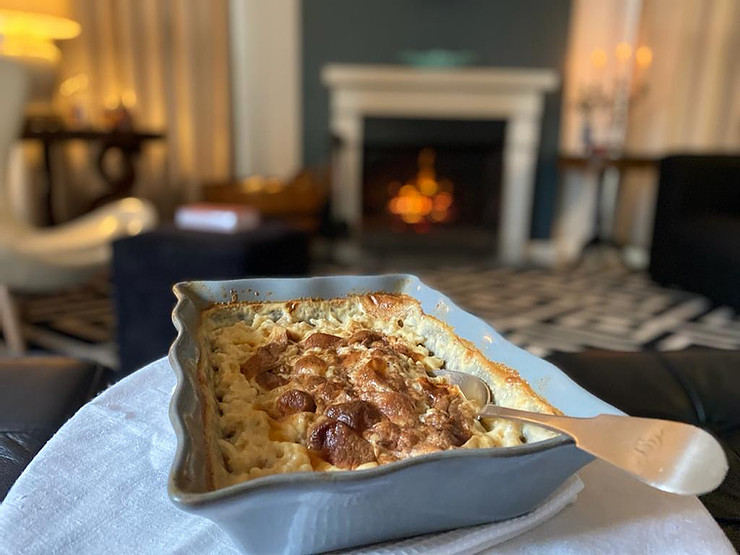
Rice pudding is one of my favourite winter desserts. It is warm, comforting and fabulously moreish!
This pudding is baked in the oven and requires no effort at all.
30ml butter, melted
180ml Arborio rice
83ml sugar
2,5ml ground cinnamon
2,5ml salt
620ml milk
250ml cream
Preheat your oven to 160℃.
Melt the butter and pour it into a ceramic dish of more or less 20 X 27cm. Rather use a smaller dish than a larger one, as long as it is at least 8cm deep.
Add the rice, sugar, cinnamon and salt to a mixing bowl and give it a stir.
Mix the milk and cream in a jug with a wide mouth and pour over the rice mixture.
Mix everything together and pour the mixture into the buttered ceramic dish.
Bake for 30 minutes and then open the oven door and stir the mixture around in the dish. It will still be very liquid and if you try to remove the dish to stir it, the chances are very big of you spilling milk and rice in your oven!
Close the oven door and allow the mixture to bake undisturbed for another 45 minutes, until beautifully golden.
This is the famous 41-cloves-of-garlic roast leg of lamb. Yes, forty one! The recipe was given to me by a friend of our French neighbour who e-mailed me the recipe, as well as very precise instructions on how to carve the leg at table!
This is a free translation: A leg of lamb should always be carved at table. the ritual ceremony adds an important dimension to the pleasure taken in the meal. To carve, hold the leg end with the other end resting on the platter. Carve away from yourself, at a sharp bias, nearly parallel to the bone, lifting off thin slices, first from the rounded, fleshy part of the leg, then from the leaner muscle to the other side and, finally, slice off small pieces of meat from the leg end. Each has a different flavour and degree of doneness. Serve a slice of each to each guest.
Whether you’ll be following the carving instructions or not, do pour yourself a good glass of red and start cooking this most delicious lamb dish!
1 leg of lamb
15ml dry white wine
15ml olive oil
41 cloves of garlic: 2 cloves cleaned; two whole bulbs of garlic (which is more or less 40 cloves)
750ml of dry, red wine
Mirepoix: 2 carrots, 1 onion, 1 celery stalk or one leek; everything chopped finely
Slice 2 cloves of garlic into slivers. You want about 8 – 10 pieces.
Trim off any superficial fat from the lamb. With a small, sharp-pointed knife, cut several deep slits in the leg, on the bias and with the grain. Open up each slit with your finger and insert a sliver of garlic.
Mix together two teaspoons of salt, the white wine and olive oil. Rub the leg all over with this mixture, cover and leave to marinate at room temperature for one hour or so.
Meanwhile prepare the mirepoix: Warm some oil in a saucepan over very low heat. Add the carrot, onion and celery. Sweat while stirring occasionally for about 30 minutes.
Add the red wine to the mirepoix and bring to the boil. Reduce the heat and simmer until reduced by two thirds or about 250ml. Pass the mixture through a sieve, pressing the vegetables with a spoon to extract all the liquid. Pour the mixture back into a clean saucepan and set aside for later.
Preheat your oven to 220℃.
Put the lamb into a roasting tin, slice off the top of the garlic bulbs, drizzle with oil and place it in the roasting tin with the lamb and into the oven for 20 minutes.
Cover the roasting tin with aluminium foil and turn the temperature down to 160℃ for two hours, by which time it will be off-the-bone tender.
Remove the roasting tin from the oven, remove the leg and cover and keep warm.
While the leg is resting, squeeze the soft, roasted garlic into a saucepan with the red wine reduction, add the pan juices from the lamb, scraping out all the little bits and pieces in the pan and bring to a simmer until you have a sauce consistency that you are happy with.
Place the lamb on a serving platter and pour the sauce into a warmed bowl.
Serve with roast potatoes and caramelised carrots.
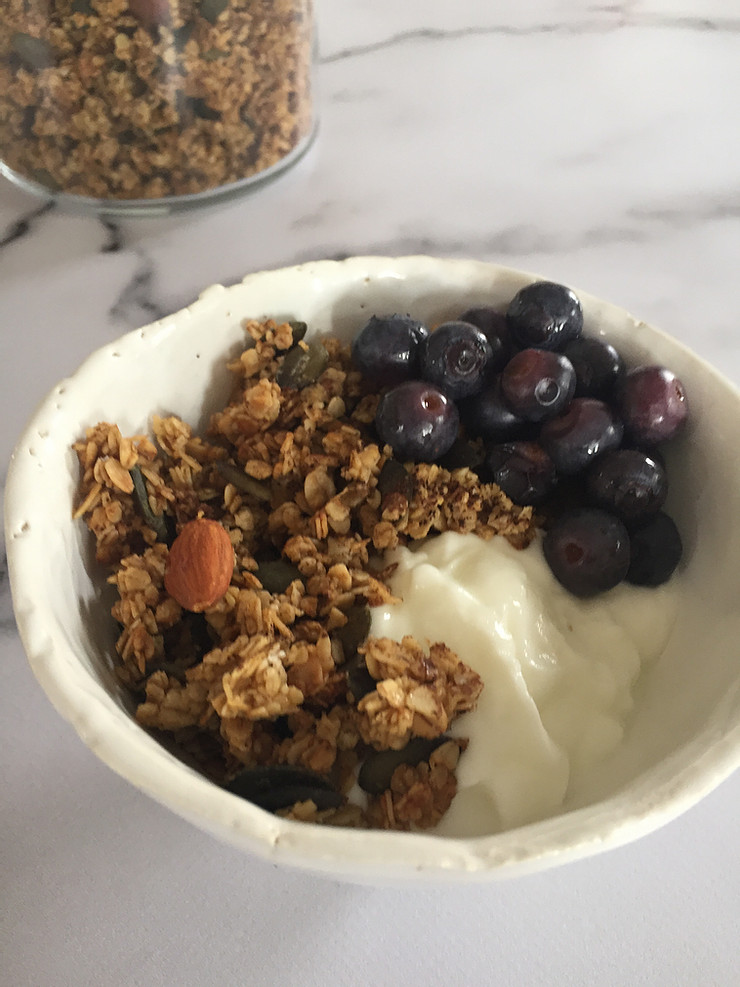
This granola is delicious as is but at the same time makes for the perfect base to add whatever else you wish to it. The coconut oil makes the granola crisp but you may replace it with olive oil if you are not keen on the sweetness.
The granola will keep for two weeks in a glass jar.
4x 250ml oats
250ml Almonds or any other nut you may prefer
125ml pumpkin seeds
2,5ml ground cinnamon
125ml melted coconut oil
125ml honey
5ml vanilla extract
180ml dried fruit like raisins or chopped, dried apricots, or chocolate chips
Preheat your oven to 160℃ and line a roasting tin with baking paper.
Combine all the dry ingredients.
Combine all the wet ingredients and pour it over the dry ingredients. Mix together with your hands so that all the dry ingredients are lightly covered in the wet.
Bake the mixture for 12 minutes. Open the oven and give it a good stir before baking for another 10 – 15 minutes, until golden brown.
Cool the granola completely before stirring through the dried fruit or chocolate chips.
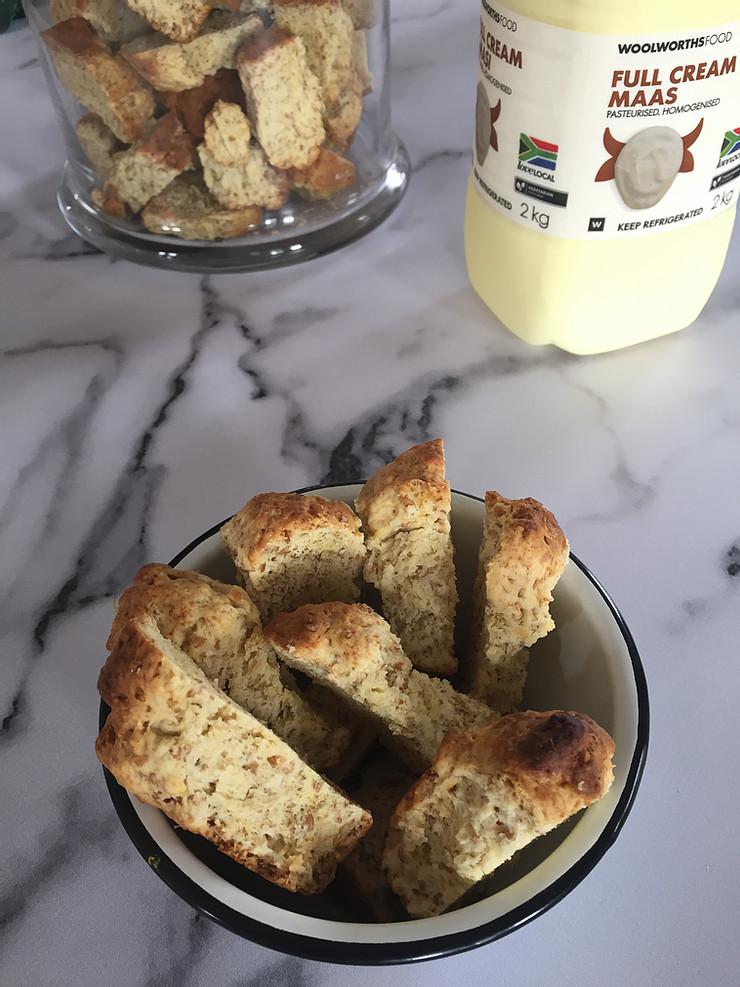
These rusks are melt-in-your-mouth and truly South African. If you can’t get real Amasi you may replace it with cultured buttermilk.
500g cake flour
500g wholewheat flour
125ml sugar
25ml cream of tartar
12,5ml bicarbonate of soda
5ml salt
250g butter
1 egg
450ml Amasi or Cultured Buttermilk
Add the flours, sugar, cream of tartar, bicarb and salt to a mixing bowl and give it a good mix.
Add the butter to a saucepan and melt it on low heat.
Take off the heat and add the Amasi and then the eggs. Give the mixture a good whisk.
Add the wet mixture to the dry mixture to form a dough.
Knead the dough by hand for 5 minutes to evenly distribute the ingredients.
Preheat your oven to 200℃.
Grease a large bread tin and break off pieces of dough, the size of golf balls. Pack them tightly in the bread tin. Keep going until you have no more dough.
Bake the rusks for 25 – 30 minutes.
Once the rusks are cold enough, break them apart and place them on a baking tray. Dry the rusks in a 50℃ oven for about 3 hours.
Cool completely before packing the rusks into a glass container.
This cake is exactly what the name says it is: French simplicity, filled to the brim with chocolate. It is a very flat cake with an intense dark chocolate taste but it has an almost biscuity texture. Of course I mean that as far as cakes go…. I like to serve mine with blueberry compôte but it is delicious with ice cream or Chantilly cream or eaten as is.
4 eggs, separated
100g butter
150g dark chocolate
100g brown sugar
50g cake flour
100g almond flour
a pinch of salt
Preheat your oven to 180℃ and grease a 23cm loose-bottomed cake tin.
Melt the butter in a saucepan over a low heat.
Break the chocolate into small pieces and add it to the melted butter. Stir until the butter and chocolate are completely blended.
Add the brown sugar to the saucepan and stir until the sugar has melted.
Add the flour to the chocolate mixture and stir well before adding the almond flour and stirring to mix, once more.
Take the saucepan off the heat and put to the side.
Add the egg whites and a pinch of salt to a clean mixing bowl and whisk to stiff peaks with an electric beater.
Now stir the egg yolks into the slightly cooled chocolate batter.
Stir one third of the beaten egg whites into the mixture to slacken the texture. Now fold in the rest of the whites.
Spoon the cake batter into the greased cake tin and bake for 30 minutes.
Take the cake out of the oven when its done and allow it to cool in the cake tin for 10 minutes before removing it from the tin.
Place the cake onto a cooling rack and allow to cool completely.
This is such a refreshing and easy cheesecake to make when citrus abounds. I use blood oranges when I can lay my hands on them, but any other orange will work a charm as it is the zing from the citrus that elevates this cake.
For the cake:
250g digestive biscuits
80g butter, melted
500g cream cheese
500g sour cream
100g caster sugar
grated zest of two oranges
You may use a round, square or rectangular cake tin to make the cake
Blitz the digestive biscuits to crumbs in a food processor or put them in a plastic bag and smash them with a rolling pin.
Melt the butter in the microwave.
Add the crumbs to the melted butter and mix thoroughly.
Tip the crumb mixture into your cake tin and press the mixture firmly onto the base of the tin with the back of a spoon.
Refrigerate the base until you need it.
Add the cream cheese, sour cream, caster sugar and orange zest to the bowl of a stand mixer fitted with the paddle attachment.
Beat until smooth, scraping down the mixture, once or twice.
Take the base from the refrigerator and spoon the cream cheese mixture into it, levelling the surface as best you can. This is important as it will affect your top layer.
Cover the cheesecake with plastic wrap and put it back into the refrigerator to set. At least 3 hours.
For the candied orange slices:
Slice two oranges into 0,5cm slices and remove the pips
Add the water and sugar to a small saucepan on a low heat and stir continuously until the sugar has dissolved completely.
Turn the heat up to medium and let the syrup simmer until syrupy.
Turn the heat back to low and add the orange slices.
Simmer the orange in the syrup for 15 – 20 minutes.
Remove the candied slices to a cooling rack to cool completely.
For the gel layer:
60ml cold water
7,5ml powdered gelatine
62ml orange juice
juice of 1 lemon
45ml caster sugar
Pour the cold water into a small bowl and sprinkle the gelatine on top. Leave to bloom.
Add the orange juice, lemon juice and sugar to a small saucepan.
Turn the heat to low and stir until the sugar has dissolved.
Now turn the heat up and bring the mixture to the boil. Simmer for 5 minutes before removing from the heat.
Add the gelatine mixture to the juice mixture and whisk vigorously so that all the gelatine dissolves into the juice.
Allow the mixture to cool slightly and then gently pour it over the cheesecake.
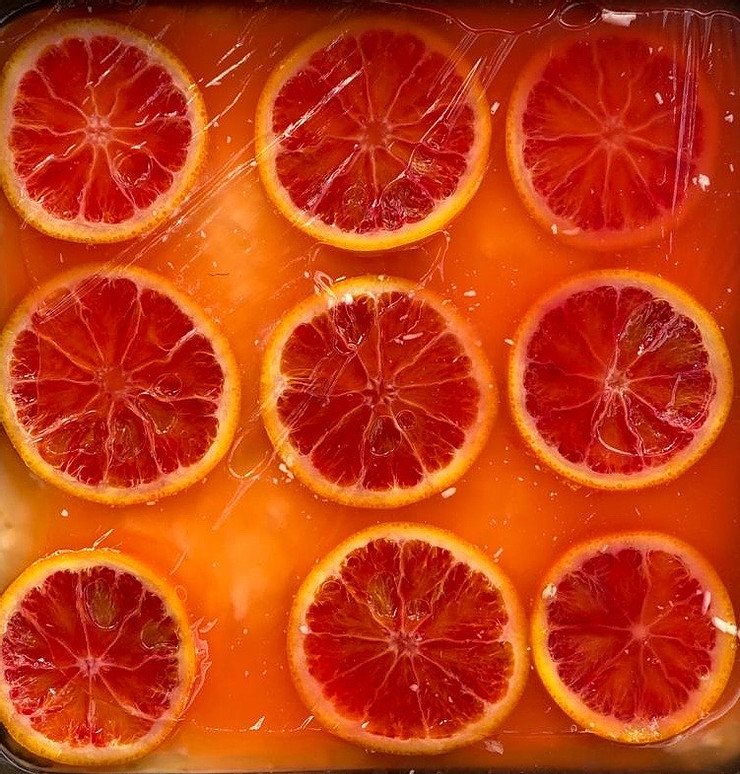
Arrange the candied orange slices on the cheesecake.
Cover the cake with plastic wrap and place it in the refrigerator for at least 4 hours to firm up.
Clafoutis is a traditional French tart made with black cherries. Do not ask a frenchman whether the stones should be removed or left in the fruit….this usually leads to hour-long discussions and at some stage you, the innocent bystander, will be drawn into the debate and believe me, you will make an enemy for life, no matter where you stand on the topic!
Apart from the stone issue, a clafoutis is basically a tart made by placing the fresh cherries into an ovenproof dish and then covering it with a flan-like batter. The texture reminds me of baby Dutch pancakes, but of course you will never say this where your French friends could hear you!
In short a clafoutis is like a chic Parisian: simple, elegant, effortless and makes a lasting impression!
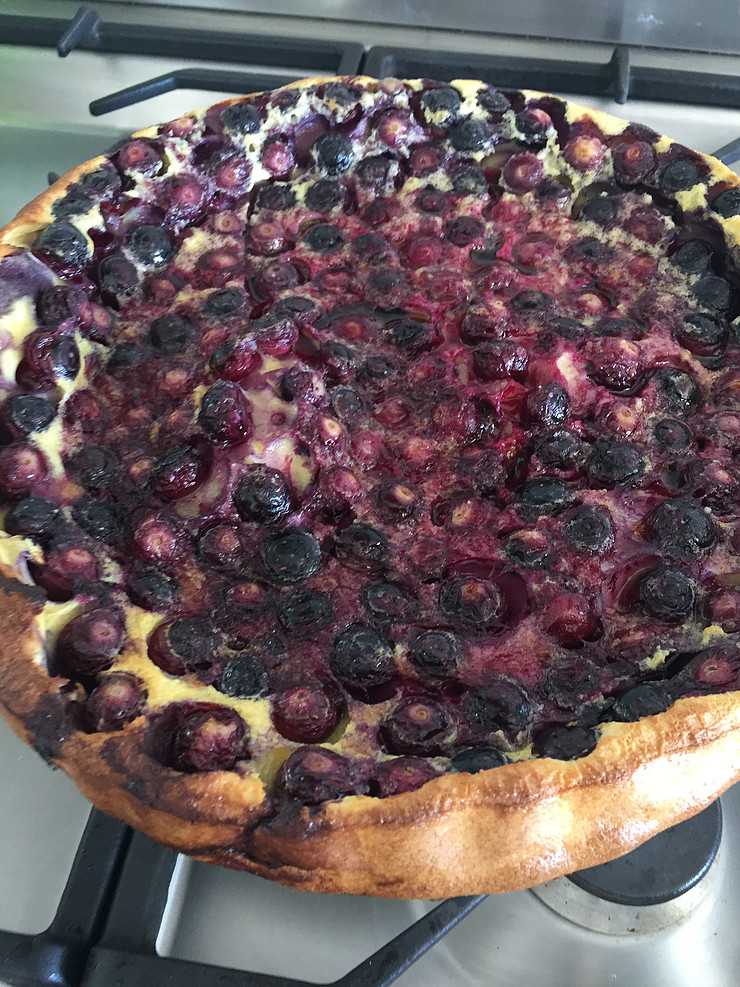
This is my Blueberry version of the classic Clafoutis aux Cerises, that can be found in the inspirational Fait Maison: Gâteaux book. (See the Cook and Book section on this blog to read more about the book. It is only available in French, but easy enough to practise your language skills!)
125ml sugar
125ml flour
3 eggs
5ml vanilla
30ml butter, melted
250ml milk
enough blueberries to cover the bottom of a pie/flan dish
Preheat your oven to 180℃.
Grease a pie dish and fill the bottom with a layer of blueberries. Set aside.
Add the sugar and flour to a mixing bowl.
Whisk the eggs, vanilla, melted butter and milk together in a wide-mouthed jug.
Slowly pour the milk mixture into the dry ingredients while constantly whisking.
Pour the batter onto the berries in the pie dish.
Place in the oven and bake for 35 – 40 minutes.
The clafoutis will puff up in the oven and fall back on itself as it cools.
Allow to cool to room temperature.
I serve my clafoutis as is but you can dust it with icing sugar before serving.